
Canadian Wildfire Smoke Triggers 4,896 Flight Delays and 126 Cancellations Across Major US Hubs in 2026
Canadian wildfire smoke has crippled US airspace, causing 4,896 delays and 126 cancellations, severely impacting Chicago O’Hare and major carriers like Southwest and American Airlines ahead of the World Cup Final.

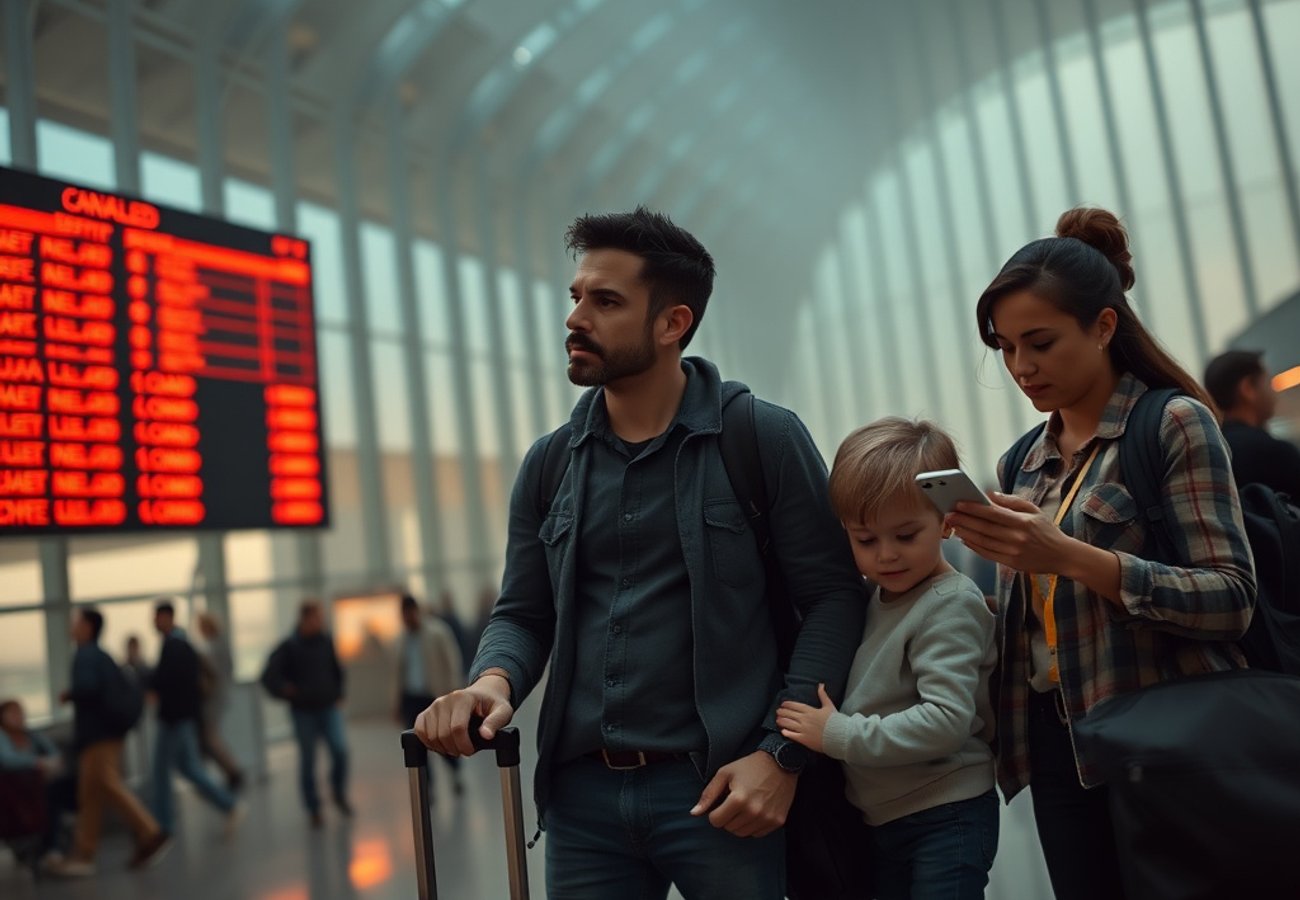
Image generated by AI
Widespread aviation chaos has gripped the United States as wildfire smoke from Canada drifts south, triggering 4,896 delays and 126 cancellations across the national network.
The Local Trend Revealed: Environmental Volatility in Aviation
The US aviation system is currently grappling with a severe operational crisis driven by environmental factors. Smoke from hundreds of active Canadian wildfires has migrated into the Midwest, Mid-Atlantic, and Northeast, creating a hazardous air quality crisis that transcends public health. For the aviation sector, this smoke reduces visibility and forces the Federal Aviation Administration (FAA) to implement increased spacing between arriving and departing aircraft.
This "ripple effect" is most evident at major connecting hubs. When visibility drops at a primary gateway, the resulting delays cascade across the entire domestic and international network. The timing is particularly critical as the region prepares for the 2026 FIFA World Cup Final between Spain and Argentina at MetLife Stadium in New Jersey, where approximately 82,500 spectators are expected to face outdoor air quality risks.
Impact Analysis: The Hardest-Hit Hubs and Carriers
The disruption is not uniform, but certain corridors have borne the brunt of the atmospheric interference. Chicago O’Hare has emerged as the epicenter of the crisis, recording the highest number of disruptions nationwide.
Airport Disruption Statistics
| Airport | Delays | Cancellations |
|---|---|---|
| Chicago O’Hare (Illinois) | 801 | 17 |
| Hartsfield-Jackson Atlanta (Georgia) | 420 | 16 |
| Orlando (Florida) | 216 | 5 |
| San Francisco (California) | 213 | 7 |
| San Diego (California) | 182 | 12 |
| John F. Kennedy (New York) | 115 | 4 |
| Newark Liberty (New Jersey) | 87 | 4 |
The operational strain is equally visible among the carriers. Southwest Airlines has faced the steepest climb in recovery, recording the highest volume of delays.
Airline Operational Disruptions
| Airline | Delays | Cancellations |
|---|---|---|
| Southwest Airlines | 866 | 9 |
| American Airlines | 850 | 11 |
| SkyWest | 434 | 21 |
| United Airlines | 434 | 4 |
Cultural & Environmental Value (Information Gain)
This crisis highlights the growing intersection between climate change and global mobility. The reliance on "just-in-time" flight scheduling leaves the industry vulnerable to atmospheric anomalies. By monitoring the Air Quality Index (AQI) and FAA visibility advisories, regional tourism departments and cultural heritage associations are urging a shift toward "slow travel" during peak wildfire seasons.
Supporting local economies during these disruptions means encouraging travelers to utilize regional rail or stay in local boutique accommodations rather than rushing through stressed airport terminals. Furthermore, the situation underscores the necessity for airlines to integrate real-time environmental data into their routing software to avoid the "bottleneck" effect seen at O'Hare and Newark.
Visitor Insider Tips
For those navigating the US airspace during this period of hazardous air quality, standard travel advice is insufficient.
- The "Hub-Avoidance" Strategy: If your itinerary includes a connection at Chicago O’Hare or Newark Liberty during a smoke event, check for alternative routing through southern hubs (like Dallas or Atlanta) which may be less affected by Canadian drift.
- Air Quality Gear: When traveling to the Northeast or Midwest, carry a high-quality N95 mask. Air quality in cities like Detroit and Chicago has reached hazardous levels, making these essential for those with respiratory sensitivities.
- Digital Vigilance: Do not rely on airport monitors. Enable push notifications for your specific flight number via the airline app and cross-reference with real-time tracking tools like FlightAware.
- The Carry-On Rule: Because cancellations (particularly with regional carriers like SkyWest) can lead to unexpected overnight stays, keep all essential medications and chargers in your carry-on, not checked luggage.
Tourism Outlook
The long-term impact of these recurring environmental disruptions is a push toward more resilient infrastructure. As wildfire seasons become more intense, the aviation industry will likely move toward more flexible scheduling and increased investment in precision landing technologies that can mitigate the impact of reduced visibility. For the 2026 World Cup and other mega-events, the focus will shift toward "Environmental Contingency Planning," ensuring that public health and transport logistics are synchronized to protect millions of international visitors.
Safe travels require a shift from rigid schedules to adaptive movement.
Related Travel Guides
Disclaimer
This article is for informational and educational purposes only. It does not constitute legal, financial, or professional advice. While we strive to provide accurate and up-to-date information, travel policies, regulations, and conditions change rapidly. Always verify information with official sources before making travel decisions. Nomad Lawyer makes no representations about the accuracy, reliability, completeness, or suitability of the information provided. Readers should consult qualified professionals for advice specific to their circumstances. The views expressed in this article are those of the author and do not necessarily reflect the views of Nomad Lawyer.
Raushan Kumar
Founder & Lead Developer
Full-stack developer with 11+ years of experience and a passionate traveller. Raushan built Nomad Lawyer from the ground up with a vision to create the best travel and law experience on the web.
Learn more about our team →