
Severe Travel Chaos Paralyzes Canada as Air Canada, Jazz, and WestJet Suffer 526 Flight Disruptions Across Toronto, Montreal, and Vancouver: Latest Airline News
The Canadian aviation network has collapsed under severe operational strain, officially recording 456 flight delays and 70 outright cancellations that have stranded thousands across the country.

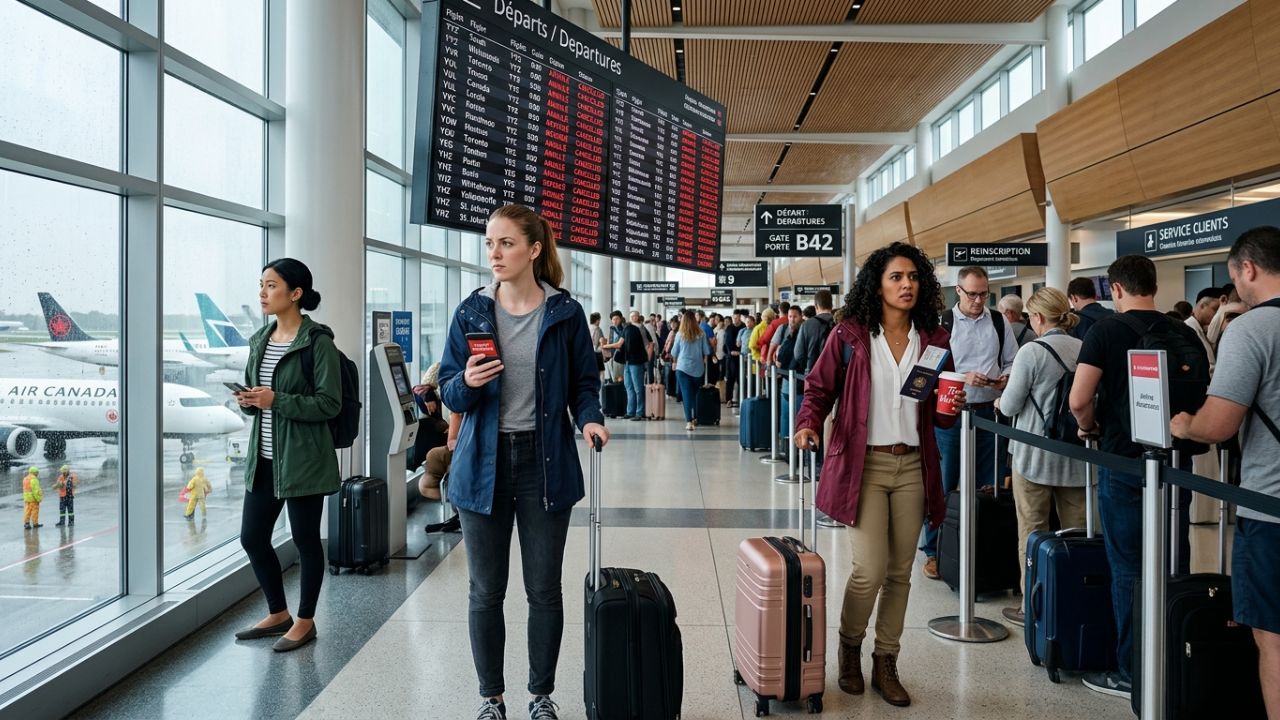
Image generated by AI
In a massive, cascading logistical breakdown that has completely destabilized the national passenger transit grid, a severe wave of airport disruptions has paralyzed the Canadian aviation network. According to official flight data recorded today, June 17, 2026, severe schedule instability and rolling weather patterns have triggered a highly disruptive wave of 456 flight delays and 70 outright cancellations across the country’s primary commercial and remote gateways. As prominent operators like Air Canada, Jazz, WestJet, Porter Airlines, and regional lifelines like Air Inuit and Pacific Coastal scramble to recover their massively backlogged fleets, intense travel chaos is currently tearing through massive mega-hubs in Vancouver, Montreal, Toronto, and Calgary. With thousands of travelers stranded, facing missed connections and severe terminal congestion extending down to cross-border routes in Rochester, this sprawling wave of flight cancellations represents the premier headline in today's breaking airline news and essential global aviation updates.
By introducing direct passenger coordination and dynamic scheduling backups, the regional aviation hubs target growing passenger demand across vital commerce sectors. The choice to coordinate flight departures in phases helps to manage gate capacity, supporting the country's broader regional transportation network.
Context: The Collapse of the Canadian Air Corridor
For the thousands of corporate professionals, eco-tourists, and remote community residents relying on the precision scheduling of the Canadian aviation grid, the current operational reality has degenerated into an absolute nightmare.
The widespread flight disruptions aggressively highlight the inherent vulnerability of Canada's massive, geographically diverse aviation network. The disruption is primarily driven by a combination of severe hub congestion, cascading schedule delays, and regional connectivity pressure. Air traffic systems in Toronto and Montreal are under particular stress, operating as the central arteries for the entire eastern seaboard. The sheer volume of 526 combined disruptions indicates that the system is experiencing intense schedule congestion and recovery strain rather than total route suspensions. However, because Canadian aviation operates heavily on a hub-and-spoke model, severe delays at Toronto Pearson instantly propagate into regional feeder networks, devastating the flight schedules of remote northern provinces that lack alternative routing options.
To view live flight schedules, specific domestic carrier route maps, or alternative connection options, travelers must consult official Canadian aviation directories. For direct booking access, specific baggage rules, and immediate rebooking portals, passengers should check the official Air Canada or WestJet portals. To explore live flight tracking and monitor the exact severity of the rolling airspace closures, passengers can consult the official FlightAware tracking service.
Section-Wise Breakdown of the National Meltdown
The Eastern Hubs: Toronto and Montreal
Toronto Pearson International Airport remains the primary congestion point driving the national travel chaos. Closely linked to Air Canada and Porter operations, severe air traffic flow management restrictions here instantly back up the entire system. Simultaneously, Montreal-Trudeau International Airport is showing sustained pressure, unable to clear the rolling delays bleeding over from Ontario. Even localized facilities like Toronto City Centre Airport are experiencing severe disruptions.
The Western Gateways: Vancouver and Calgary
The gridlock has successfully crossed the continent. Both Vancouver International Airport and Calgary International Airport are experiencing severe ripple effects caused by massive inbound and outbound traffic imbalances. As delayed aircraft arrive hours late from the East Coast, the tightly scheduled Pacific and prairie rotations are forced to hold, creating massive terminal congestion. Secondary western markets, including Victoria, are also feeling the downstream squeeze.
Remote Operations: Nunavik, Labrador, and Cross-Border
The disruption pattern proves that fragile, remote networks suffer the highest cancellation sensitivity. Northern and remote airports serving communities in Nunavik and Labrador are heavily affected due to limited operational redundancy. Furthermore, the schedule collapse has bled across the border, impacting vital cross-border feeder routes into Rochester, New York.
Technical Roster: Canadian Airline Disruption Matrix
To ensure absolute factual accuracy regarding the specific airlines driving this massive national aviation failure, the following tables detail the exact operational metrics generated by the breakdown:
| Airline / Operating Group | Operational Disruption Metric | Fleet Impact & Network Severity |
|---|---|---|
| National Total Impact | 456 Delays, 70 Cancellations | Severe disruption paralyzes the Canadian national network |
| Air Canada (Mainline) | 10 Cancellations, 109 Delays | Flag carrier suffers massive operational pressure at primary hubs |
| Jazz (Air Canada Express) | 20 Cancellations, 89 Delays | Highest cancellation volume; regional feeder network collapses |
| Air Canada Rouge | 4 Cancellations, 38 Delays | Leisure and vacation subsidiary caught in eastern hub gridlock |
| Air Inuit | 12 Cancellations, 25 Delays | High cancellation ratio paralyzes northern remote communities |
| WestJet | 2 Cancellations, 26 Delays | Western mega-carrier suffers moderate knock-on hub delays |
| Porter Airlines | 2 Cancellations, 21 Delays | Mid-scale domestic operator experiences localized delays |
| Pacific Coastal Airlines | 2 Cancellations, 10 Delays | Western regional routes heavily throttled by cascading delays |
Passenger Impact: Stranded Nationwide
For the everyday passengers currently trapped inside Canada's major terminals, the logistical reality demands immediate contingency planning.
The primary impact of these 526 rolling disruptions is the devastating destruction of complex, multi-leg domestic itineraries. Passengers attempting to connect from a delayed mainline flight in Montreal to a regional Jazz flight heading north are facing catastrophic missed connections. Thousands of passengers are currently overwhelming customer service desks, desperately attempting to secure alternate routings before the night curfews take effect. In remote markets served by Air Inuit, a canceled flight does not just mean a ruined vacation; it means vital personnel and supplies are entirely severed from communities that lack road access, creating severe economic and social friction.
Industry Analysis: Weather and Hub Fragility
Aviation industry analysts view the 526-flight disruption wave across Canada as a stark demonstration of how rapidly local weather can trigger a national collapse.
Analysts note that recent atmospheric instability in Southern Ontario—specifically intense thunderstorm activity in the Waterloo region and surrounding areas—was the primary catalyst for this meltdown. Although the formal weather warnings were eventually lifted, the residual storm activity forced air traffic control to enact severe flow management restrictions. These conditions typically force immediate rerouting, ground handling delays, and reduced sequencing efficiency at high-density hubs like Toronto Pearson. Because the Air Canada ecosystem (including Jazz and Rouge) is heavily centralized in these eastern hubs, the weather instantly crushed their regional feeder services. Analysts warn that recovery will depend entirely on stabilization at Pearson, Montreal-Trudeau, and Vancouver, where the vast majority of the rolling congestion originates.
Actionable Advice for Surviving Canadian Flight Disruptions
If you are a traveler relying on Air Canada, WestJet, or regional carriers during this massive disruption wave, execute this extreme survival checklist immediately:
- Check Rebooking Options Instantly: Do not wait in the physical terminal line. Call customer service or use the airline's mobile app immediately to explore alternative routing options through secondary hubs (like Edmonton or Halifax) to reduce exposure to Toronto congestion.
- Allow Massive Connection Buffers: If you have an onward connection through Toronto Pearson or Montreal-Trudeau, verify your minimum connection times immediately. Due to the rolling delays, assume you will need at least three hours of buffer time to successfully transfer terminals.
- Monitor Flow Restrictions: Understand that even if the weather in your departure city is clear, thunderstorm activity in Southern Ontario dictates the entire national schedule. Monitor national weather radar proactively.
- Understand Remote Carrier Vulnerability: If flying Pacific Coastal or Air Inuit, recognize that these airlines lack massive backup fleets. A single cancellation often means waiting a full 24 hours for the next available rotation.
FAQ: Canadian Airport Flight Disruptions 2026
How severe is the current operational breakdown across Canadian airports?
The Canadian aviation network suffered a massive collapse, officially recording 456 flight delays and 70 outright cancellations across the country.
Which specific airlines are most affected by this travel chaos?
The Air Canada ecosystem was devastated. Air Canada mainline suffered 109 delays, while its regional partner Jazz recorded the highest cancellation volume with 20 canceled flights and 89 delays. Regional carrier Air Inuit also suffered 12 critical cancellations.
Which major Canadian airports experienced the worst flight cancellations and delays?
Toronto Pearson International Airport and Montreal-Trudeau drove the national congestion, while Vancouver and Calgary experienced massive inbound and outbound traffic imbalances causing secondary terminal gridlock.
The Breaking Point of the Canadian Grid
The massive wave of 526 flight disruptions ravaging Canada's primary mega-hubs proves definitively that the national transit infrastructure remains highly vulnerable to centralized bottlenecks in 2026. By entirely devastating the highly scheduled operations of Air Canada, Jazz, WestJet, and vital remote lifelines like Air Inuit, this operational meltdown has ruthlessly exposed the fragility of the hub-and-spoke model when faced with Southern Ontario weather restrictions. As major carriers desperately attempt to reposition their fleets and rebook stranded transit passengers, travelers must accept a brutal reality: navigating Canadian airspace requires extreme itinerary flexibility, aggressive digital contingency planning, and the understanding that a thunderstorm in Waterloo can instantly cancel a flight to Nunavik.
Key Takeaways
- Massive National Breakdown: The Canadian aviation network was paralyzed by 456 rolling flight delays and 70 outright cancellations.
- Air Canada Group Crippled: Air Canada, Jazz, and Rouge absorbed the vast majority of the damage, combining for 34 cancellations and 236 flight delays.
- Remote Communities Severed: Air Inuit suffered a high ratio of cancellations (12 canceled, 25 delayed), heavily impacting isolated communities in Nunavik and Labrador.
- Weather Catalyst: Thunderstorm activity and atmospheric instability in Southern Ontario (Waterloo region) triggered massive flow restrictions at Toronto Pearson.
- Cascading Network Failure: Operational constraints spread delays from the eastern hubs directly into Vancouver, Calgary, Victoria, and cross-border routes to Rochester.
Related Travel Guides
Severe Travel Chaos Paralyzes the United States Across Major Hubs
Severe Travel Chaos Paralyzes China Across Major Hubs
Canadian Domestic Flight Delays and Air Canada Rebooking Strategies on Reddit
Disclaimer
This article is for informational and educational purposes only. It does not constitute legal, financial, or professional advice. While we strive to provide accurate and up-to-date information, travel policies, regulations, and conditions change rapidly. Always verify information with official sources before making travel decisions. Nomad Lawyer makes no representations about the accuracy, reliability, completeness, or suitability of the information provided. Readers should consult qualified professionals for advice specific to their circumstances. The views expressed in this article are those of the author and do not necessarily reflect the views of Nomad Lawyer.
Kunal K Choudhary
Co-Founder & Contributor
A passionate traveller and tech enthusiast. Kunal contributes to the vision and growth of Nomad Lawyer, bringing fresh perspectives and driving the community forward.
Learn more about our team →