Canada Immigration Issues Strict Work Directives for International Students: IRCC 24-Hour Off-Campus Cap and Permit Guide 2026–2027

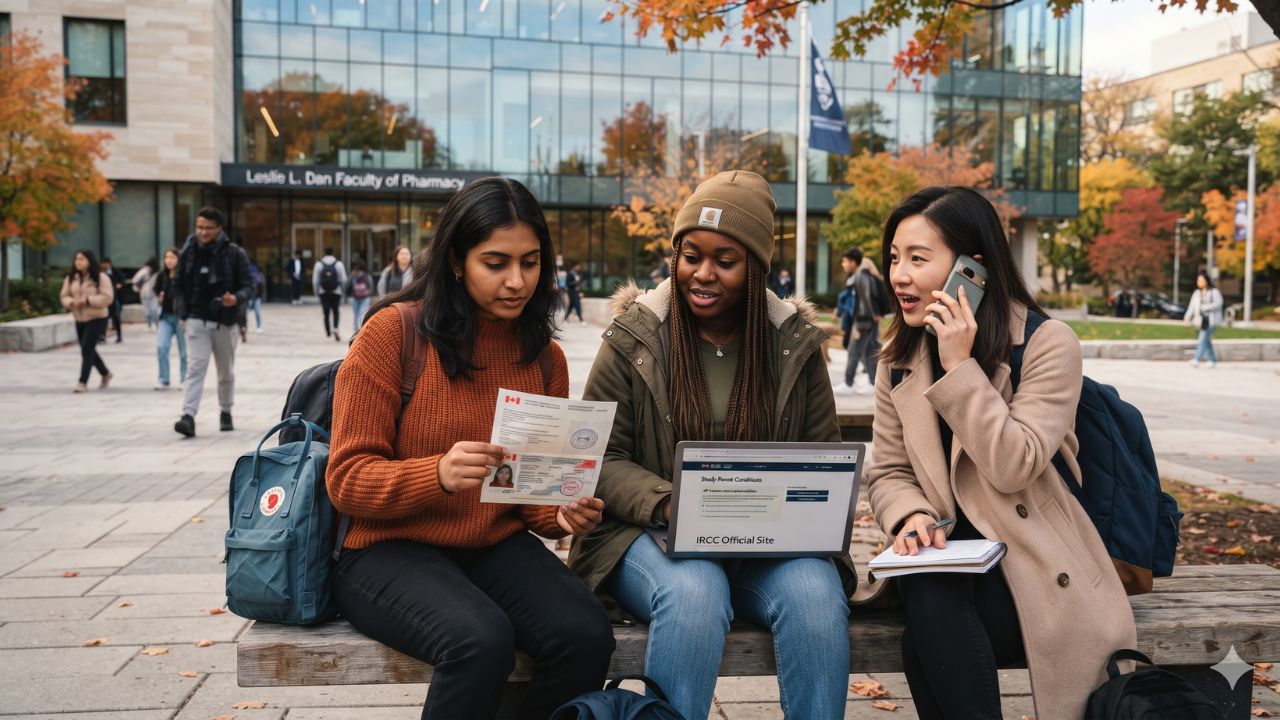
Contrary to a widespread assumption among incoming foreign scholars, simply holding an official Canadian study permit does not grant blanket employment authorization unless specific work clauses are explicitly printed on the document itself. Following renewed regulatory enforcement directives from Immigration, Refugees and Citizenship Canada (IRCC), international students across the country are facing rigorous compliance oversight regarding their legal employment boundaries. The directives reinforce regulations introduced in November 2024 that permanently established a 24-hour weekly limit on off-campus employment during active semesters, while setting clear boundaries enforced through Immigration, Refugees and Citizenship Canada.
For thousands of foreign nationals arriving to pursue degrees in Toronto, Vancouver, Montreal, and Calgary, understanding the exact legal wording of their immigration status has become an urgent operational necessity. Canadian border authorities and immigration enforcement divisions have heightened monitoring across campuses and regional workplaces. Engaging in unauthorized labor or exceeding weekly hourly caps carries severe administrative consequences, including immediate revocation of temporary resident status, denial of post-graduation opportunities, and formal removal from the country.
The Evolution of Canada's Student Work Regulations: From Pandemic Flexibility to Fixed Thresholds
The current enforcement directives mark a decisive end to the era of temporary employment relaxations that characterized Canadian international education during recent years. Between 2022 and early 2024, the Canadian federal government introduced temporary waivers that permitted certain full-time foreign students to work unlimited hours off campus to alleviate nationwide commercial labor shortages. While this measure provided immediate financial relief to many scholars coping with rising living costs, it created widespread operational ambiguity among designated learning institutions, employers, and immigration officers.
To restore systemic integrity and safeguard educational outcomes, IRCC introduced a permanent policy framework in November 2024. Under this standardized rule, eligible full-time post-secondary students can work up to 24 hours per week off campus while academic classes are actively in session. During scheduled institutional breaks—such as winter holidays, reading weeks, and summer recesses—enrolled students who maintain continuous academic standing are legally permitted to work unlimited hours.
Immigration authorities emphasize that the 24-hour weekly cap balances financial self-sufficiency with the core purpose of a study permit: academic progress. Federal evaluations revealed that unrestricted off-campus work hours frequently compromised classroom attendance, increased course failure rates, and made foreign scholars vulnerable to workplace exploitation, wage theft, and substandard employment practices by unscrupulous employers.
Understanding the Legal Mechanics: Study Permit Conditions and SIN Registration
International scholars arriving at Canadian ports of entry must recognize that their physical or electronic study permit functions as a conditional legal contract with the federal government. The document must explicitly state one of the standard statutory clauses:
- “May work 24 hours per week off campus or full-time during regular breaks if meeting criteria outlined in section R186(v).”
- “May accept employment on the campus of the institution at which registered in full-time studies.”
If a study permit contains the condition "This permit does not authorize the holder to engage in off-campus employment in Canada," the student cannot legally accept any off-campus job, regardless of program length or institutional standing. In such instances, students must apply for a formal amendment through IRCC before seeking employment.
Once explicit work authorization is confirmed on the study permit, students must obtain a Social Insurance Number (SIN) from Service Canada prior to their first day of paid employment. Service Canada issues temporary SINs starting with the digit "9" to foreign nationals holding valid temporary resident status. Working without a valid SIN or utilizing an expired number constitutes a serious breach of federal tax and labor laws for both the employee and the hiring business.
Canada International Student Employment Conditions and Compliance Framework
| Status Category & Work Authorization | Permissible Weekly Hours | Academic Session Applicability | Documentation & Pre-Requisites | Legal Penalties for Non-Compliance |
|---|---|---|---|---|
| Off-Campus Employment (Standard) | Up to 24 hours per week | Active academic terms and regular semesters | Study permit with R186(v) condition; valid 9-series SIN | Loss of student status, permit cancellation, removal order |
| Off-Campus Employment (Scheduled Breaks) | Unlimited full-time hours | Official institutional breaks (winter, summer, reading week) | Full-time enrollment before and after break; valid SIN | Rejection of future post-graduate work permits if unauthorized |
| On-Campus Employment | Unlimited hours (as permitted by employer) | Year-round during active full-time enrollment | Valid study permit; enrollment at eligible DLI; valid SIN | Must cease immediately if student transitions to part-time study |
| Co-op / Internship Placement | Full-time (50% or less of total academic program) | Term dates specified in academic curriculum | Co-op Work Permit issued by IRCC; institutional letter | Work unauthorized if completed outside official co-op terms |
| Post-Graduation Transition (PGWP) | Full-time under maintained status | Following formal completion of academic program | Maintained status application filed before study permit expiry | Forfeiture of work rights if application is submitted after expiry |
Visitor Insider Tips: Managing Student Employment and Avoiding Immigration Pitfalls
Adjusting to student life in Canada while maintaining strict legal compliance requires practical planning:
- Examine Your Study Permit at the Airport: When receiving your physical study permit from the Canada Border Services Agency (CBSA) officer at Vancouver, Toronto Pearson, or Montreal-Trudeau airports, review the printed conditions before leaving the immigration desk. If the officer omitted the off-campus work clause despite your eligibility, politely request an immediate correction on-site to avoid months of processing delays.
- Track Your Weekly Hours on a Strict Sunday-to-Saturday Calendar: Canadian immigration regulations calculate work hours over a fixed weekly payroll cycle. Exceeding 24 hours by even thirty minutes across multiple part-time jobs constitutes an enforceable immigration violation. Maintain personal timecard records and ensure secondary shifts do not inadvertently push total hours beyond the threshold.
- Secure Service Canada SIN Registration Online or by Appointment: Rather than waiting in long standby lines at busy downtown Service Canada offices, apply for your Social Insurance Number through the official online portal or reserve an early morning appointment at suburban service locations.
- Guard Against Fraudulent Immigration and Employment Scams: Enrollees are strongly cautioned against social media solicitations offering cash-in-hand employment, guaranteed work permits, or expedited permanent residency pathways for an upfront fee. Legitimate employers in Canada never demand recruitment fees, and all official immigration processing is conducted exclusively through authorized IRCC channels.
- Plan the PGWP Transition Early: Upon completing your final academic examinations, obtain an official completion letter and final transcript immediately. You must apply for your Post-Graduation Work Permit (PGWP) while your study permit remains valid to benefit from maintained status, which allows you to begin working full-time while awaiting the formal permit issuance.
Cultural and Environmental Context: Campus Communities, Housing Pressures, and Economic Balance
The enforcement of student employment directives intersects directly with wider socio-economic discussions across Canada. International students contribute immense cultural energy, intellectual diversity, and economic strength to Canadian communities, supporting university research and local enterprise across towns promoted by Destination Canada. However, the unprecedented growth in foreign student enrollees over the past decade placed visible pressure on urban housing markets, public transit networks, and entry-level employment availability in major metropolitan centers.
By defining precise employment parameters, federal policymakers aim to ensure that foreign scholars are treated as students first rather than a flexible labor reserve. Enforcing the 24-hour weekly work threshold ensures that educational achievement remains central to the Canadian study abroad experience. Simultaneously, clear regulatory boundaries help prevent unscrupulous employers from depressing regional wage standards or subjecting young scholars to unsafe working environments.
For academic communities from British Columbia to Nova Scotia, preserving the integrity of international education is foundational to Canada's global standing. Transparent work guidelines protect students from burnout, support mental health, and ensure that those who eventually transition toward permanent residency possess the accredited skills and academic credentials necessary to thrive within Canada's long-term economic future.
FAQ: Canada International Student Work Rules 2026–2027
Can international students work full-time during summer vacations in Canada?
Yes. Eligible full-time international students can work unlimited hours during regularly scheduled institutional breaks, including summer vacation and winter break, provided they maintain continuous enrollment before and after the scheduled recess.
Does working on campus count toward the 24-hour weekly limit?
No. Authorized on-campus employment is separate from the off-campus limit. However, students working both on-campus and off-campus must ensure that off-campus employment does not exceed 24 hours per week.
Can I work in Canada before my academic semester officially starts?
No. International students are not legally authorized to work in Canada—either on-campus or off-campus—before their study program officially begins, even if they arrive in the country weeks ahead of orientation.
What happens if an international student works more than 24 hours per week?
Exceeding the permitted 24-hour weekly limit during regular classes violates federal study permit conditions, leading to immediate status loss, study permit cancellation, rejection of future visa applications, and potential deportation from Canada.
Respecting the legal boundaries of Canadian student permits protects your academic journey and preserves the pathway to a rewarding professional future.
Related Travel Guides
- Aspen and Snowmass Accessible Tourism Breakthrough: Colorado Inclusive Travel, 80th Anniversary Season, and 2027 Airport Transit Guide
- Orlando Christmas Celebrations 2026–2027: Theme Park Events, Holiday Festivals, and Local Winter Guide
- Canada Post-Graduation Work Permit Guide: Transitioning from Study to Career 2027 (Upcoming)
This article is for informational purposes. Flight routes, passenger regulations, visa rules, and transit advisories are subject to change by airlines and aviation authorities. Readers are advised to verify schedules and travel documentation with relevant carriers and border agencies before departure.
Related Stories

Finnish Immigration Service Issues Guidance on 100-Day D Visa Applications for Five International Applicant Groups

US Temporary Protected Status for Ukraine and Sudan Reaches Expiration Cliff: International Travel and Legal Guide for 2026