
Breaking Airline News: Unprecedented Travel Chaos Sweeps Canada as 352 Flights Are Brutally Cancelled and Delayed Across Major Hubs
Breaking airline news: Amidst a terrifying era of severe operational fragility, a massive wave of cancellations and delays violently sweeps across Canada, plunging major hubs like Toronto and Montreal into extreme travel chaos.

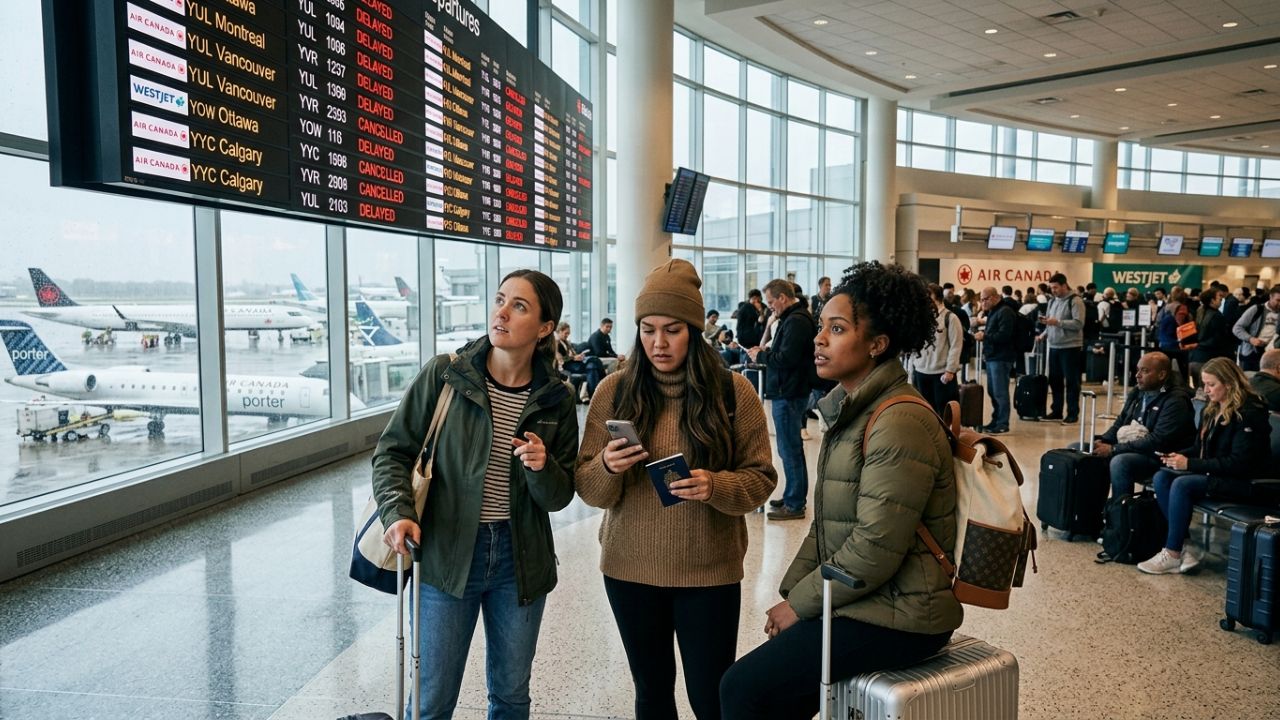
Image representing the intense strategic battle as global aviation authorities desperately attempt to contain severe operational meltdowns and bypass paralyzing flight cancellations sweeping across Canada's busiest transit hubs.
Breaking Airline News: Unprecedented Travel Chaos Sweeps Canada as 352 Flights Are Brutally Cancelled and Delayed Across Major Hubs
As paralyzing terminal congestion, terrifying infrastructural fragility, and severe operational meltdowns violently threaten to completely choke the absolute core of the Canadian aviation network, a massive nationwide breakdown has triggered unprecedented passenger panic. In a harrowing display of modern transit vulnerability, the entire country was aggressively slammed by a massive wave of operational disruptions on June 11, 2026. A staggering total of 352 flights were violently scrubbed or stalled, comprising 285 massive delays and 67 outright flight cancellations. Because major Canadian airports operate as highly critical intercontinental gateways, this aggressive operational collapse did not remain localized; it violently rippled outward from Toronto Pearson, Montreal-Trudeau, Ottawa, Vancouver, and Winnipeg, completely shattering meticulously planned itineraries. By violently entangling essential domestic flights with massive trans-border schedules, this terrifying disruption severely impacted major carriers like Air Canada, Jazz, and Porter Airlines. This cascading failure has completely destroyed passenger confidence, ensuring that corporate commuters and tourists are now directly exposed to the agonizing misery historically defining extreme travel chaos.
In a brutal display of the ongoing global transit crisis, the sheer logistical nightmare of attempting to navigate through Canada's busiest international hubs is currently being violently amplified by systemic network failures. For thousands of passengers, the expectation of a seamless departure was abruptly shattered as major carriers faced massive, inescapable schedule challenges. When a national grid suffers 352 simultaneous disruptions, the ensuing damage is catastrophic: passengers violently miss their massive widebody connections overseas, forcing airlines into a terrifying scramble to rebook furious travelers across multiple fragmented schedules. This massive injection of operational uncertainty forced airport staff nationwide to work furiously to minimize the tension, demonstrating exactly how fragile the Canadian travel grid has become when subjected to severe, high-volume capacity strain.
Expanded Overview: The Massive Scale of the Transit Contagion
The terrifying crisis of overwhelming passenger stress currently gripping the Canadian transit grid brutally exposes the severe limitations of flying through highly congested hubs during operational breakdowns. Recognizing that aggressively forcing travelers to endure hours of sudden terminal waiting leads directly to severe psychological friction, aviation authorities are attempting to forcefully decompress the tension. The sheer scale of this disruption is immense. Data obtained directly from FlightAware reveals that the terrifying ripple effect violently infected major international routes. With 67 definitive cancellations securely locking aircraft to the tarmac and 285 delays forcing passengers into terrifying holding patterns, the fragile illusion of stable, reliable airline scheduling across North America has been completely destroyed.
Section-Wise Breakdown: The Operational Realignment
Breaking the Ontario Transit Gridlock
To survive the terrifying surge in global travel demand, airlines rely entirely on seamless aircraft turnaround at major hubs. However, Toronto Pearson International Airport became the absolute epicenter of this travel chaos, suffering a terrifying collapse resulting in 121 delays and 22 total cancellations. Airlines explicitly impacted here included Air Canada, Jazz, Republic Airways, Air Canada Rouge, SkyWest, and Endeavor Air. The crisis aggressively bled into Toronto City Centre, which suffered 26 delays and 6 cancellations, heavily impacting Porter Airlines. Furthermore, Ottawa Macdonald-Cartier International was violently choked by 29 delays and 3 cancellations, trapping passengers flying Porter, Jazz, PAL Airlines, Republic, and GoJet.
Deploying the Quebec and Western Meltdown
Looking beyond the terrifying impact on Ontario, this massive crisis aggressively threatened the physical survival of the eastern and western corridors. Montreal-Trudeau International suffered a massive hit, recording 66 delays and 19 sudden cancellations, violently affecting Air Canada, Jazz, Air Canada Rouge, Republic, Air Inuit, and PAL Airlines. On the West Coast, Vancouver International was aggressively impacted by 29 delays and 11 cancellations, completely shattering schedules for Air Canada, Jazz, Air Canada Rouge, and Pacific Coastal Airlines. Meanwhile, Winnipeg International suffered 14 delays and 6 cancellations, paralyzing SkyWest and Calm Air.
Carrier Impact: The Fall of Legacy Fleets
The operational violence was disproportionately borne by the nation's largest carriers. Jazz (ACA) recorded an absolutely staggering 72 delays and 29 cancellations. The flagship carrier, Air Canada, experienced extensive schedule destruction with 45 delays and 21 cancellations. The chaos violently cascaded into the regional and budget sectors, severely disrupting Porter Airlines (26 delays) and Air Canada Rouge (14 delays, 4 cancellations), proving that no carrier is safe from a systemic national meltdown.
Flight Disruption Matrices
To fully comprehend the massive logistical and strategic fallout of this terrifying operational failure, corporate travel managers and affected tourists must review the exact disruption metrics defining the crisis. The following matrices provide a granular breakdown of the specific, officially verified flight data driving this massive travel chaos across Canada.
Verified Canadian Airport Disruption Matrix (June 11, 2026)
| Airport | Delayed Flights | Cancelled Flights |
|---|---|---|
| Toronto Pearson International | 121 | 22 |
| Montreal-Trudeau International | 66 | 19 |
| Ottawa Macdonald-Cartier | 29 | 3 |
| Vancouver International | 29 | 11 |
| Toronto City Centre | 26 | 6 |
| Winnipeg International | 14 | 6 |
Verified Canadian Carrier Disruption Matrix (June 11, 2026)
| Airline | Delayed Flights | Cancelled Flights |
|---|---|---|
| Jazz (ACA) | 72 | 29 |
| Air Canada | 45 | 21 |
| Porter Airlines | 26 | 0 |
| Air Canada Rouge | 14 | 4 |
| Republic Airways | 14 | 0 |
| SkyWest | 7 | 3 |
(Note: Other heavily disrupted regional carriers contributing to the national total included PAL Airlines, Endeavor Air, Pacific Coastal Airlines, Calm Air, Air Inuit, and GoJet).
Passenger Impact: Surviving the Terminal Stranding
For the thousands of global tourists and corporate commuters attempting to navigate the rapidly collapsing Canadian transit corridors, this massive operational failure represents a terrifying descent into travel misery. The brutal reality of enduring a sudden cancellation notification via text message while standing at the boarding gate in Toronto, only to realize your onward flight from Montreal is now physically impossible to reach, inflicts intense psychological stress and completely destroys meticulously planned itineraries.
Survival Guide for Stranded Travelers
Travelers desperately preparing to navigate this highly unstable network must immediately execute the following survival protocols if their flight is scrubbed:
- Leverage Digital Rebooking Shields: Passengers must aggressively monitor airline notifications and official airport boards; do not wait in massive physical queues at Toronto Pearson. Check with carriers regarding instant rebooking and alternate travel options using mobile apps before available seats are entirely wiped out.
- Execute Terminal Defense Strategies: Because security and rebooking lines will be violently congested, passengers flying through major hubs in Ontario, Quebec, or British Columbia must arrive exponentially early, keeping all important travel documents and essentials easily accessible at all times.
- Demand Legislative Compensation: Corporate travelers must relentlessly audit individual airline baggage and compensation policies; if a cancellation causes an overnight stranding, passengers must aggressively demand hotel vouchers and remain completely flexible with their revised boarding times.
Industry Analysis: The Economics of Tactical Paralysis
From a strategic aviation perspective, the travel turmoil currently forcing these massive delays highlights the terrifying vulnerability of global infrastructure when exposed to capacity strain at major legacy hubs. Industry analysts confirm that relying on thinly stretched ground crews and ultra-tight turnaround times at airports like Toronto Pearson leaves carriers with absolutely zero operational buffer. When a single massive storm or ATC restriction strikes, the resulting knock-on effect is immediate and catastrophic. The aggressive failure to maintain contingency plans lowers systemic confidence, ensuring that cautious international visitors will aggressively demand more resilient scheduling in the future to avoid the paralyzed Canadian airspace.
Conclusion: A Strategic Retreat to Ensure Aviation Survival
As the extremely critical travel season accelerates, the massive disruption triggered across Canada represents a terrifying warning to passengers attempting to transit through the nation's primary gateways. The aggressive cascading delays prove that maintaining global connectivity requires completely insulating critical airport infrastructure from centralized operational meltdowns. Corporate travel buyers, logistics managers, and everyday passengers attempting to navigate this highly unstable era of airport disruptions must embrace extreme vigilance. By acting aggressively to demand policy clarity, utilizing flexible booking options, and maintaining comprehensive travel insurance, travelers can successfully survive these intense operational surges and attempt to avoid the paralyzing threat of airline-induced travel chaos.
Key Takeaways
- Massive Tactical Threat: The Canadian aviation grid suffered a severe operational breakdown on June 11, 2026, triggering 352 total flight disruptions (285 delays and 67 cancellations).
- Crushing the Domestic Hubs: Toronto Pearson International became the epicenter of the travel chaos, suffering an astonishing 121 delays and 22 flight cancellations.
- Global Ecosystem Disrupted: Montreal-Trudeau followed closely with 66 delays and 19 cancellations, while Vancouver, Ottawa, and Winnipeg were also violently paralyzed by the cascading delays.
- Carrier Impact: Jazz (ACA) and Air Canada bore the absolute brunt of the schedule destruction, with Jazz recording 29 cancellations and Air Canada suffering 21 scrubbed flights.
- Traveler Advisory: Passengers impacted by sudden operational cancellations must aggressively leverage airline mobile apps for instant onward connection rebooking and arrive at massive hubs like Toronto and Montreal exceptionally early to survive the disruption.
Related Travel Guides
Disclaimer
This article is for informational and educational purposes only. It does not constitute legal, financial, or professional advice. While we strive to provide accurate and up-to-date information, travel policies, regulations, and conditions change rapidly. Always verify information with official sources before making travel decisions. Nomad Lawyer makes no representations about the accuracy, reliability, completeness, or suitability of the information provided. Readers should consult qualified professionals for advice specific to their circumstances. The views expressed in this article are those of the author and do not necessarily reflect the views of Nomad Lawyer.
Kunal K Choudhary
Co-Founder & Contributor
A passionate traveller and tech enthusiast. Kunal contributes to the vision and growth of Nomad Lawyer, bringing fresh perspectives and driving the community forward.
Learn more about our team →