
Canada Education Boom Drives Tourism Growth Overtaking US in Accessibility and Global Appeal 2026

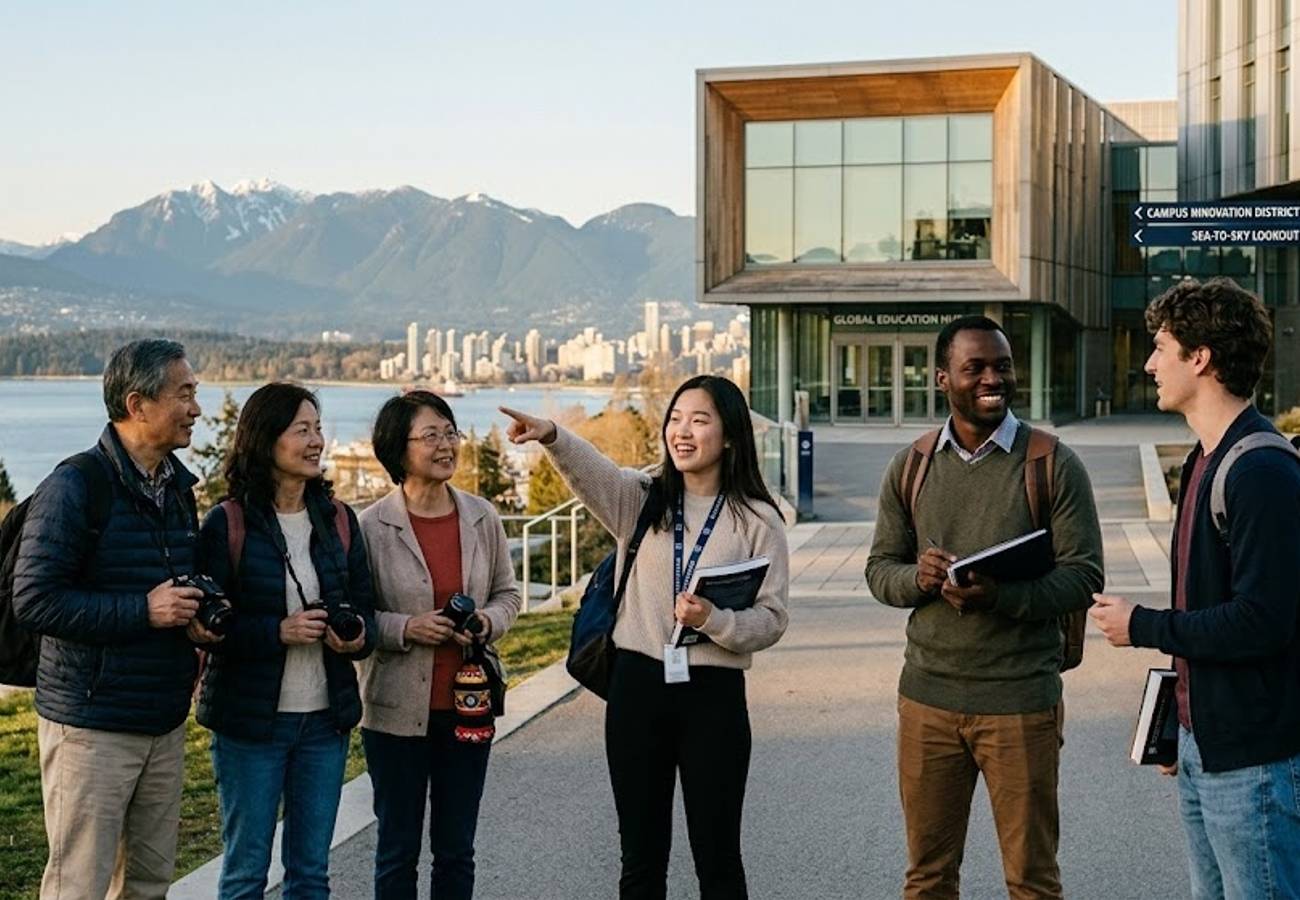
Image generated by AI
Canada has transformed its national education system into a primary catalyst for tourism expansion, registering a 13.9-year average schooling level to challenge the United States and global powers in attracting international students, academic visitors, and family travelers.
TORONTO, Canada — International education has emerged as Canada's secret weapon in expanding its tourism economy, creating a knowledge-based travel movement that extends far beyond traditional holiday sightseeing. Data from the global education index shows Canada achieving an average of 13.9 years of schooling, matching top-tier economies like the United States, Iceland, and Switzerland, while trailing only Germany.
Rather than relying solely on iconic natural landscapes, wildlife safaris, and metropolitan city breaks, Canadian tourism authorities and academic institutions are leveraging world-class universities and vocational colleges to attract international students, researchers, and academic conference delegates. This multi-year educational immersion generates a continuous stream of visiting friends and relatives (VFR), driving sustained economic activity across Canadian hotels, restaurants, retail centers, and regional transport networks.
Global Schooling Data Ranks Canada Alongside World Education Leaders
Canada’s high ranking in global education indices reflects decades of strategic public investment in higher education, vocational training, and research infrastructure. With a nationwide average of 13.9 years of schooling, Canada shares elite status with global economic heavyweights while outperforming major international student destinations like the United Kingdom (13.5 years), Australia (12.9 years), and New Zealand (12.9 years).
Unlike nations where academic prestige is concentrated within a handful of private universities, Canada’s post-secondary network offers high-quality instruction across public universities, technical institutes, and community colleges spanning all ten provinces.
This institutional breadth allows academic travel demand to spread evenly across major urban centers—such as Toronto, Vancouver, Montreal, Ottawa, and Calgary—as well as smaller university towns across Atlantic and Western Canada.
Global Education Index and Average Schooling Benchmark Matrix (2026)
The table below presents the full 13-country comparative global education index dataset, outlining average years of schooling alongside primary educational advantages and tourism synergy factors:
| Rank & Nation | Average Years of Schooling | Primary Education Advantage & Specialization | Tourism Synergy & Mobility Impact |
|---|---|---|---|
| Germany | 14.3 years | Technical education & vocational excellence | Industrial research visits & European travel hubs |
| Canada | 13.9 years | International education & broad accessibility | Nationwide VFR travel & multi-year residency spend |
| United States | 13.9 years | Ivy League research universities & innovation hubs | High-cost private tuition & concentrated urban travel |
| Iceland | 13.9 years | Equal education opportunities & research access | Eco-tourism & high-latitude environmental research |
| Switzerland | 13.9 years | Industry-focused hospitality & technical learning | Luxury hotel management & Alpine luxury travel |
| Estonia | 13.6 years | Digital education & e-governance innovation | Tech conference travel & Baltic digital nomadism |
| Lithuania | 13.6 years | Strong higher education participation rates | Regional Baltic academic exchange programs |
| United Kingdom | 13.5 years | Historic university prestige & research legacy | Heritage tourism & global student city hubs |
| Israel | 13.5 years | High-tech R&D & technology startup education | Innovation summits & tech incubator travel |
| Australia | 12.9 years | International student attraction & coastal lifestyle | Asian-Pacific student travel & working holiday visas |
| New Zealand | 12.9 years | Student-focused learning & outdoor research | Adventure tourism & eco-study abroad circuits |
| Bahamas | 12.8 years | Regional Caribbean education development | Regional island study & marine research travel |
| Japan | 12.7 years | Academic discipline, robotics & technology | Cultural exchange & Asian academic partnerships |
Three Strategic Pillars Driving Canada's Advantage Over United States
While the United States remains a formidable competitor with prestigious research universities, Canada has carved out a distinct competitive advantage by building an inclusive, student-centric travel ecosystem.
- Education Accessibility: Canada offers diverse, flexible learning pathways across universities, polytechnics, and community colleges at more affordable tuition rates than top-tier US private institutions.
- Multicultural Community Integration: International students from Asia, Europe, Africa, and Latin America find welcoming, diverse communities that facilitate smooth social integration and long-term residency pathways.
- Travel and Tourism Synergy: Pursuing studies in Canada serves as an entry point for exploring regional attractions. Students in British Columbia regularly visit the Rocky Mountains, while those in Ontario and Quebec travel between Niagara Falls, Montreal, and Quebec City.
These factors position Canada as a highly attractive choice for cost-conscious families seeking quality education combined with lifestyle safety and travel opportunities.
Universities Function as Regional Tourism Gateways Across Canadian Provinces
Canada’s education-led tourism strategy operates across provincial jurisdictions, ensuring economic benefits extend far beyond traditional tourist hubs:
- Ontario: Combines major urban universities in Toronto and Ottawa with cultural festivals, museum tours, and corporate business events.
- British Columbia: Blends academic programs in Vancouver and Victoria with coastal marine research, skiing in Whistler, and eco-tourism.
- Quebec: Connects historic universities in Montreal and Quebec City with French linguistic heritage, winter festivals, and culinary tourism.
- Alberta & Atlantic Canada: Integrates specialized engineering and agricultural programs in Calgary and Halifax with mountain adventure travel and maritime heritage.
By hosting international academic conferences, alumni gatherings, and student competitions year-round, universities generate consistent hotel room demand and dining revenue during shoulder and off-peak travel seasons.
VFR Travel Expansion and Long-Term Student Residency Economic Impact
The economic impact of international education extends significantly beyond tuition fees. Each enrolled international student creates a secondary wave of high-value Visiting Friends and Relatives (VFR) travel.
Parents, siblings, and extended family members visit Canada multiple times during a student's degree program, spending heavily on flights, hotel accommodations, dining, retail shopping, and regional sightseeing excursions.
Furthermore, unlike leisure tourists who stay for an average of 7 to 14 days, international students reside in Canadian communities for months or years. This long-term residency creates steady demand for rental housing, transit systems, groceries, and local entertainment, establishing a resilient economic foundation for university towns across the country.
Practical Implications for Global Students and Travel Industry Operators
For international travelers and prospective students, Canada's education boom offers an integrated pathway to combine world-class academic qualifications with broad geographic exploration.
From a travel industry perspective, hospitality businesses that partner with local universities—offering long-stay accommodation packages, family graduation rates, and academic event catering—can tap into a stable, non-seasonal revenue stream.
As global competition for international talent intensifies, Canada's strategy demonstrates how higher education can serve as a dual-engine power source for both national knowledge capacity and long-term tourism resilience.
Student and Visitor Planning Guide: Navigating Canadian Education Travel
International students and visiting family members planning travel to Canada should keep these operational tips in mind:
- Apply for Study & Transit Permits Early: Secure Canadian study permits and visitor visas well in advance of academic term start dates to avoid processing delays.
- Utilize Student Transit Passes: Take advantage of discounted provincial transit passes (U-Pass) available through Canadian post-secondary institutions for cost-effective city travel.
- Plan VFR Visits During Graduation Windows: Book family travel for spring (May/June) or autumn (October) convocation ceremonies early to secure hotel availability near university campuses.
- Explore Regional Transit Links: Use VIA Rail and regional intercity buses to explore neighboring cities and natural parks between academic terms.
Related Travel Guides
Disclaimer
This article is for informational and educational purposes only. It does not constitute legal, financial, or professional advice. While we strive to provide accurate and up-to-date information, travel policies, regulations, and conditions change rapidly. Always verify information with official sources before making travel decisions. Nomad Lawyer makes no representations about the accuracy, reliability, completeness, or suitability of the information provided. Readers should consult qualified professionals for advice specific to their circumstances. The views expressed in this article are those of the author and do not necessarily reflect the views of Nomad Lawyer.
Raushan Kumar
Founder & Lead Developer
Full-stack developer with 11+ years of experience and a passionate traveller. Raushan built Nomad Lawyer from the ground up with a vision to create the best travel and law experience on the web.
Learn more about our team →