Canada’s Adventure Tourism Faces Insurance Risks as Parks Canada Cuts Staff

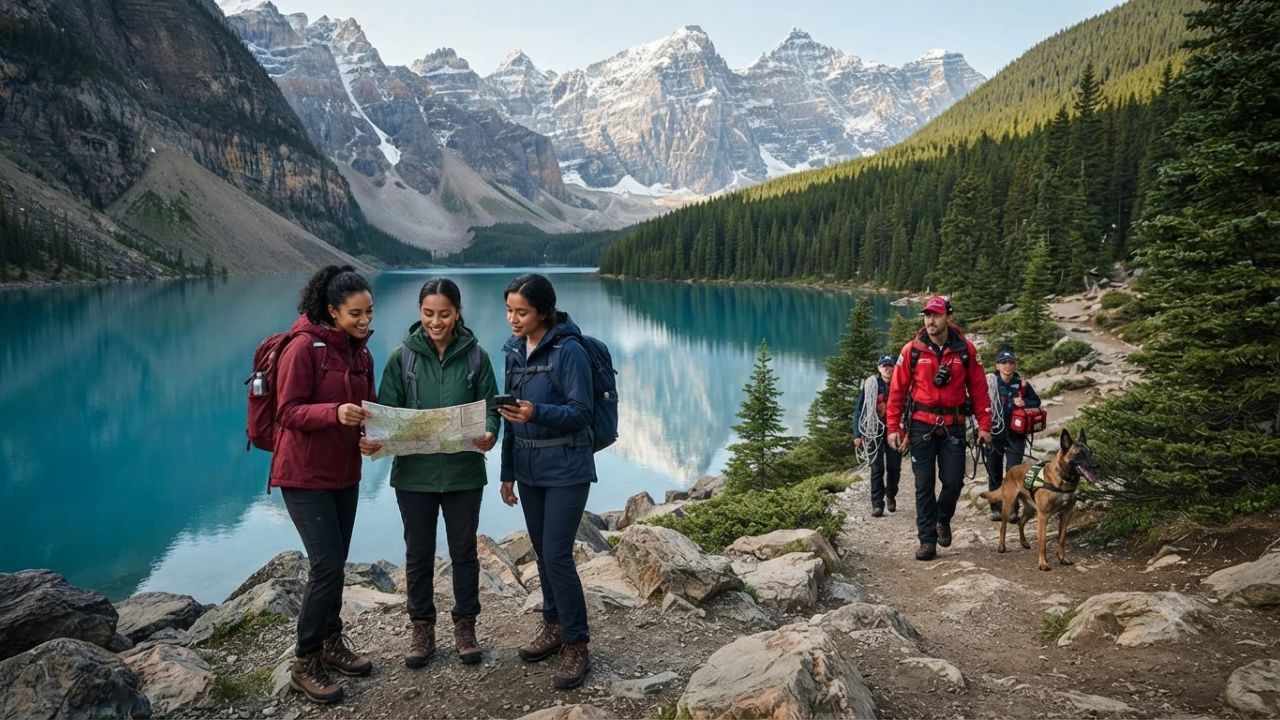
Canada's outdoor recreation sector and backcountry guiding economy are confronting sudden commercial liability challenges and underwriting reassessments as Parks Canada prepares to implement CAD 144.9 million in federal expenditure reductions and adjust more than 700 staff positions. Coming directly on the heels of a near-record 26.2 million annual visitors across Canada's federally protected heritage places, the planned restructuring—including the controversial proposal to discontinue Banff National Park's 55-year-old canine search-and-rescue program—has thrust wilderness risk management, public emergency response capabilities, and commercial insurance protections into sharp national focus.
The intersection of surging wilderness visitation and federal public-sector austerity highlights an operational paradox at the heart of Canada's tourism brand. According to Parks Canada's 2025–26 Departmental Results Report, attendance across Canada’s 48 national parks, 174 national historic sites, and 5 national marine conservation areas jumped by 13 percent year-on-year, propelled in part by affordability measures such as the Canada Strong Pass. In total, federally administered destinations supported CAD 6.5 billion in direct visitor spending, added CAD 5.9 billion to national GDP, generated CAD 839 million in government tax revenues, and sustained 58,736 full-time equivalent jobs. Yet, under the federal government's Comprehensive Expenditure Review, Parks Canada must eliminate tens of millions in operating costs over three consecutive fiscal cycles, raising profound questions for commercial outfitters, wilderness guides, and international travel underwriters who rely on predictable public emergency safety nets.
As insurance underwriters scrutinize backcountry commercial policies, adventure travel operators from the Canadian Rockies to coastal British Columbia and Atlantic Canada must re-evaluate participant safety protocols, satellite communication infrastructure, evacuation logistics, and liability waivers. The evolving landscape demands a thorough examination of federal spending reductions, search-and-rescue responsibilities, and the legal obligations binding operators in remote wilderness terrain.
| Core Dimension | 2025–26 Operational Baseline | Planned Restructuring / Budget Adjustments | Commercial & Operational Implications |
|---|---|---|---|
| Total Parks Canada Attendance | 26.2 million visitors (+13% YoY) | Second-highest visitation total in 35 years | Strained visitor infrastructure and backcountry trails |
| National Parks & Marine Areas | 17.2 million visitors (+15% YoY) | Record demand across iconic mountain parks | Elevated high-angle and remote medical call-outs |
| Direct Visitor Spending | CAD 6.5 billion | CAD 5.9 billion direct contribution to GDP | Primary economic lifeline for gateway communities |
| Employment Supported | 58,736 full-time equivalent jobs | Highly concentrated in hospitality & guiding | Vulnerable to operator overhead cost increases |
| Federal Budget Reduction Target | Comprehensive Expenditure Review | CAD 144.915 million cumulative over 3 years | Escalating savings target reaching CAD 75M in Year 3 |
| Workforce Adjustments | ~5,500 active workforce baseline | More than 700 positions potentially affected | Program eliminations, attrition, and reassignment |
| Specialist Mountain Rescue | Banff National Park Visitor Safety team | Proposed elimination of 55-year canine SAR unit | Avalanche recovery and crevasse search changes |
| Commercial Insurance Market | Standard Commercial General Liability | Underwriters reassessing backcountry policy riders | Scrutiny over emergency evacuation provisions |
The Scale of the Retrenchment: CAD 144.9 Million in Mandated Cuts
The financial pressures confronting Parks Canada stem from the federal government’s government-wide Comprehensive Expenditure Review, designed to restrain operational spending following years of pandemic-era stimulus and public sector growth. While federal departments across Ottawa have been instructed to absorb budget reductions, Parks Canada occupies a unique operational position: it is not merely a regulatory or administrative body, but an active field agency maintaining complex municipal infrastructure, highway corridors, fire management crews, and world-renowned public safety teams across millions of square kilometers of rugged wilderness.
Parks Canada’s 2026–27 Departmental Plan outlines an aggressive, three-year phased retrenchment schedule that removes substantial operating resources from the agency's baseline budget:
Three-Year Phased Expenditure Reductions
Fiscal Year 2026–27:  [===============>] CAD 24.566 Million
Fiscal Year 2027–28:  [==========================>] CAD 45.340 Million
Fiscal Year 2028–29:  [==============================================>] CAD 75.009 Million
-----------------------------------------------------------------------------------------
Cumulative Savings:   CAD 144.915 Million Total Operating Reductions
The graduated structure of these spending reductions illustrates the compounding challenge facing agency leadership. In the initial fiscal year (2026–27), an expenditure cut of CAD 24.566 million will be absorbed largely through administrative consolidation, deferred capital projects, travel reductions, and natural workforce attrition. However, as the annual savings quota escalates to CAD 45.340 million in 2027–28 and peaks at CAD 75.009 million in 2028–29, internal efficiencies alone will prove insufficient.
According to reports published by Insurance Business Canada and federal labor unions representing park staff, the proposed workforce adjustments could affect upwards of 700 positions across the national network. Although Parks Canada leadership has affirmed that involuntary layoffs will be minimized through voluntary departures, hiring freezes, and internal redeployment, the reduction of more than 700 roles inevitably impacts front-line operations, visitor services, trail maintenance, interpretive programs, and conservation monitoring.
The central point of contention for commercial operators is the distinction between back-office administrative overhead and field-level operational capacity. When field staff, park wardens, and visitor safety specialists are trimmed or stretched thin across expansive geographical territories, the operational buffer that commercial adventure businesses rely on begins to narrow.
The Record Visitation Paradox: 26.2 Million Visitors in 2025–26
The timing of these spending reductions could hardly be more paradoxical. Rather than managing a declining asset, Parks Canada is attempting to retrench during one of the most intense periods of public demand in its 115-year history.
According to Parks Canada’s 2025–26 Departmental Results Report, total attendance reached 26.2 million visitors across all administered sites, representing an overall annual growth rate of 13 percent. This volume was the second-highest attendance figure recorded by the agency in the past 35 years, approached only by the sesquicentennial celebration of Canadian Confederation in 2017 when entry was made universally free.
Parks Canada Historical Attendance Milestones:
2020–21 (Pandemic Low):      [========] 17.0 Million Visitors
2023–24 (Standard Recovery):  [============] 23.2 Million Visitors
2024–25 (Prior Year):         [=============] 23.18 Million Visitors
2025–26 (Results Report):     [=================] 26.2 Million Visitors (+13% YoY)
Historical Peak (2017 Canada 150): [==================] 27.24 Million Visitors
Breakdown of Federally Administered Destinations
The distribution of visitor traffic reveals where operational pressures are most concentrated:
- National Parks and National Marine Conservation Areas: Accounted for 17.2 million visits, registering an explosive 15 percent annual growth rate. These sites represent the primary operational theater for wilderness trekking, mountaineering, whitewater rafting, sea kayaking, and ski touring.
- National Historic Sites: Logged 9.0 million visits, registering steady urban and rural heritage tourism interest across fortresses, canals, historic battlefields, and indigenous cultural landmarks.
- International Inbound Diversification: Visitors arrived from more than 100 countries, with strong inbound growth from the United States, the United Kingdom, Germany, France, Australia, and emerging Asian travel markets.
- Affordability Drivers: Domestic visitation was significantly accelerated by the federal government's "Canada Strong Pass" promotion, which provided targeted fee waivers for youth, new citizens, and discounted wilderness camping permits to ensure outdoor access remained affordable during inflationary economic cycles.
This sharp surge in outdoor enthusiasm has altered the demographic profile of park visitors. A larger percentage of current park attendees consist of novice hikers, casual campers, and international tourists who lack extensive familiarity with bear country safety, rapidly shifting alpine weather systems, or high-altitude terrain hazards. When novice visitors venture beyond established boardwalks into backcountry terrain, the frequency of lost individuals, minor injuries, hypothermia cases, and animal encounters climbs exponentially, placing sustained demand on park safety specialists.
Economic Anchor: CAD 6.5 Billion in Local Spending and 58,736 Jobs
Canada’s national park system is not simply an environmental conservation reserve; it is an economic engine that underpins the regional economies of western Alberta, interior and coastal British Columbia, northern Ontario, Quebec’s maritime corridors, and the Atlantic provinces.
An economic impact assessment published in the Economic Impact of Visitors to Parks Canada Administered Places (2025–2026) demonstrates the magnitude of commercial activity sustained by federal parklands:
| Economic Contribution Dimension | Recorded Value (2025–26) | Primary Economic Channels & Beneficiaries |
|---|---|---|
| Gross Visitor Expenditure | CAD 6.5 Billion | Gateway lodging, restaurants, retail, guiding, outfitting |
| National Gross Domestic Product (GDP) | CAD 5.9 Billion | Value-added services across transport, supply chain, recreation |
| Government Tax Revenue Generated | CAD 839 Million | Federal, provincial, and municipal tax collections |
| Full-Time Equivalent (FTE) Jobs | 58,736 Positions | Guides, hospitality workers, park concessionaires, transit operators |
| Regional Multiplier Ratio | 1.84x Expenditure Impact | Local economic circulation in rural and mountain communities |
In mountain gateway towns like Banff, Canmore, Jasper, Golden, Revelstoke, and Lake Louise, the local economy is almost completely dependent on visitor confidence in park operations. Commercial operators range from family-owned backcountry ski lodges and dog-sledding teams to multi-million-dollar mountaineering schools, whitewater rafting fleets, and helicopter-hiking outfits.
Visitor Expenditure Flow (CAD 6.5 Billion Injected into Local Economies):
[Foreign & Domestic Visitors]
       │
       ├──> CAD 2.45B: Commercial Lodging & Backcountry Resorts
       ├──> CAD 1.62B: Dining, Food Services & Local Provisions
       ├──> CAD 1.18B: Guided Excursions, Gear Rentals & Outdoor Activities
       ├──> CAD 0.75B: Transportation, Fuel & Regional Transit Links
       └──> CAD 0.50B: Artisanal Retail, Park Merchandise & Souvenirs
When park services are constrained, gateway communities feel the immediate economic shockwave. Reduced trail clearing leads to trail closures; deferred campground maintenance forces site capacity reductions; and changes to public safety coordination threaten the commercial viability of guided operations.
The Banff Search-and-Rescue Flashpoint: The 55-Year Canine Unit
Among the proposed expenditure adjustments, none has triggered more intense public outcry and professional concern than the plan to dismantle Banff National Park’s dedicated canine search-and-rescue (SAR) program.
For approximately 55 years, Banff’s avalanche search dogs and their handler-specialists have represented the gold standard of mountain rescue across the Canadian Rockies. Established in the late 1960s, the canine unit was specifically trained to locate avalanche victims buried beneath meters of dense snowpack, detect lost hikers stranded in deep forest cover, and assist in technical crevasse recoveries where electronic transceivers or visual tracking prove ineffective.
Banff National Park Canine SAR Deployment Profile (55 Years of Operation):
- Specialist Disciplines: Avalanche victim detection, wilderness tracking, lost person scenting
- Primary Response Zone: Banff, Yoho, Kootenay, Jasper, and surrounding provincial corridors
- Deployment Speed: Airborne insertion via helicopter sling within 15–30 minutes of call-out
- Success Metrics: Rapid live recoveries during critical 15-minute avalanche burial windows
- Proposed Status: Phased discontinuation under federal expenditure reduction targets
The Operational Reality of Mountain Rescues
Mountain safety experts emphasize that canine search teams offer capabilities that technology cannot match:
- The Avalanche Survival Curve: A human buried in an avalanche has an approximate 90 percent chance of survival if extricated within 15 minutes. By 35 minutes, survival probability drops below 30 percent due to asphyxiation. Avalanche rescue dogs can sweep a 10,000-square-meter debris field in a fraction of the time required by a 20-person human probe line, locating buried individuals who are not wearing electronic avalanche transceivers.
- Terrain Complexity: The Canadian Rocky Mountain parks (Banff, Jasper, Yoho, Kootenay) feature steep glaciated peaks, dense subalpine forests, and extreme weather shifts. When hikers or mountaineers go missing in poor visibility, specialized dogs provide handlers with non-visual tracking that uncovers lost trails or scent cones carried by mountain winds.
- Cross-Agency Assistance: Although funded by Parks Canada, Banff’s canine team historically provided mutual-aid support to the Royal Canadian Mounted Police (RCMP), local volunteer search-and-rescue associations, and provincial authorities during catastrophic wilderness incidents throughout Alberta and British Columbia.
While Parks Canada has stated that high-angle technical rescues, helicopter slinging, and professional Visitor Safety specialists will continue to operate, the elimination of a specialized canine asset signals a retreat from specialized capabilities. For commercial ski guides, heli-ski operators, and mountain touring outfits, the potential loss of this asset removes a critical safety margin from the backcountry.
The Insurance Dilemma: Backcountry Risk and Liability Realities
The potential contraction of public emergency response capabilities carries profound legal and financial ramifications for commercial tourism operators. In the modern adventure travel industry, businesses do not operate in a vacuum: every guided excursion, wilderness trekking tour, and climbing expedition is governed by complex commercial insurance contracts and common-law duty of care doctrines.
As reported by Insurance Business Canada, insurance underwriters are actively examining how reductions in public park resources may alter the risk profile of outdoor recreation businesses.
Commercial Risk & Liability Exposure Map:
┌─────────────────────────────────────────────────────────────┐
│                   Commercial Guide / Outfitter              │
└──────────────────────────────┬──────────────────────────────┘
                               │ Assumes Common-Law Duty of Care
                               ▼
┌─────────────────────────────────────────────────────────────┐
│                    Backcountry Operating Field              │
│  - Remote Alpine Corridors   - Glacial Crossings            │
│  - Whitewater Rivers         - Deep Forest Trails           │
└──────────────────────────────┬──────────────────────────────┘
                               │
               ┌───────────────┴───────────────┐
               ▼                               ▼
┌──────────────────────────────┐ ┌────────────────────────────┐
│ Historical Public Safety Net │ │ Evolving Resource Scenario │
│ - Dedicated 24/7 Heli-SAR    │ │ - 700+ Staff Reductions    │
│ - Rapid Avalanche Canine Unit│ │ - Elimination of Canine SAR│
│ - Comprehensive Trail Patrol │ │ - Longer Response Latency  │
└──────────────────────────────┘ └────────────────────────────┘
               │                               │
               ▼                               ▼
  Underwriting Confidence         Policy Exclusions & Surcharges
Essential Insurance Policies Under Review
Commercial operators operating under Parks Canada business licenses are typically required to carry substantial commercial liability coverage. Underwriters are currently focusing on six distinct policy categories:
- Commercial General Liability (CGL):
- Scope: Protects businesses against third-party bodily injury and property damage claims arising from guided operations. Standard policy limits typically range from CAD 2 million to CAD 10 million per occurrence.
- Emerging Issue: If a participant is injured or killed in the backcountry and alleges that delayed emergency response or inadequate on-site medical care aggravated their condition, plaintiff attorneys will examine whether the operator took sufficient precautions knowing that public search-and-rescue services had been reduced.
- Emergency Evacuation and Extraction Coverage:
- Scope: Covers the financial expenses associated with chartered private helicopters, mountain rescue teams, and air ambulance transport.
- Emerging Issue: In Canada, public search-and-rescue conducted by Parks Canada or provincial volunteer SAR teams is traditionally provided free of direct charge to the victim to prevent hesitant call-outs during life-threatening events. However, if public teams face capacity constraints, operators may be forced to contract private aviation assets at rates exceeding CAD 3,500 to CAD 6,000 per flight hour, testing policy sub-limits.
- Participant Accident Insurance:
- Scope: Provides primary or excess no-fault medical coverage, accidental death and dismemberment (AD&D) benefits, and rehabilitation compensation for clients injured during paid recreational programs.
- Emerging Issue: Underwriters may introduce stricter participant eligibility criteria, mandatory medical disclosures, and lower coverage ceilings for extreme or remote wilderness activities.
- Remote-Area and Backcountry Exclusions:
- Scope: Standard commercial policies often contain specific warranty clauses regarding operating distance from maintained roads, cell phone reception zones, or level-one trauma hospitals.
- Emerging Issue: Insurers may adjust policy wording to define "unserviced remote zones" more broadly, requiring operators to carry specialized endorsements or pay steep surplus-lines premiums to maintain valid coverage.
- Directors and Officers (D&O) Liability:
- Scope: Protects the executive leadership and board members of commercial guiding companies, outdoor associations, and non-profit recreational clubs.
- Emerging Issue: Board members face heightened fiduciary scrutiny regarding whether their organizations established adequate crisis management plans and safety protocols in light of known federal agency staffing adjustments.
- Legal Defense Expense Protection:
- Scope: Indemnifies the insured against the catastrophic legal expenses required to defend complex wrongful death or catastrophic spinal injury lawsuits.
- Emerging Issue: In Canadian tort law, defending a multi-party wilderness liability lawsuit through discovery and trial can easily cost between CAD 300,000 and CAD 1.2 million, regardless of whether the operator is ultimately found negligent.
Has the Insurance Market Retracted?
While insurance brokers acknowledge elevated underwriting caution, there is currently no evidence that insurance companies have collectively cancelled adventure tourism policies or introduced blanket nationwide premium hikes solely in response to Parks Canada's proposed changes. The insurance sector operates on actuarial evidence and documented loss ratios. However, underwriters are issuing detailed renewal questionnaires probing emergency communication hardware, staff medical certifications, and evacuation redundancies.
The Legal Standard: Duty of Care and Wilderness Liability
To understand the vulnerability of adventure tourism operators, one must examine the legal framework governing recreational liability in Canada. In common-law provinces such as Alberta and British Columbia, commercial guides and outdoor outfitters owe their paying clients a robust common-law "duty of care."
The Legal Duty of Care Continuum for Commercial Operators:
[Baseline Competence] ──> [Terrain Risk Assessment] ──> [Self-Sufficient Safety Protocols]
- ACMG/IFMGA Certification   - Snowpack Stability Audits    - Satellite SOS Tracking
- Wilderness First Responder - Route Safety Buffers         - Independent Evacuation Plans
- Valid Release Waivers      - Real-Time Weather Checks     - Comprehensive First-Aid Gear
The Standard of Care in Remote Environments
The law does not require an adventure operator to guarantee absolute safety; outdoor activities inherent in mountain, river, and wilderness environments carry unavoidable natural hazards (volenti non fit injuria). Instead, the legal test is whether the operator exercised the care, skill, and foresight that a reasonably prudent, qualified professional guide would exercise under similar circumstances.
When public search-and-rescue services are well-funded, densely staffed, and rapidly deployable, a commercial operator can reasonably factor that public infrastructure into their overall safety matrix. However, if public response times become less predictable or specialized units are disbanded:
- Heightened Self-Reliance Standard: Courts may find that a reasonably prudent operator must maintain higher levels of internal self-sufficiency, including carrying comprehensive trauma management gear, advanced satellite communication tools (such as Garmin inReach, ZOLEO, or satellite phones), and maintaining direct contingency agreements with private helicopter operators.
- Waiver Enforceability: While Canadian courts have historically upheld well-drafted liability waivers (releases of liability, waiver of claims, and assumption of risks), waivers can be challenged if an operator demonstrates gross negligence, violates explicit statutory safety regulations, or misrepresents the availability of rescue resources to prospective clients.
Operators cannot rely on signed waivers as an excuse to neglect operational emergency planning. If an outfitter markets an excursion as having "full emergency rescue support" while knowing that public safety resources in that specific park sector have been significantly curtailed, such representations could undermine the legal validity of liability agreements.
Regional Park Impacts: From the Rockies to the Pacific and Atlantic
The ramifications of Parks Canada's CAD 144.9 million retrenchment will not unfold uniformly across the country. Canada's 48 national parks encompass radically different ecosystems, visitor volumes, and operational challenges:
                      [CANADIAN ARCTIC & NORTH]
                      - Nahanni, Kluane, Auyuittuq
                      - Extreme isolation, massive transit costs
                                  │
                                  ▼
[PACIFIC / B.C. COAST] <─────────────────────> [ROCKY MOUNTAIN CORE]
- Pacific Rim, Gwaii Haanas, Gulf Islands     - Banff, Jasper, Yoho, Kootenay
- Marine rescues, tidal traps, fog            - Avalanches, high-angle rock, 17M visits
                                  │
                                  ▼
                      [ATLANTIC & EASTERN REGIONS]
                      - Gros Morne, Cape Breton Highlands, Fundy
                      - Coastal cliffs, ocean fog, subarctic plateau
1. The Rocky Mountain Core: Banff, Jasper, Yoho, and Kootenay
The contiguous mountain parks of Alberta and British Columbia represent the epicenter of Canadian adventure tourism. Hosting over 8 million visitors annually, this corridor features high-density highway traffic along the Trans-Canada Highway and Icefields Parkway alongside extreme backcountry mountaineering and ski touring.
- Key Vulnerabilities: The proposed elimination of Banff's canine search-and-rescue unit directly affects avalanche recovery and wilderness tracking across all four parks. In addition, recent wildfire devastation in Jasper National Park has already placed massive demands on park infrastructure, reconstruction budgets, and staff bandwidth, compounding the difficulty of absorbing workforce cuts.
2. Pacific Rim and Coastal British Columbia: Marine and Rainforest Hazards
Located on the rugged west coast of Vancouver Island, Pacific Rim National Park Reserve attracts hundreds of thousands of hikers tackling the grueling 75-kilometer West Coast Trail, alongside sea kayakers in the Broken Group Islands and surfers in Tofino.
- Key Vulnerabilities: Emergency response along the West Coast Trail requires complex inter-agency coordination between Parks Canada, the Canadian Coast Guard, local volunteer SAR units, and First Nations guardians. Any reduction in seasonal trail wardens or maintenance staff increases the likelihood of trail bridge failures, ladder deteriorations, and delayed maritime medical extractions in treacherous tidal conditions.
3. The Atlantic Outposts: Gros Morne and Cape Breton Highlands
In Eastern Canada, UNESCO World Heritage sites such as Newfoundland's Gros Morne National Park and Nova Scotia's Cape Breton Highlands National Park feature sheer coastal fjords, Arctic-alpine tundra, and exposed highland plateaus.
- Key Vulnerabilities: Gros Morne's signature backcountry hike, the Long Range Traverse, is completely unmarked and requires hikers to navigate using map, compass, and GPS across trackless peat bogs and tuckamore brush. Search-and-rescue operations here are notoriously resource-intensive due to frequent ocean fog, torrential rains, and gale-force North Atlantic winds. Reductions in seasonal park wardens and briefing staff increase the risk of lost solo trekkers requiring multi-day searches.
4. Northern and Remote Parks: Nahanni, Kluane, and Auyuittuq
In the Yukon, Northwest Territories, and Nunavut, parks like Nahanni and Kluane represent true polar and subarctic wilderness where visitors travel hundreds of kilometers from the nearest hospital or road link.
- Key Vulnerabilities: These remote parks operate with minimal permanent staff. Any reduction in seasonal ranger positions or patrol flights leaves vast swathes of land completely unmonitored, requiring private expeditions to be fully self-contained and carry substantial private evacuation insurance.
Operational Redundancy: Practical Risk Management for Operators
To insulate their businesses from potential insurance cancellations, liability lawsuits, and operational delays, adventure tourism providers must transition from passive reliance on public park infrastructure to proactive, self-contained risk management frameworks.
Four-Tier Operational Safety and Risk Mitigation Architecture:
┌─────────────────────────────────────────────────────────────┐
│ 1. COMMUNICATIONS: Dual-Redundant Satellite SOS Networks    │
│    - Primary: Garmin inReach / ZOLEO 2-Way Satellite        │
│    - Secondary: Iridium Voice Handsets / Personal Locators  │
├─────────────────────────────────────────────────────────────┤
│ 2. MEDICAL TRAINING: Elevated Guiding Certifications        │
│    - Lead Guides: Wilderness First Responder (80-Hour WFR)  │
│    - Tail Guides: Advanced Wilderness First Aid (40-Hour)   │
├─────────────────────────────────────────────────────────────┤
│ 3. EVACUATION LOGISTICS: Private Contingency Contracts      │
│    - Pre-arranged charter agreements with private heli-firms│
│    - Clear secondary extraction coordinates and helipads    │
├─────────────────────────────────────────────────────────────┤
│ 4. LEGAL & UNDERWRITING: Rigorous Client Screening          │
│    - Detailed medical disclosures and fitness requirements  │
│    - Updated common-law assumption of risk release waivers  │
└─────────────────────────────────────────────────────────────┘
Specific Operational Enhancements
- Dual-Redundant Satellite Systems: Relying on standard cellular networks in Canada's national parks is hazardous, as mobile coverage drops abruptly outside primary town sites. Operators should mandate that every guiding party carries at least two independent satellite communication systems utilizing distinct satellite constellations (such as Iridium and Globalstar), ensuring constant two-way text and voice capabilities with company base operations.
- Elevated Medical Certifications: With emergency response times potentially expanding in remote sectors, adventure companies should require all lead guides to hold active Wilderness First Responder (WFR - 80 hours) or Wilderness Emergency Medical Technician (WEMT) credentials, supported by comprehensive advanced trauma kits including oxygen delivery, tourniquets, and hypothermia stabilization gear.
- Formal Private Evacuation Retainers: Rather than assuming Parks Canada visitor safety teams will immediately dispatch a helicopter for non-critical evacuations (such as lower-leg fractures or severe sprains), operators should establish formal contingency retainers with private commercial helicopter operators (such as Alpine Helicopters, Horizon Helicopters, or Yellowhead Helicopters) to execute contracted private medical flights when public teams are engaged elsewhere.
- Enhanced Client Screening and Gear Audits: Implementing strict pre-trip screening questionnaires that verify client cardiovascular fitness, cold-weather experience, and personal medical history prevents unprepared individuals from entering technical terrain. Mandatory gear inspections prior to departure ensure clients possess appropriate technical clothing, navigation backups, and alpine equipment.
Preserving Canada's Global Adventure Brand
Canada has spent over a century cultivating an international reputation as one of the world’s premier wilderness tourism destinations. From the sapphire waters of Moraine Lake to the soaring granite spires of the Bugaboos and the untamed rivers of the Northwest Territories, international travellers associate Canada with pristine natural environments and uncompromising safety standards.
Core Pillars of Canada's Wilderness Tourism Reputation:
[Global Recognition] ──> [Pristine Wilderness] ──> [Reliable Safety] ──> [Economic Resilience]
- 26.2M Annual Visits    - 48 National Parks       - Professional SAR     - CAD 6.5B Local Spend
- 100+ Source Markets    - Protected Ecologies     - Licensed ACMG Guides - 58,736 Active Jobs
If international travel agencies, inbound tour operators, and global travel insurance syndicates (such as Allianz, AXA, or Zurich) begin to perceive Canada’s national parks as facing compromised emergency infrastructure, the downstream consequences could be severe:
- Itinerary Re-Routing: European and American wholesale tour operators may quietly steer luxury adventure clients toward alternative wilderness destinations with robustly funded public safety networks, such as Switzerland, Norway, or New Zealand.
- Travel Insurance Surcharges: International insurance companies could introduce specific backcountry exclusions or demand supplementary premium riders for policyholders undertaking hiking or skiing excursions in Canadian national parks.
- Loss of Inbound Economic Value: Any softening of international visitor demand directly threatens the CAD 6.5 billion in visitor expenditure that supports rural hospitality workers, family-owned outfitters, and municipal tax bases.
Balancing fiscal discipline with the physical safety of millions of park visitors is not simply an administrative exercise in Ottawa; it is a foundational economic imperative that safeguards Canada’s standing in the international tourism economy.
Frequently Asked Questions
What spending reductions is Parks Canada implementing over the next three fiscal years?
Under the federal government's Comprehensive Expenditure Review, Parks Canada is mandated to implement CAD 144.915 million in baseline expenditure reductions across three consecutive fiscal cycles: CAD 24.566 million in 2026–27, CAD 45.340 million in 2027–28, and CAD 75.009 million in 2028–29.
How many staff positions are expected to be affected by these budget cuts?
Reports from insurance industry analysts and federal labor organizations indicate that proposed workforce adjustments could impact more than 700 positions across Parks Canada. The agency has stated that it will prioritize natural workforce attrition, voluntary retirements, and internal redeployment where possible to minimize involuntary terminations.
How many people visited Canada's national parks and historic sites in 2025–26?
According to Parks Canada's 2025–26 Departmental Results Report, attendance reached 26.2 million visitors across all federally administered places, marking a 13 percent annual increase and the second-highest attendance total recorded in the past 35 years. National parks and marine conservation areas specifically welcomed 17.2 million visits, an expansion of 15 percent.
What is the economic impact of visitors to Parks Canada administered places?
During the 2025–26 fiscal year, visitors to Canada's national parks, historic sites, and marine conservation areas generated approximately CAD 6.5 billion in direct spending in surrounding gateway communities, contributed CAD 5.9 billion to Canada's gross domestic product (GDP), generated CAD 839 million in government tax revenues, and supported 58,736 full-time equivalent jobs.
Why is the proposed elimination of Banff National Park's canine search-and-rescue program controversial?
Banff National Park's canine search-and-rescue unit has operated for approximately 55 years and is recognized globally as an asset for rapid avalanche victim recovery, wilderness tracking, and crevasse searches. Avalanche search dogs can clear vast debris fields in a fraction of the time required by human probe lines during the critical initial 15-minute survival window, providing an emergency margin that technology cannot replicate.
Will search-and-rescue services be eliminated entirely across Canadian national parks?
No. Parks Canada has clarified that professional Visitor Safety teams, high-angle rescue specialists, and helicopter-assisted rescue capabilities will continue to operate across mountain and coastal parks. However, the elimination of specialized assets like canine tracking and potential reductions in seasonal field personnel have raised concerns about response capacity during peak incident periods.
What insurance challenges are commercial adventure tourism operators confronting?
Adventure outfitters, wilderness guides, and ecotourism companies face heightened underwriting scrutiny regarding Commercial General Liability (CGL), emergency medical evacuation riders, and remote-area coverage terms. Underwriters are evaluating whether reductions in public park safety assets require operators to establish higher levels of internal self-reliance and carry higher financial policy limits.
Have insurance companies cancelled commercial coverage or increased premiums nationwide?
No. There is currently no evidence of widespread policy cancellations or blanket nationwide premium increases across the Canadian adventure tourism sector. However, insurance brokers report that underwriters are issuing detailed risk questionnaires regarding guide medical qualifications, satellite communication equipment, and private evacuation contingencies.
What legal duty of care do commercial wilderness guides owe to their clients in Canada?
Under Canadian common law, commercial operators and guides owe paying clients a legal duty to exercise the reasonable care, skill, and diligence expected of a qualified outdoor professional. While natural environmental risks cannot be completely eliminated, operators must take reasonable steps to assess terrain hazards, maintain appropriate guide-to-client ratios, carry functional emergency communications, and possess adequate first-aid capabilities.
How can adventure tourism operators adapt to potential delays in public emergency services?
Operators can enhance their operational resilience by carrying dual-redundant satellite communication devices (such as Garmin inReach and satellite phones), requiring lead guides to hold Wilderness First Responder (WFR) credentials, establishing pre-arranged contingency contracts with private helicopter operators, and conducting comprehensive client fitness and medical screenings prior to departure.
Related Travel Guides
- Brazil Beats 2026 Tourism Target With Record Arrivals and Tourist Spending - Explore how strategic international air route expansion and high-yield ecotourism propelled Brazil past its national visitor milestones.
- SWISS Enhances Switzerland Winter Travel With Valais Regional Menus - Discover how premium European carriers are innovating in-flight gastronomy and seasonal luxury alpine tourism.
- Nepal Sees Strong Travel Demand as Pokhara Airport Expands Dubai Connectivity - Learn how scheduled direct international flights are unlocking tourism growth across western Nepal's mountain trekking hubs.
- Asia Winter Travel Highlights Flexible Holiday Bookings Across Japan, Korea, and China - Review essential cancellation and flexible booking policies across Asian winter adventure destinations.
This article is for informational purposes. Flight routes, passenger regulations, visa rules, and transit advisories are subject to change by airlines and aviation authorities. Readers are advised to verify schedules and travel documentation with relevant carriers and border agencies before departure.
Related Stories

Australia Targets Chinese Tourism Boom with 2027 Bilateral Partnership: A$11.2 Billion Spending, Regional Dispersal, and Digital Marketing Strategies

Thailand Loy Krathong 2026 Generates 6-Billion-Baht Boost as Ministry Expands Flights and Regulates Fares