
Canada Allocates C$7.5 Billion to Counter US Tariffs With C$20 Million Boost for Alberta's Mercer Peace River
Canada launches a C$7.5 billion industrial shield against US tariffs, featuring a C$20 million modernization grant for Mercer Peace River Pulp Ltd to protect 3,000 Alberta forestry jobs.

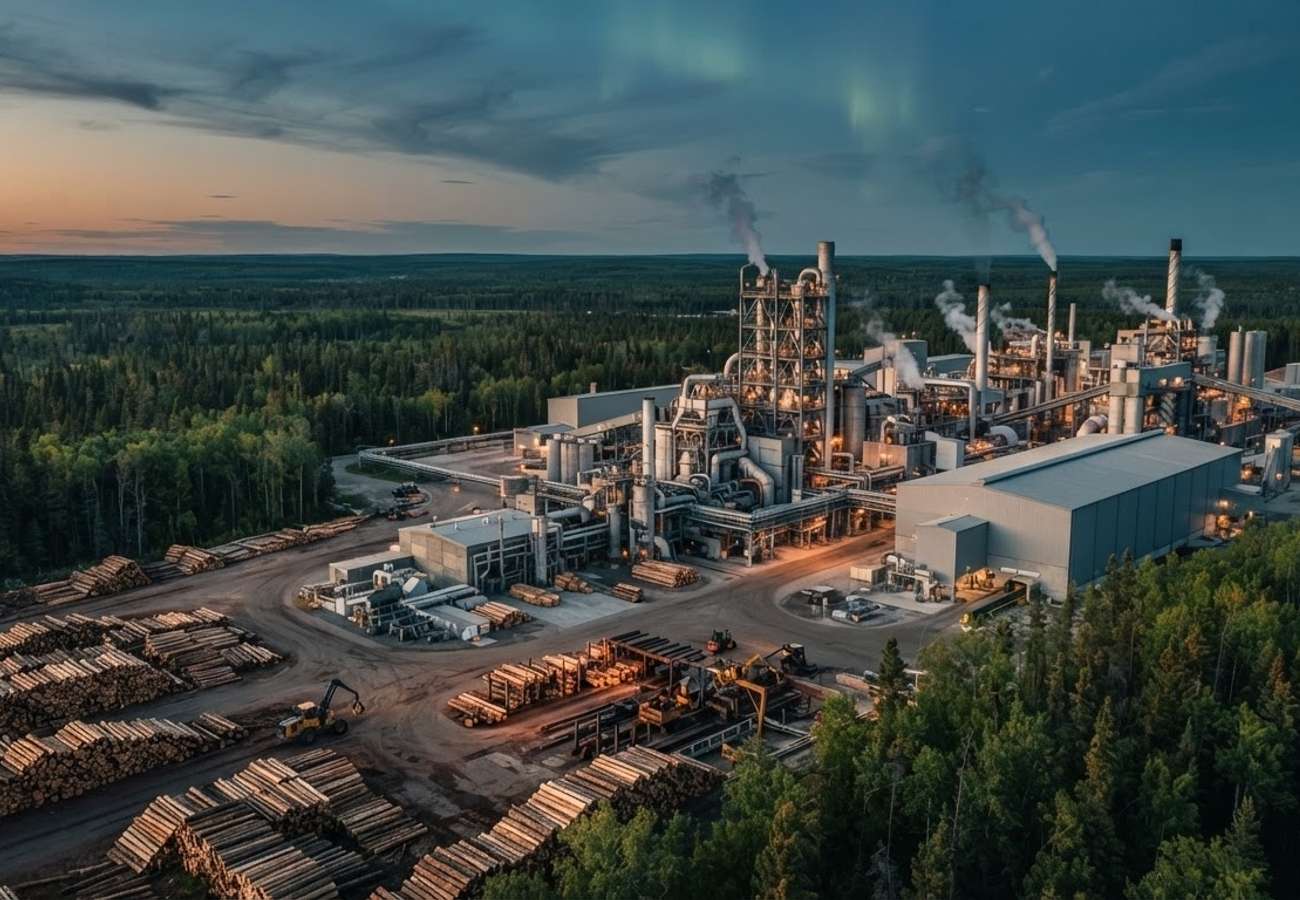
Image generated by AI
Canada is deploying a massive C$7.5 billion financial shield to protect domestic industries and workers from the volatility of US tariffs. At the center of this strategy is a C$20 million federal injection into Mercer Peace River Pulp Ltd, aimed at transforming a regional economic anchor into a high-efficiency, low-emission powerhouse.
Strategic Intervention in Alberta's Forestry Sector
On August 26, 2026, the Canadian government announced a C$20 million investment in Mercer Peace River Pulp Ltd. This move is not a mere subsidy but a targeted effort to modernize production in northern Alberta as the forestry industry grapples with escalating American trade barriers.
The mill, which has been operational since 1990, serves as a critical hub for the regional economy. While it directly employs approximately 360 people, its influence extends far deeper into the supply chain. An estimated 3,000 jobs across Alberta—including regional sawmills and forest operators—depend on the mill's continued viability.
By prioritizing modernization over short-term compensation, Ottawa is attempting to decouple the facility's success from the unpredictability of cross-border trade. The goal is to ensure that the forestry-dependent communities of northern Alberta remain resilient regardless of US trade policy.
Technical Upgrades and Environmental Pivot
The C$20 million funding is earmarked for specific physical and operational overhauls designed to slash production costs and increase output. The investment focuses on:
- Infrastructure Overhaul: Reconstruction of pulp-machine rolls and upgrades to heavy black liquor piping.
- Efficiency Gains: Improvements to the recovery boiler and lime kiln to lower operational expenses.
- Market Flexibility: Transitioning to a more commercially viable mix of hardwood and softwood pulp, allowing the mill to pivot based on global demand.
Beyond immediate productivity, the federal government is positioning the facility for a green transition. The upgrades prepare the mill for future retrofits in carbon-capture technology and innovative energy production. This shift aims to create new revenue streams beyond traditional pulp, transforming a trade-vulnerable asset into a diversified industrial leader.
The Macroeconomic Shift: Canada vs. US Tariffs
For decades, Canadian forestry relied on integrated North American supply chains. The introduction of new US tariffs has fundamentally altered the cost structures these businesses were built upon.
Ottawa's response signals a shift in trade diplomacy. Rather than relying solely on retaliatory tariffs, Canada is using capital investment to solve underlying competitiveness issues. The logic is straightforward: if a facility can produce more efficiently and with lower emissions, it can maintain its market position even when traditional US market access is restricted.
Global Trends in State-Backed Industrial Defense
Canada is not alone in this approach. A similar pattern of state-led industrial protection is emerging in Brazil and the UK, where governments are using state financing to buffer exporters against geopolitical instability.
Brazil offers the most direct parallel. On July 22, 2026, Brazil entered the third phase of Plano Basil Soberano (under Law No. 15,473/2026 and Provisional Measure No. 1,379/2026). This program expands access to financing via the development bank, BNDES, specifically for exporters in sectors such as planted forests, agriculture, and mineral resources.
Like Canada's intervention in Alberta, Brazil's BNDES Basil Soberano Competitividade is designed to prevent temporary trade barriers from causing permanent industrial collapse.
Mercer Peace River Investment Breakdown
| Canada Measure | Figure | Strategic Significance |
|---|---|---|
| Federal Investment | C$20 million | Modernization of northern Alberta pulp facility |
| Operational History | Since 1990 | Long-term regional economic stability |
| Direct Employment | 360 staff | Immediate workforce protection |
| Supply-Chain Impact | ~3,000 jobs | Broad regional economic dependence |
| Primary Sector | Pulp and Forestry | High exposure to US-Canada trade volatility |
| Technical Focus | Piping, rolls, kiln, boiler | Reduction of structural production costs |
| Product Shift | Hardwood/Softwood mix | Increased global market profitability |
| Eco-Impact | Lower emissions | Integration of decarbonization goals |
| Future Tech | Carbon capture/Energy | Long-term revenue diversification |
Key Takeaways
- Massive Federal Support: Canada has committed C$7.5 billion to protect industries impacted by US tariffs.
- Regional Stability: The C$20 million investment in Mercer Peace River protects roughly 3,360 direct and indirect jobs in Alberta.
- Efficiency over Subsidies: The funding targets structural cost reductions through machinery upgrades rather than simple revenue replacement.
- Global Alignment: Canada's strategy mirrors Brazil's Plano Basil Soberano, highlighting a global trend toward state-financed industrial resilience.
FAQ
Why is the Canadian government investing in a private pulp mill? The government views Mercer Peace River as an "economic anchor." Because the mill supports 3,000 indirect jobs in the forestry supply chain, its failure would cause a systemic economic ripple effect across northern Alberta.
How does this investment help with US tariffs? By lowering the cost of production and improving efficiency, the mill can remain profitable even if tariffs make its products more expensive for US buyers.
What is the environmental angle of this funding? The investment lowers current emissions and prepares the facility for future carbon-capture and clean energy technology, aligning industrial survival with climate goals.
The shift toward state-backed industrial modernization suggests a new era of trade where domestic efficiency is the primary weapon against international tariffs.
Related Travel Guides
Disclaimer
This article is for informational and educational purposes only. It does not constitute legal, financial, or professional advice. While we strive to provide accurate and up-to-date information, travel policies, regulations, and conditions change rapidly. Always verify information with official sources before making travel decisions. Nomad Lawyer makes no representations about the accuracy, reliability, completeness, or suitability of the information provided. Readers should consult qualified professionals for advice specific to their circumstances. The views expressed in this article are those of the author and do not necessarily reflect the views of Nomad Lawyer.
Preeti Gunjan
Contributor & Community Manager
A passionate traveller and community builder. Preeti helps grow the Nomad Lawyer community, fostering engagement and bringing the reader experience to life.
Learn more about our team →