
Travel Easter Chaos: Cambridge Rail Network Faces Total Disruption in 2026
Easter 2026 rail chaos hits Cambridge as Network Rail launches decade's largest spring engineering project. Thousands face severe travel disruptions across Cambridgeshire routes.

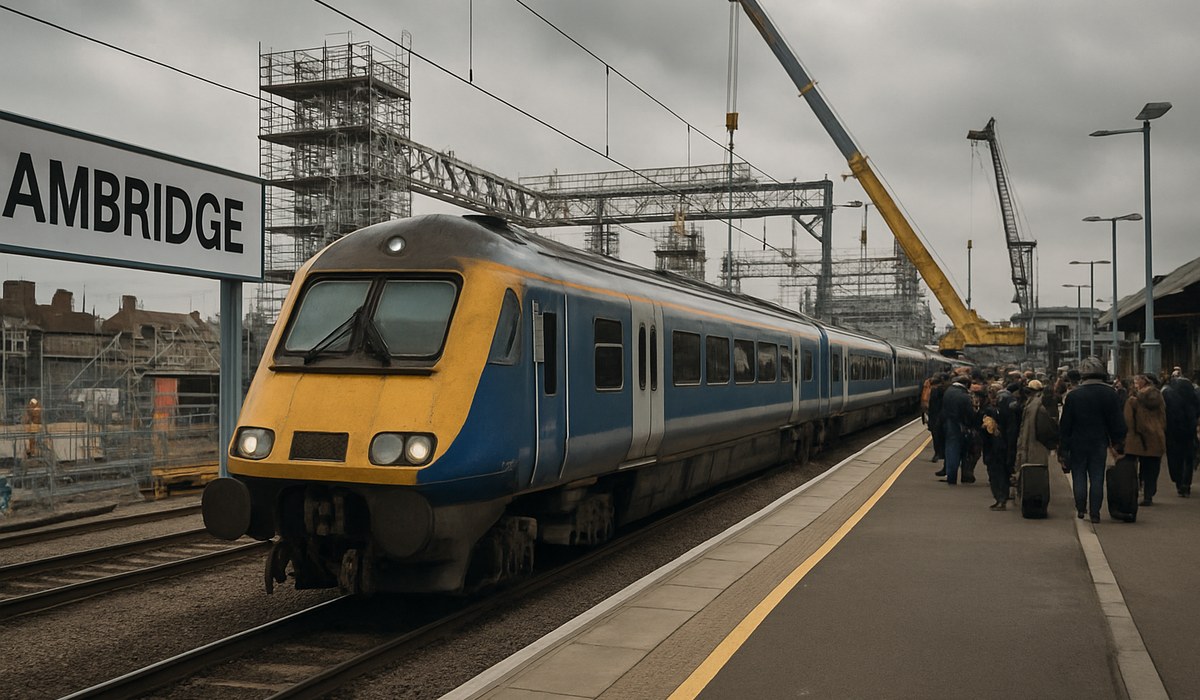
Image generated by AI
If you're planning an Easter getaway from Cambridge in 2026, your train tickets might be worth less than the paper they're printed on. Major engineering works are set to paralyze rail services during one of the busiest travel weekends of the year. Network Rail has confirmed its largest spring infrastructure upgrade in a decade will shut down critical routes across Cambridgeshire throughout the Easter holiday period.
The timing couldn't be worse. Easter weekend traditionally sees more than 4.5 million rail journeys across the UK, with Cambridge serving as a crucial hub connecting London to East Anglia and beyond. This year's disruption will force tens of thousands of travelers to scramble for alternative arrangements just days before departure.
Quick Summary • Network Rail's Easter 2026 engineering program will close multiple Cambridge rail corridors for up to four consecutive days • Replacement bus services will operate but journey times may triple for some routes • International travelers connecting through London will face significant delays reaching Eurostar terminals • Rail operators are offering advance rebooking with waived change fees for tickets purchased before March 15
What's Happening: The Scope of Easter 2026 Rail Disruptions in Cambridge
Travel Easter chaos begins on Good Friday, April 3rd, when engineers commence track modernization work spanning 28 miles of line through Cambridgeshire. According to Network Rail's scheduled engineering works calendar, the project encompasses signal upgrades, platform extensions at three stations, and complete track replacement on aging Victorian-era infrastructure.
The work represents a £120 million investment in regional connectivity, but its short-term impact will ripple across domestic and international travel networks. Cambridge station alone handles 14.2 million passengers annually, making it the seventh-busiest station outside London. During Easter 2026, that traffic will face unprecedented rerouting challenges.
Rail industry analyst Marcus Pemberton told reporters the scale exceeds anything attempted during a major holiday period. "They're essentially rebuilding critical junctions while passenger demand peaks," he explained. "It's necessary work, but the disruption window shows poor coordination with the travel calendar."
The engineering blocks will remain in place through Easter Monday, April 6th. Some peripheral works may extend into the following Tuesday, creating a five-day nightmare for business travelers returning from long-weekend breaks.
Which Routes and Services Are Affected
Every mainline service touching Cambridge will experience significant alterations. The London King's Cross to Cambridge route—the region's busiest commuter and tourist corridor—will operate at 40% normal capacity with journey times extended by an average of 55 minutes.
Greater Anglia services connecting Cambridge to Stansted Airport face complete suspension on three of the four disruption days. This creates particular problems for international travelers, as Stansted serves 28 million passengers yearly with extensive European connections. Replacement coaches will operate, but travelers should budget an additional two hours for airport transfers.
Cross-country services from Cambridge toward Birmingham and the North will terminate at Peterborough. Passengers continuing west or north must switch to replacement buses for a 45-minute segment before rejoining rail services. This adds complexity for families traveling with luggage and young children during the holiday period.
Local services within Cambridgeshire face the most severe impact. The Cambridge to Ely line shuts down completely, as does the branch to Newmarket. Residents of these market towns will rely entirely on road-based alternatives, with replacement buses serving stops every 30 minutes instead of the usual 15-minute rail frequency.
Even routes not directly affected by engineering work will experience knock-on delays. With Cambridge's switching capacity reduced, services from East Anglia toward London may reroute through longer alternative paths, adding 20-30 minutes to standard journey times.
Alternative Travel Options and Workarounds
Travelers planning Easter 2026 trips through Cambridge should immediately explore alternative strategies. The most obvious pivot involves departing before April 3rd or after April 6th, but holiday pricing and accommodation availability make this impractical for many.
For London-bound passengers, National Express coaches offer direct service from Cambridge city center with journey times of approximately 2 hours 15 minutes—comparable to disrupted rail alternatives but at significantly lower fares. Advanced bookings show availability, though seats are filling rapidly as word spreads about the rail chaos.
International travelers heading to continental Europe face particular challenges. Eurostar services from London St Pancras require Cambridge passengers to first reach the capital, and disrupted rail connections make tight international connections risky. Industry experts recommend building in a four-hour buffer between arriving in London and boarding Eurostar departures.
Those with flexible schedules might consider driving to secondary stations outside the engineering zone. Stevenage and Royston both offer frequent London services and have expanded parking facilities. This hybrid approach—driving partway, then completing journeys by rail—reduces stress and maintains reasonable journey times.
Flight alternatives exist but carry their own 2026 complications. As we've covered regarding fuel export restrictions impacting airlines, aviation faces supply chain pressures that may affect flight reliability and pricing during peak travel periods.
Business travelers caught in the disruption should note that corporate travel priorities have evolved. Recent analysis shows companies now prioritize trip value over cost, meaning employers may authorize premium alternatives like private car services or last-minute flight upgrades rather than accept productivity losses from extended rail journeys.
Cycling advocates point out that Cambridge's extensive cycle network connects to nearby towns served by unaffected rail lines. Weather-permitting, determined travelers could cycle 25 miles to Ely or 15 miles to Royston, then board trains operating normally. This unconventional approach has gained traction among younger, adventure-minded travelers on social media platforms.
How to Protect Your Easter Travel Plans
Travelers holding advance-purchase tickets for Easter 2026 journeys through Cambridge possess specific consumer rights. Under National Rail Conditions of Travel, passengers may claim full refunds when engineering works substantially alter advertised services—even on non-refundable ticket types.
Greater Anglia and other operators serving Cambridge have proactively announced fee-waived rebooking for tickets purchased before March 15th. This policy allows free amendments to travel dates outside the disruption window, though seat availability on alternative dates cannot be guaranteed during the busy spring season.
Travel insurance takes on heightened importance. Standard policies rarely cover engineering work disruptions since operators provide alternative transport. However, premium "cancel for any reason" policies would allow complete trip abandonment with partial reimbursement. Read policy documents carefully—coverage thresholds vary dramatically between providers.
Hotels and accommodation providers in Cambridge report receiving cancellation inquiries as news of the rail chaos spreads. Many have relaxed standard cancellation deadlines for Easter bookings, recognizing that transport uncertainty affects through no fault of guests. Contact properties directly rather than through third-party booking platforms for maximum flexibility.
For travelers determined to proceed despite disruptions, advance preparation proves essential. Download offline maps showing replacement bus routes and stops. Pack lighter than usual, as multiple transfers increase the burden of heavy luggage. Charge devices fully and carry battery packs—extended journeys drain phones used for navigation and communication.
Consider timing strategies within the disruption window. Engineering work typically pauses between 10 PM and 6 AM, when short windows of normal service may operate. Late-night or pre-dawn departures could avoid the worst congestion on replacement transport, though this requires careful schedule verification.
Those with truly inflexible Easter commitments might explore whether the complexity justifies alternative destinations altogether. Our coverage of weekend escape options compared highlights how shifting travel plans to different locations sometimes proves simpler than navigating major disruptions.
FAQ: Cambridge Easter 2026 Rail Engineering Works
Q: Will any Cambridge train services operate normally during Easter 2026?
A: Very limited services will operate at significantly reduced capacity. Most routes face either complete closure or severe frequency reductions with extended journey times. Replacement buses will handle the majority of passenger movement through the engineering zone.
Q: Can I get compensation for delays caused by planned engineering work?
A: Compensation schemes typically exclude planned engineering work since operators provide alternative transport. However, you may qualify for full refunds if service changes are substantial, even on advance tickets normally classified as non-refundable. Contact your ticket issuer directly.
Q: How much extra time should I allow for journeys through Cambridge this Easter?
A: Budget a minimum of two additional hours for any journey touching the Cambridge area. Airport connections require even larger buffers—add three to four hours to ensure you don't miss flights due to replacement bus delays or overcrowding.
Q: Are replacement buses wheelchair accessible and suitable for large luggage?
A: Rail replacement services must meet accessibility standards, including wheelchair access. However, luggage capacity on buses is significantly less than trains. Passengers with multiple large bags should expect potential difficulty, especially during peak periods when buses fill to capacity.
Q: Will this disruption affect Eurostar connections from Cambridge to Paris or Brussels?
A: Indirectly, yes. Cambridge passengers must first reach London to access Eurostar services, and disrupted regional rail makes these connections much more precarious. Anyone with Eurostar bookings departing London should allow four hours from Cambridge instead of the usual 90 minutes to avoid missing international trains.
Related Articles:
Disclaimer
This article is for informational and educational purposes only. It does not constitute legal, financial, or professional advice. While we strive to provide accurate and up-to-date information, travel policies, regulations, and conditions change rapidly. Always verify information with official sources before making travel decisions. Nomad Lawyer makes no representations about the accuracy, reliability, completeness, or suitability of the information provided. Readers should consult qualified professionals for advice specific to their circumstances. The views expressed in this article are those of the author and do not necessarily reflect the views of Nomad Lawyer.
Raushan Kumar
Founder & Lead Developer
Full-stack developer with 11+ years of experience and a passionate traveller. Raushan built Nomad Lawyer from the ground up with a vision to create the best travel and law experience on the web.
Learn more about our team →