Cambodia Expands Screen Tourism & Athletic Events in Siem Reap: 2026 Angkor Travel & Economic Guide

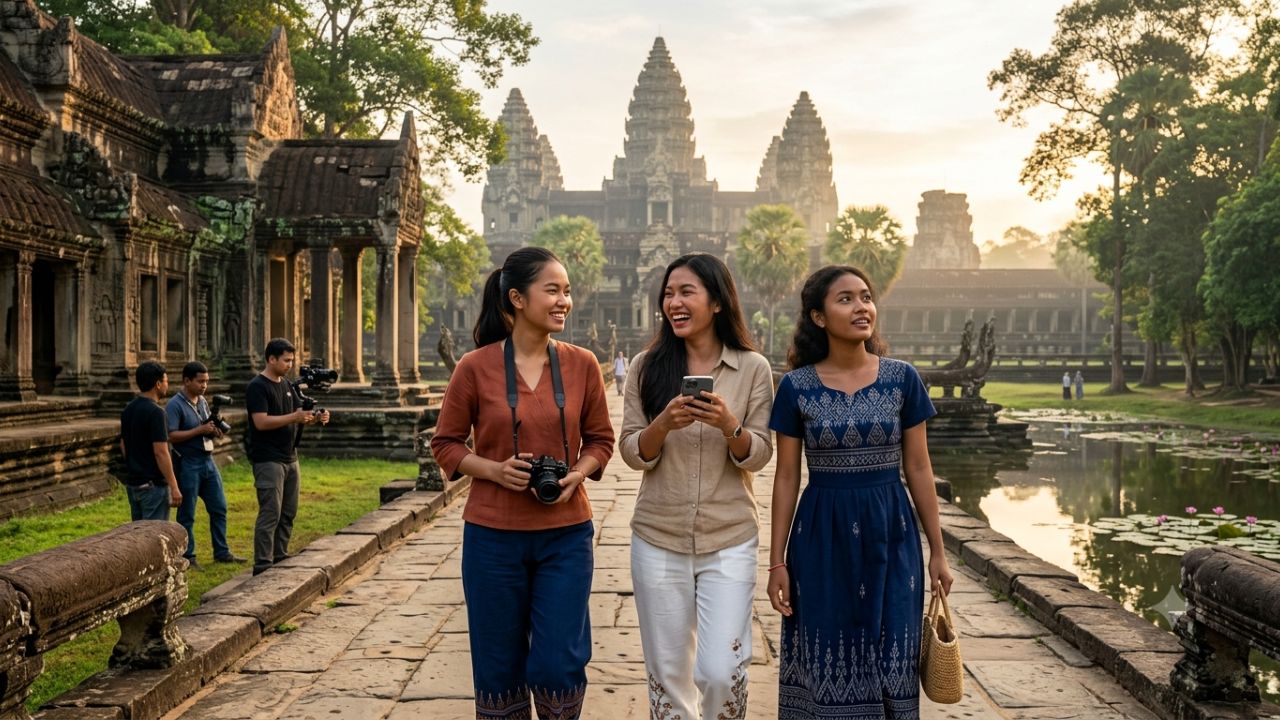
Image generated by AI
Cambodia is leveraging screen tourism and high-profile international cultural events to drive visitor arrivals across Siem Reap, positioning ancient monuments like Angkor Wat as global cinematic backdrops. Supported by a $1.1 billion international airport expansion and upcoming mega-events like the Equinox Angkor Run, state authorities are deploying multi-sector strategies to boost international travel spending.
[SIEM REAP, Cambodia] — A high-level creative delegation from Hong Kong—including actors Kenny Wong, Jayden Cheung, and Yeung Nga Man—arrived in Siem Reap on September 7, 2026, for the Hong Kong Film Gala Presentation, underscoring Cambodia’s expanding screen tourism strategy. Accompanied by Tourism Minister Huot Hak, the delegation toured the UNESCO World Heritage sanctuary of Angkor Wat and surrounding monuments, highlighting state initiatives to attract foreign film productions and international cultural travelers to Northern Cambodia.
State economic data indicates that international tourism generated $3.878 billion in revenue in 2025, contributing 9.8% to Cambodia's gross domestic product. Government planners are deploying film partnerships and athletic tourism to offset a 46% year-on-year drop in foreign arrivals recorded during the first seven months of 2026, when total international visits stood at 1.99 million.
Creative Delegations Showcase Siem Reap's Heritage to Global Film Markets
The visit by Hong Kong film personalities forms part of a broader government effort to promote Angkor Archaeological Park as an international filming location and cultural travel destination. Tourism Minister Huot Hak personally accompanied the delegation alongside provincial tourism officials, guiding the visitors through ancient stone monuments and traditional Khmer culinary showcases.
Cambodia maintains an established legacy of hosting international cultural figures, including high-profile icons such as Angelina Jolie, Jackie Chan, Rain, and Ed Sheeran. State representatives emphasize that hosting creative delegations establishes an organic promotional platform reaching global audiences who might not otherwise consider visiting Southeast Asia.
| Tourism & Macroeconomic Metric | Official Cambodian Government Benchmark |
|---|---|
| 2025 Annual Tourism Revenue | $3.878 Billion USD (9.8% contribution to national GDP) |
| National Tourism Employment | Over 420,000 jobs nationwide |
| Licensed Guides in Siem Reap | 6,600+ registered tour guides |
| H1 2026 International Arrivals | 1.99 million visits (-46% YoY decline during first 7 months) |
| 2028 Long-Term Arrival Target | 7.0 million annual international visitors |
| 2025 Domestic Travel Baseline | 25.16 million internal trips (+11.7% YoY increase) |
| Accommodation Base | 95,500 hotel rooms across 2,300 restaurants |
Screen Tourism Multiplier Effect: Daily Expenditures and Operating Budgets
Industry research confirms that film-inspired travelers display significantly higher daily spending habits than standard overland tourists. In Siem Reap, film-inspired international vacationers spend an average of $120 to $180 per day, compared to $70 to $90 daily among traditional budget travelers. Furthermore, cinematic destination marketing extends average stay durations from 2.5 days to 4.5 days, driving sustained revenue across regional hotels and dining establishments.
| Traveler / Production Category | Daily Expenditure & Financial Metric | Average Stay Duration |
|---|---|---|
| Film-Inspired International Tourist | $120 to $180 USD per day | 4.5 days average stay |
| Traditional Budget Traveler | $70 to $90 USD per day | 2.5 days average stay |
| Foreign Film Production Spend | 40% of operating budget retained locally | Multi-week shoot duration |
| Equinox Run Direct Spending | $2.5 million USD direct economic impact | 3 to 4 day event window |
Foreign media projects yield direct economic benefits during production. Major film shoots retain up to 40% of their total operating budgets within Cambodia through equipment rentals, catering services, local talent hiring, and ground logistics management, generating millions of dollars in earned media exposure long after a film's initial release.
Transport Logistics and $1.1 Billion Aviation Expansion at SAI Airport
Connecting global film crews and vacationers to Siem Reap relies on modern aviation and ground transportation infrastructure. The state-of-the-art Siem Reap-Angkor International Airport (SAI), developed through a $1.1 billion capital investment, currently manages up to 7 million passengers annually, with structured expansion phases designed to reach 12 million annual passengers by 2030.
| Transport Infrastructure Parameter | Operational Capacity & Specification |
|---|---|
| SAI Airport Capital Investment | $1.1 Billion USD |
| Current Annual Terminal Capacity | 7 million passengers per year |
| 2030 Terminal Expansion Target | 12 million passengers per year |
| Direct International Flight Links | Hong Kong, Bangkok, Singapore, Kuala Lumpur |
| Municipal Electric Transit Fleet | 60,000+ registered electric tuk-tuks |
Direct flight routes connect SAI Airport with regional creative and financial hubs including Hong Kong, Bangkok, Singapore, and Kuala Lumpur, simplifying equipment transit for production teams. On the ground, dedicated transport corridors connect the aviation hub to the Angkor Archaeological Park, while municipal transit initiatives have converted over 60,000 registered tuk-tuks toward electric power, reducing emissions around ancient monuments.
Preservation Rules and APSARA Authority Environmental Guidelines
Integrating commercial filming into delicate historical environments requires strict environmental oversight. The APSARA National Authority enforces access protocols across the 401-square-kilometer Angkor Archaeological Park, strictly regulating daily entry into sensitive structures such as the central towers of Angkor Wat to prevent structural damage.
Production crews must utilize clean energy technologies within protected zones, operating renewable energy generators and battery storage units to eliminate noise and carbon emissions. Furthermore, a fixed percentage of commercial film permit fees and monument ticket sales is directly allocated toward ongoing structural restoration, environmental monitoring, and archaeological research.
Diversifying Attractions Across Secondary Ecotourism Corridors
To prevent overcrowding at central monuments, national tourism strategies actively promote secondary regional destinations. Travel agencies are encouraged to route visitors toward Phnom Kulen National Park, the carved riverbeds of Kbal Spean, and the Tonle Sap Biosphere Reserve.
| Secondary Ecotourism Destination | Primary Attraction & Community Enterprise |
|---|---|
| Phnom Kulen National Park | Sacred mountain waterfalls & ancient ruin trails |
| Kbal Spean | Carved sandstone riverbed & forest hiking routes |
| Tonle Sap Biosphere Reserve | Floating village eco-lodges & bird sanctuaries |
| Community Tourism Sites | 129 registered community initiatives nationwide |
Cambodia supports 129 officially recognized community-based tourism initiatives that funnel visitor spending directly to rural households, agricultural cooperatives, and local artisan workshops. Sustainable eco-lodges along the Tonle Sap basin fund conservation efforts while state programs have provided vocational training vouchers to over 3,500 informal tourism workers in Siem Reap.
Sports Tourism Revenue Catalyst: The 2026 Equinox Angkor Run
Complementing screen tourism, major athletic events serve as major drivers for off-peak travel. Siem Reap is preparing to host the annual Equinox Angkor Run on September 21, 2026, with organizers expecting between 5,000 and 10,000 participants from around the world.
Commencing at dawn from the historic Preah Reach Damnak Stone Bridge, the marathon course winds directly through the Angkor Archaeological Park. The event is projected to inject over $2.5 million in direct spending into local hotels, transport providers, and restaurants, raising average hotel occupancy from shoulder-season baselines of 35% to over 80% during the race period.
Strategic Impact Analysis & 2028 Tourism Outlook
Cambodia’s strategy of combining film tourism, major athletic gatherings, and airport infrastructure expansion establishes a resilient travel model. By diversifying destination promotion beyond traditional temple tours, state planners aim to reach 7 million annual international arrivals by 2028, supported by a strong domestic travel baseline that generated 25.16 million internal trips in 2025.
Upgraded digital safety networks—including 24-hour multilingual tourist police teams and dedicated digital assistance portals—further enhance traveler confidence, securing long-term economic growth across Southeast Asia.
Why This Matters: Experienced Perspective for Travelers and Industry Leaders
For the traveler, Cambodia's screen tourism initiatives mean richer, story-driven itineraries that combine iconic movie backdrops at Angkor Wat with eco-tours across Phnom Kulen and Tonle Sap. Direct flight connections via the $1.1 billion SAI Airport and electric tuk-tuk transit make exploring Siem Reap smooth and environmentally sustainable.
For travel agencies and film production houses, Cambodia offers a supportive environment backed by clear APSARA filming guidelines, 40% local production budget retention, and strong GSA flight connectivity. Combining cinematic marketing with major events like the Equinox Angkor Run ensures steady year-round visitor demand and high daily spending.
Frequently Asked Questions
How does screen tourism benefit Cambodia's travel economy?
Film-inspired travelers spend significantly more ($120–$180 per day vs $70–$90 for budget travelers) and stay longer (4.5 days vs 2.5 days). Additionally, foreign film shoots retain up to 40% of their operating budgets locally.
What is the capacity of the new Siem Reap-Angkor International Airport (SAI)?
The $1.1 billion SAI Airport currently handles up to 7 million passengers annually, with development phases designed to expand total capacity to 12 million passengers per year by 2030.
When is the Equinox Angkor Run, and what is its economic impact?
The Equinox Angkor Run takes place on September 21, 2026, starting at Preah Reach Damnak Stone Bridge. It is expected to attract 5,000 to 10,000 participants, generating $2.5 million in direct spending and boosting hotel occupancy from 35% to 80%+.
Related Travel Guides
This article is for informational purposes. Flight routes, passenger regulations, visa rules, and transit advisories are subject to change by airlines and aviation authorities. Readers are advised to verify schedules and travel documentation with relevant carriers and border agencies before departure.
Related Stories

Cambodia Tourism Analysis 2026: Visitor Arrivals Hit 2.46 Million Amid Strategic Pivot to Wellness