
Busan Teams Up With Incheon, Daejeon and More as K-culture Destinations Across Korea Beckon Global Travellers
Busan Teams Up With Incheon, Daejeon and More as K-culture Destinations Across Korea Beckon Global Travellers

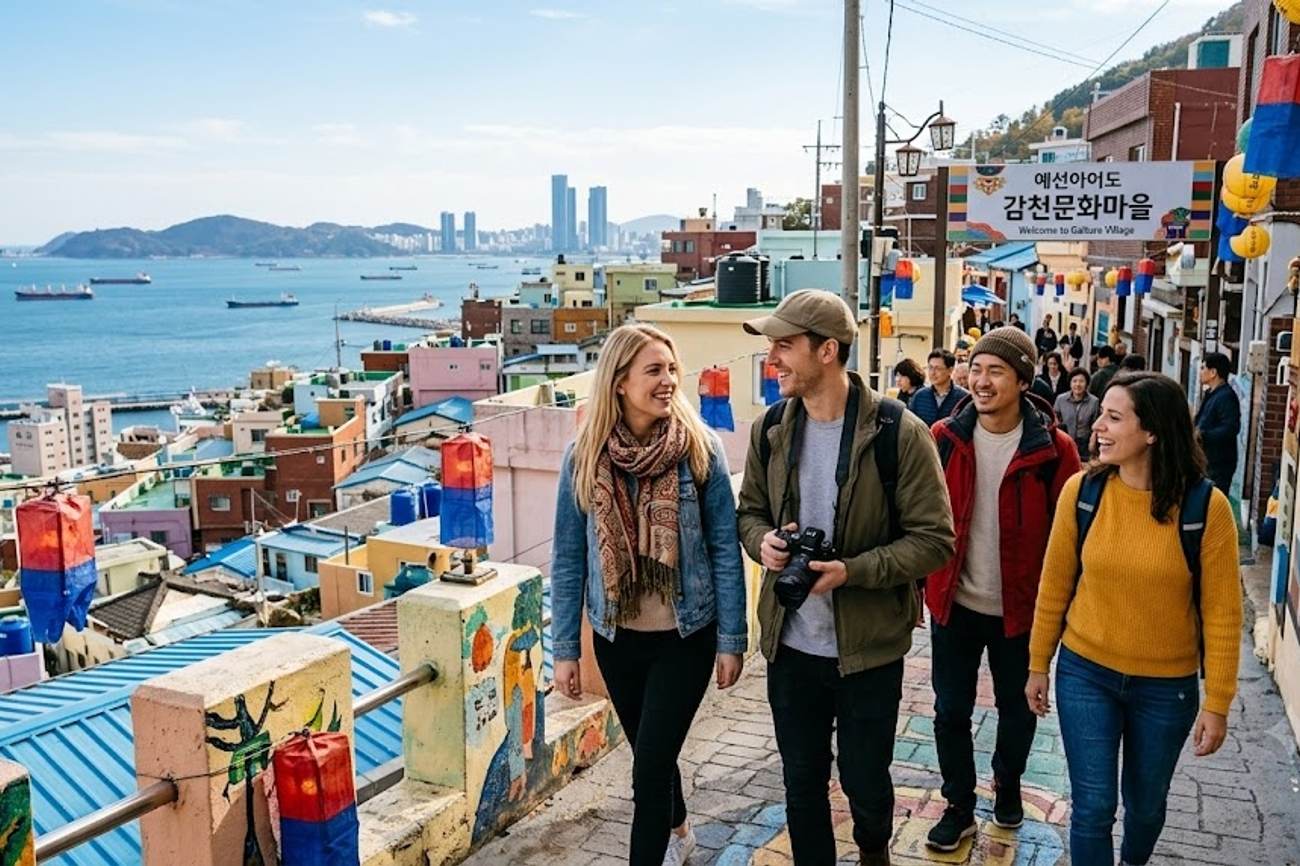
Image generated by AI
[Seoul, May 2026] — South Korea is aggressively pivoting its national tourism strategy to redirect millions of international arrivals away from the capital and toward regional hubs like Busan, Gyeongju, and Daejeon. This strategic shift aims to capitalize on the global "K-culture" phenomenon by linking music, fashion, and cinema with local heritage and regional gastronomy.
The initiative comes as the country experiences a massive surge in inbound travel. According to data from the Ministry of Justice, foreign entries climbed from 967,003 in 2021 to a record-breaking 19,584,714 in 2025. To manage this volume and distribute economic benefits, the Ministry of Culture, Sports and Tourism is leveraging high-profile events, such as the 2025 APEC Summit in Gyeongju, to establish these regional cities as primary destinations rather than secondary side-trips.
The Regional Expansion Strategy
The South Korean government is attempting to redefine the "K-culture" brand. While Seoul remains the epicenter of K-pop and beauty trends, the new push emphasizes that the roots of these trends—food, history, and local lifestyles—are found in the provinces. By integrating regional festivals, film locations, and heritage sites into a cohesive national travel map, officials hope to increase the average length of stay for international visitors.
The recovery of the tourism sector has been steep and consistent. In 2022, the country saw 3,198,017 inbound tourists, a 230.7% increase from the previous year. By 2023, that number jumped to 11,031,665 (+245%), and by 2024, arrivals reached 16,369,629. This 2024 figure represents 93.5% of the pre-pandemic levels seen in 2019, signaling a near-total recovery of the international market.
High-Growth Regional Hubs
The shift toward regional travel is already producing measurable economic results, particularly in coastal and historical centers.
Busan: The Coastal Powerhouse Busan has emerged as the most accessible alternative to Seoul, blending urban luxury with beach culture. The city is seeing a rapid acceleration in foreign interest:
- Visitor Volume: From January to October 2025, Busan recorded 3,019,164 foreign visitors, a 23% increase over the 2,451,057 visitors in the same period of 2024.
- Spending: Foreign tourist expenditure in Busan hit KRW 859.2 billion through October 2025.
- Market Share: Between January and April 2025, the city welcomed 1,061,284 international guests (up from 858,656 in 2024), with the largest shares coming from Taiwan, China, and Japan.
- Early 2026 Trends: Busan Metropolitan City reported 1,023,946 foreign visitors in the first quarter of 2026 alone.
Gyeongju: The Historical Anchor Gyeongju is repositioning itself as the "museum without walls," blending Silla-era archaeology with modern "Instagrammable" cafes.
- General Traffic: The Korea Tourism Data Lab noted a steady stream of visitors, with 45.08 million in 2022, 47.54 million in 2023, and 47.09 million in 2024.
- International Growth: Between January and May 2026, foreign visitors reached approximately 569,000, an 18.3% increase over the same period in 2025.
- Economic Impact: Foreign spending in the city rose by 34.1% to KRW 11.1 billion during that same window.
- Infrastructure: In preparation for the 2025 APEC Summit, the city established 150 "World Restaurants" to cater to diverse international palates.
What This Means for Travelers
For the modern nomad or tourist, the "Seoul-only" itinerary is becoming obsolete. The South Korean government is making it significantly easier to navigate the country's interior.
Logistics and Accessibility Travelers can now expect better English-language support and diverse dining options outside the capital. The introduction of the "World Restaurants" in Gyeongju is a prime example of the government removing friction for non-Korean speakers and diners.
Diversified Experiences Instead of crowded Seoul districts, visitors are encouraged to seek:
- Busan: High-energy coastal vibes in Haeundae, traditional seafood at Jagalchi Market, and artistic hillside walks in Gamcheon Culture Village.
- Gyeongju: A mix of ancient sites like Bulguksa Temple and Seokguram Grotto paired with the trendy boutiques and cafes of Hwangridan-gil.
Budgeting and Timing With the surge in regional tourism, travelers should anticipate higher hotel occupancy in Busan and Gyeongju during peak festival seasons (such as the Busan International Film Festival) and major diplomatic events like the APEC Summit.
The Road to 2026 and Beyond
The South Korean government is not slowing down. The Korea Tourism Organization (KTO) continues to refine its data collection through the Korea Tourism Data Lab to track visitor movements in real-time. This data-driven approach allows the government to adjust infrastructure—such as transport links and hotel zoning—based on where international tourists are actually spending their time.
The focus for 2026 is the expansion of "nocturnal tourism" and experiential stays. Busan is leading this charge by expanding its night-tour offerings and cruise tourism, aiming to turn short-stay visitors into long-term explorers. The goal is to transform Korea from a "city-break" destination into a multi-region exploration journey.
FAQ: Regional Korea Travel 2026
Is it easy to travel from Seoul to Busan or Gyeongju? Yes. High-speed rail (KTX) connects Seoul to Busan and Gyeongju in a few hours. The government is actively improving regional transport links to encourage tourists to leave the capital.
What are the best areas to stay in Busan for first-timers? Haeundae is best for beaches and luxury hotels; Seomyeon is ideal for central transport connections; and Nampo-dong is recommended for those seeking traditional markets and heritage sites.
Do I need to speak Korean to visit regional cities like Gyeongju? While English is more common in Seoul, regional cities are catching up. Gyeongju has specifically added 150 international-friendly restaurants to accommodate global visitors ahead of the 2025 APEC Summit.
When is the best time to visit Busan for culture seekers? Autumn is ideal, particularly during the Busan International Film Festival, which combines the city's cinematic heritage with its modern urban energy.
The era of the Seoul-centric holiday is over; the real Korea is now moving to the provinces.
#BusanTourism2026 #GyeongjuAPEC2025 #KCultureRegional #KoreaTourismOrganization #BusanToSeoul #VisitKorea2026
Related Travel Guides
Disclaimer
This article is for informational and educational purposes only. It does not constitute legal, financial, or professional advice. While we strive to provide accurate and up-to-date information, travel policies, regulations, and conditions change rapidly. Always verify information with official sources before making travel decisions. Nomad Lawyer makes no representations about the accuracy, reliability, completeness, or suitability of the information provided. Readers should consult qualified professionals for advice specific to their circumstances. The views expressed in this article are those of the author and do not necessarily reflect the views of Nomad Lawyer.
Preeti Gunjan
Contributor & Community Manager
A passionate traveller and community builder. Preeti helps grow the Nomad Lawyer community, fostering engagement and bringing the reader experience to life.
Learn more about our team →