Bulgaria Travel Surge 2026: Wizz Air Sofia-Berlin Flights & Cultural City Guide

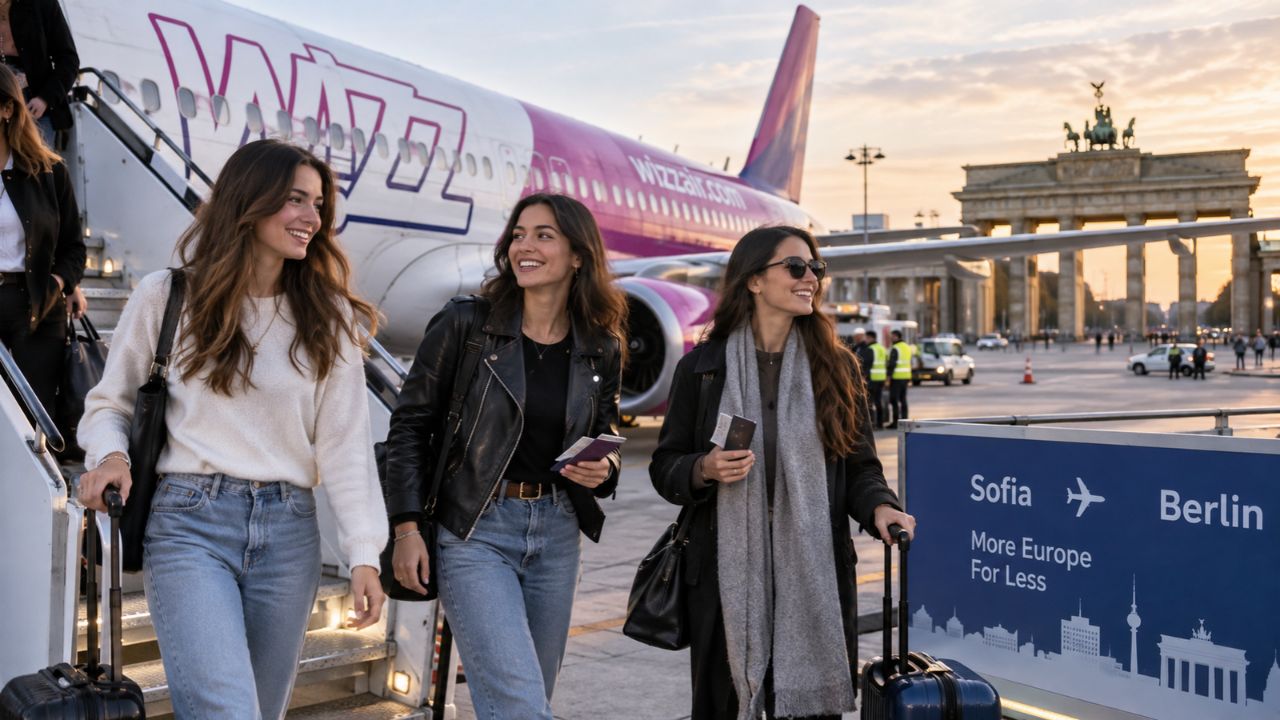
Beneath the central metro station in Sofia lies an entire preserved Roman city complete with octagonal paved streets and underfloor heating systems, yet travelers can now cross from these ancient Thracian crossroads to Berlin's Museum Island in just over two hours for less than the cost of a train ride. On September 20, low-cost carrier Wizz Air officially inaugurated a new year-round flight route connecting Sofia Airport directly with Berlin. Operating four times weekly every Monday, Wednesday, Friday, and Sunday with one-way introductory fares starting at €31.99, the new route establishes an affordable air corridor linking southeastern Europe with Germany's cultural capital.
The launch underscores Bulgaria's expanding status as a strategic aviation hub in the Balkans. Wizz Air has operated in Bulgaria for 21 years, transporting more than 34 million passengers into and out of the country since its market entry and scheduling more than 15,000 flights in Bulgaria during the current year alone. Backed by a modern fleet of 273 Airbus A320 and A321 aircraft that transported 68.6 million passengers in 2025, the London Stock Exchange-listed carrier (WIZZ) aims to scale annual global traffic to 80 million passengers by the close of 2026 while expanding holiday packages through its WIZZ Holidays platform.
| Route Metric / Feature | Operational Specification | Strategic Significance |
|---|---|---|
| Route Sector | Sofia Airport (SOF) to Berlin BER | Direct Capital-to-Capital Link |
| Service Launch Date | September 20, 2026 | Year-Round Scheduled Operations |
| Weekly Flight Frequency | 4x Weekly (Mon, Wed, Fri, Sun) | Weekend & Extended Break Options |
| Starting One-Way Fare | €31.99 (Includes Admin Fee) | Free Cabin Bag (40x30x20 cm) |
| Carrier Operating History | 21 Years in Bulgarian Market | Over 34 Million Inbound/Outbound |
| Annual Bulgarian Volume | 15,000+ Flights in 2026 | Fleet of 273 Airbus A320/A321 |
Bridging Balkan Heritage and Central European Urban Culture
The addition of four weekly frequencies creates seamless bidirectional travel between two of Europe's most architecturally contrasting capitals. For travelers embarking from Germany, Bulgaria Travel presents a destination defined by mountain vistas, ancient Christian and Ottoman architecture, and affordable wellness tourism. Sofia sits immediately below the 2,290-meter peak of Vitosha Mountain, allowing visitors to hike alpine trails in the morning and wander through the Neo-Byzantine gold-domed Alexander Nevsky Cathedral by the afternoon.
Scattered across the city center are active natural mineral springs where locals fill bottles with warm, thermal healing waters right behind the historic Central Mineral Baths.
In the reverse direction, the flight corridor delivers Bulgarian travelers and international backpackers into the heart of Berlin. Managed through Visit Berlin, the German metropolis is an epicenter of twentieth-century geopolitical history and contemporary art. Arriving travelers can explore iconic monuments like the Brandenburg Gate, the glass-domed Reichstag parliament building, the historic Unter den Linden boulevard, and the preserved open-air art gallery along the remaining sections of the Berlin Wall.
A centerpiece of the city is Museum Island (Museumsinsel), a UNESCO World Heritage site situated along the Spree River. This complex houses five internationally renowned institutions—including the Pergamonmuseum, the Neues Museum, and the Alte Nationalgalerie—displaying treasures spanning 6,000 years of art and human civilization.
What Makes Sofia and Berlin Distinct Urban Escapes
What sets Sofia apart from standard European weekend destinations is its layered history of coexisting civilizations. Within a single city square, known locally as the Square of Religious Tolerance, stands the fourth-century Saint George Rotunda, the Banya Bashi Mosque built in 1566, the Sofia Synagogue, and the Roman Catholic Cathedral of Saint Joseph. Beyond historical monuments, Sofia offers thriving pedestrian boulevards like Vitosha Boulevard, lined with outdoor cafes, rakia bars, and craft bakeries serving warm banitsa pastries filled with sirene cheese.
Berlin, by contrast, thrives on spatial decentralization and neighborhood identity. Each Kiez (neighborhood) functions as an independent cultural ecosystem. In Kreuzberg and Friedrichshain, former industrial warehouses host independent art spaces, vinyl record stores, and legendary techno clubs. In Mitte and Prenzlauer Berg, leafy residential courtyards hide boutique coffee roasters, flea markets, and contemporary fashion ateliers. Alexanderplatz anchors the eastern skyline with the 368-meter Berlin TV Tower (Fernsehturm), offering 360-degree views across the sprawling metropolis.
Visitor Insider Tips
- Baggage and Fare Rules: The baseline €31.99 fare includes one under-seat personal item measuring up to 40x30x20 cm. If carrying a standard 10kg rolling overhead bag, purchase WIZZ Priority during initial booking to save up to 40 percent compared to adding baggage at the airport gate.
- Sofia Metro Transit from Airport: Do not take unmetered taxis outside Terminal 2; board the Sofia Metro Line 2 station directly connected to the terminal for a 20-minute ride to Serdica Station in the city center for only 1.60 BGN (less than €0.90).
- Berlin WelcomeCard Advantage: At Berlin Brandenburg Airport (BER), purchase a 72-hour Berlin WelcomeCard (Zones ABC), which grants unlimited rides on S-Bahn, U-Bahn, regional trains, and buses, along with discounts at Museum Island and the Berlin TV Tower.
- Vitosha Mountain Day Trip: From downtown Sofia, take Bus 66 from Vitosha Metro station up to Aleko Hut on Mount Vitosha for panoramic hiking routes and traditional tavern dining at high altitude without renting a car.
- Authentic Dining Windows: In Berlin, avoid overpriced sit-down venues along Unter den Linden; head instead to Markthalle Neun in Kreuzberg on Thursday evenings for international street food or sample traditional Currywurst at Konnopke's Imbiss beneath the Eberswalder Strasse elevated rail line.
Cultural and Environmental Context
As low-cost aviation networks expand across Central and Eastern Europe, environmental performance has become a major operational benchmark. Wizz Air was recognized between 2021 and 2025 as the Most Sustainable Low-Cost Airline by the World Finance Sustainability Awards and ranked second in Cirium's 2026 global airline emissions intensity report. The airline's reliance on fuel-efficient Airbus A321neo aircraft equipped with high-density seating reduces per-passenger carbon output compared to older regional fleets.
At the municipal level, both Sofia and Berlin actively promote sustainable urban mobility. Sofia has expanded its electric trolleybus and tram lines while developing pedestrian greenways connecting the city center to South Park and Borisova Gradina. Berlin's extensive cycling infrastructure and ban on heavy vehicle traffic within historic central quarters protect architectural heritage while reducing urban particulate emissions. Travelers are encouraged to utilize integrated public transport passes and support local culinary markets in both destinations.
FAQ: Traveling Between Sofia and Berlin 2026
What are the flight days and starting prices for the Sofia-Berlin route?
Flights operate four times weekly on Mondays, Wednesdays, Fridays, and Sundays, with one-way introductory fares starting from €31.99.
Which airports are used for this service?
The route operates between Sofia Airport (SOF) Terminal 1/2 and Berlin Brandenburg Airport (BER) with a flight time of approximately two hours and fifteen minutes.
What luggage is included in the basic Wizz Air ticket?
The standard ticket includes one free personal bag (maximum 40x30x20 cm) placed under the seat in front of you. Larger cabin bags require WIZZ Priority.
How do I reach downtown Berlin from BER Airport?
The Airport Express (FEX) and regional trains (RE8, RB23) run directly from the station beneath Terminal 1/2 to Berlin Hauptbahnhof in roughly 30 minutes.
[From the ancient Roman flagstones of Serdica to the creative avenues of Berlin, budget air travel is making Europe's cultural crossroads more accessible than ever.]
Related Travel Guides
This article is for informational purposes. Flight routes, passenger regulations, visa rules, and transit advisories are subject to change by airlines and aviation authorities. Readers are advised to verify schedules and travel documentation with relevant carriers and border agencies before departure.
Related Stories
Thessaloniki Wins Best City Break at Greek Travel Awards 2026 in London as Northern Greece Expands Year-Round Urban Tourism

Bethlehem Pennsylvania Christmas City Guide 2026: Markets, Moravian Heritage, and SteelStacks