
British Holidaymakers Refuse to Cancel Flights Despite EES Border Chaos Gripping European Airports in 2026
New data reveals 64% of British travelers refuse to cancel European holidays despite massive EES biometric border delays. Here's why they're staying the course.

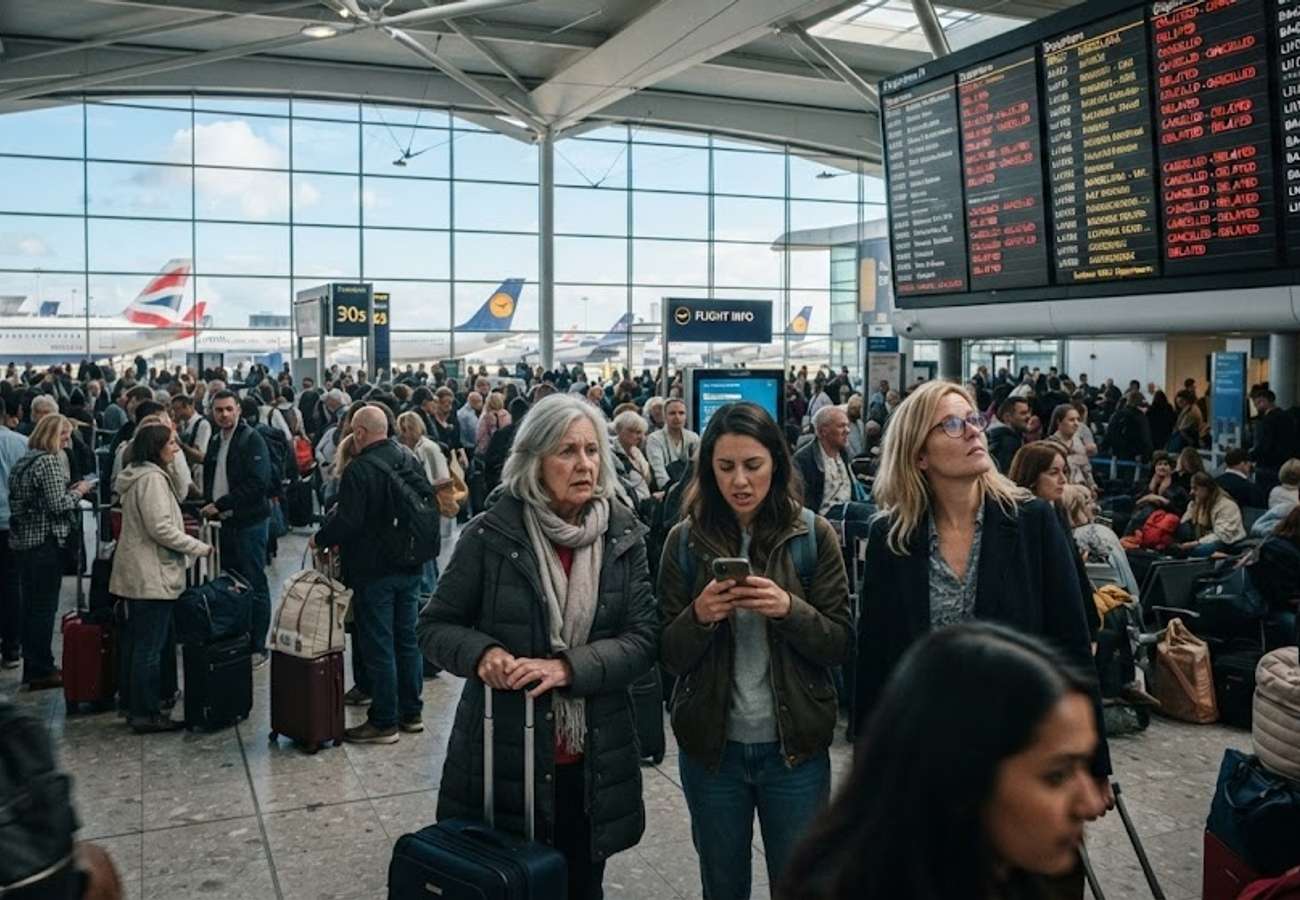
Image generated by AI
The Defiant Traveler: Why Border Chaos Can't Kill the European Summer Dream
Comprehensive consumer data released on June 30, 2026 reveals a striking reality: despite epidemic-level chaos at European border gates, British holidaymakers simply refuse to bail. A stunning 64 per cent of British travelers remain fully committed to their continental summer itineraries, even as mandatory biometric processing systems create bottlenecks that would make anyone reconsider their life choices.
The culprit? The European Union's newly implemented Entry/Exit System (EES), a digital passport processing nightmare that's upended airport operations across the continent. Yet somehow, the British travelling public is treating extended border queues like an inconvenient weather forecast—annoying, sure, but absolutely not a trip-canceller.
The Psychology of Unstoppable Holiday Hunger
According to Travel Weekly's market survey, the answer to this paradox is surprisingly simple: three-quarters of British flyers knew exactly what they were getting into before booking. They'd already read the headlines. They'd already heard the horror stories. And they booked anyway.
Reddit: "I added three hours to my airport arrival time and called it a day. Not missing the Amalfi Coast over some passport scanning." — r/travel
This isn't denial. It's resignation mixed with pragmatism. Rather than pivoting to non-Schengen destinations, travelers are doing something far more human—they're adapting their strategies while maintaining their priorities. The Mediterranean summer holiday isn't just a trip; it's a cultural institution that temporary administrative friction cannot dismantle.
The Real-World Delays: Data That Actually Matters
What's happening at actual European arrival terminals? YouGov polling indicates 36 per cent of British nationals who visited the continent last month encountered slow-moving biometric queues. Another three in ten reported substantially longer wait times at standard passport booths compared to previous journeys.
Here's the kicker: 27 per cent of holidaymakers experienced significantly increased total transit times, while 19 per cent admitted the unfamiliar airport bureaucracy caused noticeable pre-flight anxiety. Yet more than one-third passed through continental customs without experiencing any meaningful delays whatsoever.
The operational reality is wildly inconsistent. Some airports have cracked the code. Others remain total dumpster fires.
How Airlines Are Responding to the Crisis
The aviation industry? Panicking quietly, but panicking nonetheless.
Stefan Schulte, president of ACI Europe, delivered a stark warning that the ongoing EES implementation "keeps major airport chief executives awake at night." These aren't abstract concerns—real infrastructure is buckling under the strain. Regional airports with historic space constraints are finding it nearly impossible to install the physical infrastructure required to process hundreds of non-Schengen passengers simultaneously.
easyJet chief executive Kenton Jarvis has publicly urged European member states to demonstrate greater operational flexibility, pointing to Greece as a proactive example—authorities there temporarily suspended mandatory biometric checks for British passport holders earlier this spring to prevent total terminal gridlock.
Aviation trade bodies are now warning that if more member states don't adopt similar emergency contingency measures, systemic airport congestion could ultimately drive up long-term operational costs across the entire aviation ecosystem. To track how major carriers are adjusting route management and scheduling, industry executives closely follow specialized logistics networks like FlightRoutes to monitor real-time adjustments.
How British Travelers Are Actually Adapting
Among the demographic intending to visit mainland Europe over the next twelve months, 41 per cent have explicitly confirmed they will permanently allocate extra airport arrival time. That's not just a 2026 phenomenon—that's behavioral change that'll stick around.
Interestingly, absolutely zero respondents reported completely cancelling their European holiday bookings due to EES concerns. Instead, only 8 per cent shifted their travel dates to off-peak months to sidestep summer chaos. A microscopic 5 per cent are considering non-European alternatives.
This tells you everything: British travelers aren't fleeing Europe. They're just planning more carefully.
When Will This Actually Get Better?
The timeline for achieving seamless passenger processing across the Schengen Area remains murky. Although the European Commission originally mandated full technological readiness earlier this year, actual deployment of biometric kiosks has been noticeably uneven.
To verify changing entry conditions and updated processing timelines for specific European destinations, international holidaymakers can check official updates on Condé Nast Traveller's travel advisory section, which tracks consulate announcements and visa processing changes.
Most aviation analysts predict that true operational equilibrium won't be fully achieved until mid-2027 at the earliest. Until then, extra terminal wait times are the price of continental travel. The airline and airport brands that provide the clearest, most transparent pre-flight guidance will win the long-term loyalty of British consumers navigating this chaotic transition.
For institutional travel managers tracking operational trends during infrastructure disruptions, Business Travel News regularly publishes updated analysis on how shifting airline profitability and airport capacity are responding to ongoing EES challenges.
The British holiday dream survives biometric queues. That's not hope—that's just statistics.
Related Travel Guides
Disclaimer
This article is for informational and educational purposes only. It does not constitute legal, financial, or professional advice. While we strive to provide accurate and up-to-date information, travel policies, regulations, and conditions change rapidly. Always verify information with official sources before making travel decisions. Nomad Lawyer makes no representations about the accuracy, reliability, completeness, or suitability of the information provided. Readers should consult qualified professionals for advice specific to their circumstances. The views expressed in this article are those of the author and do not necessarily reflect the views of Nomad Lawyer.
Raushan Kumar
Founder & Lead Developer
Full-stack developer with 11+ years of experience and a passionate traveller. Raushan built Nomad Lawyer from the ground up with a vision to create the best travel and law experience on the web.
Learn more about our team →