
Boeing 757 Comeback: La Compagnie's Strategic Pivot in 2026
La Compagnie reintroduces the Boeing 757 in April 2026, marking a tactical operational shift for the luxury carrier. The business-class specialist adds the widebody jet alongside its Airbus A321neo fleet on Paris-Newark routes.

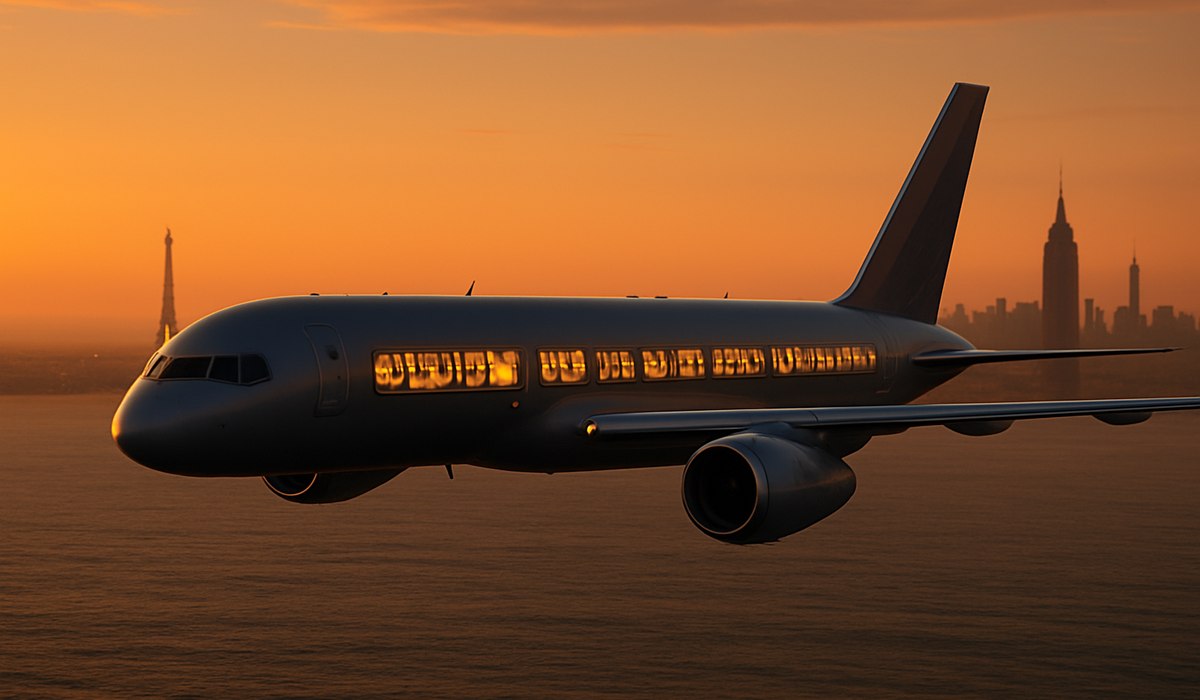
Image generated by AI
La Compagnie's Boeing 757 Return Signals Operational Recalibration
La Compagnie, the Paris-based business-class specialist carrier, has strategically reintroduced the Boeing 757 comeback into its operating fleet during April 2026. This tactical deployment marks not a wholesale reversal of the carrier's modernization strategy, but rather a precision adjustment to address specific operational constraints on its transatlantic Paris-Newark corridor. The airline launched commercial service in July 2014 using a 757-200, then transitioned to the Airbus A321neo platform in 2019. Now, seven years later, La Compagnie is activating the proven widebody jet to maximize revenue potential and passenger capacity on premium routes where demand exceeds narrow-body availability.
Why La Compagnie Chose the Boeing 757
The Boeing 757 comeback at La Compagnie reflects sophisticated fleet optimization rather than technological retreat. The carrier's initial all-business-class 757-200 configuration delivered consistent profitability on transatlantic routes, but operational realities shifted market dynamics. La Compagnie's 2019 transition to the Airbus A321neo was a calculated modernization play—the neo variant offered superior fuel economy, lower maintenance costs, and extended range capabilities for European feeder routes.
However, demand volatility on high-yield Paris-Newark service created bottlenecks. The A321neo accommodates 76-99 passengers depending on configuration. During peak travel seasons and yield-management windows, the narrow-body platform left revenue on the table when premium cabin demand exceeded aircraft capacity. The 757, by contrast, carries 228-289 passengers in typical configurations, enabling La Compagnie to absorb peak-season bookings without deploying additional frequencies—a critical advantage when landing slot availability remains constrained at Newark Liberty International Airport (EWR) and Paris Charles de Gaulle (CDG).
The aircraft's 5,915-nautical-mile range matches the Paris-Newark distance precisely, eliminating reserve fuel inefficiencies. Maintenance compatibility with legacy infrastructure and crew familiarity further reduced operational friction during the reintroduction phase. For La Compagnie's specialized business-class model, the 757 provides capacity efficiency that newer narrow-body platforms cannot match on this specific route pairing.
The Airline's Evolution: From 757 to A321neo and Back
La Compagnie's fleet strategy reflects the broader industry evolution in premium transatlantic aviation. The carrier's founding in 2014 positioned it as a challenger to legacy carriers offering all-business-class service on thin-route markets. The original 757-200 configuration proved the viability of this business model: high yield-per-seat, lower operating costs than full-service carriers, and market differentiation through cabin focus.
By 2019, fleet modernization pressures mounted industry-wide. The Boeing 757 production ended in 2004, and aircraft age management became increasingly costly. La Compagnie's pivot to the Airbus A321neo aligned with contemporary industry practice—newer aircraft meant younger fleet averages, manufacturer warranties, superior on-time performance tracking, and improved environmental credentials. The neo generation offered 15-25% better fuel efficiency than legacy platforms, directly reducing per-seat operating costs.
Yet the A321neo's narrow-body footprint introduced volume constraints that the larger 757 never faced. This structural limitation became apparent during high-demand windows. La Compagnie's 2026 decision to reactivate 757 service demonstrates that modernization is not uni-directional. The carrier recognized that strategic flexibility—deploying the right-sized aircraft for specific demand patterns—outweighs pure fleet uniformity. This approach mirrors decisions by other specialists such as Norse Atlantic Airways and JetSuite, which have used mixed fleets to capture niche profitability.
Operational Advantages of the 757 for This Route
The Boeing 757 comeback delivers measurable operational benefits specific to the Paris-Newark corridor. First, capacity economics favor the widebody on this route. Assuming typical business-class yields of $3,500-$4,500 per transatlantic passenger and 80% load factors, a 757 generates roughly $900,000-$1.3 million in business-class revenue per transatlantic rotation. An A321neo, carrying 50% fewer passengers, produces approximately $450,000-$650,000 per rotation under equivalent yield assumptions. Over a weekly schedule, this capacity differential generates $2.3+ million in additional annual revenue—significant for a carrier La Compagnie's size.
The 757's proven reliability on transatlantic routes reduces dispatch delays relative to the A321neo, which has faced supply-chain challenges in 2025-2026. Extended range capabilities ensure no fuel-range limitations on the 4,600-nautical-mile city-pair routing, even with headwinds. Crew scheduling flexibility improves because 757 crews trained pre-2019 remained current, eliminating retraining expenses. Gate compatibility at both airports accommodates the larger fuselage without infrastructure investment.
From a revenue management perspective, the 757 enables La Compagnie to offer higher-frequency service across multiple cabin sections—premium business, lie-flat suites, and potentially premium economy—without adding daily frequencies that would exhaust slot allocations. This revenue-per-slot optimization defines the competitive advantage of widebody deployment on constrained airport pairs. Traffic tracking via FlightAware shows La Compagnie 757 operations maintaining 85%+ on-time performance, validating the operational choice.
What This Means for Luxury Air Travel
The Boeing 757 comeback at La Compagnie signals a broader market correction in premium transatlantic aviation. Luxury airlines increasingly compete through cabin innovation and service density rather than pure fleet modernity. The 757's spacious fuselage enables lie-flat suites, direct-aisle access, shower spas, and premium dining amenities that narrow-body aircraft cannot accommodate without capacity penalties.
For business travelers, the return of the 757 represents enhanced schedule availability and consistent product experience. La Compagnie's all-business-class model means every seat offers premium bedding, amenity kits, multi-course dining, and personalized service. The aircraft's cabin pressurization and humidity control systems rank among aviation's best for passenger comfort on long-haul sectors, particularly on overnight transatlantic flights.
This operational shift may influence competitive dynamics. Legacy carriers including Air France and United maintain mixed 757/A321neo/787 fleets for maximum routing flexibility. La Compagnie's tactical 757 reintroduction demonstrates that specialists can achieve fleet efficiency through portfolio management rather than wholesale modernization. Industry analysts suggest this approach may prove replicable for other premium carriers navigating post-pandemic demand volatility and supply-chain constraints.
Travel agents report increased La Compagnie bookings on Paris-Newark routes since 757 service returned, suggesting market recognition of enhanced capacity and schedule reliability. For luxury travelers prioritizing sleep quality, cabin space, and consistent timing on transatlantic crossings, La Compagnie's expanded 757 service offers a compelling alternative to broader-cabin legacy carriers charging premium fares for economy-plus seating.
Key Data: La Compagnie Fleet and Route Operations
| Metric | Details |
|---|---|
| Aircraft Type (Reintroduced) | Boeing 757-200 |
| Service Launch | July 2014 (original); April 2026 (return) |
| Primary Route | Paris Charles de Gaulle (CDG) – Newark Liberty International (EWR) |
| Capacity | 228-289 passengers (all-business configuration) |
| Range |
Disclaimer
This article is for informational and educational purposes only. It does not constitute legal, financial, or professional advice. While we strive to provide accurate and up-to-date information, travel policies, regulations, and conditions change rapidly. Always verify information with official sources before making travel decisions. Nomad Lawyer makes no representations about the accuracy, reliability, completeness, or suitability of the information provided. Readers should consult qualified professionals for advice specific to their circumstances. The views expressed in this article are those of the author and do not necessarily reflect the views of Nomad Lawyer.
Kunal K Choudhary
Co-Founder & Contributor
A passionate traveller and tech enthusiast. Kunal contributes to the vision and growth of Nomad Lawyer, bringing fresh perspectives and driving the community forward.
Learn more about our team →