
British Columbia Aligns With Quebec And More Canadian Destinations Accelerate 6% Digital Tourism Growth Through New Technology
British Columbia Aligns With Quebec And More Canadian Destinations Accelerate 6% Digital Tourism Growth Through New Technology

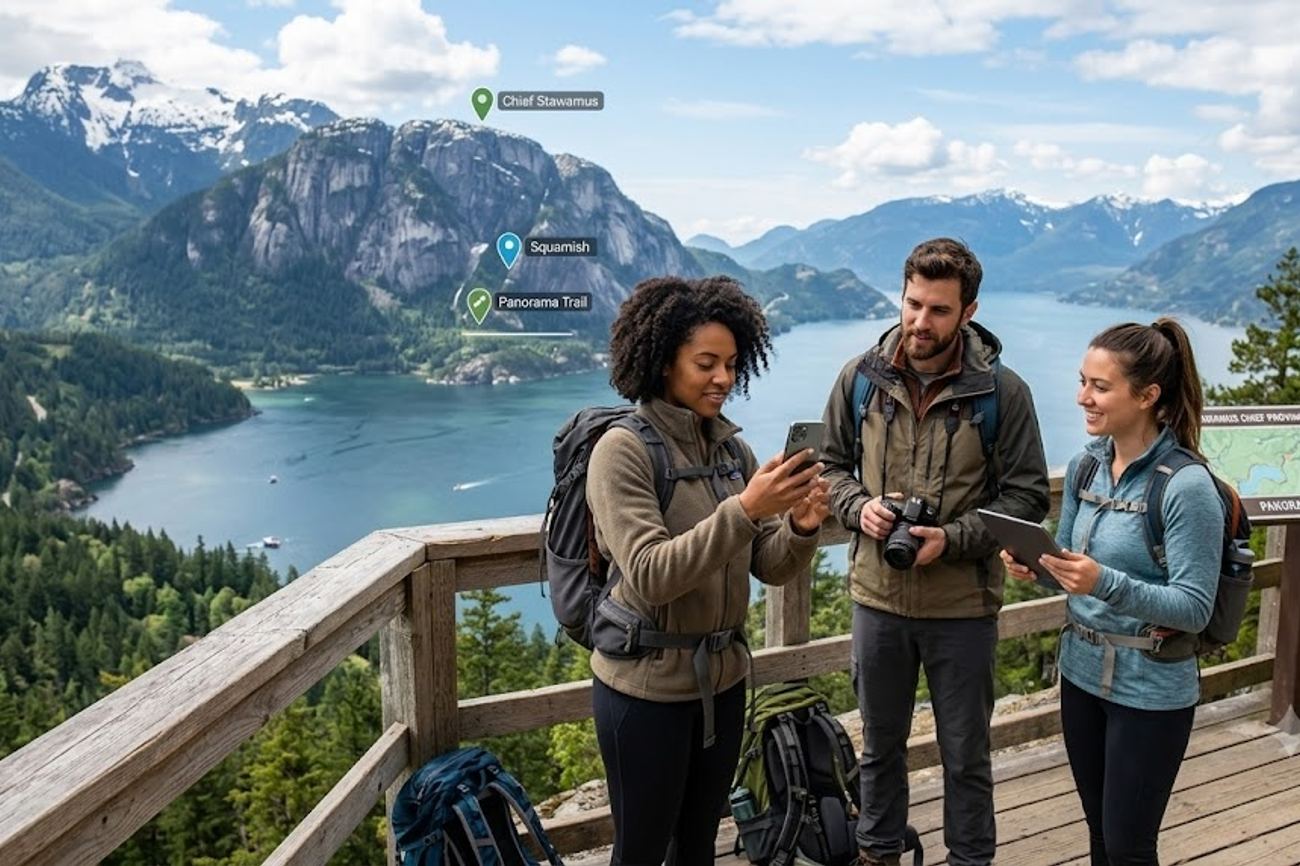
Image generated by AI
Canada’s projected visitor spending is set to climb by 6% by 2026, a growth trajectory underpinned by a systemic shift from traditional marketing to integrated digital ecosystems. This pivot toward "smart tourism" represents a calculated move to decentralize tourist traffic and increase the average spend per visitor through hyper-personalized, AI-driven curation.
The Digital Pivot in Numbers: Canada's Smart Tourism Shift
The Canadian tourism sector is currently transitioning from a passive information model to an active engagement model. The core of this evolution is the deployment of artificial intelligence (AI) and data-driven platforms designed to eliminate friction in the travel planning process. According to current projections, the 6% increase in visitor spending expected by 2026 is not merely a result of increased volume, but a result of technology-driven engagement that pushes travelers toward higher-value, customized experiences.
In Quebec, specifically within Montréal, the implementation of the Sésame AI city guide marks a shift toward "companion-based" tourism. Rather than relying on static lists, the city is utilizing AI to map visitor interests—ranging from gastronomy to heritage—directly to local business offerings. This is a strategic move to increase the "capture rate" of tourist spending in neighborhood economies that previously lacked the marketing budget to compete with major city center attractions.
Similarly, in British Columbia, the focus has shifted toward "Smart Destination Discovery." By utilizing AI-focused marketing and digital storytelling, the province is attempting to solve a historical imbalance in tourism distribution. The objective is to redirect traffic from saturated hotspots into regional zones, specifically targeting the Thompson Okanagan, Kootenay Rockies, Cariboo Chilcotin Coast, and Fraser Canyon. This distribution of demand is essential for sustainable growth, as it prevents "overtourism" in primary hubs while injecting capital into rural economies.
Comparative Regional Tech Integration
When analyzing the current deployment of tourism technology across Canada, a clear pattern emerges: Quebec is prioritizing personalization (the "how" of the visit), while British Columbia is prioritizing distribution (the "where" of the visit). Toronto, meanwhile, is focusing on competitiveness through macro-level data planning.
The following table illustrates the divergence in digital strategy across the primary adopting regions:
| Region | Primary Tech Tool | Strategic Objective | Targeted Outcome |
|---|---|---|---|
| Montréal, QC | Sésame AI Assistant | Hyper-Personalization | Increased spend per visitor via curated interests |
| British Columbia | Smart Destination Tools | Geographic Dispersion | Growth in Thompson Okanagan & Kootenay Rockies |
| Surrey, BC | Digital Spice Trail | Niche Sector Growth | Increased visibility for independent food vendors |
| Toronto, ON | Data-Driven Planning | Market Competitiveness | Strengthening the overall visitor economy |
This regional divergence mirrors global trends observed by the World Travel & Tourism Council (WTTC), where destinations are moving away from "one-size-fits-all" promotion in favor of segmented, data-backed visitor journeys. The shift toward digital food trails in Surrey, for example, recognizes that culinary tourism is no longer a secondary activity but a primary driver for destination selection.
What This Means for Travelers
For the individual traveler, the "Smart Tourism" era in Canada means the end of the generic itinerary. The integration of AI assistants and digital trails changes the booking and exploration behavior in three specific ways:
1. Transition to Real-Time Iteration: With tools like Montréal's AI assistant, travelers no longer need to finalize a rigid schedule weeks in advance. The ability to receive customized recommendations based on current time availability and specific interests (e.g., gastronomy vs. adventure) allows for a more fluid, spontaneous travel experience.
2. Access to "Invisible" Destinations: Travelers planning trips to British Columbia will find it significantly easier to navigate the Kootenay Rockies or the Cariboo Chilcotin Coast. Digital storytelling tools are lowering the barrier to entry for these remote regions, making them as accessible in the planning phase as Vancouver or Victoria.
3. Enhanced Local Discovery: In cities like Surrey, the Digital Spice Trail removes the "discovery risk" for travelers. Instead of relying on generic review sites, visitors can follow curated digital paths that guarantee authentic cultural experiences, specifically benefiting those seeking international cuisines and independent restaurants.
If you are planning a Canadian itinerary for 2025 or 2026, the data suggests that relying on traditional guidebooks will result in missing the most current, high-value local experiences. Utilizing the province-specific AI tools during the "inspiration phase" of your trip will likely reveal more competitive pricing and unique lodging options in the emerging regional zones.
Forward Projection: The Data-Driven Destination
Based on the current trajectory of Toronto's data-driven planning and Quebec's AI integration, Canada is moving toward a "Predictive Tourism" model. Within the next 36 months, we can expect these digital ecosystems to integrate with IATA standards for seamless travel, potentially linking flight data and hotel occupancy rates directly into the AI assistants to suggest real-time destination pivots.
For example, if an AI assistant detects a surge in crowds at a major Montréal museum, it may automatically push a notification to the traveler suggesting a lesser-known gallery or a nearby culinary experience in a quieter neighborhood. This "load balancing" of tourism is the ultimate goal of smart city integration.
Furthermore, the success of Surrey's Digital Spice Trail will likely trigger a nationwide trend of "Micro-Trail" digitalization. We will likely see the emergence of digital "Art Trails" in Ontario or "Indigenous Culture Trails" in the Prairies, as destinations realize that niche, tech-enabled pathways drive higher engagement than broad regional campaigns.
FAQ: Canada Smart Tourism 2026
Will AI-driven tourism increase travel costs? Not necessarily. While AI is used to promote higher-value experiences, it also opens up cheaper, lesser-known regional alternatives in British Columbia and Quebec, potentially lowering the average cost of accommodation and dining for the adventurous traveler.
Is it better to book through these AI assistants or traditional agencies? For customized, local experiences (like Surrey's food trails), AI assistants provide superior real-time data. However, for complex international logistics, traditional agencies still offer a layer of security that current smart tourism platforms do not yet provide.
Which Canadian region is currently the most "tech-forward" for visitors? Quebec, specifically Montréal, leads in personalization via AI assistants, while British Columbia leads in using technology to expand the geographic footprint of its tourism industry.
How do these digital tools help local businesses? They provide "digital visibility" to small vendors who cannot afford major marketing campaigns. By being included in an AI-curated "Spice Trail" or "Culture Guide," small businesses are placed directly in front of high-intent travelers.
The era of the static map is over; Canada is now treating the traveler's journey as a dynamic data stream.
Tags: Canada-Visitor-Spending-2026, BC-Smart-Destination-Strategy, Montreal-AI-Tourism, Surrey-Digital-Food-Trails, Quebec-Personalized-Travel-Data
Related Travel Guides
- IBTM World Unveils Dr Eliza Filby Keynote on AI, Society and the Future of Human Behaviour
- Europe’s Travel Future Transformed as AI and Social Media Redefine How Millions Plan Their Next Holiday
- United States Introduces AI Air Traffic Control System in Washington DC to Transform Travel With Faster Flights and Fewer Delays
Disclaimer
This article is for informational and educational purposes only. It does not constitute legal, financial, or professional advice. While we strive to provide accurate and up-to-date information, travel policies, regulations, and conditions change rapidly. Always verify information with official sources before making travel decisions. Nomad Lawyer makes no representations about the accuracy, reliability, completeness, or suitability of the information provided. Readers should consult qualified professionals for advice specific to their circumstances. The views expressed in this article are those of the author and do not necessarily reflect the views of Nomad Lawyer.
Preeti Gunjan
Contributor & Community Manager
A passionate traveller and community builder. Preeti helps grow the Nomad Lawyer community, fostering engagement and bringing the reader experience to life.
Learn more about our team →