
British Airways Scales Back UAE Routes: Insider Guide to Navigating Dubai and Abu Dhabi Travel
As British Airways reduces Dubai flights and postpones its Abu Dhabi return to 2027, travelers face shifting schedules and expanding choices on Emirates and Etihad.

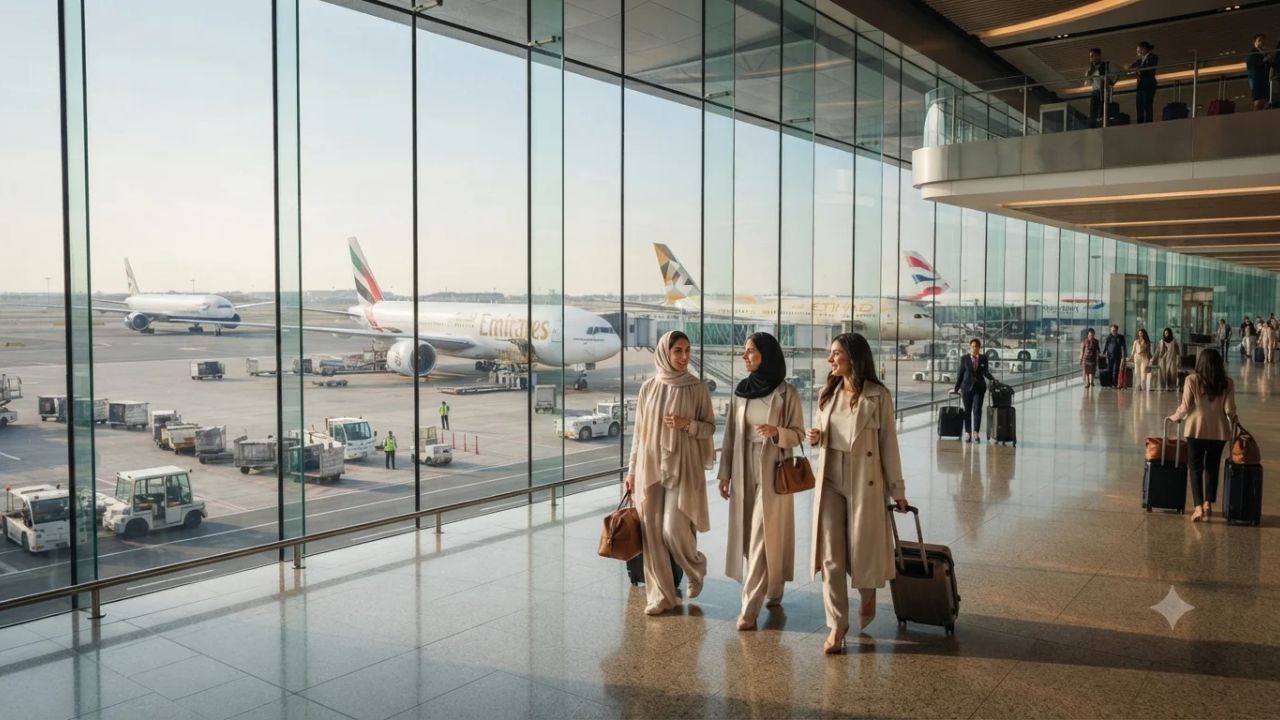
Image generated by AI
Although London to Dubai cemented its position as the undisputed crown jewel of international aviation with 3.9 million passengers crossing between the two cities in 2025, Britain's flag carrier is executing one of the most cautious network rebounds in modern Gulf travel. When British Airways resumes service to Dubai on 3 November 2026, it will operate merely a single daily rotation throughout the winter season—rising to two daily flights in summer 2027—while entirely suspending flights to the federal capital of Abu Dhabi until winter 2027–28. This long gap dismantles the airline’s historic 28 weekly round trips to the United Arab Emirates, fundamentally tilting market control toward home carriers Emirates and Etihad Airways just as seasonal holiday demand surges across Europe.
The Gulf Aviation Realignment: British Airways Shrinks as UAE Flagships Surge
Before operational interruptions reshuffled Middle Eastern flight corridors in February, British Airways provided an intensive shuttle service to the Emirates, comprising three daily departures to Dubai and a dedicated daily rotation to Abu Dhabi. The revised timetable marks a dramatic commercial recalibration. By limiting Dubai to one daily flight this winter and pushing Abu Dhabi’s revival back by more than a year, the carrier is leaving high-yield corporate travelers and multi-generation holidaymakers to reassess their booking loyalties.
Incumbent UAE airlines are stepping into the void with unmatched scale. At Dubai International (DXB), Emirates already operates the planet's busiest international terminal complex. According to Adnan Kazim, Deputy President and Chief Commercial Officer at Emirates, UK passenger bookings for the October school mid-term holiday have climbed 10 per cent year on year. This momentum aligns with historical traffic data: DXB welcomed a record-shattering 95.2 million passengers in 2025—a 3.1 per cent year-on-year jump—connecting 291 global destinations across 108 international carriers via 454,800 flight movements and a 77.6 per cent annual seat load factor. The UK stood out as DXB's top country market, generating 6.3 million travelers over the year.
Down the coast in the capital, Etihad Airways has established an unassailable direct monopoly between Britain and Abu Dhabi. Operating up to four daily non-stop flights from London Heathrow alongside direct services from Manchester, the Abu Dhabi carrier offers consistent schedule reliability while European legacy operators, including Lufthansa Group and Air France, continue staggering their regional returns into late 2026 and 2027.
What Makes Dubai and Abu Dhabi Different
Understanding this aviation shift requires looking beyond airport gates to the distinct personalities of the two leading emirates. While separated by only eighty miles of smooth desert highway, Dubai and Abu Dhabi offer fundamentally contrasting cultural atmospheres.
Dubai is an electrifying laboratory of vertical architecture, high-energy retail, and relentless hospitality innovation. Promoted globally through the Dubai Department of Economy and Tourism, the city drew a record 19.59 million international overnight visitors in 2025, following a first-half surge of 9.88 million arrivals where Western Europe represented 22 per cent of total inbound travelers. Visitors flock to the shadow of the Burj Khalifa, the palm-fringed beach clubs of Jumeirah, and the kinetic art galleries of Alserkal Avenue.
Abu Dhabi, by comparison, projects an unhurried, contemplative elegance anchored in sovereign statecraft, deep heritage, and environmental conservation. As the cultural heart of the federation, the capital invites visitors to Saadiyat Island’s museum district—home to the Louvre Abu Dhabi and upcoming Guggenheim—and the peaceful waterways of the Eastern Mangroves. Inland, travelers discover the ancient date palm canopies of the Al Ain Oasis, protected as a celebrated UNESCO World Heritage Centre site documenting thousands of years of traditional falaj irrigation and desert agriculture.
Because the two cities maintain distinct identities, booking the wrong gateway creates significant logistical friction. Arriving at DXB when your resort sits on Saadiyat Island requires a 90-minute highway transfer costing upwards of AED 300 by private taxi.
Visitor Insider Tips
Navigating UAE travel during this period of airline restructuring demands precise itinerary planning. If your primary objective is exploring Abu Dhabi’s cultural monuments or Formula 1 events at Yas Island, book directly with Etihad into Zayed International Airport (AUH) rather than accepting a displaced flight into Dubai.
For travelers who choose to land at DXB but need to reach Abu Dhabi, bypass expensive airport limousines. Take the Dubai Metro to the Ibn Battuta or Al Ghubaiba bus stations, where modern, air-conditioned intercity express coaches (routes E101 and E100) depart every fifteen to twenty minutes for Abu Dhabi Central Bus Station for just AED 25, payable via a standard Nol transit card.
Timing your journey is critical for both comfort and cost. The premier travel window spans November through March, when mild daytime temperatures of 25°C make coastal walking and outdoor dining delightful. Avoid booking during late October UK school half-terms or festive December weeks unless reservations are secured four to six months early, as seat shortages on reduced London flights can drive economy airfares past £900 round-trip.
Etiquette in the Emirates blends cosmopolitan tolerance with Islamic tradition. While beachwear is standard beside resort swimming pools, casual visitors must dress respectfully in public shopping districts, traditional souks, and cultural monuments: cover shoulders and knees, and avoid public displays of affection.
When dining, step away from luxury hotel buffets to experience true Emirati culinary traditions. In Dubai’s Al Fahidi Historical Neighbourhood, seek out shaded courtyard cafes serving slow-cooked lamb machboos (spiced rice infused with dried lime and saffron) and crispy luqaimat dough fritters drizzled with sweet date syrup. In Abu Dhabi, visit the traditional dhow harbor at Mina Zayed to select fresh local hammour, sea bream, or kingfish, grilled to order over open coals by local fishmongers.
Cultural and Environmental Context
The growth of tourism across the UAE reflects an ambitious national push to diversify economies beyond petroleum reserves. Yet this modernization is deeply counterbalanced by environmental stewardship coordinated through the Department of Culture and Tourism – Abu Dhabi and regional sustainability bodies.
Surrounding Abu Dhabi, dense coastal mangrove reserves act as vital blue-carbon sinks, sequestering atmospheric carbon while shielding shoreline communities from erosion and sheltering sea turtles, dugongs, and migrating flamingos. In Dubai, the protected wetlands of Ras Al Khor preserve critical mudflats where tens of thousands of migratory birds feed in the direct shadow of downtown skyscrapers. By dispersing international visitor foot traffic across heritage districts, desert nature reserves, and maritime national parks, the Emirates demonstrate that global aviation hubs can coexist with delicate desert ecosystems and ancestral Bedouin traditions.
FAQ: Visiting Dubai and Abu Dhabi 2026
What is the best time of year to visit Dubai and Abu Dhabi?
November through March provides the most pleasant weather, with sunny skies and daytime temperatures averaging 24°C to 28°C, making outdoor activities, desert excursions, and beach visits exceptionally comfortable.
How do travelers commute between Dubai and Abu Dhabi?
Travelers can take direct intercity express buses (E100 or E101) for AED 25, hire private highway taxis for approximately AED 250 to AED 350, or utilize complimentary airline luxury shuttles provided for qualifying premium passengers.
Do British and European tourists need a visa to enter the UAE?
Citizens of the United Kingdom, the European Union, Canada, and the United States receive a free 30-day visit visa upon arrival at all UAE international airports, requiring only a passport valid for at least six months.
Is it safe for solo and female travelers to explore the UAE independently?
The UAE consistently ranks among the safest destinations in the world, with low crime rates, safe 24-hour metered taxis, and dedicated women-and-children cars on the Dubai Metro.
The sands of the Arabian Gulf have always welcomed travelers, but mastering the journey requires knowing which oasis meets your pace.
Related Travel Guides
North America Luxury Winter Travel: Big Sky Heights, Deer Valley Expansion, and Lake Louise Escapes
10 Best Desert Safaris and Cultural Tours in Dubai According to Reddit 2026
Disclaimer
This article is for informational and educational purposes only. It does not constitute legal, financial, or professional advice. While we strive to provide accurate and up-to-date information, travel policies, regulations, and conditions change rapidly. Always verify information with official sources before making travel decisions. Nomad Lawyer makes no representations about the accuracy, reliability, completeness, or suitability of the information provided. Readers should consult qualified professionals for advice specific to their circumstances. The views expressed in this article are those of the author and do not necessarily reflect the views of Nomad Lawyer.
Raushan Kumar
Founder & Lead Developer
Full-stack developer with 11+ years of experience and a passionate traveller. Raushan built Nomad Lawyer from the ground up with a vision to create the best travel and law experience on the web.
Learn more about our team →