
British Airways A380 Return Strengthens Heathrow Connectivity And Boosts Long Haul Travel Options
British Airways A380 Return Strengthens Heathrow Connectivity And Boosts Long Haul Travel Options

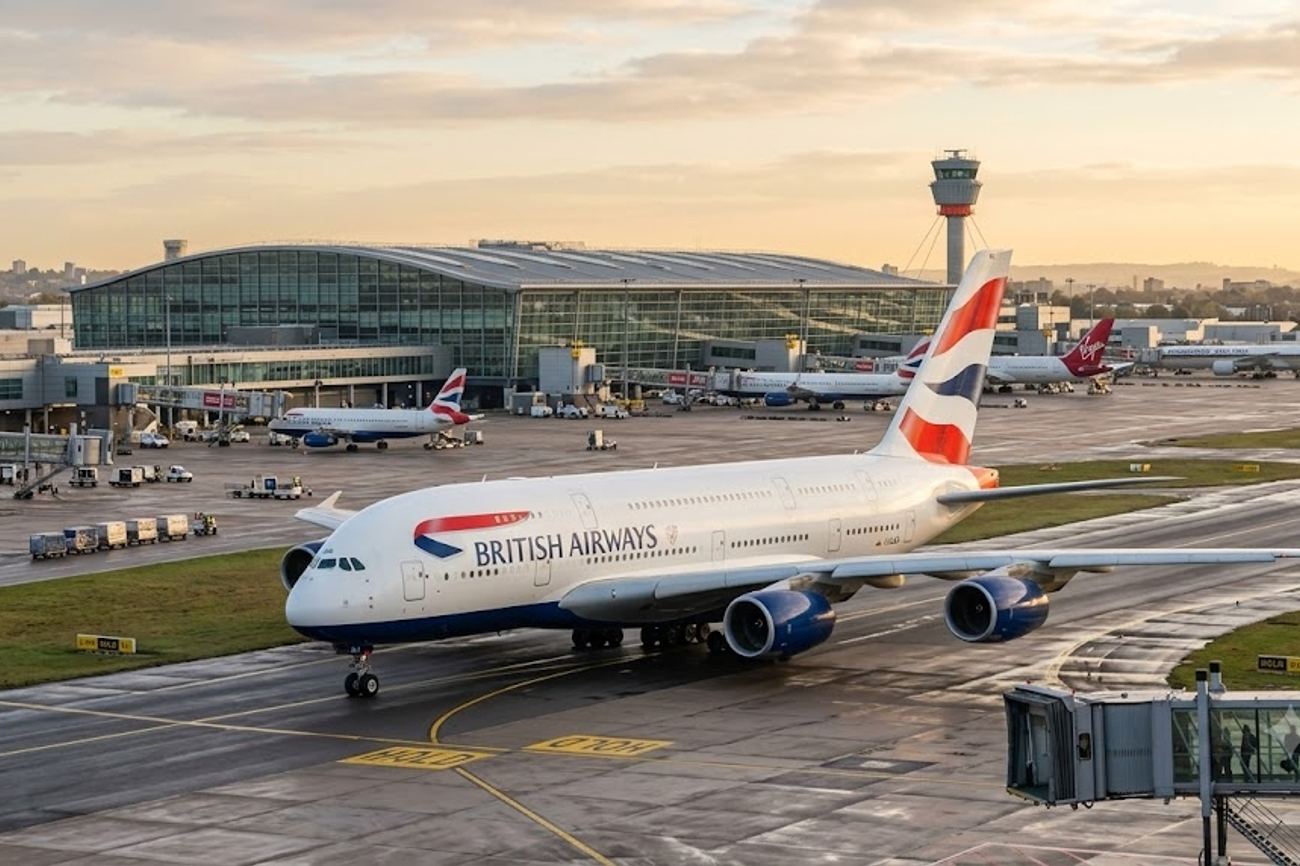
Image generated by AI
title: "The Giant of Heathrow: Navigating London's Long-Haul Gateway" date: 2026-09-20 tags: [LondonHeathrow, BritishAirways, A380-841, UKTravel2026, AviationTourism]
While most travelers view an airport as a mere transit point, a dedicated community of observers treats the tarmac of London Heathrow as a living gallery, where the sighting of a specific airframe like the Airbus A380 G-XLEK can trigger a wave of digital engagement. On 9 August 2026, this particular double-decker giant was captured in its element, and by the time the image was uploaded on 14 September 2026, it had already garnered 1,965 views and 78 likes from a global network of aviation enthusiasts. This isn't just about a plane; it is about the enduring romance of high-capacity flight in an era of leaner, twin-engine efficiency.
The Endurance of the Double-Decker at Heathrow
In the current aviation climate, the Airbus A380-841 is more than just a vehicle; it is a statement of scale. Within the British Airways fleet, the A380 continues to anchor the most demanding long-haul routes, serving as a high-capacity bridge between London and the far reaches of Asia, Africa, and North America. The aircraft G-XLEK, identified by manufacturer serial number 194, exemplifies this model of international connectivity.
For the seasoned traveler, the presence of the A380 at Heathrow signifies a specific type of journey. Unlike the smaller wide-bodies, the A380’s full-length upper deck creates a distinct onboard atmosphere, separating the chaos of the main cabin from the more secluded upper levels. This architectural split within the aircraft mirrors the duality of Heathrow itself: a place of frantic, high-volume transit that simultaneously hosts some of the most exclusive luxury lounges and first-class experiences in the world.
The continued deployment of these giants suggests that despite the industry shift toward smaller, more fuel-efficient aircraft, the demand for massive passenger volumes on key corridors remains absolute. When you see G-XLEK idling on the apron, you are seeing the physical manifestation of London's role as a primary global node. To understand the scale of this operation, one can look at the official Visit Britain resources, which highlight how these aviation arteries feed the UK's tourism economy.
What Makes the Heathrow Experience Different
Heathrow is not just an airport; it is a city unto itself, designed to process millions of souls with surgical precision. What sets it apart from other European hubs is its extreme concentration of long-haul traffic. While airports in Paris or Frankfurt distribute their load across a wider variety of short-haul hops, Heathrow is the undisputed king of the intercontinental leap.
The experience of arriving here on an A380 is visceral. The sheer volume of passengers disembarking from a single G-XLEK flight can momentarily alter the rhythm of a terminal. This creates a unique social friction—a sudden influx of travelers from a single city, all converging on immigration and baggage claim at once.
Beyond the logistics, there is the cultural phenomenon of "plane spotting." For those who know where to look, the perimeter of the airport is a sanctuary. Enthusiasts don't just look for "a plane"; they track registrations. The fact that a commenter on the G-XLEK photo recalled flying on this specific airframe as a child proves that these machines carry emotional weight. They are not anonymous steel tubes; they are vessels of memory.
Visitor Insider Tips
Navigating Heathrow and the surrounding aviation culture requires a bit of local intuition to avoid the common pitfalls of the "tourist" experience.
Timing the Tarmac If you are heading to the perimeter fences to catch a glimpse of the A380s, avoid the midday rush. The best light for photography—and the lowest crowd density—occurs during the early morning arrival banks. Check the live flight boards via the Heathrow Airport official site to time your arrival with the landing of the heavy long-haul flights from Singapore or Los Angeles.
The Transit Hack Avoid the temptation to take a black cab from the terminal to central London unless you have a massive amount of luggage and a large budget. The Elizabeth Line is the gold standard for modern transit; it is faster, cleaner, and significantly cheaper, whisking you into the heart of the city with minimal friction.
Etiquette for Spotters If you find yourself among the aviation photographers at the viewing areas, remember that this is a disciplined community. Avoid blocking the line of sight of those with long-range telephoto lenses. A simple "excuse me" goes a long way in these high-stakes environments where a three-second window is the difference between a legendary shot and a missed opportunity.
Regional Flavors While terminal food is predictably generic, venture toward the airport's outskirts or into the city for authentic London eats. Skip the chain restaurants in the arrivals hall and head for a traditional Sunday roast in a pub in Hounslow or Windsor once you've cleared customs.
Cultural and Environmental Context
The presence of the Airbus A380 at Heathrow sits at the center of a complex debate regarding environmental sustainability and urban growth. The A380 is a four-engine behemoth, and in an era of aggressive carbon-reduction targets, its operational footprint is under constant scrutiny. The aviation industry is currently balancing the need for high-capacity transport—which reduces the total number of flights needed to move a million people—against the high fuel burn of individual large aircraft.
Furthermore, the relationship between Heathrow and the surrounding community is often strained. The noise pollution generated by the takeoff of a four-engine aircraft like G-XLEK is a daily reality for residents of the surrounding boroughs. This has led to a sophisticated system of noise monitoring and flight path rotations designed to distribute the acoustic burden more evenly across the region.
From a heritage perspective, the A380 is already becoming a legacy icon. As airlines transition to twin-engine aircraft like the A350 or Boeing 787, the A380 represents a specific era of aviation ambition—the belief that bigger was always better. Preserving the visual record of these aircraft, as seen with the photography of G-XLEK, is a way of documenting the evolution of human mobility. For those interested in the broader history of global transport and heritage, the UNESCO World Heritage Centre provides context on how modern infrastructure must coexist with protected cultural landscapes.
FAQ: Visiting London Heathrow 2026
What is the best time to visit for plane spotting? Early morning (06:00 to 09:00) is ideal. This is when the majority of the heavy long-haul aircraft, including the A380s, arrive from overseas, providing the best opportunities for photography and sightings.
How do I get to central London most efficiently? The Elizabeth Line is the most recommended option for its balance of speed, cost, and comfort. Alternatively, the Heathrow Express is faster but more expensive, while the Piccadilly Line is the cheapest but slowest.
Is Heathrow safe for solo travelers? Yes, it is one of the most secure and well-monitored environments in the world. Standard urban awareness applies, but the airport and its direct transit links are very safe for solo visitors.
Do I need a visa to transit through Heathrow? This depends entirely on your nationality and your final destination. Always check the official UK government website or your embassy's guidelines to determine if a Direct Airside Transit Visa (DATV) is required.
The next time you see a double-decker silhouette descending through the London fog, remember that you aren't just looking at a plane—you're witnessing the fading grandeur of the aviation world's greatest giant.
Related Travel Guides
- Indonesia Tracks Uneven Flores Travel Recovery As Labuan Bajo Normalises While Ende Air Access Returns
- Spain Follows France and Other Leading Countries as Tanzania Safari Travel Expands in Northern Serengeti
- Lamphun Holds The Golden Key To Unlocking An Unforgettable Travel Route In Northern Thailand, All You Need To Know
Disclaimer
This article is for informational and educational purposes only. It does not constitute legal, financial, or professional advice. While we strive to provide accurate and up-to-date information, travel policies, regulations, and conditions change rapidly. Always verify information with official sources before making travel decisions. Nomad Lawyer makes no representations about the accuracy, reliability, completeness, or suitability of the information provided. Readers should consult qualified professionals for advice specific to their circumstances. The views expressed in this article are those of the author and do not necessarily reflect the views of Nomad Lawyer.
Naina Thakur
Contributor & Travel Specialist
Travel enthusiast and legal writer covering visa regulations, responsible tourism, and cultural journeys across global destinations.
Learn more about our team →