
Bristol Temple Meads Opens £23m Eastern Entrance to Link Rail Travel and Innovation District in 2026
Bristol Temple Meads transforms into a tourism and innovation gateway with the opening of its £23m eastern entrance, connecting 2.5 million annual passengers to the Temple Quarter Enterprise Campus.

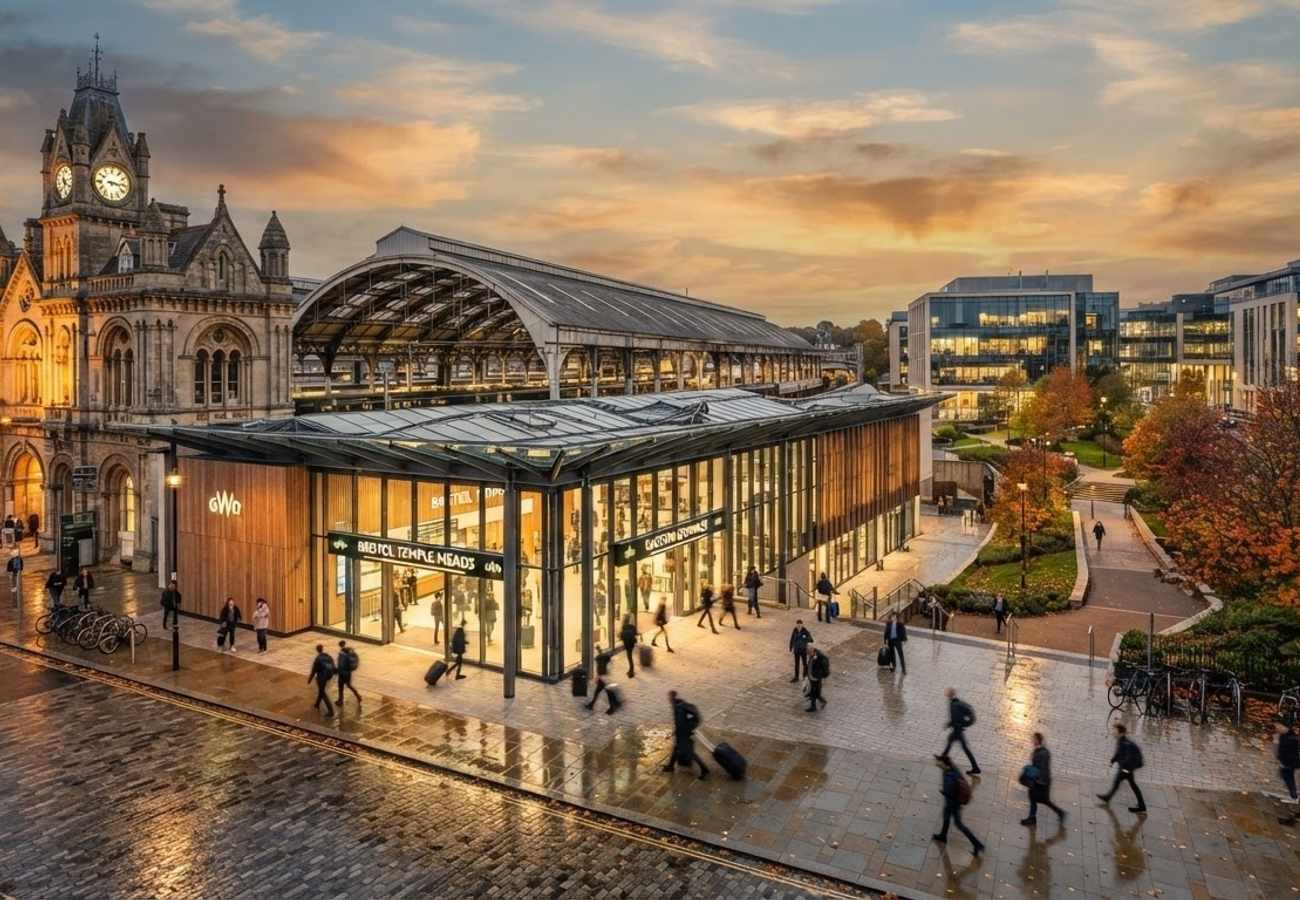
Image generated by AI
A £23 million infrastructure investment will open the eastern entrance of Bristol Temple Meads on 7 September 2026, providing direct access for 2.5 million annual passengers to the city's emerging innovation district.
The Shift Toward Integrated Urban Gateways
For nearly two centuries, Bristol Temple Meads has functioned as the primary rail artery for the region. However, its historic layout created a physical barrier, isolating the eastern side of the city from the main passenger flow. The opening of the eastern entrance marks a departure from traditional station management, transitioning the hub from a mere arrival point into a strategic tourism and economic gateway.
This development is a cornerstone of the Bristol Temple Quarter Regeneration project, one of Europe’s largest urban renewal efforts. By creating a seamless movement corridor between the platforms and the University of Bristol’s Temple Quarter Enterprise Campus, the city is integrating transport infrastructure directly with zones of education, business growth, and urban innovation.
By 2030, projections indicate that 2.5 million people will utilize this eastern entrance annually. This shift reflects a global trend where major railway stations are no longer isolated facilities but are instead designed as integrated destinations that dictate the flow of tourism and commerce.
Cultural and Environmental Value
For the visitor, the real impact is the immediate removal of "friction" upon arrival. Rather than navigating traditional, crowded city routes, travelers now have a direct path into a district designed around sustainable movement and public spaces. This encourages a dispersal of tourism away from the saturated city center and into the Temple Quarter, supporting a new ecosystem of local cafés, hotels, and cultural venues.
From an environmental perspective, this project aligns with the broader European movement toward lower-carbon travel. By enhancing the efficiency of rail arrivals, Bristol is incentivizing visitors to choose trains over short-haul domestic flights or private car journeys.
The project also represents a delicate balance between heritage and utility. To achieve this new connectivity, Network Rail performed complex engineering beneath platforms 13 and 15, extending the station subway and upgrading drainage and foundations without compromising the architectural integrity of the historic station.
Impact Analysis: From Transport Hub to Tourism Catalyst
The following table outlines how the £23 million investment resolves long-standing accessibility issues to create new economic opportunities:
| Area of Impact | Previous Constraint | 2026 Opportunity |
|---|---|---|
| Visitor Flow | Limited access to eastern Bristol | Direct connection to innovation districts |
| Tourism Patterns | Concentration on traditional routes | Wider exploration of Temple Quarter |
| Business Travel | Station isolated from tech hubs | Rapid access for conferences and events |
| Student Mobility | Extended walking routes to campus | Seamless University of Bristol connectivity |
| Local Economy | Underutilized surrounding land | Increased commercial and retail activity |
Visitor Insider Tips
To make the most of the new layout and the surrounding district, travelers should consider the following:
- The "Innovation Walk": Instead of heading toward the city center, exit via the eastern entrance to explore the Temple Quarter Enterprise Campus. This area offers a glimpse into Bristol's future in research and technology.
- Off-Peak Exploration: To avoid the rush of students and commuters, visit the Temple Quarter district between 10:00 AM and 2:00 PM on weekdays.
- Sustainable Transit: Use the new corridor to connect with local e-bike schemes, which are heavily integrated into the Temple Quarter's sustainable movement plan.
- Heritage Contrast: Spend time comparing the Victorian engineering of Brunel’s original station with the ultra-modern architecture of the Enterprise Campus—the contrast is a photographer's highlight.
Tourism Outlook
The long-term trajectory for Bristol is a complete redesign of the "arrival experience." By linking a major railway hub directly to an innovation district, the city is ensuring that business and educational tourism are baked into the infrastructure. The funding, part of a larger £94.7 million government package awarded to the West of England Mayoral Combined Authority, signals that the future of urban tourism lies in connectivity.
As the Temple Quarter continues to add thousands of new homes and jobs, the eastern entrance will serve as the primary bridge between the city's industrial legacy and its high-tech future.
Bristol is no longer just welcoming passengers; it is directing the future of urban movement.
Related Travel Guides
Disclaimer
This article is for informational and educational purposes only. It does not constitute legal, financial, or professional advice. While we strive to provide accurate and up-to-date information, travel policies, regulations, and conditions change rapidly. Always verify information with official sources before making travel decisions. Nomad Lawyer makes no representations about the accuracy, reliability, completeness, or suitability of the information provided. Readers should consult qualified professionals for advice specific to their circumstances. The views expressed in this article are those of the author and do not necessarily reflect the views of Nomad Lawyer.
Naina Thakur
Contributor & Travel Specialist
Travel enthusiast and legal writer covering visa regulations, responsible tourism, and cultural journeys across global destinations.
Learn more about our team →