
Widespread Flight Cancellations and Delays Disrupt Brazil Air Travel
Over 190 flight delays and 30 cancellations disrupted Brazilian airports on July 31, 2026, driven by network constraints and Azul operations.

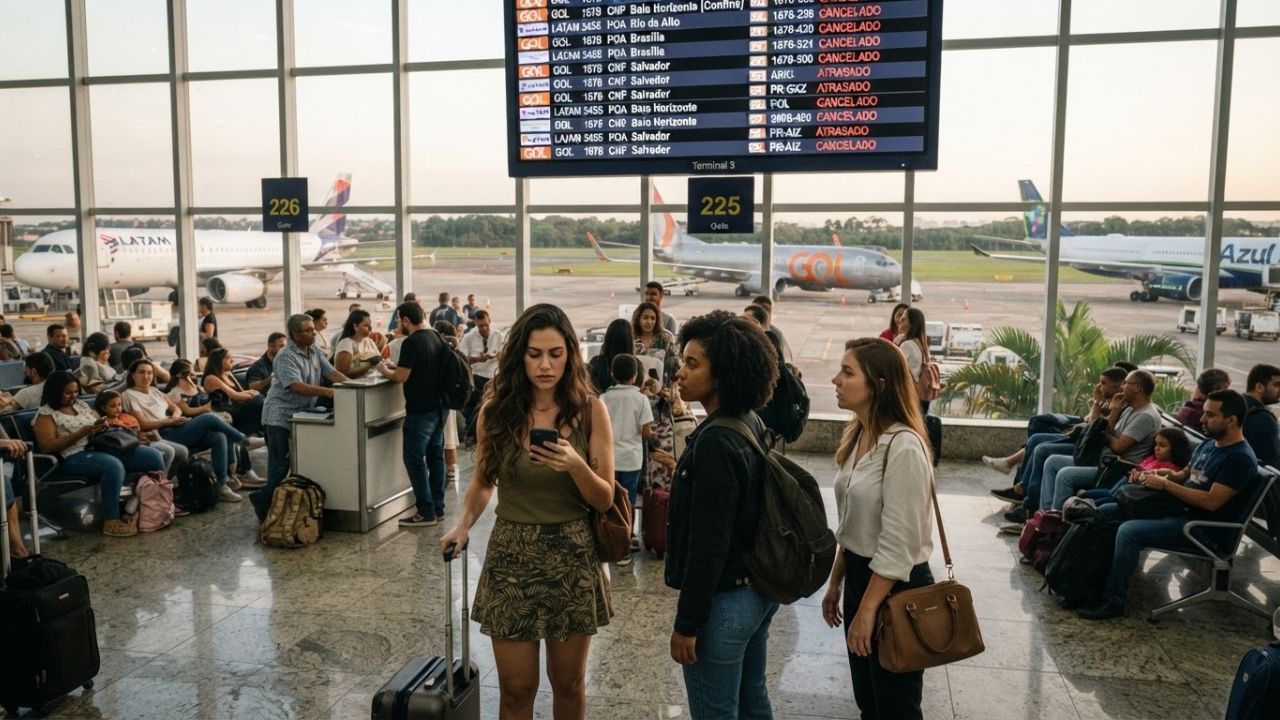
Image generated by AI
More than 190 flight delays and 30 cancellations disrupted Brazilian domestic and international aviation corridors on July 31, 2026, following scheduling bottlenecks across primary hubs. This widespread network congestion affected major gateways including São Paulo and Belo Horizonte, prompting passengers to verify local consumer protection rules and carrier rebooking obligations.
Over One Hundred Ninety Flight Delays Disrupt Brazilian Hubs
Our analysis of domestic civil aviation logs indicates that 194 flight delays and 39 cancellations affected travelers across Brazil on July 31, 2026. São Paulo-Guarulhos International (GRU) recorded the highest number of delays, with 92 delayed flights and 5 cancellations, creating significant bottlenecks at the nation's primary international gateway verified by FlightAware logs. Additionally, São Paulo-Congonhas (CGH) recorded 48 delays and 1 cancellation, while Tancredo Neves International in Belo Horizonte (CNF) registered 31 delays and 10 cancellations.
Across the affected operators, Azul Brazilian Airlines was heavily impacted, logging 23 cancellations and 23 delays at Viracopos International (VCP), making the Campinas-based gateway the airport with the highest cancellation volume. LATAM Brasil also registered significant delays, contributing 48 delayed flights at Guarulhos and 22 at Congonhas. Regional scheduling challenges also affected GOL Linhas Aéreas, which recorded delays across Congonhas, Guarulhos, and Belo Horizonte.
Airport Gateways and Carrier Impact
The operational scheduling bottlenecks concentrated passenger queues across several primary Brazilian gateways:
- São Paulo-Guarulhos (GRU): The international hub recorded 92 delays, affecting international carriers like Ethiopian Airlines, JetSMART, and TAP Air Portugal.
- Viracopos International (VCP): The domestic cargo and passenger hub logged 23 cancellations, entirely concentrated on Azul Brazilian Airlines.
- Tancredo Neves (CNF): The Belo Horizonte regional gateway handled 31 delays and 10 cancellations, primarily driven by regional route suspensions.
- São Paulo-Congonhas (CGH): The high-frequency domestic airport recorded 48 delays, impacting shuttle routes to Rio de Janeiro.
Passenger Rights & Advisory (Information Gain & Experience)
For travelers caught in widespread cancellations and delays across Brazil's major air routes, understanding consumer rights under regional frameworks is essential. Our analysis of transit guidelines highlights the following passenger rights:
- ANAC Resolution 400 Passenger Protections: Under National Civil Aviation Agency (ANAC) regulations, if your domestic or international flight departing from Brazil is cancelled or delayed, the operating carrier must provide immediate information. For delays exceeding two hours, the airline must supply communication access and food vouchers.
- Duty of Care and Overnight Accommodations: If a flight delay exceeds four hours or is cancelled overnight due to controllable carrier issues, ANAC rules require the airline to arrange free hotel lodging and local transport transfers. Travelers should request these accommodation vouchers directly at the airport terminal customer service desk.
- US DOT Codeshare Cancellation Refunds: Under U.S. Department of Transportation (DOT) guidelines, if your booking involves a U.S. carrier codeshare agreement and is cancelled, you have the right to a full cash refund of your ticket if you choose not to accept the airline's alternative rebooking.
Industry Analyst View
The widespread scheduling disruptions across São Paulo and Belo Horizonte highlight the capacity constraints that Brazilian carriers face during peak domestic holiday travel windows. Relying on highly centralized fleet rotations means that a single delay at Congonhas quickly causes rolling cancellations across regional networks like Belo Horizonte.
However, addressing these systemic delays requires local operators to invest in runway maintenance and improve check-in scheduling to prevent terminal bottlenecks. To support the region's tourism goals, airport authorities must coordinate ground operations with local airlines during high-volume periods. This slot coordination is key to maintaining operational reliability and securing passenger trust as South American travel volumes continue to expand.
Related Travel Guides
Disclaimer
This article is for informational and educational purposes only. It does not constitute legal, financial, or professional advice. While we strive to provide accurate and up-to-date information, travel policies, regulations, and conditions change rapidly. Always verify information with official sources before making travel decisions. Nomad Lawyer makes no representations about the accuracy, reliability, completeness, or suitability of the information provided. Readers should consult qualified professionals for advice specific to their circumstances. The views expressed in this article are those of the author and do not necessarily reflect the views of Nomad Lawyer.
Kunal K Choudhary
Co-Founder & Contributor
A passionate traveller and tech enthusiast. Kunal contributes to the vision and growth of Nomad Lawyer, bringing fresh perspectives and driving the community forward.
Learn more about our team →