Botswana Unlocks Next-Generation Safari Travel with Starlink Mobile: Direct-to-Cell Satellite Connectivity Across the Okavango and Kalahari

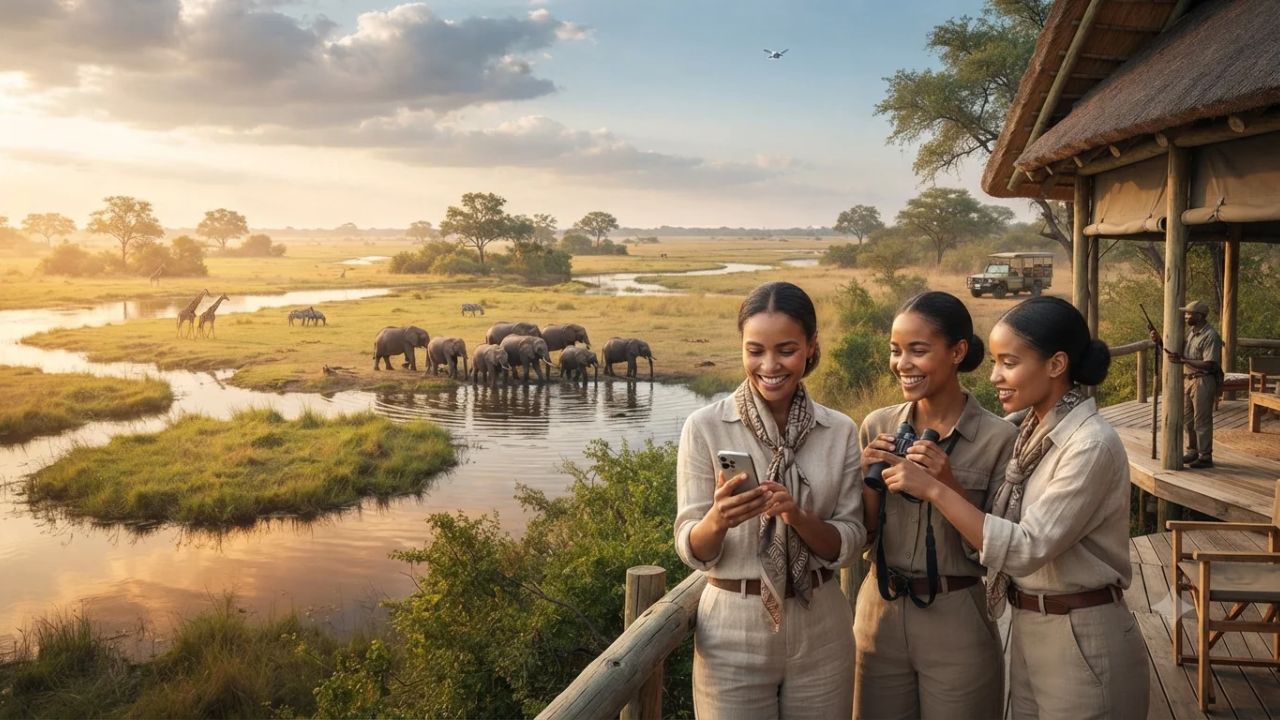
Botswana is preparing to redefine wilderness exploration across southern Africa through a pioneering direct-to-cell satellite partnership between state-backed Botswana Telecommunications Corporation and Starlink, bridging vast telecommunication blind spots across the Okavango Delta, Chobe National Park, and the Kalahari without erecting intrusive cellular towers.
The prospective nationwide deployment, slated for early 2027, will enable standard, unmodified 4G LTE and 5G smartphones to connect directly to Starlink's low Earth orbit satellite constellation. For decades, international travellers embarking on remote bush excursions have faced complete telecommunications blackouts the moment their bush planes touched down on unpaved safari airstrips. By enabling automatic cellular-to-satellite handover, the initiative promises to deliver fundamental digital connectivity—including text messaging, real-time GPS navigation, low-bandwidth data messaging, and critical emergency communication—to regions where terrestrial mobile infrastructure has long remained commercially and environmentally impossible.
Covering 581,730 square kilometres with a population of approximately 2.6 million people, Botswana is one of the most sparsely populated nations on Earth. Approximately 38% of its total landmass is legally preserved as national parks, game reserves, and wildlife management areas. The nation’s commitment to a low-volume, high-value eco-tourism model has preserved some of the planet’s last untamed wilderness sanctuaries. However, this same dedication to environmental preservation has created acute logistical hurdles for remote safari operators, bush aviators, conservation field teams, and holidaymakers. The advent of direct-to-cell satellite connectivity presents an elegant technical compromise, maintaining pristine natural landscapes while providing a reliable digital safety net.
The Frontier of African Wilderness Travel: Botswana's Direct-to-Cell Vision
Botswana’s international reputation as Africa’s premier safari destination rests squarely on its pristine ecosystems and dramatic wildlife densities. From the intricate, flood-sculpted channels of the Okavango Delta to the dense elephant corridors along the Chobe River and the windswept salt crusts of Makgadikgadi, travellers journey thousands of miles to experience authentic isolation.
Yet, this isolation presents genuine logistical challenges. When moving between remote concessions, tracking wildlife across trackless bush, or transferring between secluded tented camps, travellers frequently lose all cellular reception. While many luxury travellers cherish the opportunity to disconnect from routine digital noise, complete communication isolation can pose severe vulnerabilities during sudden medical crises, vehicle breakdowns in predator-dense terrain, or unexpected changes in regional charter flight schedules.
BOTSWANA DIRECT-TO-CELL CONNECTIVITY MODEL
| Column 1 |
|---|
| DIRECT-TO-CELL SATELLITE ARCHITECTURE |
| [Starlink LEO Satellite Constellation] |
| - Operates at ~550 km altitude in Low Earth Orbit |
| - Advanced phased-array antennas & eNodeB cellular modems |
| - Communicates over standard terrestrial LTE mobile spectrum |
| v v |
| [Standard 4G/5G Smartphone] [BTC Ground Gateway Stations] |
| - Unmodified consumer device - Direct connection to core telco |
| - Automatic network handover - Links to national emergency dispatch |
| - No external dish or antenna - Coordinates international data routs |
The Transmission Mechanism
When a traveller moves beyond the range of terrestrial BTC cellular towers, their smartphone automatically detects the satellite-delivered LTE signal from above. Because the satellites orbit in low Earth orbit rather than geostationary orbit (which sits at 35,786 kilometres), the signal propagation delay is reduced from over 600 milliseconds down to roughly 20 to 40 milliseconds.
The satellite’s phased-array antennas focus powerful, highly directional spot beams onto the Earth's surface, compensating for the miniature, low-power omnidirectional antennas built into ordinary smartphones. Once locked onto a beam, the device registers with the network just as it would with an ordinary roaming partner. The satellite receives the signal and relays it via laser space-links to adjacent satellites and down to terrestrial ground stations connected to BTC’s core telecommunications backbone.
Initial Capability Phases
The roll-out of direct-to-cell capabilities follows an evolutionary phased trajectory:
- Phase One (2026–2027): Text messaging (SMS), automated emergency SOS location broadcasting, and basic telemetry. Users can transmit and receive plain text messages with guides, tour operators, and loved ones.
- Phase Two (2027–2028): Low-bandwidth data transmission, supporting messaging applications such as WhatsApp, Signal, and basic web-based travel utilities like digital maps and live weather radars.
- Phase Three (Beyond 2028): Voice over satellite calling and enhanced data transfer rates as next-generation satellite deployments increase constellation density and bandwidth capacity.
Transforming the Safari Experience: From the Okavango to the Kalahari
Botswana’s safari circuits represent some of the most diverse ecological landscapes in Africa. The introduction of satellite connectivity directly to consumer devices will reshape how travellers experience these iconic destinations.
BOTSWANA ICONIC WILDERNESS CORRIDORS
| Column 1 |
|---|
| SATELLITE-ENABLED CONSERVATION MONITORING |
| SUB-SAHARAN AFRICA SATELLITE PARTNERSHIP PENETRATION |
| (GSMA Global vs. Regional Benchmarks) |
| GLOBAL OPERATORS WITH SATELLITE PARTNERSHIPS |
| [=================== ] 19% |
| SUB-SAHARAN AFRICA OPERATORS WITH SATELLITE PARTNERSHIPS |
| [============= ] 13% |
| KEY REGIONAL OPERATORS PURSUING DIRECT-TO-CELL INTEGRATION: |
| - BTC (Botswana) - Airtel Africa (DR Congo, Kenya, Nigeria) |
| - MTN Group (Pan-Africa) - Vodacom Group (Southern & East Africa) |
| - AXIAN Telecom (Madagascar, Tanzania, Uganda) |
In August 2026, the Democratic Republic of the Congo (DRC) made history by becoming the first African nation to introduce a commercial satellite-to-mobile service through a partnership between Airtel and satellite providers, offering an indispensable communications lifeline across the dense, roadless expanses of the Congo River basin.
Botswana’s approach, however, represents a distinctly comprehensive model. Rather than confining the technology to specific pilot regions or isolated extractive mining concessions, BTC and Starlink are pursuing a universal nationwide deployment. According to data published by the GSM Association (GSMA) for the third quarter of 2026, approximately 13% of mobile network operators across Sub-Saharan Africa had established formal satellite partnerships, compared to a global average of 19%. Major continental telecommunication giants—including Airtel Africa, MTN Group, Vodacom, and AXIAN Telecom—are accelerating investments in low Earth orbit partnerships to leapfrog traditional infrastructure hurdles.
By advancing this partnership, Botswana not only addresses the immediate needs of its high-value tourism sector but also sets a regulatory and technical benchmark for neighboring wilderness-dense nations like Namibia, Zambia, Zimbabwe, and Mozambique, where wildlife tourism forms the bedrock of rural economic sustainability.
The Regulatory Landscape: BOCRA, Spectrum Harmonization, and BTC
While the technological promise of Starlink Mobile is immense, executing a nationwide direct-to-cell deployment requires navigating intricate regulatory, spectrum, and security approvals.
The regulatory journey for Starlink in Botswana has experienced notable milestones:
- May 2024: The Botswana Communications Regulatory Authority (BOCRA) formally granted Starlink an operating licence following extensive technical reviews regarding spectrum interference and local regulatory compliance.
- August 2024: Starlink’s fixed residential and enterprise satellite broadband services launched commercially across the country, with BTC acting as an authorized distributor for fixed satellite hardware.
- 2026–2027: The transition from fixed dish-based broadband to direct-to-cell mobile satellite communications introduces a distinct set of regulatory considerations that BOCRA must adjudicate prior to commercial switch-on.
REGULATORY APPROVAL FRAMEWORK
| Column 1 |
|---|
| [Spectrum Allocation] [National Security & Intercept] |
| - Harmonizing BTC terrestrial LTE bands - Compliance with lawful intercept |
| - Mitigating adjacent-channel bleed - Emergency dispatch (999/911) links |
| - Cross-border coordination with Namibia - Data sovereignty & local gateways |
| [Consumer Protection & Pricing] [Environmental & Wildlife Standards] |
| - Fair-use roaming rate structures - Ensuring zero ground disturbance |
| - Transparent billing for safari guests - Eliminating need for wilderness |
| - Emergency SOS free-access mandates communication masts and towers |
Spectrum Allocation and Cross-Border Coordination
Direct-to-cell technology functions by transmitting over licensed terrestrial cellular frequencies directly from space. BOCRA must formally authorize Starlink to transmit across specific spectrum bands allocated to BTC (such as 700 MHz, 800 MHz, or 1800 MHz LTE bands).
Because satellite spot beams do not strictly observe political borders, BOCRA must coordinate closely with neighboring regulatory authorities—including Namibia’s CRAN, South Africa’s ICASA, and Zimbabwe’s POTRAZ—to ensure satellite beams traversing the Caprivi Strip or the Limpopo River do not cause harmful electromagnetic interference with terrestrial networks in adjacent countries.
Lawful Intercept and Data Sovereignty
Like all sovereign nations, Botswana maintains strict statutory requirements regarding national security, telecommunications monitoring, and lawful intercept capabilities. Satellite communication architecture must ensure that calls and data originating within Botswana's airspace pass through certified local ground gateways, guaranteeing that national emergency services can identify caller locations during distress events and ensuring compliance with national cybersecurity regulations.
Digital Detox Versus Bush Safety: Managing Guest Expectations
The prospect of ubiquitous smartphone connectivity across Africa's wilderness raises a profound philosophical and experiential question for the luxury safari industry: Does constant connectivity ruin the magic of the African bush?
For decades, the defining luxury of an African safari has been the rare privilege of absolute disconnection. High-net-worth travellers pay upwards of $1,500 to $3,000 per night precisely to escape pinging email notifications, constant social media updates, and relentless geopolitical news feeds. The gentle rhythm of the bush—waking at dawn to birdsong, sipping tea beside an open campfire, and watching a leopard stalk through the grass without interruption—has long served as the ultimate antidote to modern digital exhaustion.
BALANCING DIGITAL ACCESS WITH BUSH SERENITY
| Column 1 |
|---|
| [CRITICAL SAFETY & ESSENTIAL ACCESS] [PRESERVING WILDERNESS SANCTUARY] |
| - Emergency medical distress calling - Strict "Silent Mode" policies on |
| - Real-time GPS location sharing shared game drive vehicles |
| - Flight delay & transfer notifications - Banning audible ringtones & video |
| - Reassurance for travelling families calls in open public lounge spaces |
| - Low-bandwidth emergency family texts - Designated "quiet zones" across |
| tented guest suites & camp decks |
Recognizing this delicate balance, leading safari lodge operators are formulating clear operational guidelines for the impending satellite era:
- Silent Protocols on Game Drives: Audible ringtones, speakerphones, and voice calling are strictly prohibited on safari vehicles. Guests may utilize mobile devices for photography, offline wildlife field guides, and silent messaging, but making calls in front of other passengers while observing animals is widely forbidden.
- Public Area Wi-Fi Restrictions: Many ultra-luxury lodges will continue to maintain device-free dining rooms, bomas, and communal bar lounges, encouraging guests to engage with fellow travellers and listen to the natural night sounds of the bush.
- The "Digital Safety Net" Paradigm: Safari operators will position direct-to-cell connectivity not as a tool for streaming video or attending corporate Zoom meetings, but as a silent, invisible life-safety cushion that operates in the background, offering peace of mind while preserving the primal sanctity of the wild.
Complete Traveller's Guide to Botswana Safari Planning
Planning a journey into the heart of Botswana requires meticulous preparation. Understanding seasonal wildlife movements, health precautions, packing requirements, and digital connectivity options ensures a smooth, unforgettable adventure.
Best Safari Circuits and Regional Highlights
- The Okavango Delta: The crown jewel of African safaris. Explore by mokoro canoe, motorized boat, or walking safari. Best for birdwatching, aquatic antelope (lechwe and sitatunga), hippos, and painted hunting dogs.
- Chobe National Park: World-renowned for massive elephant herds and dramatic boat cruises along the Chobe Riverfront. Combine with a visit to nearby Victoria Falls (just 70 km away across the border in Zimbabwe/Zambia).
- Moremi Game Reserve: The predator capital of northern Botswana. Spectacular concentrations of lions, leopards, cheetahs, and spotted hyenas roaming between mopane woodlands and acacia savannahs.
- Makgadikgadi and Nxai Pans: Stark, surreal landscapes featuring massive salt pans, ancient baobab trees, habituated meerkat colonies, and the southern Africa zebra and wildebeest migration (December to March).
- Central Kalahari Game Reserve: Vast, remote desert landscapes offering raw solitude, black-maned lions, honey badgers, and fascinating insights into ancient San bushman survival skills.
BOTSWANA SEASONAL SAFARI MATRIX
| Entity / Facility | Delays | Cancellations | Details |
|---|---|---|---|
| SEASON | MONTHS | WILDLIFE DYNAMICS | CLIMATE & CONDITIONS |
| Peak Dry | Jun – Oct | High predator visibility; | Cool, crisp mornings; |
| (High Season) | animals gather at water | zero rain; dusty | |
| Shoulder | Apr – May | Delta waters arrive; lush | Warm, mild days; |
| (Transition) | & November | vegetation; few tourists | excellent light |
| Green Season | Dec – Mar | Calving season; predator | Afternoon rains; hot |
| (Emerald Season) | action; migrant birds | & humid; lower rates |
Essential Practical Packing Advice
- Strict Luggage Weight Restrictions: Light aircraft flights between bush camps enforce a strict luggage limit of 15 kilograms (33 pounds) per person, including camera gear and hand luggage. Bags must be entirely soft-sided (duffel style without hard frames or rigid wheels) to fit into the cramped luggage pods of Cessna Grand Caravans.
- Neutral Safari Attire: Pack lightweight, breathable clothing in neutral tones—khaki, beige, olive, and brown. Avoid dark blue and black clothing, as these colors attract tsetse flies in woodland areas. Bright white should also be avoided on walking safaris, as it startles wildlife.
- Layering for Thermal Swings: In the winter dry season (June to August), early morning temperatures on open game vehicles frequently drop to near freezing (2 to 5 degrees Celsius), before rising to 28 degrees Celsius by midday. Pack thermal base layers, a fleece jacket, a warm beanie, and windproof gloves.
- Health and Vaccinations: Botswana is a recognized malaria risk area, particularly across the northern wetland zones (Okavango, Chobe, and Moremi). Consult a travel medicine physician four to six weeks before departure to obtain prophylactic antimalarials (such as Atovaquone/Proguanil or Doxycycline). Pack high-strength DEET insect repellent, broad-spectrum sunscreen, and a personal first-aid kit.
- Comprehensive Travel and Medical Evacuation Insurance: Due to the hyper-remote nature of Botswana’s wilderness, ensure your travel insurance specifically includes emergency aero-medical evacuation coverage (such as Okavango Air Rescue or similar medical rescue services) to transport injured or ill travellers directly to premier trauma facilities in Johannesburg or Gaborone.
Comprehensive Frequently Asked Questions About Satellite Connectivity and Botswana Safaris
How will Starlink Mobile work in Botswana without a satellite dish?
Starlink Mobile utilizes direct-to-cell technology. Specially equipped low Earth orbit satellites carry advanced eNodeB cellular modems that communicate directly over standard mobile frequency bands with unmodified 4G LTE and 5G smartphones. When users travel beyond terrestrial cellular tower ranges, their phone automatically connects to an overhead satellite just like it would to an ordinary cell tower, without requiring an external dish, specialized handset, or hardware adapter.
When is the service expected to launch commercially?
The commercial launch between Botswana Telecommunications Corporation (BTC) and Starlink is targeted for early 2027, subject to final spectrum allocation, regulatory clearance, and technical approvals from the Botswana Communications Regulatory Authority (BOCRA).
Will all smartphones work with the direct-to-cell satellite service?
The majority of modern 4G LTE and 5G smartphones from leading manufacturers (including Apple, Samsung, Google, and others) that support standard terrestrial mobile frequencies will be technically compatible with Starlink direct-to-cell services. No specialized satellite chipsets are required.
What services will be available during the initial rollout?
During the initial deployment phase, the service will support text messaging (SMS), emergency location broadcasting, and essential low-bandwidth data messaging (such as text-based WhatsApp messages). Voice calls and high-speed video streaming will not be supported in the initial launch phase, as these require subsequent generations of satellite hardware and increased constellation bandwidth.
Can international safari tourists roam on the BTC Starlink satellite network?
While final commercial roaming arrangements remain under negotiation, international travellers with roaming-enabled SIM cards or eSIM profiles from global carriers that maintain roaming agreements with BTC are expected to access satellite connectivity automatically when entering remote coverage zones. Alternatively, visitors can purchase a local BTC tourist eSIM or physical SIM card upon arrival at Maun International Airport or Sir Seretse Khama International Airport in Gaborone.
How does this affect Wi-Fi at luxury safari lodges?
Many established luxury lodges in the Okavango Delta and Chobe already utilize fixed Starlink residential or enterprise satellite dishes to provide high-speed broadband Wi-Fi within guest suites and communal areas. Direct-to-cell satellite service complements this existing infrastructure by providing continuous mobile coverage when guests leave the lodge perimeter on game drives, boat excursions, walking safaris, or light aircraft transfers.
Will satellite connectivity disrupt the peace and tranquility of game drives?
Leading safari operators enforce strict etiquette policies to protect the wilderness atmosphere. Audible ringtones, speakerphone conversations, and video calling are strictly forbidden on shared safari vehicles. Mobile devices may be used silently for photography, offline wildlife guidebooks, GPS mapping, and silent text messaging, ensuring the acoustic sanctity of the bush remains undisturbed.
What are the main benefits of direct-to-cell connectivity for wildlife conservation?
Direct-to-cell technology provides anti-poaching ranger units with reliable, encrypted communication across vast, roadless reserves without requiring heavy military radio gear. It also supports automated data transmission from satellite-collared wildlife, allowing conservationists to monitor elephant and predator movements in real time and mitigate human-wildlife conflict near community boundaries.
What is the difference between Starlink residential broadband and Starlink Mobile?
Starlink residential or enterprise broadband requires a fixed, powered satellite dish (terminal) and Wi-Fi router, providing high-speed internet (100–250 Mbps) to a stationary building or camp. Starlink Mobile connects directly to handheld smartphones from space without any ground equipment, providing low-bandwidth text, tracking, and basic data services wherever you walk or drive.
Why is Botswana considered a leader in African safari conservation?
Botswana practices a deliberate "high-value, low-volume" tourism philosophy designed to minimize environmental degradation while maximizing economic returns for conservation and local communities. Nearly 38% of the country’s territory is legally protected within national parks, game reserves, and wildlife concessions, maintaining vast, unfenced ecosystems where wildlife can migrate freely along ancestral corridors.
Related Travel Guides
This article is for informational purposes. Flight routes, passenger regulations, visa rules, and transit advisories are subject to change by airlines and aviation authorities. Readers are advised to verify schedules and travel documentation with relevant carriers and border agencies before departure.
Related Stories


Beaver Supermoon 2026 Puts European Astrotourism in Focus: A Comprehensive Guide Across Sweden and 16 Captivating Night Sky Destinations