
Boston Logan Meltdown Triggers Epic Travel Chaos as Republic and JetBlue Suffer 365 Delays and 45 Cancellations Across Global Network
Breaking airline news: Severe thunderstorms have triggered a massive operational meltdown at Boston Logan Airport, paralyzing Republic and JetBlue with 365 delays and 45 cancellations.

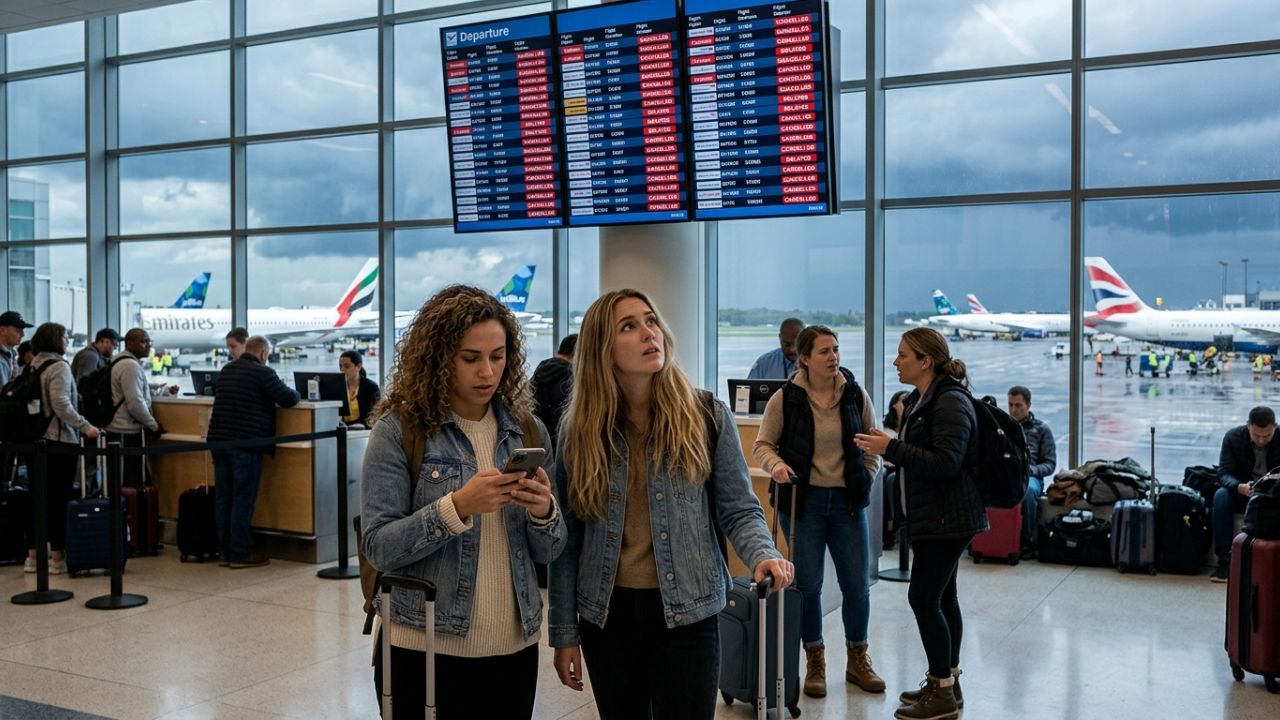
Image representing the severe, weather-driven operational meltdown at Boston Logan International Airport (BOS), where violent thunderstorms have paralyzed major carriers like JetBlue and Republic, generating epic travel chaos and triggering 365 rolling delays and 45 flight cancellations. (Image Credit: Aviation Tracking Network)
Boston Logan Meltdown Triggers Epic Travel Chaos as Republic and JetBlue Suffer 365 Delays and 45 Cancellations Across Global Network
Severe Convective Thunderstorms Decimate the New England Hub, Severing Global Connectivity to Europe and the Middle East
The international commercial aviation network is currently absorbing a massive logistical shockwave generated from one of the most critical transit points in New England. According to the latest breaking airline news and critical aviation updates, hundreds of desperate passengers are currently physically stranded at Boston Logan International Airport (BOS) as widespread operational delays completely overwhelm the facility. A devastating system of highly active convective thunderstorms has severely degraded the airspace, forcing federal air traffic controllers to execute a highly restrictive Ground Delay programme. This brutal operational intervention has reduced arrival and departure flows to a crawl, inflicting a devastating average delay of around 72 minutes on trapped aircraft. The sheer intensity of this weather event has officially triggered a massive 365 rolling flight delays and 45 absolute flight cancellations, generating unprecedented travel chaos for massive global carriers including Republic, JetBlue, British Airways, Emirates, and Air Canada.
Because Boston Logan operates as a massive domestic fortress and a highly trafficked transatlantic gateway, this severe, localized weather event has immediately created a terrifying, uncontrollable ripple effect. The staggering volume of airport disruptions has severely paralyzed connectivity not only across heavily trafficked United States and Canadian routes but also throughout massive international corridors connecting Europe, the Middle East, and Latin America. Desperate passengers are currently enduring agonizingly extended waiting times, chaotic rebooking procedures, and devastating missed connections as airlines frantically attempt to clear the congested terminal gates. With the severe weather continuing to choke the departure corridors, this localized breakdown in Boston definitively highlights the terrifying fragility of the modern hub-and-spoke airline model when subjected to massive, multi-airport system imbalances.
Section-Wise Breakdown: The Anatomy of the Boston Collapse
The highly detailed operational data exposes how rapidly a weather delay at a massive coastal hub completely destroys domestic and international connectivity:
The Convective Ground Delay Program The absolute primary driver of this terrifying disruption is massive convective weather activity developing aggressively over the highly sensitive New England region. These violent thunderstorms immediately forced the FAA to enact a severe Ground Delay programme, drastically reducing the volume of inbound and outbound traffic that can be safely processed. In commercial aviation, an average delay of 72 minutes completely destroys the highly synchronized turnaround schedules that airlines rely upon. Because BOS operates with incredibly high traffic volume, even the shortest weather pause escalates instantly into a massive backlog, transforming a minor flow restriction into a multi-hour logistical nightmare that physically traps hundreds of passengers at the gate.
Republic and JetBlue Absorb the Destruction As dominant operators at the Boston fortress hub, Republic and JetBlue are absorbing the absolute worst of the destruction. The operational tracking data explicitly confirms that Republic leads the disruption matrix with a staggering 70 active delays and 19 absolute cancellations, completely crippling the vital regional connectivity feeding into Boston. JetBlue follows dangerously close, suffering 86 delays and 12 cancellations, severely damaging its core operational network. Delta Air Lines suffered heavily with 45 delays and 2 cancellations, while American Airlines registered 36 delays and 4 cancellations. United Airlines recorded 27 delays. The absolute carnage also heavily infected vital regional and short-haul feeder operators, including Southwest, Envoy Air, Porter Airlines, Cape Air, Jazz, and Boutique Air.
Massive Domestic and Global Spillover The chaos aggressively bled out of Massachusetts, creating a horrific inbound imbalance from the most heavily trafficked airports on the continent. The disruption network severely impacted major US hubs including John F Kennedy (JFK), LaGuardia (LGA), Reagan National (DCA), Dallas–Fort Worth (DFW), Chicago O’Hare (ORD), Houston Bush (IAH), Newark Liberty (EWR), and Philadelphia (PHL). Secondary feeders such as BWI, Detroit (DTW), Charlotte (CLT), Raleigh–Durham (RDU), St Louis (STL), Milwaukee (MKE), and Buffalo (BUF) were dragged directly into the crisis. Internationally, the highly lucrative transatlantic connections suffered brutal delays. Premium carriers including Lufthansa, British Airways, Emirates, Air Canada, Swiss, TAP Air Portugal, Turkish Airlines, and LATAM Brasil reported varying levels of severe impact, while global gateways including London Heathrow (LHR), Frankfurt (FRA), Zurich (ZRH), Madrid (MAD), Milan (MXP), Rome (FCO), Lisbon (LIS), Istanbul (IST), Dubai (DXB), São Paulo (GRU), Toronto (YYZ), and Halifax (YHZ) were hit by the brutal shockwaves of the Boston Logan collapse.
Flight Details: The Boston Logan Hub Disruption Matrix
To provide exact, factual clarity on the immense scale of this logistical failure, aviation analysts have mapped the specific operational metrics reported out of BOS. The following factual matrix details the precise breakdown of the absolute cancellations and active delays by the primary affected carriers:
Factual Boston Logan (BOS) Disruption Matrix
| Airline Carrier | Cancelled Flights | Delayed Flights |
|---|---|---|
| Republic | 19 | 70 |
| JetBlue | 12 | 86 |
| American Airlines | 4 | 36 |
| Delta Air Lines | 2 | 45 |
| United Airlines | 0 | 27 |
| Total BOS Airport Metrics (All Carriers) | 45 | 365 |
Data reflects the extreme operational failures recorded at Boston Logan International Airport. Additional delays impacted international carriers like British Airways and Emirates, alongside regional operators like Porter and Cape Air. (Source: FlightAware)
Passenger Impact: Trapped in the New England Congestion
For the traveling public, the sudden meltdown at Boston Logan represents an inescapable nightmare. The highly engineered hub-and-spoke structure means that passengers are currently physically trapped inside the terminal, enduring excruciatingly long queues for customer service assistance as the 72-minute average delay completely obliterates any hope of making international connections. The high volume of flight cancellations forces airlines to aggressively attempt to re-accommodate passengers, but because the entire East Coast network is severely congested, alternative seats are mathematically nonexistent. The psychological stress of the travel chaos is immense, and travelers on tight itineraries or complex multi-leg journeys—especially those connecting through London Heathrow or JFK—are suffering catastrophic logistical failures.
Industry Analysis: The Fatal Flaw of Network Imbalance
Aviation analysts closely monitoring the Boston meltdown emphasize that this crisis exposes a complex, multi-airport system imbalance rather than a single operational failure. When severe thunderstorms force the FAA to implement a massive Ground Delay programme at Boston Logan, the resulting congestion creates an immediate inbound backup across the entire continent. Airports from Dallas to Dubai suddenly find their Boston-bound aircraft trapped at the gate. Until the weather fully clears and the upstream congestion across key origin airports officially stabilizes, Boston Logan lacks the physical runway capacity and gate space to rapidly clear the massive backlog, guaranteeing rolling delays well into the night.
Conclusion: A Global Network Paralyzed by Local Weather
The intense operational collapse at Boston Logan International Airport serves as a highly visible, definitive warning regarding the fragility of modern aviation routing. With a staggering 365 severe delays and 45 absolute cancellations, the violent thunderstorms over Massachusetts have effectively paralyzed Republic, JetBlue, and major international legacy carriers, resulting in undeniable, global travel chaos. As the FAA attempts to manage the massive Ground Delay programme and airlines frantically struggle to clear the massive backlog, passengers attempting to reach destinations from London Heathrow to São Paulo must brace for severe, ongoing airport disruptions. Moving forward, travelers heavily reliant on the Boston hub must maintain extreme flexibility and constantly monitor airline applications to successfully navigate the highly volatile reality of summer storm season. (Source: FlightAware via Nomad Lawyer)
Key Takeaways
- Massive BOS Collapse: Severe thunderstorms over New England triggered a massive Ground Delay programme, forcing 365 rolling delays and 45 absolute cancellations at Boston Logan International Airport.
- Republic & JetBlue Devastated: Republic absorbed the worst cancellations (19 cancels / 70 delays), while JetBlue suffered the highest delay volume (86 delays / 12 cancels).
- Massive Ground Holds: The FAA-mandated flow restrictions created a brutal average flight delay of approximately 72 minutes.
- Global Shockwaves: The massive backlog completely disrupted international connections across Europe, the Middle East, and Latin America, crippling flights bound for London, Frankfurt, Dubai, and São Paulo.
- Domestic Gridlock: The disruption heavily infected major US hubs, violently delaying connecting flights from JFK, Dallas-Fort Worth, Chicago O'Hare, and Newark Liberty.
✈️ Frequently Asked Questions (Factual Aviation & Disruption Data)
What specific airport served as the primary epicenter for this massive operational breakdown? The severe disruption and resulting travel chaos were completely concentrated at Boston Logan International Airport (BOS) in Massachusetts.
Exactly how many total cancellations and delays were recorded at Boston during this event? According to reported operational figures, the airport suffered a staggering 365 flight delays and 45 absolute cancellations.
What was the average wait time for flights trapped in the federal Ground Delay programme? Because of the intense thunderstorms, the FAA Ground Delay programme inflicted a severe average delay of around 72 minutes on affected aircraft.
Which major airlines absorbed the heaviest volume of delays and cancellations? Republic was heavily damaged with 70 delays and 19 cancellations, while JetBlue suffered 86 active delays and 12 absolute cancellations.
How severely were the major US legacy carriers impacted by this meltdown? Delta Air Lines suffered 45 delays and 2 cancellations, American Airlines registered 36 delays and 4 cancellations, and United Airlines recorded 27 delays.
Which major international gateways suffered severe spillover delays linked to the Boston chaos? The global ripple effect disrupted international schedules at massive gateways including London Heathrow, Frankfurt, Zurich, Madrid, Milan, Rome, Lisbon, Istanbul, Dubai, São Paulo, Toronto, and Halifax.
Which major US domestic airports contributed to the massive inbound congestion? Inbound congestion was heavily driven by major hubs including JFK, LaGuardia, Reagan National, Dallas–Fort Worth, Chicago O’Hare, Houston Bush, Newark Liberty, and Philadelphia.
What other international legacy carriers reported delays due to the Boston congestion? In addition to domestic operators, significant delays were reported by major global carriers including Lufthansa, British Airways, Emirates, Air Canada, Swiss, TAP Air Portugal, Turkish Airlines, and LATAM Brasil.
🌍 Related Travel Guides & Flight Resources
- Navigate Airport Disruptions Like a Pro Master the art of surviving unexpected travel chaos with our expert strategies.
- Breaking Airline News & Evasion Routes Stay ahead of the delays with our real-time aviation updates and route intelligence.
- Global Flight Cancellation Defense Grid Essential legal rights and compensation tactics when your flight goes down.
⚖️ Disclaimer
The flight cancellation statistics, delay metrics, and airline operational overviews provided in this report are for informational purposes only. The specific aviation variables regarding the operational meltdown at Boston Logan International Airport (BOS)—including the exact cancellation and delay figures for Republic, JetBlue, Delta, and American Airlines, as well as the 72-minute average delay imposed by the FAA Ground Delay programme—are highly volatile and subject to rapid, real-time adjustments by federal air traffic controllers and corporate airline dispatchers. All data has been officially sourced from FlightAware and affected airport authorities as of June 15, 2026. NomadLawyer does not guarantee the absolute accuracy or current validity of the information provided and assumes no liability for sudden schedule changes, rolling domestic delays, agonizing missed connections, or any financial consequences resulting from the use of this content. Passengers trapped in the current Boston disruption are strongly advised to utilize their airline’s official mobile applications for emergency rebooking updates.
Disclaimer
This article is for informational and educational purposes only. It does not constitute legal, financial, or professional advice. While we strive to provide accurate and up-to-date information, travel policies, regulations, and conditions change rapidly. Always verify information with official sources before making travel decisions. Nomad Lawyer makes no representations about the accuracy, reliability, completeness, or suitability of the information provided. Readers should consult qualified professionals for advice specific to their circumstances. The views expressed in this article are those of the author and do not necessarily reflect the views of Nomad Lawyer.
Kunal K Choudhary
Co-Founder & Contributor
A passionate traveller and tech enthusiast. Kunal contributes to the vision and growth of Nomad Lawyer, bringing fresh perspectives and driving the community forward.
Learn more about our team →