
Border checks strand 120+ easyJet passengers at Milan Linate in April 2026
Over 120 easyJet passengers missed their Manchester flight after the EU's new Entry/Exit System overwhelmed Milan Linate border control on April 12, 2026, leaving the aircraft nearly empty.

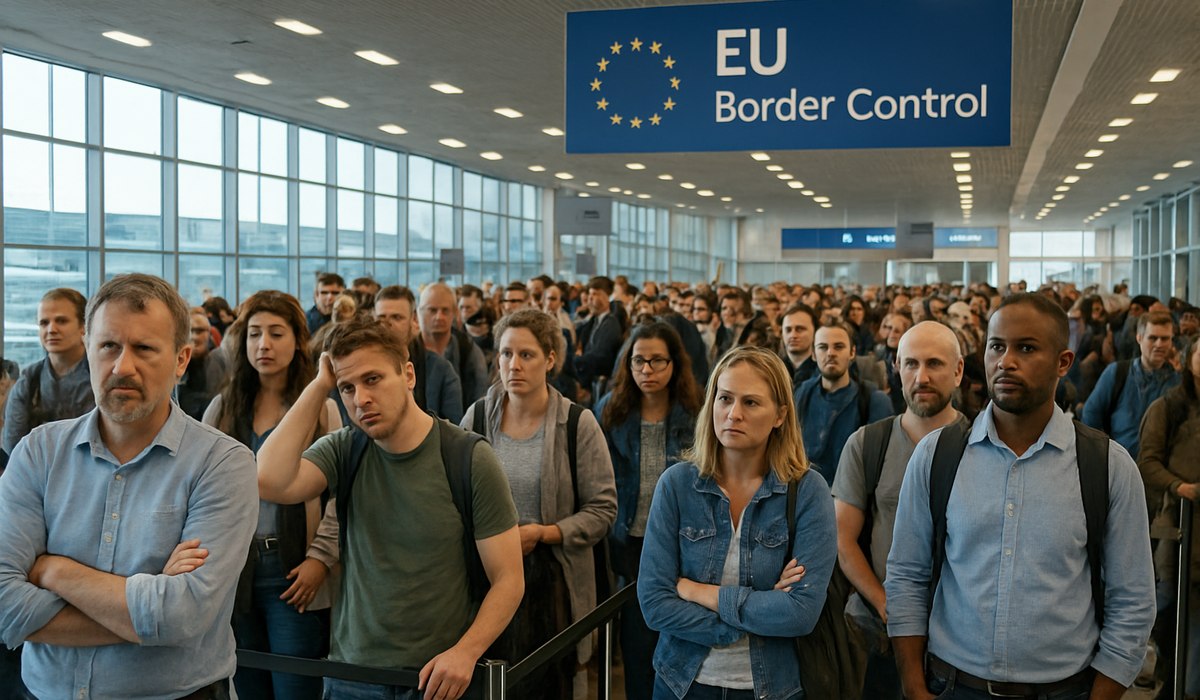
Image generated by AI
EU Entry/Exit System Creates Unprecedented Airport Disruption
Over 120 easyJet passengers were stranded at Milan Linate Airport on April 12, 2026, after the European Union's new Entry/Exit System (EES) caused massive delays at border control. The flight to Manchester departed with only 34 of 156 booked passengers aboard, leaving approximately 120 to 122 travelers trapped in processing queues. This incident represents one of the most severe disruptions since the EES moved into full operation, highlighting the challenges non-EU nationals—including UK citizens—now face when crossing Schengen borders.
EES Implementation Causes Milan Airport Gridlock
The border checks strand incident occurred during peak spring travel season at Milan Linate, one of Italy's busiest airports. The European Union's Entry/Exit System, designed to record biometric data and track all non-EU arrivals and departures, has overwhelmed processing capacity at multiple airports since its April 2026 launch. Milan Linate's passport control experienced queues stretching for hours, with staff unable to process the volume of UK and other third-country nationals requiring fingerprint and facial recognition registration.
Industry bodies including European airport associations and airline groups have publicly acknowledged the disruption, characterizing the initial rollout as marked by "passenger disruption, long queues and missed flights at several airports." The combination of new biometric procedures, limited staffing allocation, and high spring travel demand created a perfect storm at this critical hub. easyJet released statements describing the delays as "unacceptable" while emphasizing that airlines cannot control government-operated border processing systems.
Flight Departs with Only 34 of 156 Booked Passengers
Passengers arriving at Milan Linate well in advance of their scheduled departure found themselves unable to clear the new EES checks in time to reach the gate. As the aircraft pushed back from the terminal, news outlets reported that approximately 78% of booked passengers remained in border control lines. Accounts from stranded travelers describe families forced to purchase expensive replacement flights, some paying over £1,000 per ticket to reach their final destinations via alternative European hubs. Others were rerouted to London instead of Manchester, while some faced multi-day waits for the next direct service.
Medical incidents were also reported, with witnesses describing passengers becoming unwell during extended waits in densely packed queues. Consumer advocates highlighted that many travelers had followed existing arrival recommendations—arriving two to three hours before departure—yet the new border checks strand protocol required significantly more processing time than anticipated.
Biometric Data Collection Slows Processing Times
The EES mandate requires all non-EU nationals, including British citizens post-Brexit, to undergo biometric registration upon entry and exit from the Schengen area. This includes fingerprint scanning and facial image capture. At Milan Linate, officers discovered that the volume of UK travelers requiring first-time registration created unexpected bottlenecks. Processing times per traveler increased substantially compared to traditional passport control procedures.
European airport operators have called for temporary suspension or scaling back of full EES checks during peak periods, pending infrastructure improvements and additional staffing. The system aims to enhance security through comprehensive data collection, but the initial implementation revealed that airports require more resources than currently allocated. According to industry commentary, the Schengen zone's external borders were not adequately prepared for the simultaneous processing demands when EES moved from testing to mandatory enforcement.
What UK Travelers Need to Know About EES Requirements
British passengers now classified as third-country nationals must understand the new requirements when traveling to or from Schengen countries. The EES border checks strand incident at Milan demonstrates that standard airport arrival times may no longer suffice. Here's what UK travelers should know:
UK nationals must register biometric data (fingerprints and facial images) upon their first EES crossing within a 12-month period. Subsequent crossings within that window may process more quickly once registration is complete. Travelers should plan for extended processing times at European airports, particularly during peak seasons like Easter and summer holidays. The system applies to all non-EU visitors, making queues at major hubs like Milan, Frankfurt, and Paris consistently longer than before EES implementation.
Airlines and airports recommend arriving at least three to four hours before international departure when transiting through Schengen airports. Passengers connecting between flights face particular risk; the Milan incident demonstrates that missed connections are now possible even with proper arrival times. Travel insurance with disruption coverage is recommended for all UK-Schengen travel during this adjustment period.
Key Data: EES Impact at Milan Linate (April 12, 2026)
| Metric | Figure | Status |
|---|---|---|
| Booked passengers on easyJet flight | 156 | Confirmed |
| Passengers who boarded aircraft | 34 | Confirmed |
| Passengers stranded at border control | ~120-122 | Estimated |
| Percentage of flight that departed empty | ~78% | Confirmed |
| Flight route | Milan to Manchester | Confirmed |
| Primary cause | EES biometric processing delays | Confirmed |
| Reported incident date | April 12, 2026 | Confirmed |
| Peak queue wait time | 2-3+ hours | Reported |
What This Means for Travelers
The Milan Linate incident establishes critical precedent for all travelers planning Schengen crossings in 2026. Here are actionable steps to minimize disruption risk:
-
Increase arrival buffer time significantly. Standard two-hour airport arrival recommendations no longer apply at EES-affected borders. Plan for minimum three to four hours before departure on international flights from Schengen airports.
-
Complete EES biometric registration early. If traveling to Schengen for the first time under EES rules, allow maximum processing time. First-time registration is mandatory and cannot be expedited.
-
Avoid peak travel periods when possible. The Milan disruption occurred during Easter holiday season. Flying mid-week and avoiding school holidays reduces queue risk substantially.
-
Monitor airline communications. Check easyJet, Ryanair, and other carriers for updated guidance on processing times at major hubs. Airlines increasingly publish real-time border queue updates.
-
Purchase comprehensive travel insurance. Coverage including missed connection protection and travel disruption compensation provides financial protection if EES delays prevent boarding.
-
Connect only through major hubs with upgraded facilities. Smaller airports may have inadequate EES infrastructure. When possible, route through Frankfurt, Amsterdam, or Paris rather than secondary hubs.
Frequently Asked Questions About EES and Border Delays
Q: Do I need to register for EES before traveling to Europe? A: No advance registration exists for EES. All eligible third-country nationals (including UK citizens) register upon first arrival in the Schengen zone. This mandatory registration now requires biometric capture, creating processing delays. Plan extra time at borders during your first Schengen crossing.
Q: Will the Milan border checks strand situation repeat at other airports? A: Yes, similar disruptions have already occurred at Frankfurt, Rome, and other major hubs. April 2026 data indicates that most airports lack sufficient EES infrastructure. Travelers should expect delays and queues at all primary Schengen gateways through at least mid-2026.
Q: Can easyJet be held responsible for the stranded passengers? A: Airlines have limited legal responsibility when government border systems cause delays. easyJet acknowledged the situation as "unacceptable" but emphasized they cannot control state-run border processing. Passengers seeking compensation should file claims with both the airline and the Italian government's aviation authority.
Q: How long does EES biometric registration take per traveler? A: Processing time ranges from 2-
Disclaimer
This article is for informational and educational purposes only. It does not constitute legal, financial, or professional advice. While we strive to provide accurate and up-to-date information, travel policies, regulations, and conditions change rapidly. Always verify information with official sources before making travel decisions. Nomad Lawyer makes no representations about the accuracy, reliability, completeness, or suitability of the information provided. Readers should consult qualified professionals for advice specific to their circumstances. The views expressed in this article are those of the author and do not necessarily reflect the views of Nomad Lawyer.
Kunal K Choudhary
Co-Founder & Contributor
A passionate traveller and tech enthusiast. Kunal contributes to the vision and growth of Nomad Lawyer, bringing fresh perspectives and driving the community forward.
Learn more about our team →