
Security Chaos Strands 120+ EasyJet Passengers at Milan Linate
Over 120 EasyJet passengers missed their Manchester flight after EU's new biometric entry system caused severe security chaos strands at Milan Linate Airport. The incident exposed critical infrastructure gaps in 2026.

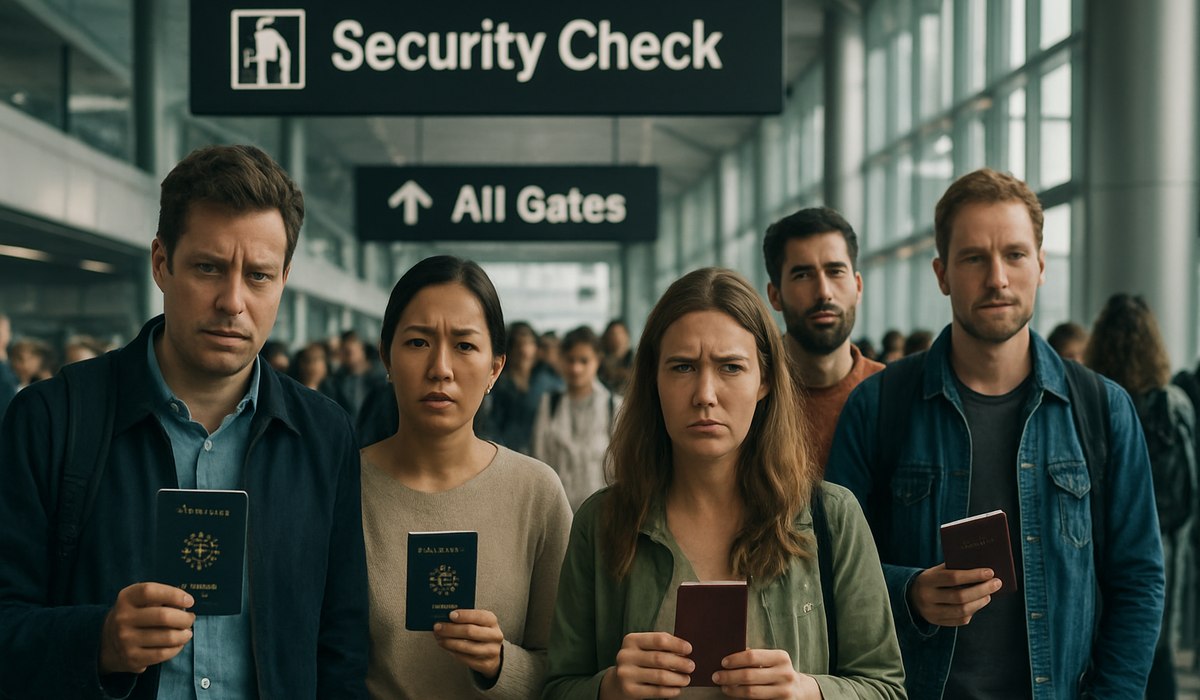
Image generated by AI
Breaking: Security Chaos Strands Over 120 EasyJet Passengers at Milan Linate
More than 120 EasyJet passengers became stranded at Milan Linate Airport after overwhelming passport control delays prevented them from boarding their Manchester flight on a mid-April 2026 Sunday. The security chaos strands incident exposed critical vulnerabilities in how European airports handle the EU's new biometric entry requirements. Travelers who arrived 60 to 120 minutes before departure found themselves trapped in non-Schengen passport control queues, unable to reach the gate before boarding closed.
Passport Control Bottleneck Turns Routine Flight Into Operational Crisis
The disruption unfolded when hundreds of passengers converged on Milan Linate's limited passport control booths. Accounts from affected travelers reveal queues barely moved as fingerprint scans and facial recognition requirements slowed processing. Officers struggled to manage both standard document verification and mandatory biometric enrollment simultaneously.
Unlike traditional security screening, which has been streamlined with modern scanning technology, the new biometric procedures require individual processing time. At Linate, the combination proved catastrophic. Passengers arriving with standard advance timing discovered they lacked sufficient buffer for the extended border control process.
One critical factor: the incident occurred on a Sunday, when overall passenger volumes spike but staffing levels may not increase proportionally. According to the European Union's official guidance on the Entry/Exit System, first-time users require longer processing windows. However, airport infrastructure at Linate was not operationally adjusted to accommodate this reality during peak travel periods.
The EasyJet service departed with dozens of empty seats. Stranded passengers emerged from passport control to discover boarding had closed. The airline subsequently faced demands for rebooking assistance and compensation from affected travelers.
EU's New Biometric Entry System Overwhelms Airport Infrastructure
The security chaos strands incident coincided directly with full operational rollout of the European Union's Entry/Exit System. This framework captures biometric data—fingerprints and facial images—for non-EU nationals entering the bloc. The system aims to enhance border security and reduce manual passport stamping requirements.
In early implementation, however, the system has significantly extended processing times for first-time users. UK nationals, Australian travelers, and other non-EU visitors required biometric enrollment alongside standard checks. At Milan Linate, this dual-process reality created an unforeseen operational bottleneck.
Travel experts and airport operations analysts note that European airports have historically maintained tight coordination between security screening and gate operations. The new biometric layer disrupted this delicate balance. Without corresponding increases in staffing or booth capacity, processing capacity collapsed under normal weekend passenger loads.
The incident raised urgent questions about infrastructure investment. Many regional European airports operate with passport control facilities designed for pre-biometric volumes. Milan Linate, despite its modern reputation, was not sufficiently equipped for the new system's demands during peak periods.
What the Entry/Exit System Means for 2026 Travelers
The security chaos strands at Milan Linate represents a broader pattern emerging across Europe in 2026. All non-Schengen residents—including UK, US, Canadian, Australian, and other passport holders—now face mandatory biometric processing. First-time registration adds 10 to 20 minutes per traveler beyond traditional passport control.
Airports must now balance three competing pressures: higher passenger volumes post-pandemic recovery, new biometric procedures, and existing staffing constraints. Milan Linate serves as a cautionary case study. Similar bottlenecks have been reported at major hubs including Frankfurt, Rome Fiumicino, and Paris Charles de Gaulle.
The incident underscores a critical gap between policy implementation and operational readiness. European governments mandated the new system without ensuring proportional infrastructure upgrades. Airports absorbed these requirements with existing resources, creating predictable disruption during busy travel periods.
For frequent travelers, the implications are substantial. Arrival buffers that proved adequate for 2025 now risk cutting margins dangerously thin. What previously required 90 minutes of pre-departure airport time may now demand 120 to 150 minutes, particularly for first-time registrants using non-EU passports.
How to Protect Yourself From Airport Security Disruptions
Managing security chaos strands risks requires advance planning and realistic timing expectations. Apply these protective measures before your next European trip:
Arrive Earlier Than Recommended Guidelines Suggest. Standard industry advice recommends 90 minutes for intra-European flights. In 2026, non-EU passengers should target 150 minutes minimum, particularly at busier airports. This buffer accommodates both biometric processing and unexpected queue extensions.
Check Your Passport Validity Status. Biometric enrollment occurs during first EU entry. Once registered in the system, subsequent trips process faster. Verify your registration status before travel; consulates and official government portals provide enrollment records.
Book Flights During Quieter Periods When Possible. Midweek departures and early morning slots experience significantly shorter passport control queues compared to weekend flights. Milan Linate's incident occurred during peak Sunday afternoon operations. Strategic flight selection reduces vulnerability to bottlenecks.
Choose Airports With Modern Infrastructure. Larger hubs invested in additional passport booths and biometric equipment faster than regional airports. Research your departure airport's infrastructure upgrades before booking. Major EU gateways generally handle volume better than secondary facilities.
Monitor Real-Time Airport Conditions. Many airports now publish live passport control wait times through official apps and websites. Check these metrics before heading to the terminal. Real-time data enables decision-making about alternative entry routes or timing adjustments.
Key Facts: Milan Linate Incident Overview
| Metric | Details |
|---|---|
| Passengers Affected | 120+ EasyJet ticketed passengers |
| Flight Destination | Manchester, United Kingdom |
| Date of Incident | Mid-April 2026 (Sunday) |
| Primary Cause | EU Entry/Exit System biometric delays at non-Schengen passport control |
| Processing Bottleneck | Fingerprint scanning and facial recognition enrollment for non-EU nationals |
| Typical Arrival Time | 60–120 minutes before departure |
| System Implementation Date | Early April 2026 (full operational status) |
| Affected Passenger Types | UK, Australian, Canadian, US passport holders |
| Rebooking Outcomes | Mixed results; some passengers faced days of delays and out-of-pocket expenses |
| Airport Capacity Issue | Insufficient passport booth staffing relative to biometric processing demands |
What This Means for Travelers in 2026
The Milan Linate security chaos strands incident carries five critical takeaways for anyone traveling to or within Europe this year:
1. Revise Your Airport Arrival Timeline. Add 30 to 60 minutes beyond previous standards if you hold a non-EU passport. The biometric entry system is not a temporary bottleneck; it is now permanent operational reality across European airports.
2. Register Your Biometric Data at First Opportunity. Enrollment occurs during your first EU entry. Subsequent trips process faster through existing system records. Getting registered early minimizes disruption on future journeys.
3. Choose Your Departure Airport Strategically. Airports with expanded biometric facilities and higher staffing levels handle volume more efficiently. Research infrastructure investments before booking. Larger hubs outperform regional airports during peak periods.
**4. Purchase Travel
Disclaimer
This article is for informational and educational purposes only. It does not constitute legal, financial, or professional advice. While we strive to provide accurate and up-to-date information, travel policies, regulations, and conditions change rapidly. Always verify information with official sources before making travel decisions. Nomad Lawyer makes no representations about the accuracy, reliability, completeness, or suitability of the information provided. Readers should consult qualified professionals for advice specific to their circumstances. The views expressed in this article are those of the author and do not necessarily reflect the views of Nomad Lawyer.
Raushan Kumar
Founder & Lead Developer
Full-stack developer with 11+ years of experience and a passionate traveller. Raushan built Nomad Lawyer from the ground up with a vision to create the best travel and law experience on the web.
Learn more about our team →