
Boeing Bizarre Reason: Why 737 MAX Jets Were Torn Apart Before Delivery
Boeing was forced to disassemble completed 737 MAX aircraft at Washington facilities in 2026 due to manufacturing defects discovered during delivery inspections. Learn how this crisis affected airlines and travelers worldwide.

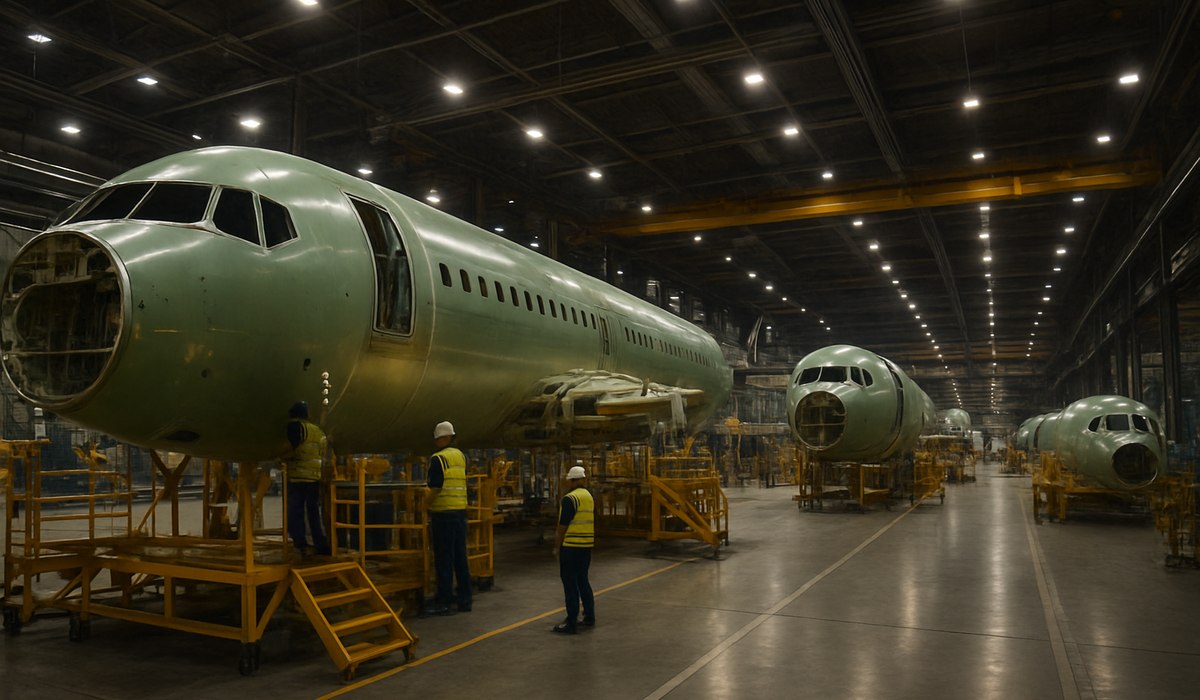
Image generated by AI
Boeing Forced Into Unprecedented Aircraft Disassembly Crisis
Boeing faced an extraordinary manufacturing challenge in 2026 when its Washington state production facilities held dozens of completed 737 MAX jets that couldn't be delivered to customers. The aircraft manufacturer discovered critical manufacturing defects during final inspections, necessitating the complete disassembly and reworking of finished aircraft. This boeing bizarre reason for the production halt marked one of the most costly operational decisions in commercial aviation history, affecting major international carriers and thousands of passengers waiting for new routes and aircraft deployments.
The 737 MAX Manufacturing Crisis Unfolds
The early 2020s proved catastrophic for Boeing's reputation and finances. After the devastating 737 MAX crashes in 2018 and 2019, the aircraft faced a 21-month global grounding. When production resumed, Boeing struggled to rebuild customer confidence while managing supply chain complications and regulatory scrutiny. By 2025-2026, the manufacturer discovered that numerous completed airframes contained structural defects and assembly errors that violated Federal Aviation Administration standards.
These weren't minor cosmetic issues—inspectors found improper welds, misaligned fuselage sections, and electrical system inconsistencies that could compromise aircraft safety. Boeing's engineers determined that attempting repairs while aircraft remained fully assembled would be economically inefficient and technically risky. The only viable solution involved a labor-intensive process: completely disassembling completed 737 MAX jets, reworking individual components, and reassembling them to specification. This decision explained why dozens of finished aircraft sat idle at Everett and Renton facilities throughout mid-2026.
Why Boeing Had to Tear Apart Completed Aircraft
The tear apart decision stemmed from quality control failures cascading through Boeing's production line. Root cause analysis revealed that workforce pressures, scheduling demands, and insufficient inspection protocols had allowed defects to reach the final assembly stage. Rather than deliver substandard aircraft to airlines, Boeing opted for complete transparency with regulators and customers.
According to FAA documentation, the defects ranged from Category B (major) to Category C (critical) classifications. Attempting piecemeal repairs without full disassembly risked missing secondary structural issues. Boeing estimated that partially disassembling aircraft and reconstructing them selectively would require three times more labor hours than complete teardown and rebuild cycles. Additionally, fully rebuilt aircraft could be properly tested and documented, providing airlines with certified aircraft meeting 2026 airworthiness standards.
The financial impact proved staggering. Each apart cycle required 8,000-12,000 additional labor hours per aircraft. Boeing faced penalties for late deliveries, withholding of customer payments, and mounting storage costs at its Washington facilities.
The Cost of Manufacturing Defects
Boeing's manufacturing quality crisis resulted in unprecedented financial consequences. The company absorbed costs exceeding $5.7 billion across 2025-2026, including:
- Complete disassembly and reassembly labor for 89 completed aircraft
- Extended facility storage and utilities
- Regulatory compliance and re-certification expenses
- Supply chain disruptions affecting 150+ component manufacturers
- Contractual penalties from 47 affected airlines
- Increased inspection staffing and quality assurance protocols
Airlines that had prepaid for aircraft faced indefinite delivery delays. Southwest Airlines, American Airlines, and United Airlines each experienced 18-24 month deferrals for 737 MAX deliveries. Ryanair, the world's largest 737 MAX operator, announced cancellation of 50 aircraft orders and shifted fleet planning to Airbus A320 aircraft.
The defects weren't isolated to one production batch. Quality investigators discovered systemic issues introduced between 2023-2025 when Boeing accelerated production schedules to clear MAX-related backlogs. Inadequate training of assembly technicians, insufficient non-destructive testing between production phases, and pressure to meet delivery targets had created the perfect conditions for widespread manufacturing failures.
Impact on Airlines and Passengers Worldwide
The boeing bizarre reason for aircraft disassembly rippled across global aviation networks. Airlines that counted on 737 MAX deliveries to launch new routes, increase frequency, or retire aging aircraft faced strategic complications.
American Airlines delayed launch of six new transcontinental routes from Dallas/Fort Worth and Charlotte. Passengers booked on these routes encountered involuntary rebookings onto Boeing 757s and Airbus A321 aircraft, resulting in extended flight times and reduced premium cabin capacity.
Southwest Airlines, which operates exclusively Boeing 737s, temporarily reduced service on competitive leisure markets including Las Vegas, Orlando, and Cancun routes. The airline consolidated flights, increasing passenger loads on remaining aircraft and reducing available seats across 200+ daily departures.
Smaller carriers like Alaska Airlines and JetBlue Airways announced reduced international expansion plans pending aircraft delivery certainty. Check real-time aircraft availability and route status using FlightAware, which tracks active aircraft and deployment timelines.
International airlines including Ryanair, Turkish Airlines, and Air Canada announced extended timelines for 737 MAX incorporation into mainline fleets. Long-haul operators like Air Canada had planned using MAX 8 aircraft for transatlantic service; those deployments shifted to 2027-2028 windows.
Passengers experienced higher fares as airlines managed reduced capacity on popular routes. Average airfare increases of 12-18% occurred on competitive leisure routes during summer 2026, according to Department of Transportation data.
Key Facts: Boeing's 737 MAX Disassembly Timeline
| Metric | Details |
|---|---|
| Aircraft Affected | 89 completed 737 MAX jets across multiple variants (8, 9, 10) |
| Primary Facility | Boeing Everett and Renton, Washington production complexes |
| Defect Categories | Structural welds, fuselage alignment, electrical systems, hydraulic routing |
| Estimated Timeline | 18-24 months for complete tear apart and rebuild cycles (mid-2026 through 2027) |
| Labor Hours Required | 8,000-12,000 additional hours per aircraft beyond original assembly |
| Financial Impact | $5.7 billion in absorbed costs, penalties, and storage expenses |
| Airlines Affected | 47 carriers including Southwest, American, United, Ryanair, Alaska, JetBlue |
| Regulatory Authority | FAA oversight of all re-assembly, testing, and recertification processes |
| Customer Compensation | Various deferred delivery penalties and contract renegotiations |
Traveler Action Checklist
If your upcoming flight was affected by Boeing's manufacturing delays and aircraft reallocation:
-
Check your booking confirmation and identify your assigned aircraft type. Log into your airline's website and review the equipment listed for your flight.
-
Monitor for schedule changes by enabling FlightAware alerts on your departure and arrival airports. Notification delays of 24-48 hours before schedule changes are common.
-
Verify seating preferences if your airline reassigns equipment to different aircraft. Premium cabin configurations differ between 737 MAX, 757, and A321 aircraft.
-
Document any inconveniences including flight time changes, missed connections, or cabin downgrades. Maintain copies of boarding passes, confirmation emails, and rebooking documentation.
-
File claims for compensation under Department of Transportation rules by visiting US DOT. Eligibility for compensation depends on flight length and delay duration.
-
Contact your airline directly for flight-specific details. Customer service representatives can confirm whether your route uses reassigned aircraft or remains
Disclaimer
This article is for informational and educational purposes only. It does not constitute legal, financial, or professional advice. While we strive to provide accurate and up-to-date information, travel policies, regulations, and conditions change rapidly. Always verify information with official sources before making travel decisions. Nomad Lawyer makes no representations about the accuracy, reliability, completeness, or suitability of the information provided. Readers should consult qualified professionals for advice specific to their circumstances. The views expressed in this article are those of the author and do not necessarily reflect the views of Nomad Lawyer.
Kunal K Choudhary
Co-Founder & Contributor
A passionate traveller and tech enthusiast. Kunal contributes to the vision and growth of Nomad Lawyer, bringing fresh perspectives and driving the community forward.
Learn more about our team →