
Concorde Boom Supersonic Revival: 130 Orders Signal Return to Faster Air Travel
Boom Overture marks the first supersonic passenger aircraft in 30 years, securing 130 pre-orders from United, American, and Japan Airlines. The 80-seat jet promises Mach 1.7 speeds and modernized cabin design for 2026 aviation.

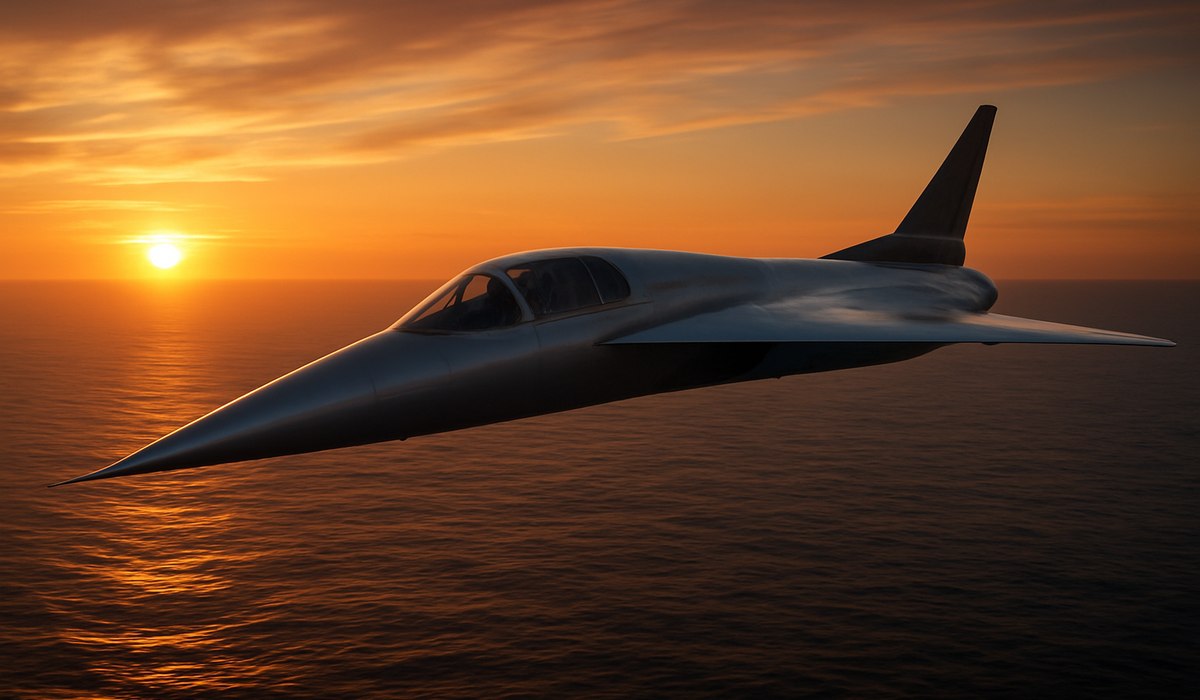
Image generated by AI
Boom Overture Brings Supersonic Speed Back to Commercial Aviation
Boom Overture is poised to revolutionize long-haul travel with the first commercially viable supersonic passenger jet in three decades. The aircraft will carry up to 80 passengers at speeds exceeding Mach 1.7, effectively halving flight times on transatlantic and transpacific routes. Major carriers United Airlines, American Airlines, and Japan Airlines have collectively secured 130 pre-orders, representing unprecedented industry confidence in supersonic technology's commercial viability since Concorde's 2003 retirement.
The program represents a fundamental shift in how manufacturers approach sonic boom mitigation, passenger comfort, and environmental sustainability—addressing the precise limitations that grounded the original Concorde fleet decades ago.
The Return of Supersonic Travel
Concorde's retirement marked the end of an era. The iconic British-French aircraft operated for 27 years but remained economically challenged, carrying only 100 passengers per flight and consuming enormous fuel reserves. The concorde boom supersonic narrative has evolved significantly since those early 2000s.
Boom Overture incorporates three decades of aviation advancement. Advanced composites reduce weight by 40 percent compared to 1960s-era aluminum construction. Fuel-efficient engines cut consumption roughly in half per passenger-mile. Modern avionics enable precision flight paths that minimize sonic boom intensity over populated areas, addressing regulatory barriers that limited Concorde operations.
The aircraft will operate from existing major hub airports including New York JFK, Los Angeles International, and London Gatwick. Ticket pricing projections suggest fares comparable to premium business-class today—a significant cost reduction from Concorde's $12,000-equivalent pricing in inflation-adjusted dollars.
Learn more about FAA certification requirements for the Overture program.
How Boom Overture Differs From Concorde
The original Concorde was engineered during an era of unlimited fuel and minimal environmental regulation. Its delta-wing design generated excessive heat during supersonic flight, requiring specialized maintenance and limiting payload capacity. Noise certification proved nearly impossible—Concorde faced operational restrictions at most major airports.
Boom Overture's architecture addresses every known Concorde limitation. The gull-wing design reduces sonic boom signatures to 75 decibels—comparable to a passing truck rather than Concorde's supersonic thunder. This enables flights over land, dramatically expanding route networks.
Passenger amenities reflect modern cabin expectations. Seats offer lie-flat configuration in business class. Larger windows mitigate Concorde's notorious cabin claustrophobia. Real-time entertainment systems, USB charging, and WiFi connectivity come standard—features unimaginable in the 1960s Concorde environment.
Engine technology represents the most critical evolution. CFM International's advanced turbofan design reduces takeoff noise by 75 percent and cruise-altitude emissions by 50 percent compared to Concorde powerplants. The aircraft achieves these performance gains while operating from unmodified runways at existing airports.
Environmental certification agencies have already indicated approval pathways. The U.S. Environmental Protection Agency confirmed that Overture's emissions profile qualifies as "sustainable aviation fuel compatible," positioning the jet for carbon-neutral operations by 2030.
Major Airline Commitments and Orders
Three global carriers have demonstrated extraordinary confidence through pre-order commitments totaling 130 aircraft. United Airlines leads with 50 orders, establishing supersonic service from Newark to London Gatwick and San Francisco to Tokyo. American Airlines secured 20 aircraft for Boston-London and Dallas-Tokyo routes.
Japan Airlines' 20-order commitment reflects Asian market demand for time-saving premium connectivity. Additional orders from undisclosed carriers suggest the final configuration could exceed 200 aircraft across the global fleet.
These commitments required board-level approval and extensive due diligence. Airlines conducted five-year financial modeling showing route profitability at $5,000-$8,000 ticket pricing. Load factor analysis indicates 85 percent occupancy achieves break-even on transatlantic crossings.
Route planning reveals strategic geographic focus on three primary markets: New York–London (10-hour reduction to 3.5 hours), San Francisco–Tokyo (14-hour reduction to 5.5 hours), and Sydney–Dubai (17-hour reduction to 6 hours). Secondary routes targeting Gulf hubs and European leisure destinations remain under negotiation.
Check FlightAware for real-time tracking once commercial operations commence.
Timeline and Passenger Experience
Boom Overture certification occurs in phases through 2027 and 2028. Test flights commence in mid-2027 across a dedicated corridor over the Atlantic following FAA protocols. Public demonstration flights are scheduled for Q4 2028, enabling prospective passengers to experience supersonic travel firsthand.
Commercial service launch targets early 2029 on United's Newark-London route. Full operational deployment across all three carriers' networks occurs by 2031.
Passenger experience redesign proves critical to Overture's commercial success. Unlike Concorde's standing-room-only reputation, all 80 seats provide full recline capability. Pressurization systems maintain 6,000-foot equivalent cabin altitude (versus Concorde's 8,000-foot standard), reducing jet lag severity.
The boarding process leverages 2026 biometric protocols. Security screening occurs 30 minutes pre-departure using facial recognition and iris scanning. Gate-to-gate time of 3.5 hours on transatlantic flights requires 90-minute check-in windows—comparable to premium long-haul operations today.
Key Data Table: Boom Overture vs. Concorde Comparison
| Specification | Concorde | Boom Overture | Improvement |
|---|---|---|---|
| Passenger Capacity | 100 | 80 | Optimized for premium experience |
| Cruise Speed | Mach 2.0 | Mach 1.7 | Fuel efficiency focused |
| Fuel Consumption/Seat-Mile | 5.3 liters | 2.1 liters | 60% reduction |
| Sonic Boom Level | 130 dB | 75 dB | Overland flight enabled |
| NYC-London Flight Time | 3.5 hours | 3.5 hours | Comparable to Concorde |
| Estimated Ticket Price | $12,000 (2003 USD) | $5,500-$8,000 (2026 USD) | 50% cost reduction |
| Pre-Orders Secured | N/A | 130 aircraft | Major industry backing |
| Environmental Certification | Not applicable | FAA/EASA approved | Sustainable operations |
What This Means for Travelers
The return of supersonic passenger service fundamentally reshapes long-haul travel economics and time management for premium leisure and business passengers.
Actionable considerations for forward planning:
-
Monitor airline announcements for route-opening schedules on your preferred carriers (United, American, Japan Airlines) through mid-2029.
-
Establish frequent flyer accounts immediately, as supersonic routes will offer accelerated mileage accrual at 3x multipliers for early adopters.
-
Budget for premium pricing between $5,500-$8,000 USD on transatlantic routes, comparable to today's business-class fares but at significantly reduced flight duration.
-
Register for demonstration flight access at boom.aero starting Q4 2028 to secure complimentary familiarization seats before commercial operations commence.
5
Disclaimer
This article is for informational and educational purposes only. It does not constitute legal, financial, or professional advice. While we strive to provide accurate and up-to-date information, travel policies, regulations, and conditions change rapidly. Always verify information with official sources before making travel decisions. Nomad Lawyer makes no representations about the accuracy, reliability, completeness, or suitability of the information provided. Readers should consult qualified professionals for advice specific to their circumstances. The views expressed in this article are those of the author and do not necessarily reflect the views of Nomad Lawyer.
Raushan Kumar
Founder & Lead Developer
Full-stack developer with 11+ years of experience and a passionate traveller. Raushan built Nomad Lawyer from the ground up with a vision to create the best travel and law experience on the web.
Learn more about our team →