
The 5 best road trips in Scotland, from the Borders to the Highlands
The 5 best road trips in Scotland, from the Borders to the Highlands

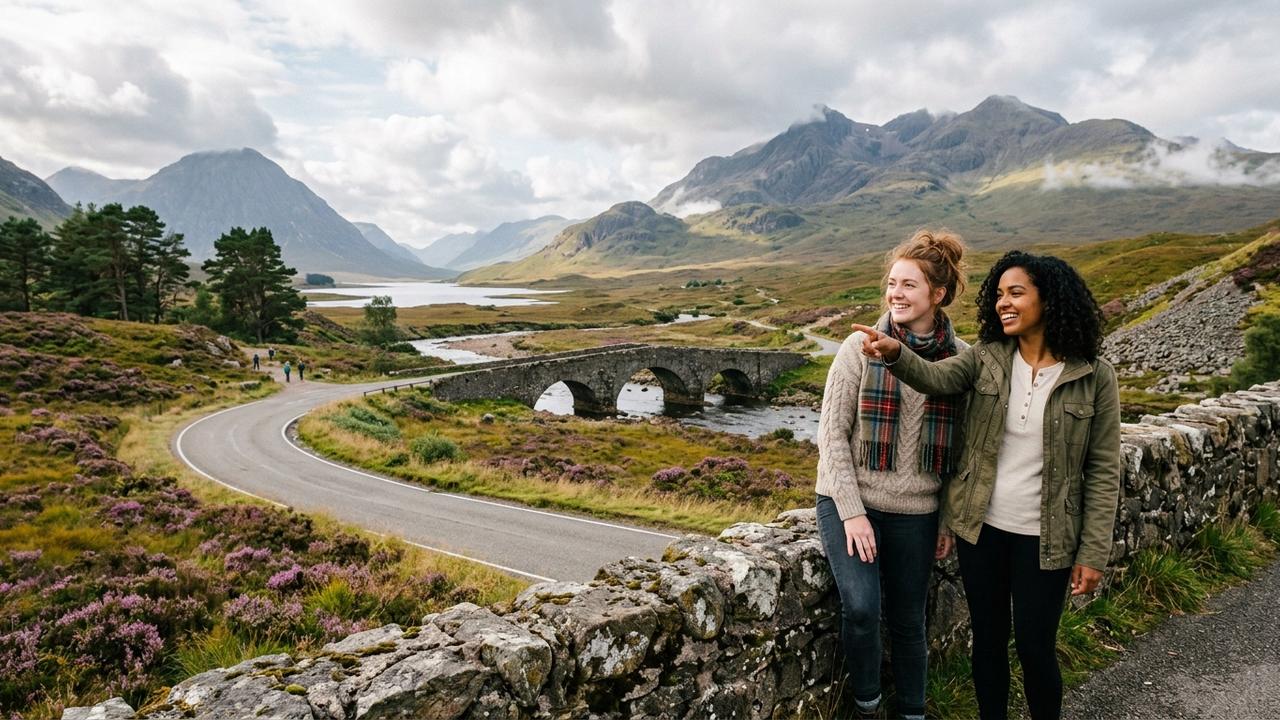
Image generated by AI
Scotland Launches Five Premier Road Routes Spanning From Edinburgh Borders to Highland Coasts for Tourists and Domestic Travelers
[Edinburgh, Scotland] — Scotland road trips now feature five carefully mapped driving itineraries that traverse more than 1,400 miles of coastal highways, mountain passes, and historic valleys. Travel officials and route coordinators confirm that these designated circuits, stretching from the Edinburgh Borders to the remote Highlands, provide structured pathways for tourists navigating the country’s most scenic terrain. Visitors can now access detailed mileage benchmarks, seasonal planning guidelines, and established overnight stops designed to maximize safety and regional economic impact.
Regional tourism boards and transportation authorities have long recognized that Scotland’s topography demands flexible travel strategies. The country’s network of primary highways connects major urban centers, while secondary roads weave through glacial valleys and remote coastal peninsulas. According to recent travel industry reports, domestic and international visitors increasingly prefer self-drive itineraries that bypass crowded transit hubs. Route planners have responded by standardizing mileage estimates, suggesting optimal seasonal windows, and mapping out overnight accommodations that support local hospitality businesses. These five designated circuits now serve as the definitive framework for exploring the region’s natural and cultural landmarks. Transportation advisors emphasize that understanding local driving conditions remains essential for safe navigation across varied elevations.
Isle of Skye Driving Loop Routes Through West Coast Highlands
Tourism coordinators outline a 310-mile circuit that begins and concludes in Fort William, requiring approximately four days to complete. Drivers cross the Skye Bridge near Kyle of Lochalsh to enter the island, where the route passes Portree, Scotland’s largest island settlement. The itinerary directs motorists across the volcanic cliffs of the Trotternish Peninsula and the rugged Duirinish Peninsula, both known for steep coastal trails and established dining venues. Photographers and hikers frequently target the jagged Cuillin Hills, while ferry operators run regular services to the Small Isles archipelago for seasonal wildlife observation. Tourism advisors recommend scheduling visits during May or September to reduce exposure to peak summer congestion and seasonal biting insects.
North Coast 500 Circuit Traverses Northern Scottish Highlands
Established in 2015, this 516-mile loop starts and finishes at Inverness Castle, demanding a full seven-day schedule for optimal pacing. Route maps guide drivers counterclockwise along the eastern coastline, passing through open moorlands and sandy beaches before reaching John O’Groats and Dunnet Head, the northernmost mainland point in the United Kingdom. Continuing westward, the path cuts through peat bogs, steep sea cliffs, and historic agricultural settlements. West coast segments offer uninterrupted views of isolated beaches and mountain ranges. Local hospitality networks report high demand for venison and smoked seafood, while distilleries like the Talisker Distillery on Skye remain popular stops. Authorities advise securing multi-night accommodation reservations well ahead of summer months, as many lodgings enforce minimum stay requirements during peak demand.
North East 250 Itinerary Connects Speyside Whisky Regions to Cairngorms
Spanning 257 miles over four days, this route originates and terminates in Spittal of Glenshee, a mountain settlement located roughly 80 miles north of Edinburgh. Clockwise routing funnels traffic through Cairngorms National Park, the largest protected wilderness area in the United Kingdom, before crossing into the Speyside region. Route planners highlight the Macallan Distillery at Aberlour and the Glenfiddich Distillery at Dufftown as primary cultural stops. The circuit continues along the Moray Firth shoreline, reaching the major port city of Aberdeen. Travel guides note that the area features numerous coastal villages, historic estates, and traditional fishing harbors. Visitors frequently sample Cullen skink, a regional fish stew, while touring malting facilities. Industry observers recommend researching distillery access policies in advance, as smaller operations like The Balvenie in Dufftown limit group sizes to preserve historical malting floors.
Historic Scottish Borders Drive Links English Border to Edinburgh Castle
Covering 97 miles in a single day, this route begins in the Cumbrian city of Carlisle and concludes at Edinburgh’s historic fortress. Motorists follow the A7 highway through Hawick and Galashiels, navigating a landscape that has served as a strategic corridor since Roman-era campaigns. Route maps suggest a detour to Hadrian’s Wall for visitors extending their travel window. The journey passes educational facilities documenting regional textile manufacturing, glass production, and mining heritage at the National Mining Museum Scotland in Newtongrange. Cultural landmarks include ruined monastic sites and the preserved estate of Abbotsford. Outdoor recreation operators report steady interest in fly-fishing along the Tweed River and mountain biking on trails near Glentress and Innerleithen. Tourism coordinators suggest a short diversion to Peebles for additional riverside walking paths.
Glasgow to Fort William Corridor Crosses Loch Lomond and Glencoe Valley
This 240-mile route requires three days and runs from Glasgow directly to Fort William. Drivers navigate northward through Loch Lomond and the Trossachs National Park, where forested hills transition into steep mountain ridges and deep freshwater basins. The itinerary aligns with sections of the West Highland Way, a long-distance hiking trail that remains accessible for day excursions. Coastal operators run regular marine excursions to the Inner Hebrides islands, while inland facilities offer kayaking and swimming access. The final segment enters Glencoe, a steep-sided valley known for its historical significance and dramatic topography. Fort William serves as the primary access point for climbing Ben Nevis, the United Kingdom’s highest summit, which requires a seven-to-eight-hour ascent from the Glen Nevis visitor center. Trail managers identify the stretch between Kingshouse and Kinlochleven, featuring the Devil's Staircase gradient, as the most demanding hiking section.
Safety and Navigation Protocols for Highland and Coastal Roads
Transportation authorities stress that primary motorways and major arterial roads remain open throughout the year, but many scenic routes utilize narrower secondary streets. These corridors frequently feature tight turns, limited overtaking zones, and seasonal snow accumulation that requires winter driving preparation. Official road status monitoring platforms provide real-time closure updates and weather alerts to assist drivers in planning safe passage. Ferry operators like Caledonian MacBrayne maintain scheduled crossings between mainland ports and island destinations, though vehicle capacity remains limited during peak travel windows. Authorities advise booking vehicle ferry tickets in advance to avoid lengthy terminal waits. Local law enforcement enforces strict penalties for speeding and impaired driving, with legal blood alcohol limits set at 50mg per 100ml of blood. Fuel infrastructure requires strategic planning, as stations become sparse in remote highland zones. Travel officials recommend maintaining a steady pace of approximately 40 miles per hour on rural backroads to account for elevation changes and narrow lanes.
Impact Analysis The formalization of these five driving circuits has generated measurable economic benefits for regional communities. Hospitality operators in remote Highland and coastal towns report consistent occupancy increases, particularly during shoulder seasons when route-specific tourism peaks. Local governments have adjusted infrastructure maintenance schedules to prioritize road safety on narrow, winding segments, while ferry terminals have expanded vehicle loading capacity to accommodate rental car fleets. Environmental monitoring teams track trail erosion and coastal foot traffic, implementing seasonal access controls where necessary. Transportation authorities emphasize that standardized mileage estimates and designated overnight stops reduce navigation errors and decrease emergency response calls in isolated areas. Ferry operators have increased departure frequency on key island crossings to match rising vehicle demand. Regional economic development agencies project sustained visitor growth as international marketing campaigns highlight these structured itineraries.
Forward-looking Conclusion Route coordinators indicate that upcoming infrastructure upgrades will focus on expanding electric vehicle charging networks along the North Coast 500 and North East 250 corridors. Digital mapping platforms are integrating real-time weather alerts and road closure notifications to improve traveler safety. Travelers utilizing these circuits will continue to drive demand for local lodging, dining, and heritage site admissions, reinforcing the routes as permanent fixtures in Scotland’s tourism framework.
Related Travel Guides
Disclaimer
This article is for informational and educational purposes only. It does not constitute legal, financial, or professional advice. While we strive to provide accurate and up-to-date information, travel policies, regulations, and conditions change rapidly. Always verify information with official sources before making travel decisions. Nomad Lawyer makes no representations about the accuracy, reliability, completeness, or suitability of the information provided. Readers should consult qualified professionals for advice specific to their circumstances. The views expressed in this article are those of the author and do not necessarily reflect the views of Nomad Lawyer.
Kunal K Choudhary
Co-Founder & Contributor
A passionate traveller and tech enthusiast. Kunal contributes to the vision and growth of Nomad Lawyer, bringing fresh perspectives and driving the community forward.
Learn more about our team →