
Bengaluru Airport to Koramangala Transit Guide 2026: Routes, Costs, and Logistics for Digital Nomads
A comprehensive logistics guide for navigating the 50km transit from Kempegowda International Airport to Koramangala, featuring updated 2026 pricing for Vayu Vajra buses and ride-hailing apps.
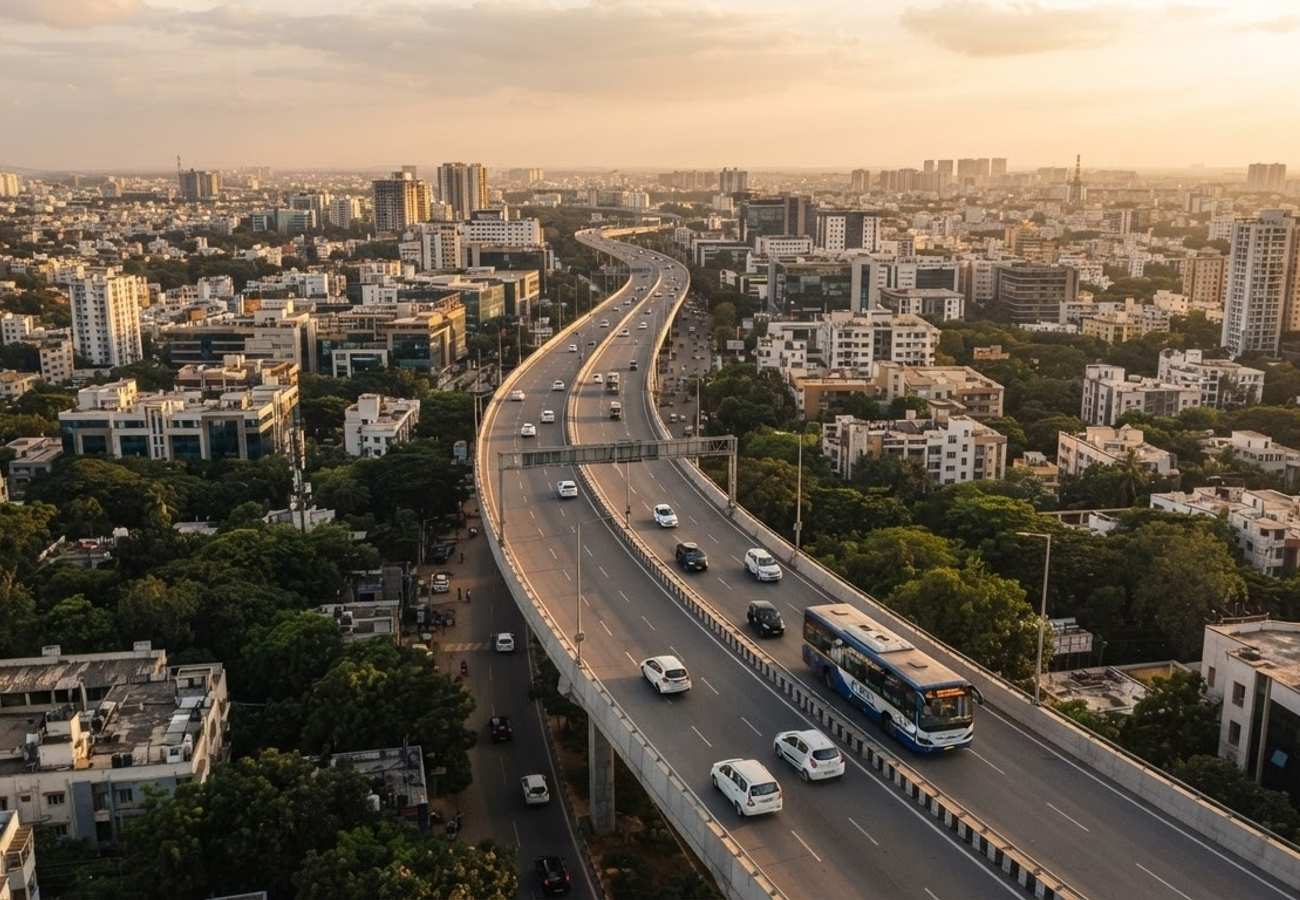
Image generated by AI
The 50km journey from Kempegowda International Airport (BLR) to Koramangala can fluctuate between 60 and 110 minutes depending on traffic. For digital nomads, choosing between the ₹300 Vayu Vajra bus and ₹1,800 surge-priced cabs is the primary logistical hurdle upon arrival.
Transit Corridor Analysis: BLR to Koramangala
Kempegowda International Airport is situated in Devanahalli, far north of the city center. Koramangala, a primary hub for startups and remote workers, is located in the southeast. The transit corridor typically follows the airport expressway south toward Hebbal, cutting through the city toward Silk Board or Hosur Road before entering the 4th, 5th, and 6th Blocks of Koramangala.
For those staying near 80 Feet Road or the Sony World Signal, the route is streamlined. However, the distance remains significant, and the "last mile" connection—the stretch from a main drop-off point to a specific serviced apartment or coliving space—often requires a secondary auto-rickshaw or short cab ride.
2026 Transport Specifications and Pricing
Travelers have three primary options: app-based ride-hailing, government-licensed prepaid taxis, and the BMTC Vayu Vajra AC bus service.
| Transport Mode | Estimated Cost (One Way) | Estimated Duration | Best For |
|---|---|---|---|
| Vayu Vajra Bus | ₹300 – ₹320 | 90 – 110 Minutes | Budget travelers, solo nomads |
| App Cab (Standard) | ₹1,000 – ₹1,400 | 60 – 90 Minutes | Door-to-door convenience |
| App Cab (Surge) | ₹1,400 – ₹1,800+ | 90 – 120 Minutes | Peak hours, heavy rain |
| Prepaid Taxi | ₹1,100 – ₹1,500 | 60 – 90 Minutes | Late-night arrivals, no local SIM |
| UberXL / Large Cab | ₹2,000+ | 60 – 90 Minutes | Groups, heavy gear, monitors |
Traveler Logistics Guide: Navigating the Arrival
From a ground-level perspective, the best way to navigate this transit is to align your transport choice with your landing time and luggage volume.
Managing Ride-Hailing Apps
Uber and Ola operate from dedicated pickup zones, primarily around the P2 parking area. Be aware that walking from the terminal to these bays takes 5 to 10 minutes. During midnight arrivals, wait times for a confirmed vehicle can extend another 10 to 15 minutes. To avoid surge pricing, which spikes during evening peaks or monsoon rains, consider the prepaid taxi counters located within the terminal. These offer fixed fares and immediate dispatch, bypassing the need for a local data connection.
Utilizing Vayu Vajra (BMTC)
The KIA-7 and KIA-8 series buses are the most efficient public options. They run 24 hours a day, typically every 20 to 30 minutes during daylight hours.
- Key Drop-off Points: Sony World Junction, Koramangala Water Tank, and Shanthinagar TTMC.
- Payment: Conductors accept cash and UPI.
- Pro Tip: If your accommodation is within 1km of Sony World Signal, the bus is the most cost-effective method, potentially saving several thousand rupees over a month-long stay.
Traffic Window Optimization
- Optimal Window (04:00 – 07:00): Fastest transit times, often under 70 minutes.
- High Congestion (08:00 – 11:00 & 16:00 – 20:00): Severe bottlenecks at Hebbal Flyover, Mekhri Circle, and the Silk Board junction. Expect the final 10km into Koramangala to be the slowest segment of the trip.
Infrastructure Impact and Connectivity
The reliance on the Hebbal-Silk Board corridor makes Koramangala's accessibility highly sensitive to city-wide traffic patterns. While the Vayu Vajra service provides a reliable baseline for affordability, the lack of direct metro connectivity from the airport to the southeast corridor remains a significant bottleneck. For the digital nomad community, this reinforces the trend of choosing "hyper-local" stays—selecting apartments within walking distance of 80 Feet Road to minimize daily dependence on the volatile transit corridor.
Efficient transit planning is the difference between a productive first day and a wasted afternoon in Bengaluru traffic.
Related Travel Guides
Disclaimer
This article is for informational and educational purposes only. It does not constitute legal, financial, or professional advice. While we strive to provide accurate and up-to-date information, travel policies, regulations, and conditions change rapidly. Always verify information with official sources before making travel decisions. Nomad Lawyer makes no representations about the accuracy, reliability, completeness, or suitability of the information provided. Readers should consult qualified professionals for advice specific to their circumstances. The views expressed in this article are those of the author and do not necessarily reflect the views of Nomad Lawyer.