
8 Must-See Fresco Masterpieces Worth Planning Your Next Trip Around in 2026
From Michelangelo's Sistine Chapel to Diego Rivera's revolutionary murals, discover the world's most breathtaking frescoes and the legal travel tips you need to visit them.

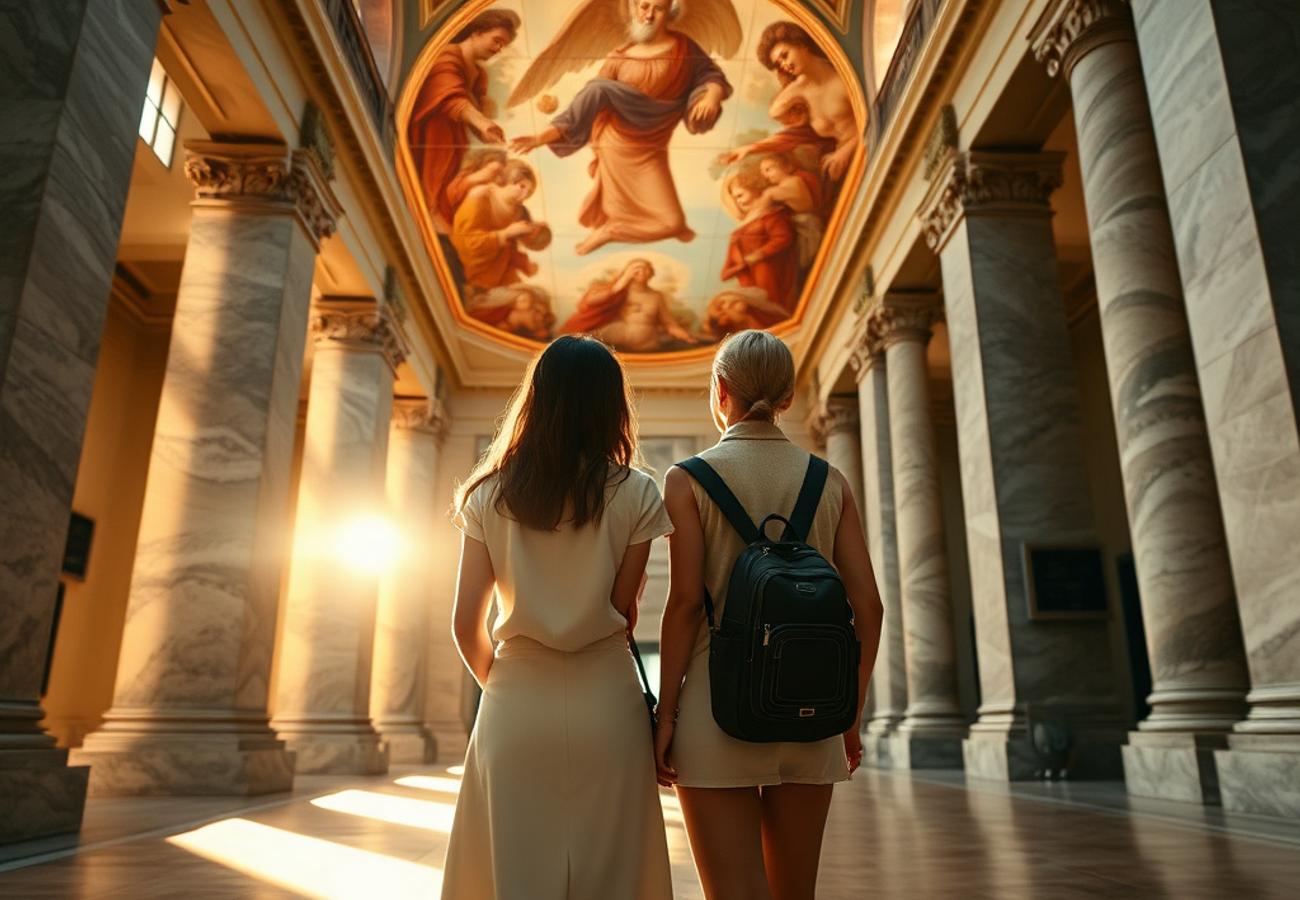
Image generated by AI
The Ancient Art Form That's Defined Civilization for Nearly 4,000 Years
Fresco painting isn't just art—it's a window into humanity's greatest moments. This water-based technique, where pigments sink directly into wet plaster, has survived millennia. While the art form dates back to ancient Egypt, it exploded across Minoan Crete nearly 4,000 years ago, where traveling artists spread the revolutionary technique across the Mediterranean.
But here's where it gets interesting: frescoes truly peaked during the Italian Renaissance, when masters like Raphael and Michelangelo revived ancient methods to create works so profound they still dominate global tourism today. I've visited seven of these masterpieces, and what struck me wasn't just the technical brilliance—it was understanding why these works still draw millions of pilgrims annually.
The durability of frescoes is remarkable. Because the paint binds with the plaster itself during application, these works have endured centuries of environmental stress, wars, and neglect. Let me take you through the eight most spectacular frescoes on Earth that deserve a spot on your travel itinerary.
The Sistine Chapel Ceiling: Michelangelo's 500-Square-Meter Miracle
Nothing prepares you for standing beneath Michelangelo's Sistine Chapel ceiling in Vatican City. I visited in early June, and despite arriving at 7:15 AM, crowds were already gathering.
This isn't hyperbole: the Apostolic Palace's chapel contains one of the most recognizable artworks in human history. Commissioned by the Pope in the 15th century, Michelangelo spent four grueling years (1508-1512) painting over 300 figures across nearly 500 square meters of ceiling space. That's roughly the size of three basketball courts.
"The Creation of Adam"—where God's finger nearly touches Adam's—has been reproduced millions of times. Yet seeing the original hits differently. The anatomical precision, the color restoration work completed in 1989, and the spatial perspective still astonish modern neuroscientists studying how humans process visual information.
Reddit: "I cried standing under it. No photo does it justice. Worth the crowds and the €17 ticket." — r/Vatican
Pro travel tip: Book early-access or skip-the-line tours through authorized providers. Photography is banned inside (strictly enforced), so you'll actually see it rather than film it. Expect 2-3 hours minimum for the full museums and chapel experience.
Raphael's School of Athens: Ancient Minds in the Heart of Rome
Don't leave Vatican City without climbing to the Raphael Rooms. Created around the same period as the Sistine Chapel, Raphael's "School of Athens" is a secular fresco—revolutionary for its time.
Instead of religious iconography, Raphael depicted the greatest philosophers, mathematicians, and scientists of antiquity: Aristotle, Plato, Socrates, Pythagoras, and Euclid, all engaged in intellectual discourse. The painting symbolizes the Renaissance obsession with reviving Classical knowledge. Some art historians argue this single fresco shaped Western philosophy's modern trajectory.
Spot Raphael's hidden self-portrait on the far right—he's looking directly outward, a confidence statement from an artist only 25 years old.
Lyon's Wall of the Silk Weavers: Europe's Largest Fresco Tells a Labor Revolution
Cross into France and you'll find the continent's largest fresco. The "Wall of the Silk Weavers" (Mur des Canuts) in Lyon stretches over 13,000 square feet (1,200 square meters) of trompe-l'oeil artistry.
What makes this 1987 creation radical: it's not Renaissance mythology or religious pageantry. Instead, it honors the daily lives of 19th-century silk workers, documenting a crucial moment when over half of Lyon's population worked in the silk industry. The fresco immortalizes the 1831 silk weavers' rebellion—a proto-labor movement decades before modern unions existed.
The mural incorporates actual residents from Lyon's history, making it part artistic documentation and part collective memorial. Visit the Croix-Rousse district afterward, once the epicenter of silk production and now alive with cafés and boutiques.
Versailles' Hall of Mirrors: Baroque Propaganda at Its Most Opulent
The Palace of Versailles's Hall of Mirrors (Galerie des Glaces) showcases Charles Le Brun's ceiling frescoes, celebrating Louis XIV's military victories. This 240-foot gallery features 17 mirrored arches, gilded sculptures, and crystal chandeliers designed to overwhelm visitors with absolute monarchical power.
The ceiling frescoes blend mythological scenes with actual historical events—watch for Louis XIV portrayed as a Roman emperor conquering enemies. It's propaganda art, yes, but executed with such technical mastery that even modern viewers feel the intended psychological impact.
Le Brun's fresco technique influenced European palace design for two centuries. Understanding Versailles's political function helps contextualize tourism law around heritage site preservation and visitor access regulations.
Strahov Library: Where Baroque Ceiling Frescoes Celebrate Human Knowledge
Prague's Strahov Library, founded in the 1670s, splits into two sacred spaces: the Theological Hall and the Philosopher's Hall. With over 250,000 historic works, this library draws scholars globally.
But the real pilgrimage destination? The ceiling frescoes by Siard Nosecký Orsi and Anton Maulbertsch, depicting humanity's journey toward wisdom through theology and science. Unlike religious chapels, Strahov's frescoes celebrate knowledge itself as sacred.
Access to the main halls is restricted—you typically view from doorways only. Book private guided tours in advance to experience the frescoes properly. Worth every minute.
The History of Mexico: Diego Rivera's Revolutionary Three-Part Narrative
Diego Rivera's monumental fresco "The History of Mexico" at Mexico City's National Palace divides into three sections: ancient Aztec civilization, Spanish colonial rule, and visions of a socialist future.
Commissioned post-Mexican Revolution, this fresco bristles with indigenous iconography, colonial symbolism, and revolutionary figures. It's ideologically charged—Rivera made no pretense of objectivity. The fresco functions as historical argument, not mere decoration.
After viewing Rivera's work, visit the Frida Kahlo Museum (Casa Azul) in Coyoacán. Exploring their artistic partnership reveals how personal relationships shaped 20th-century art movements.
Masaccio's Expulsion: The Fresco That Inspired Michelangelo
In Florence's Church of Santa Maria del Carmine, Masaccio's "Expulsion from the Garden of Eden" demonstrates raw emotional power through sculptural realism. Located in the Brancacci Chapel, this simple yet devastating image of Adam and Eve depicts ultimate human despair.
Art historians believe Michelangelo studied Masaccio's anatomical precision and emotional intensity before painting the Sistine Chapel. The influence is undeniable—compare the figures' bodies and expressions, and you'll see Renaissance continuity.
Masaccio died at 26, yet his work altered art history's trajectory. This chapel is mandatory for anyone understanding Renaissance development.
Legal Travel Considerations for Visiting Global Heritage Sites
Here's what travel lawyers need to know: accessing these masterpieces requires understanding UNESCO protocols, national heritage laws, and entry restrictions.
Photography bans (strictly enforced at the Sistine Chapel and some European museums) stem from copyright and preservation laws. Strahov Library's restricted access reflects Czech cultural property legislation protecting 17th-century manuscripts from foot traffic damage.
Visa requirements vary by nationality. U.S., Canadian, and Australian citizens enjoy visa-free access to Italy, France, and Czech Republic for up to 90 days under Schengen agreements. Mexican tourism requires no visa for most nationalities, but document entry dates carefully.
Heritage site entry fees fund conservation—currently €17 for Vatican Museums, €22 for Versailles, and €15 for Strahov. These aren't arbitrary; they support restoration work preventing deterioration of 400-year-old frescoes.
Book skip-the-line access through official government tourism sites to avoid unlicensed vendors and ensure legitimate cultural preservation funding.
The greatest frescoes aren't just destinations—they're arguments for why human civilization endures.
Related Travel Guides
Disclaimer
This article is for informational and educational purposes only. It does not constitute legal, financial, or professional advice. While we strive to provide accurate and up-to-date information, travel policies, regulations, and conditions change rapidly. Always verify information with official sources before making travel decisions. Nomad Lawyer makes no representations about the accuracy, reliability, completeness, or suitability of the information provided. Readers should consult qualified professionals for advice specific to their circumstances. The views expressed in this article are those of the author and do not necessarily reflect the views of Nomad Lawyer.
Kunal K Choudhary
Co-Founder & Contributor
A passionate traveller and tech enthusiast. Kunal contributes to the vision and growth of Nomad Lawyer, bringing fresh perspectives and driving the community forward.
Learn more about our team →