
Ben-Gurion Airport Summer Delays Stretch to 90 Minutes as Passenger Volumes Exceed Pre-Pandemic Levels
Ben-Gurion Airport faces 90-minute summer delays as passenger volumes exceed pre-pandemic levels, straining capacity and security.

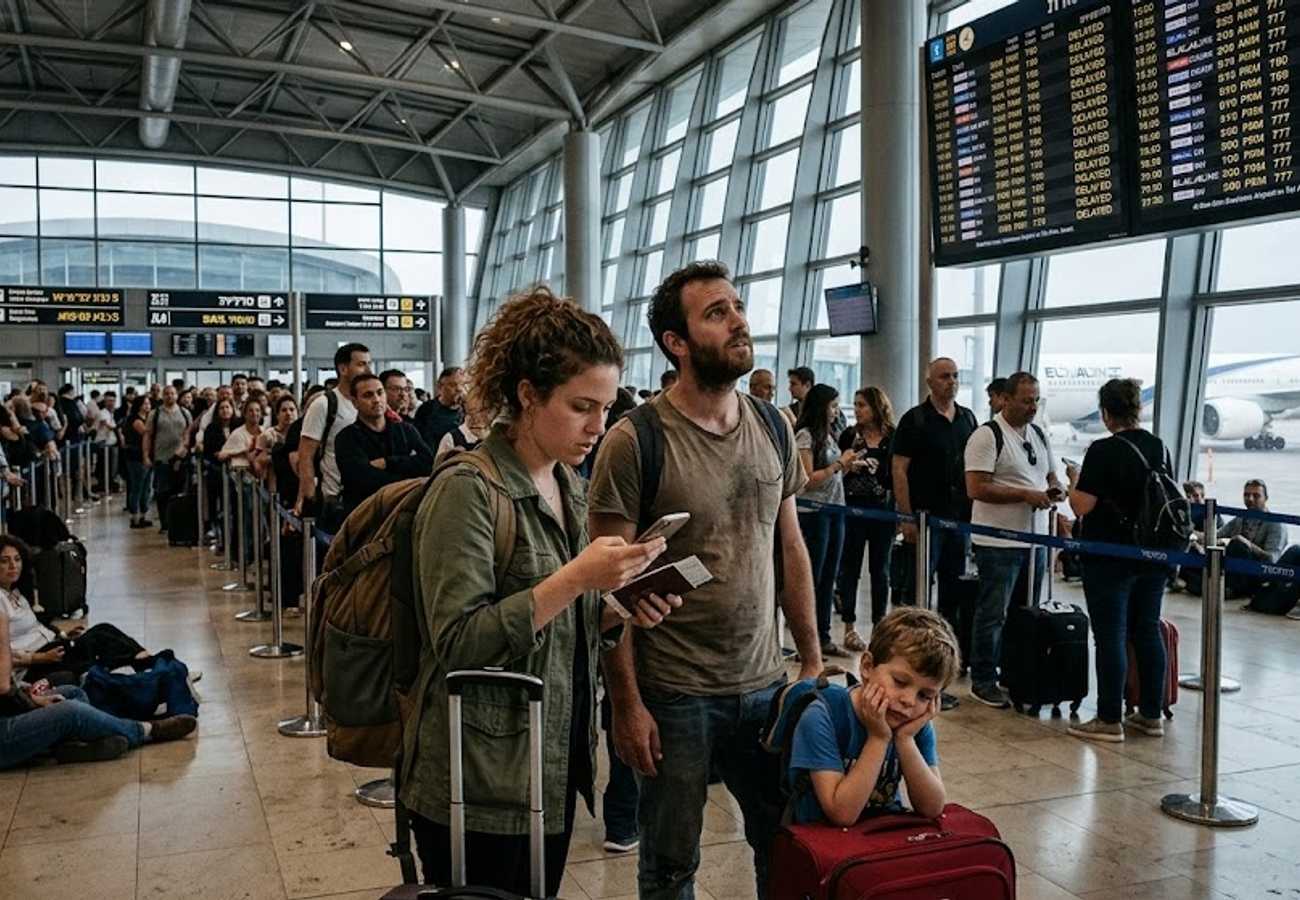
Image generated by AI
Ben-Gurion Airport is facing one of its most challenging summer seasons in recent years, with passengers reporting departure delays of up to 90 minutes. Israel’s main international gateway is straining under record demand, heightened security procedures, and complex airspace pressures.
The Local Trend Revealed
Ben-Gurion Airport is operating near the upper limit of its capacity during the July and August peak. Publicly available traffic statistics from the Israel Airports Authority indicate that passenger volumes this year are running ahead of pre-pandemic levels, while the basic layout of terminals and runways has changed little. Industry analyses describe the airport as over capacity, with very limited room to absorb surges at peak hours.
Airlines serving Israel have scheduled an aggressive slate of summer flights, seeking to capture strong outbound leisure demand and a rebound in inbound tourism. Company updates from major Israeli carriers point to increased seat capacity for the season, even as they acknowledge operational pressures at Ben-Gurion. With more aircraft movements packed into the morning and late-night banks, even minor disruptions can quickly cascade into delays measured in dozens of minutes.
Network-level data published by Eurocontrol and other aviation bodies show that Ben-Gurion has already been flagged in recent seasonal reports for elevated average delay minutes per flight, particularly in summer 2024 and 2025. While typical averages remain in the low double digits, those figures mask wide variation, with the busiest departure waves now seeing individual flights pushed back by an hour or more.
Travel forums and social channels dedicated to Israel travel are filled this season with accounts of passengers waiting through repeated boarding time changes or sitting on aircraft awaiting a departure slot. Many of those reports converge around delays of 60 to 90 minutes, especially at peak outbound times, underscoring how thin the airport’s margin has become in high summer.
Cultural & Environmental Value (Information Gain & Experience)
Ben-Gurion Airport has a long-standing reputation for intensive security procedures, and the current regional environment has further tightened checks on passengers, luggage, and aircraft movements. Publicly available guidance from airlines and the Israeli Tourism Ministry continues to advise early arrival at the terminal, particularly for international departures, in recognition of the time required to clear security interviews, screening, and passport control.
For the visitor, the real impact is a markedly different experience than in quieter seasons. Queues can form far in advance of scheduled departure times, especially in the early morning and late evening peaks when multiple long-haul flights depart within short windows. Local travel coverage has highlighted periods when security and check-in lines have stretched through the departure halls, forcing airlines to hold flights for late-arriving passengers or to rebook those who cannot clear formalities in time.
Ground handling and baggage operations are also under strain. Aviation industry briefings on Ben-Gurion’s recent performance describe challenges with staff availability and stand capacity, particularly when aircraft need special handling or when turnaround times run longer than planned. A single delayed inbound flight can tie up a gate or bus position, forcing outbound aircraft to wait for access to the stand or to the runway queue. These overlapping factors can translate into visible knock-on effects for travelers. Passengers who clear security early may still find themselves waiting in crowded gate areas as flights ahead of theirs depart late, compressing turnaround times and contributing to the 60 to 90 minute delays now commonly cited for some departures.
Unlike many major leisure gateways, Ben-Gurion sits in a complex airspace that must accommodate both civilian and military traffic. Public reports this year have described periods in which military operations, including the presence of foreign and Israeli aircraft, have required tighter coordination around the airport and within Israeli airspace more broadly. Aviation commentary has raised questions about how long the current balance between heavy civilian traffic and military needs can be sustained without more systematic disruption. Adjustments to flight paths and spacing for safety reasons can limit the number of aircraft that can arrive or depart within a given period. When this happens during a peak bank of flights, airport capacity effectively shrinks while demand remains unchanged, creating queues on taxiways and at holding points.
From an environmental perspective, extended taxiway queues and holding patterns increase fuel burn and carbon emissions. The Israel Airports Authority has been working with regional aviation bodies to optimize air traffic control routing where possible, though the primary focus remains safety and security. For travelers interested in eco-friendly tourism, minimizing connection times and supporting direct flights where available can help reduce the overall carbon footprint of their journey.
Visitor Insider Tips
Travel advisories from Israeli and international agencies now commonly recommend arriving at Ben-Gurion at least three hours before departure, with some local coverage suggesting even earlier arrival during school holidays, Friday daytime peaks, and late-night long-haul waves.
- Off-peak visit windows: Mid-afternoon hours (between 14:00 and 16:00) typically see fewer departures, offering a slightly less congested environment for check-in and security screening.
- Transit connections: Transit passengers using Ben-Gurion as a connecting point are particularly exposed. Tight connections that might have been workable in previous summers are now more likely to be missed if the inbound leg encounters even modest delay. Airline advisories and booking engines increasingly warn against very short connection times at the airport.
- Surface transport: Surface transport connections such as the rail link between Ben-Gurion and Jerusalem also factor into travelers’ planning. Public discussions on local transport forums point to the importance of checking train schedules carefully, as evening and weekend service patterns can complicate late arrivals caused by flight delays.
- Cultural etiquette: Note that on Friday afternoons, as Shabbat approaches, public transport options to and from the airport become limited. Travelers should plan ground transportation accordingly, as train services pause from Friday afternoon until Saturday evening.
- Local dining specialties: While waiting out a delay, head to the Dan Cafe in Terminal 3 for a reliable Israeli breakfast or grab a freshly baked bourekas from one of the local bakeries in the food court to experience a regional staple.
- Hidden under-the-radar spots: For a quieter wait, seek out the seating areas near the D gates in Terminal 3, which are often less crowded than the main duty-free concourse, offering a moment of respite before boarding.
Tourism Outlook
Aviation analysts note that Ben-Gurion’s status as Israel’s primary international gateway leaves few domestic alternatives during such periods. Unlike multi-airport city systems elsewhere, Israel has limited ability to redistribute traffic away from Ben-Gurion when the airfield or surrounding airspace becomes constrained.
The Israel Airports Authority has outlined long-term expansion plans for Ben-Gurion, including terminal and airfield enhancements, in recent annual reports. However, most of these projects will take years to deliver additional capacity, meaning that the next few summers are likely to remain challenging if demand continues to grow at the current pace. In the short term, published information indicates that airlines and the airport are focusing on incremental improvements, such as adjusting flight schedules to spread peaks, adding staff during known rush periods, and refining ground handling procedures. Eurocontrol documentation notes that some regional airports have been asked to coordinate flight plans more closely to reduce concentrated surges that can overwhelm runways and stands.
The long-term impact for the destination hinges on balancing this rapid tourism growth with infrastructure capacity. Direct support of local economies remains a priority, as the rebound in inbound tourism directly benefits regional businesses, from hospitality to guided tours. Sustainable travel practices are also becoming a focus for the region. By encouraging airlines to optimize flight paths and reduce taxiway idling, local aviation bodies aim to lower the carbon footprint of delayed operations. For the foreseeable future, travelers through Ben-Gurion will need to pack their patience and plan for a slower, more security-conscious journey through Israel’s main gateway.
Navigating Ben-Gurion this summer requires strategic planning, but understanding the operational realities ensures a smoother start to your Israeli adventure.
Related Travel Guides
Disclaimer
This article is for informational and educational purposes only. It does not constitute legal, financial, or professional advice. While we strive to provide accurate and up-to-date information, travel policies, regulations, and conditions change rapidly. Always verify information with official sources before making travel decisions. Nomad Lawyer makes no representations about the accuracy, reliability, completeness, or suitability of the information provided. Readers should consult qualified professionals for advice specific to their circumstances. The views expressed in this article are those of the author and do not necessarily reflect the views of Nomad Lawyer.
Kunal K Choudhary
Co-Founder & Contributor
A passionate traveller and tech enthusiast. Kunal contributes to the vision and growth of Nomad Lawyer, bringing fresh perspectives and driving the community forward.
Learn more about our team →