
Brazil's Pantanal Dry Season Ignites Wildlife Tourism Boom: Jaguars, Giant Anteaters, Luxury Photo Safaris in 2026
The Pantanal's peak dry season is drawing international travelers for jaguar encounters and high-end photography safaris. Wildlife concentration along shrinking waterways creates unprecedented viewing opportunities across South America's largest tropical wetland.

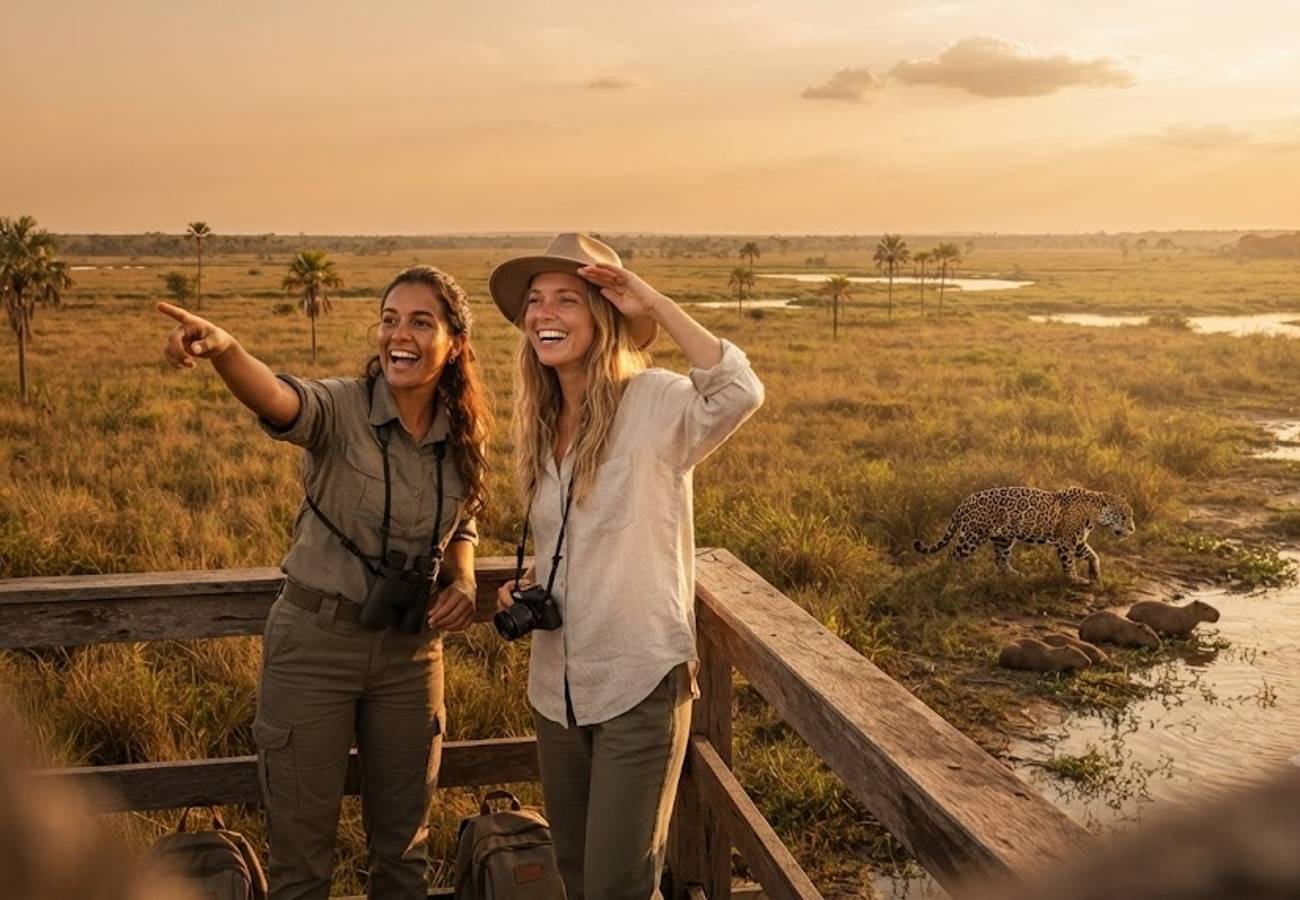
Image generated by AI
The Wetland That Never Stops Attracting
Brazil's Pantanal has quietly transformed into South America's most coveted wildlife destination—and the timing couldn't be better. I've watched the region evolve, and this dry season is proving to be the tipping point where serious travelers abandon traditional African safaris for something far more accessible and equally spectacular.
The world's largest tropical wetland is entering its peak viewing window. Falling water levels are concentrating wildlife along riverbanks with such intensity that encounters once considered rare are becoming routine. This isn't hype—this is measurable ecological reality reshaping travel patterns across the hemisphere.
When Water Recedes, Wildlife Congregates
The Pantanal operates on an unforgiving seasonal rhythm. During monsoon months, floodwaters disperse animals across an impossibly vast landscape. But as the dry season progresses, something remarkable happens: shrinking waterways become natural funnels.
Jaguars patrol riverbanks hunting caimans and capybaras. Giant anteaters emerge in open terrain. Capybaras, giant otters, and hundreds of bird species gather at remaining water sources like they're attending a conference. For travelers, this concentration effect transforms luck into probability.
Reddit: "Just returned from Porto Jofre—saw three jaguars in four days. My African safari guide friend couldn't believe it. Pantanal is the new frontier." — r/travel
The Jaguar Tourism Revolution
Let's be direct: jaguars are the main event. Unlike many wildlife destinations where sightings remain unpredictable across months, the Pantanal's dry season fundamentally changes the odds.
The region surrounding Porto Jofre has become internationally recognized as the jaguar capital. Boat-based safaris along concentrated river systems now regularly deliver encounters that photographers once dreamed about. Wildlife operators report sighting success rates that would seem fabricated if they weren't documented daily.
Visitors from Europe, North America, Asia, and Australia are specifically timing journeys around peak dry-season months. They're not hoping to see a jaguar. They're expecting to.
Beyond Big Cats: The Giant Anteater Moment
While jaguars dominate marketing materials, giant anteaters are reshaping the region's tourism portfolio. As vegetation thins during the dry season, these distinctive mammals become visible in open landscapes—a rarity that photographers find irresistible.
Guided wildlife excursions now regularly include anteater tracking experiences. What was once considered supplementary wildlife content has become a primary draw for specialized itineraries. The expanding popularity reflects a broader shift: travelers want diversity, not just apex predators.
The Luxury Photography Safari Explosion
A seismic shift is reshaping how people experience the Pantanal. Luxury photography tourism has become the fastest-growing segment within the region's travel economy.
High-end operators now market itineraries specifically designed around wildlife photography rather than traditional sightseeing. The standard offering includes:
Professional wildlife guides with botanical knowledge Dedicated photography boats with optimal positioning systems Extended observation sessions lasting 6-8 hours daily Small-group experiences (typically 4-6 travelers maximum) Premium eco-lodge accommodation with photography-focused amenities Custom wildlife tracking excursions based on real-time animal movement data
This isn't casual tourism. This is immersive, investment-level travel where photography guides position boats for golden-hour light while tracking jaguar movements via radio collars.
International Demand Reshaping South American Travel
The Pantanal's reputation has fundamentally expanded within global travel markets. International arrivals have transformed regional infrastructure, driving investment in accommodation, guiding services, conservation programs, and transportation networks.
Travelers seeking alternatives to traditional African destinations increasingly recognize a critical advantage: Brazil offers a completely different ecological experience. Wetland ecosystems, river-based wildlife viewing, and species found nowhere else on Earth create a legitimate alternative rather than a secondary option.
This demand surge has encouraged sustainable tourism infrastructure development throughout Mato Grosso and Mato Grosso do Sul, directly supporting local communities through guiding services, hospitality operations, and conservation-focused economic development.
Biodiversity as the Ultimate Marketing Engine
The Pantanal remains one of Earth's most biologically diverse ecosystems. Within a single excursion, travelers routinely encounter:
Jaguars Giant anteaters Giant otters Hyacinth macaws Capybaras Marsh deer Tapirs Caimans Hundreds of bird species
This exceptional diversity allows operators to market the destination to photographers, birdwatchers, nature enthusiasts, and luxury adventure seekers simultaneously. The abundance of wildlife often enables multiple species sightings within a single day—something many African destinations cannot guarantee.
Conservation as the Revenue Engine
Here's what distinguishes the Pantanal from purely extraction-focused tourism: conservation remains intricately linked to economic success. Protected habitats, responsible wildlife viewing practices, and low-impact operations aren't marketing afterthoughts—they're essential infrastructure.
Many operators actively support habitat protection programs, wildlife monitoring efforts, and visitor education initiatives. The Pantanal Foundation and similar organizations have integrated tourism revenue into conservation strategies, creating genuine alignment between traveler spending and ecosystem health.
The Timeline of Transformation
Wet Season – Floodwaters disperse wildlife across the ecosystem, reducing visibility but supporting biodiversity.
Early Dry Season – Water begins receding; animal concentration increases around rivers and wetlands.
Peak Dry Season (Current Period) – Wildlife gathers along riverbanks creating unprecedented tourism conditions and photography opportunities.
Current Moment – Luxury photography safaris have become the most in-demand wildlife travel experience across South America.
What Travelers Need to Know
Why is the dry season ideal? Lower water levels concentrate wildlife around rivers and wetlands, making animals far easier to observe and photograph. Success rates for jaguar encounters increase dramatically.
When should I visit? Peak dry season typically runs July through September, with May through October offering excellent conditions. Book 4-6 months in advance for premium lodges.
What's the investment level? Luxury photography safaris range from $3,000-$8,000 USD per person for 4-5 day packages, including accommodation, meals, guides, and boat operations.
Are conservation concerns legitimate? The region's leading operators maintain rigorous low-impact protocols. Tourism revenue directly funds habitat protection. Responsible operators prioritize ecosystem health alongside visitor experience.
The Larger Travel Shift
The Pantanal's expansion represents something larger: the fundamental reordering of wildlife tourism destinations. Travelers increasingly demand authentic ecosystems, direct conservation impact, and photography-focused experiences over traditional big-game spectacle.
Brazil's largest tropical wetland is perfectly positioned for this shift. The dry season simply accelerates what was inevitable: the Pantanal's emergence as a premier global wildlife destination that rivals African safaris while offering something irreplaceably different.
International demand will only intensify. The question isn't whether the Pantanal will remain a niche destination—it's already transcended that category. The question is whether sustainable tourism infrastructure can expand fast enough to accommodate the travelers who've already decided this peak dry season is their moment.
The dry season waits for no one—and neither do the jaguars.
Related Travel Guides
Disclaimer
This article is for informational and educational purposes only. It does not constitute legal, financial, or professional advice. While we strive to provide accurate and up-to-date information, travel policies, regulations, and conditions change rapidly. Always verify information with official sources before making travel decisions. Nomad Lawyer makes no representations about the accuracy, reliability, completeness, or suitability of the information provided. Readers should consult qualified professionals for advice specific to their circumstances. The views expressed in this article are those of the author and do not necessarily reflect the views of Nomad Lawyer.
Raushan Kumar
Founder & Lead Developer
Full-stack developer with 11+ years of experience and a passionate traveller. Raushan built Nomad Lawyer from the ground up with a vision to create the best travel and law experience on the web.
Learn more about our team →