Is Sargassum Disrupting Belize Vacations? Seaweed Inundation Patterns, Barrier Reef Escapes, and Travel Planning

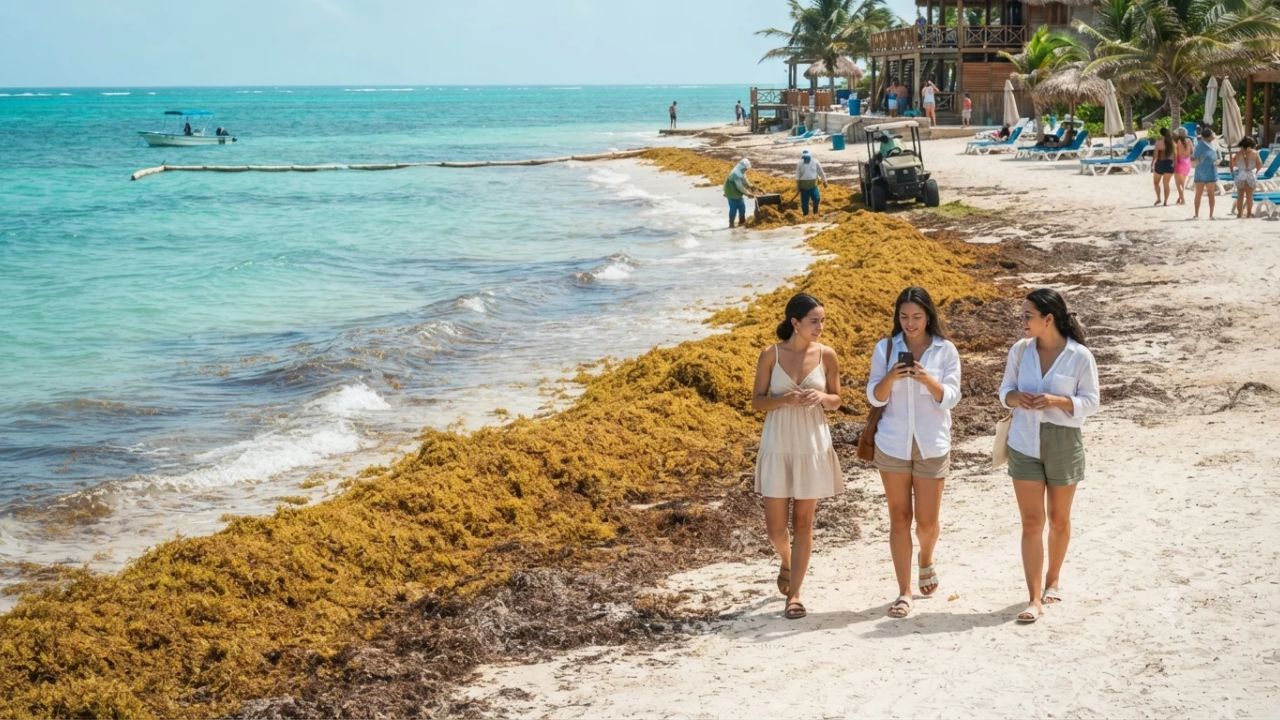
Image generated by AI
Tracking millions of metric tonnes of pelagic macroalgae drifting through the Caribbean basin with seasonal arrivals peaking between April and August, coastal Belize is overhauling its hospitality operations to manage recurring sargassum strandings. While decomposing seaweed challenges shoreline leisure along exposed mainland beaches in San Pedro and Placencia, Belize’s offshore marine geography preserves crystal-clear diving across its world-renowned barrier reef, transforming environmental adaptation into a masterclass in resilient tropical itinerary planning.
Oceanic Vectors and Biogeochemical Drivers: The Proliferation of the Atlantic Belt
Over the past decade, pelagic sargassum has transformed from a seasonal biological feature of the Sargasso Sea into a sprawling, trans-oceanic ecological phenomenon. Propelled by equatorial trade winds and complex marine currents, vast mats of macroalgae coalesce across the Great Atlantic Sargassum Belt, a biomass corridor extending thousands of miles from the coast of West Africa into the Gulf of Mexico.
Marine scientists tracking satellite imagery from the University of South Florida Optical Oceanography Lab, in collaboration with the National Oceanic and Atmospheric Administration (NOAA), attribute this sustained explosion to interconnected planetary forces. Elevated ocean surface temperatures combine with massive nutrient inputs—specifically nitrogen and phosphorus discharges washed down the Amazon and Orinoco rivers due to agricultural intensification and basin deforestation—to create an ideal incubator for accelerated vegetative reproduction on the open sea.
When prevailing easterly currents push these floating rafts into the shallow coastal waters of Central America, the shoreward accumulation is immediate. Beach communities on Ambergris Caye and the Stann Creek District experience daily cycles of heavy deposition. As mounds of organic matter bake under tropical sunlight, anaerobic decomposition releases pungent hydrogen sulfide gas, stains crystal shallows a murky tea color, and depletes dissolved oxygen levels, presenting acute operational hurdles for beachfront hoteliers and municipal authorities.
Coastal Disruption vs Outer Atoll Immunity: The Geographic Divergence
Despite alarming headlines, sargassum does not blanket the entire marine environment uniformly. The physical impact depends almost entirely on regional topography, wind exposure, and distance from the barrier reef.
Exposed windward coastlines—such as the eastern shores of San Pedro on Ambergris Caye and the sandy reaches of the Placencia Peninsula—absorb the primary brunt of incoming mats. Properties operating along these stretches deploy continuous mitigation operations, utilizing offshore deflection booms, specialized aquatic skimmer craft, and manual dawn raking teams to protect guest access to the water.
Conversely, offshore marine exploration remains exceptional. The Belize Barrier Reef, celebrated under the UNESCO World Heritage Centre for its extraordinary coral ecosystems, lies miles offshore. Floating sargassum remains largely confined to the surface in open water channels, carried past elevated atolls by deep oceanic drop-offs. Renowned global dive sanctuaries—including the Great Blue Hole, Lighthouse Reef, and the Turneffe Atoll—routinely maintain pristine water clarity with underwater visibility exceeding 100 feet, allowing world-class scuba diving and snorkeling to proceed without interruption.
Simultaneously, travelers are diversifying their itineraries into mainland adventures. The interior Cayo District offers an expansive refuge from coastal seaweed, featuring ancient Maya cities like Xunantunich and Caracol, river cave tubing, and dense jungle wildlife reserves that remain completely unaffected by marine macroalgae cycles.
| Destination Zone | Sargassum Inundation Risk | Primary Water Activity Status | On-Site Mitigation Tactics | Strategic Recommendation for Travelers |
|---|---|---|---|---|
| San Pedro (Ambergris Caye) | High on eastern beaches | Coastal swimming restricted; boat docks operational | Deflection booms & daily tractor raking | Stay on leeward caye lagoons; charter reef boats |
| Placencia Peninsula | Moderate to high (April–Aug) | Beachfront swimming variable by tide | Manual rake crews & floating containment | Opt for resorts with active barrier boom systems |
| Outer Atolls (Turneffe, Lighthouse) | Minimal to zero accumulation | World-class scuba & snorkeling unaffected | Natural deep-water current clearing | Base vacation at offshore island dive lodges |
| The Great Blue Hole | Negligible surface interference | Prime 100-foot underwater visibility | Ocean drop-offs prevent biomass retention | Book full-day catamaran excursions from cayes |
| Cayo District (Inland Belize) | Completely immune (Inland) | River tubing, waterfalls & cave expeditions | Zero marine exposure; freshwater rivers | Pair 4 days inland with 3 days outer atolls |
The Belize Tourism Board (BTB) works closely with the Department of the Environment to provide real-time updates and coordinate disposal logistics, helping vacationers make data-backed lodging choices.
Expert Analysis: Resort Capex Surges, Circular Valorization, and Itinerary Hedging
From a hospitality economics perspective, sargassum management has transitioned from a sporadic maintenance nuisance into a permanent capital expenditure line item.
The pricing pressure this creates means premier beachfront properties in San Pedro and Placencia frequently spend between $15,000 and $35,000 per month during peak summer influxes to operate offshore floating barriers, fuel mechanical beach sweepers, and transport organic waste to designated inland containment centers. Rather than absorbing these escalating expenses directly, hoteliers are increasingly incorporating environmental maintenance surcharges into baseline room rates or resort facility fees.
For travelers booking this route, the direct consequence is that blind vacation planning carries severe financial and aesthetic penalties. Reserving a non-refundable oceanfront villa along an unprotected mainland shore in June without verifying barrier installations can leave vacationers facing an unusable beach and unpleasant odors. Conversely, travelers who contact resort concierges in advance to confirm active boom operations—or who stay at properties located on the protected leeward sides of cayes—experience unimpeded Caribbean waters.
Simultaneously, Belize is pioneering circular-economy initiatives to convert decaying biomass into commercial assets. Because sargassum bioaccumulates trace heavy metals like arsenic from open-ocean transit, simply dumping it into unlined municipal landfills threatens freshwater aquifers. Researchers and local entrepreneurs are piloting composting processes that extract heavy metals, turning clean residue into organic agricultural fertilizer and experimental bio-packaging materials.
Until large-scale marine harvesting scales across the Atlantic, the optimal traveler defense is itinerary hedging: combining four nights of rainforest exploration in Cayo with three nights at an outer reef lodge at Turneffe Atoll. This dual-destination approach guarantees an exceptional vacation that completely avoids coastal seaweed bottlenecks.
Key Takeaways
- Predictable Peak Window: Sargassum arrivals in Belize peak primarily between April and August, driven by warmer sea temperatures and prevailing easterly trade winds.
- Intact Offshore Diving: Famous oceanic dive sites—including the Great Blue Hole, Lighthouse Reef, and Turneffe Atoll—remain completely clear with world-class underwater visibility.
- Localized Beach Impacts: Windward beaches in San Pedro and Placencia experience heavy shoreline accumulations requiring daily mechanical and manual clearing.
- Resort Mitigation Tech: High-end resorts deploy floating barrier booms and specialized skimmers, making direct inquiry into property cleanup systems essential before booking.
- Dual-Destination Strategy: Travelers can insulate vacations by pairing inland jungle lodges in the Cayo District with offshore barrier reef island resorts.
FAQ: Belize Sargassum Seaweed Travel 2026
What time of year does sargassum affect Belize beaches the most?
The heaviest accumulations typically occur between April and August, when strong trade winds and warm sea temperatures drive large oceanic mats toward the Central American coastline.
Can you still swim and scuba dive in Belize when sargassum is present?
Yes. Offshore barrier reefs and oceanic atolls like Turneffe, Lighthouse Reef, and the Blue Hole remain clear of decaying seaweed, offering pristine scuba diving, snorkeling, and boat excursions.
Which areas of Belize are free from sargassum seaweed?
Inland destinations like the Cayo District are entirely unaffected, while offshore coral atolls and the western, leeward sides of cayes experience little to no seaweed buildup.
What should travelers ask their Belize resort before confirming a booking?
Travelers should ask if the property has active offshore deflection booms, daily beach grooming teams, or dedicated boat transfers to pristine reef swimming areas during sargassum season.
Beyond the floating ribbons of the open sea, Belize’s ancient rainforests and deep oceanic reefs prove that paradise is never lost—it is simply discovered in deeper waters.
Related Travel Guides
- Illinois Records 423 Speeding Deaths in 2024 as US Speed-Related Toll Hits 11,288 Fatalities
- New Jersey, Tennessee, North Carolina, California & Oregon Overhaul US Tourism Leadership in 2026 Seismic Shift
- United States Allocates US$1.73 Billion in BUILD Grants for 127 Infrastructure Projects Across 52 States in 2026
This article is for informational purposes. Flight routes, passenger regulations, visa rules, and transit advisories are subject to change by airlines and aviation authorities. Readers are advised to verify schedules and travel documentation with relevant carriers and border agencies before departure.
Related Stories

European Mass Protests Disrupt Travel Across France, Italy, Belgium, and Turkey in 2026

Israel Tourism Recovery 2026: North American Flight Restorations and New ETA-IL Entry Rules