
Auckland City Rail Link Opens as New Underground Railway Transforms Central Travel Connectivity
Auckland City Rail Link Opens as New Underground Railway Transforms Central Travel Connectivity

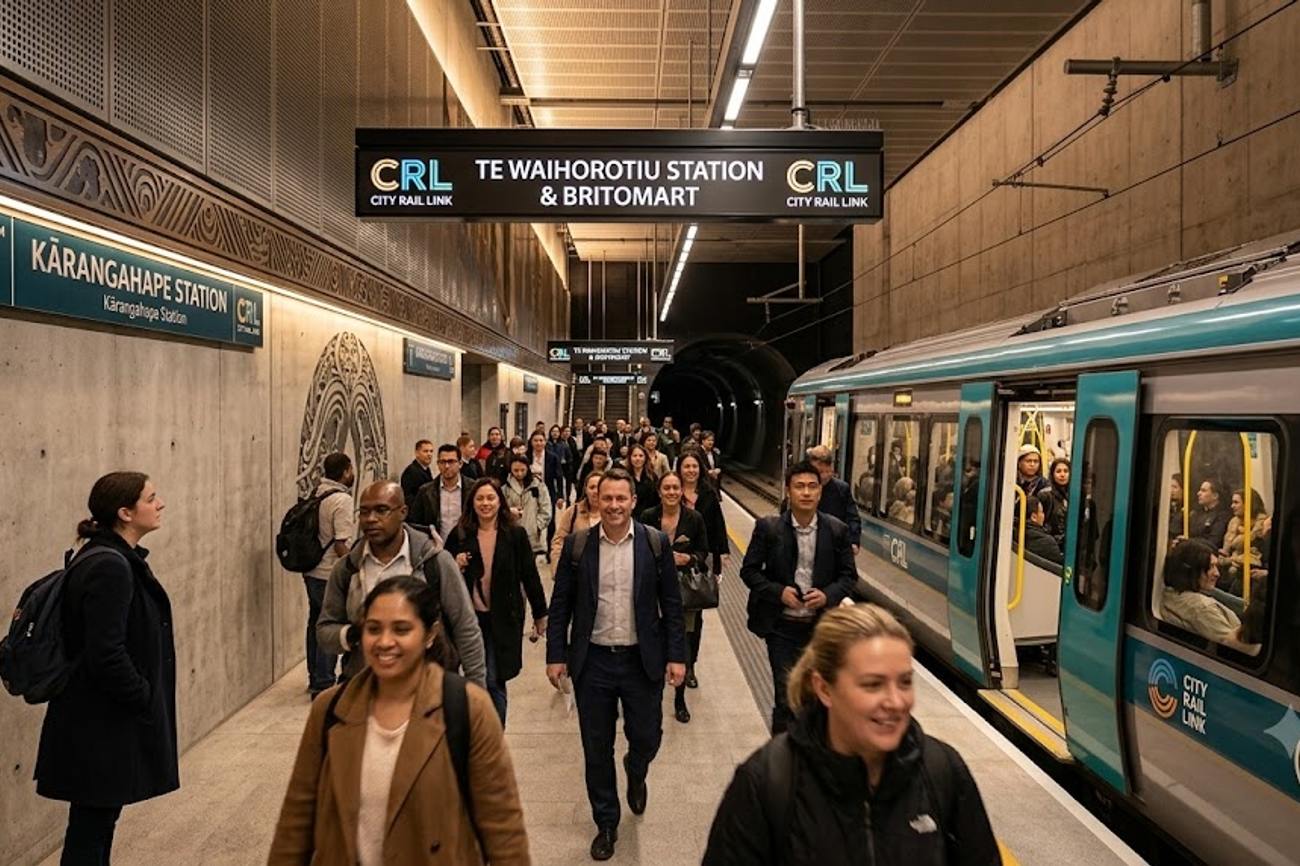
Image generated by AI
[Auckland, September 13, 2026] — New Zealand has officially launched its largest urban rail upgrade with the opening of the Auckland City Rail Link (CRL), a 3.45-kilometre underground railway designed to eliminate terminal bottlenecks in the heart of the city.
The infrastructure project, which opened to the public in the early hours of September 13, converts Auckland's rail network from a terminating system into a through-running operation. By linking Waitematā and Maungawhau via a double-track underground corridor, the CRL allows trains to pass directly through the central business district rather than ending their journeys at terminal stations and reversing direction.
The Shift to Through-Running Rail
The immediate trigger for this project was the systemic inefficiency of Auckland's previous rail architecture. For decades, the city's trains operated on a terminal basis, meaning services reached the city centre and stopped, creating a ceiling on how many trains could realistically operate per hour.
By implementing a through-running system, the Auckland Transport network can now move trains seamlessly from the eastern side of the city to the western side. This structural change removes the need for trains to "turn around," which significantly increases the total capacity of the network and allows for more frequent service intervals across the entire metropolitan area.
Affected Travelers, Airlines and Logistics
The CRL impacts every commuter, tourist, and business traveler utilizing the central Auckland corridor. The project introduces two entirely new underground hubs and modifies two existing key points of access.
| Station | Role and Impact |
|---|---|
| Te Waihorotiu | New underground station serving Queen Street and the primary commercial core. |
| Karanga-a-Hape | New underground station providing direct access to the Karangahape Road district. |
| Maungawhau | Replaces the former Mount Eden station to facilitate new interchange opportunities. |
| Waitematā | Converted from a terminal end-point into a high-capacity through station. |
The project primarily benefits passengers traveling between the eastern and western suburbs, who no longer face the delays associated with terminal reversals. It also directly impacts the New Zealand Government's broader strategy for sustainable urban growth in the country's largest city.
Practical Traveler Advisory and Strategic Insights
For the average passenger, the CRL translates to a fundamental change in how they navigate the city. The "terminal" era of Auckland rail is over, replaced by a system that functions more like a traditional metro.
For Daily Commuters: The most immediate impact is the reduction in transfer times. Passengers no longer need to exit at a terminal and find alternative surface transport to reach the other side of the city. The increased capacity means less crowding during peak hours and a more reliable timetable.
For International Visitors: Tourists arriving in Auckland now have a streamlined path to the city's primary hotels, shopping districts, and cultural landmarks. The reliance on taxis and ride-share services for short cross-city trips is expected to drop as the underground rail provides a faster, more predictable alternative.
For Business Travelers: The direct connection to the central business zones via Te Waihorotiu allows for rapid transit between corporate offices and residential zones, reducing the time spent in Auckland's notorious surface traffic.
Future Urban Mobility and Growth
The CRL is not a standalone project but the foundation for Auckland's long-term transport evolution. By shifting the population's reliance away from private vehicles and toward high-capacity rail, the city aims to mitigate the environmental impact of urban sprawl.
The Ministry of Transport views this as a catalyst for "transit-oriented development." This means the city expects to see increased residential and commercial density around the new stations, particularly at Karanga-a-Hape and Te Waihorotiu. The ability to move more people per hour through the city center creates the necessary headroom for Auckland's projected population growth over the next several decades.
Operators have cautioned that while the infrastructure is live, service patterns will evolve. Timetables are currently being optimized to take full advantage of the through-running capabilities, meaning passengers may see adjustments to frequency and route mapping in the coming months.
FAQ: Auckland City Rail Link 2026
Do I need a different ticket to use the new underground stations? No. The City Rail Link is fully integrated into the existing Auckland public transport ticketing system. Passengers can use their current travel cards or payment methods to access Te Waihorotiu and Karanga-a-Hape.
How does the CRL differ from the old rail system? Previously, trains ended their trips at terminal stations in the city. The CRL allows trains to travel through the city center, meaning they can continue to other destinations without stopping and reversing, which increases overall speed and capacity.
Which stations were replaced or changed? The Mount Eden station has been replaced by the new Maungawhau station. Additionally, Waitematā has been transformed from a terminal station into a through station to accommodate the new underground flow.
Will this reduce traffic on Auckland's roads? Yes. By providing a faster, more efficient underground alternative for crossing the city center, the CRL is designed to reduce the number of private vehicles and taxis on surface streets.
Auckland's transit map has been permanently redrawn.
Related Travel Guides
Disclaimer
This article is for informational and educational purposes only. It does not constitute legal, financial, or professional advice. While we strive to provide accurate and up-to-date information, travel policies, regulations, and conditions change rapidly. Always verify information with official sources before making travel decisions. Nomad Lawyer makes no representations about the accuracy, reliability, completeness, or suitability of the information provided. Readers should consult qualified professionals for advice specific to their circumstances. The views expressed in this article are those of the author and do not necessarily reflect the views of Nomad Lawyer.
Raushan Kumar
Founder & Lead Developer
Full-stack developer with 11+ years of experience and a passionate traveller. Raushan built Nomad Lawyer from the ground up with a vision to create the best travel and law experience on the web.
Learn more about our team →