
Beijing Daxing Airport Disruption: 9 Cancellations, 107 Delays Impact China Eastern, Air China, and International Routes on June 22
Beijing Daxing International Airport experienced significant operational strain on June 22, 2026, with 9 flight cancella

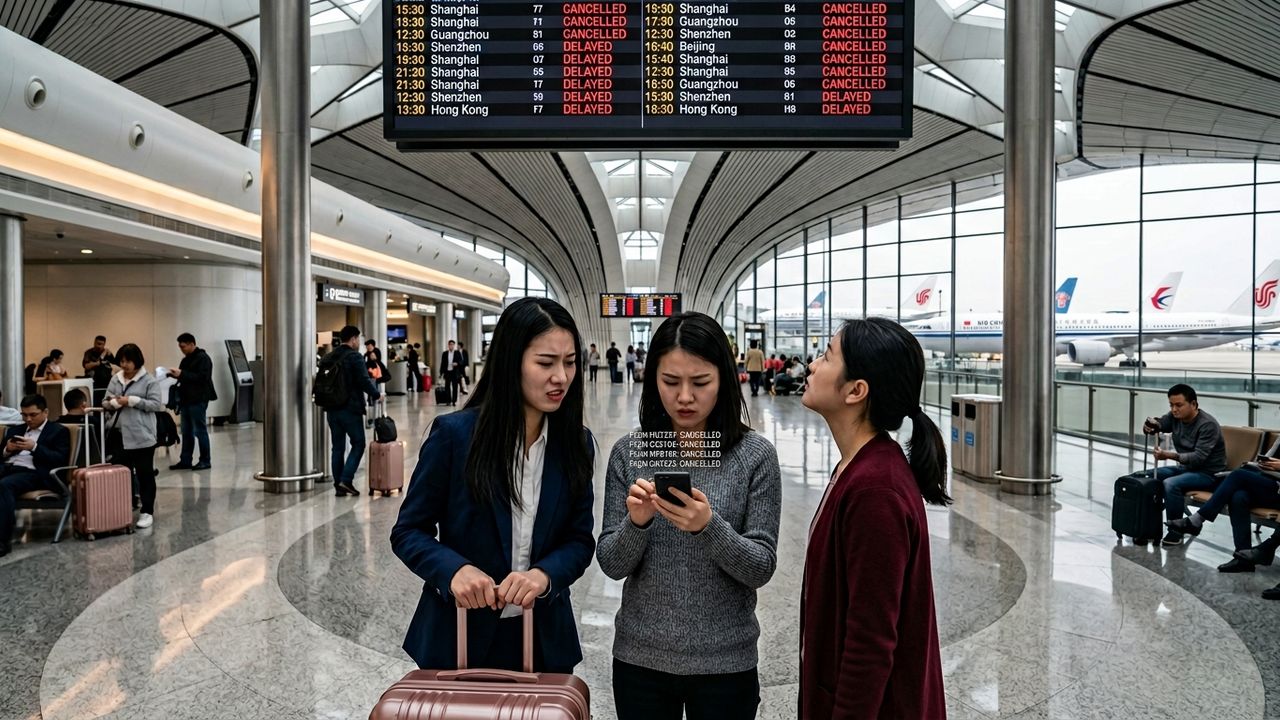
Image generated by AI
Beijing Daxing International Airport faced substantial operational pressure on June 22, 2026, resulting in 9 flight cancellations and 107 delays across multiple carriers. The disruptions impacted a mix of domestic Chinese routes and international services, including flights to Saudi Arabia and Russia. While the cancellation rate remained low relative to total daily traffic, the high volume of delays signals a network-wide slowdown affecting thousands of passengers.
Operational data indicates a ratio of approximately 12 delayed flights for every cancellation. This pattern suggests that airlines serving the hub are prioritizing schedule preservation by operating services with delays rather than withdrawing flights entirely. This approach minimizes outright passenger strandedness but increases congestion at the airport, compressing aircraft rotations, gate availability, and crew schedules.
The disruptions were not isolated to a single carrier. While cancellations were concentrated among two major state-owned airlines, delays were distributed across almost every major operator at Daxing, indicating systemic strain rather than an airline-specific failure. International services also felt the impact, with carriers operating routes to Saudi Arabia and Russia reporting delayed departures.
Airline Operational Performance at Beijing Daxing
The following table details the cancellation and delay statistics for airlines operating at Beijing Daxing International Airport on June 22, 2026.
| Airline | Cancelled (#) | Cancelled (%) | Delayed (#) | Delayed (%) |
|---|---|---|---|---|
| China Eastern | 7 | 3% | 23 | 10% |
| Air China | 2 | 2% | 14 | 19% |
| Beijing Capital Airlines | 0 | 0% | 1 | 2% |
| Shanghai Airlines | 0 | 0% | 1 | 50% |
| China Southern Airlines | 0 | 0% | 28 | 8% |
| China United Airlines | 0 | 0% | 11 | 8% |
| XiamenAir | 0 | 0% | 18 | 29% |
| Juneyao Airlines | 0 | 0% | 4 | 100% |
| Hebei Airlines | 0 | 0% | 4 | 11% |
| 9 Air | 0 | 0% | 1 | 50% |
| Saudia | 0 | 0% | 1 | 100% |
| Ural | 0 | 0% | 1 | 100% |
China Eastern and Air China Account for All Cancellations
China Eastern Airlines bore the brunt of the cancellations at Beijing Daxing today. The carrier reported 7 cancelled flights, representing roughly 77.8% of the airport's total cancellations. Beyond the withdrawals, China Eastern also faced 23 delayed flights, indicating significant pressure on its scheduling and aircraft rotation capabilities at the hub.
Air China recorded the remaining cancellations, with 2 flights withdrawn, accounting for the remaining 22.2% of cancellations at the airport. The carrier also experienced 14 delayed flights, confirming that operational challenges extended across a broader segment of its daily operations.
China Southern Records Highest Delay Volume
China Southern Airlines avoided cancellations entirely but recorded the highest number of delays among all carriers at Beijing Daxing, with 28 flights affected. This represents an 8% delay rate for the airline's operations at the airport.
XiamenAir also faced substantial disruption, reporting 18 delayed flights without a single cancellation. With a 29% delay rate, nearly one-third of XiamenAir's scheduled services at Daxing experienced schedule slippage, likely impacting connecting itineraries and aircraft utilization.
China United Airlines registered 11 delayed flights, maintaining all scheduled services but encountering moderate operational setbacks. The pattern of absorbing delays rather than cancelling flights appears to be a deliberate strategy across several carriers to maintain network connectivity and reduce passenger disruption.
International and Regional Carrier Disruptions
Delays affected international and regional carriers serving the airport. Saudia, operating services to Saudi Arabia, and Ural Airlines, servicing routes to Russia, each reported 1 delayed flight. While the absolute numbers are low, these delays can have outsized impacts on passengers making long-haul international connections.
Smaller domestic carriers also faced disruptions. Juneyao Airlines reported 4 delayed flights, resulting in a 100% delay rate for its scheduled operations during the reporting period. Similarly, Shanghai Airlines and 9 Air each recorded 1 delayed flight, corresponding to 50% delay rates for their respective schedules. Hebei Airlines reported 4 delays, while Beijing Capital Airlines experienced 1 delay.
Network-Wide Factors Driving Delays
Aviation authorities and airlines have not attributed today's disruptions to a single confirmed cause. However, the scale and distribution of delays across the network point to common systemic factors that frequently impact aviation operations in East Asia:
- Adverse Weather: Thunderstorms, heavy rainfall, strong winds, or reduced visibility can restrict airport capacity and airspace flow, triggering cascading delays.
- Air Traffic Management: Authorities may implement flow control measures to maintain safe separation during periods of high traffic volume.
- Aircraft Rotation Delays: Late-arriving aircraft can delay subsequent departures, creating chain reactions across the network.
- Crew Scheduling Constraints: Extended delays can push flight crews toward regulated duty-time limits, necessitating crew changes that further impact schedules.
- Ground Handling Congestion: Increased passenger volumes and longer turnaround times can strain baggage handling, refueling, and aircraft servicing processes.
- Network Recovery: Disruptions originating at other airports within the airline's network can propagate to Beijing Daxing as aircraft and crew are repositioned.
The interconnected nature of modern aviation means that conditions at other points in the network can significantly affect operations at Beijing Daxing. Airlines adjusting schedules throughout the day may issue real-time revisions as they attempt to stabilize operations.
Passenger Impact and Travel Advice
The combination of 9 cancellations and 107 delays affects a substantial number of travelers moving through one of China's busiest aviation hubs. Passengers should anticipate longer waiting times at gates, extended baggage claim periods, and potential pressure on airport retail and dining services.
Key Recommendations for Travelers:
- Verify Flight Status: Check the latest status with your airline before departing for the airport. Schedules may have been revised or flights rebooked.
- Arrive Early: Allow extra time for check-in and security procedures, as congestion may be higher than usual.
- Monitor Notifications: Enable airline alerts on mobile devices to receive immediate updates on gate changes or delays.
- Connecting Passengers: Be aware that delay cascades may affect minimum connection times. Contact your airline promptly if a delay risks a missed connection.
- Refund and Rebooking: Passengers with cancelled flights should contact their airline to discuss options, which may include rebooking on the next available service, travel credits, or refunds, depending on the carrier's conditions of carriage. For delayed flights, compensation eligibility varies by airline policy and the cause of disruption. Retain boarding passes and receipts for any necessary expenses.
Economic and Tourism Ramifications
While isolated disruption events rarely cause long-term damage to tourism, Beijing Daxing's role as a major gateway means that sustained operational strain can influence traveler confidence. Business travelers may face missed meetings, while leisure visitors could lose sightseeing time or miss pre-booked tours and hotel check-ins.
From an industry perspective, delays impose measurable costs. Airlines incur additional fuel consumption during extended taxi times and higher crew expenses. Ground handlers and airport operators face increased demand for passenger assistance and gate management. The decision by carriers to delay rather than cancel flights helps mitigate these economic costs by maintaining service levels, though it shifts the burden to passengers in the form of waiting time and uncertainty.
| Airline | Cancelled (#) | Cancelled (%) | Delayed (#) | Delayed (%) |
|---|---|---|---|---|
| China Eastern | 7 | 3% | 23 | 10% |
| Air China | 2 | 2% | 14 | 19% |
| Beijing Capital Airlines | 0 | 0% | 1 | 2% |
| Shanghai Airlines | 0 | 0% | 1 | 50% |
| China Southern Airlines | 0 | 0% | 28 | 8% |
| China United Airlines | 0 | 0% | 11 | 8% |
| XiamenAir | 0 | 0% | 18 | 29% |
| Juneyao Airlines | 0 | 0% | 4 | 100% |
| Hebei Airlines | 0 | 0% | 4 | 11% |
| 9 Air | 0 | 0% | 1 | 50% |
| Saudia | 0 | 0% | 1 | 100% |
| Ural | 0 | 0% | 1 | 100% |
Key Takeaways
- Total Disruptions: Beijing Daxing International Airport recorded 9 cancellations and 107 delays on June 22, 2026.
- Cancellations: China Eastern accounted for 7 cancellations; Air China reported 2. No other airlines cancelled flights.
- Delays: China Southern Airlines experienced the highest delay volume with 28 flights. XiamenAir (18) and China Eastern (23) also saw significant delays.
- International Impact: Services to Saudi Arabia (Saudia) and Russia (Ural) reported delays, affecting international connectivity.
- Operational Strategy: A 12:1 ratio of delays to cancellations indicates carriers are prioritizing schedule preservation, resulting in broader network delays rather than widespread flight withdrawals.
- Passenger Action: Travelers should verify flight status before departing, allow extra airport time, and monitor airline communications for real-time updates.
FAQ
How many flights were cancelled at Beijing Daxing International Airport on June 22, 2026? A total of 9 flights were cancelled. China Eastern Airlines reported 7 cancellations, and Air China reported 2.
Which airline had the most delayed flights? China Southern Airlines recorded the highest number of delays with 28 flights. China Eastern followed with 23 delays, and XiamenAir reported 18 delays.
Are international flights to Saudi Arabia and Russia affected? Yes. Saudia, operating services to Saudi Arabia, and Ural Airlines, servicing routes to Russia, both reported delayed flights on June 22.
Should passengers proceed to the airport if their flight is delayed? Most delayed flights are still expected to operate. Passengers should verify their flight status with the airline before leaving for the airport and allow additional time for check-in and potential gate changes.
What refund options are available for cancelled flights? Passengers with cancelled flights should contact their airline directly. Options typically include rebooking on the next available flight, travel credits, or a full refund, depending on the airline's conditions of carriage and the specific circumstances of the cancellation.
Related Travel Guides
Disclaimer
This article is for informational and educational purposes only. It does not constitute legal, financial, or professional advice. While we strive to provide accurate and up-to-date information, travel policies, regulations, and conditions change rapidly. Always verify information with official sources before making travel decisions. Nomad Lawyer makes no representations about the accuracy, reliability, completeness, or suitability of the information provided. Readers should consult qualified professionals for advice specific to their circumstances. The views expressed in this article are those of the author and do not necessarily reflect the views of Nomad Lawyer.
Raushan Kumar
Founder & Lead Developer
Full-stack developer with 11+ years of experience and a passionate traveller. Raushan built Nomad Lawyer from the ground up with a vision to create the best travel and law experience on the web.
Learn more about our team →