
Batanes Aviation Resilience: Basco Weather Upgrades, Itbayat Terminal Works, and Travel Guide

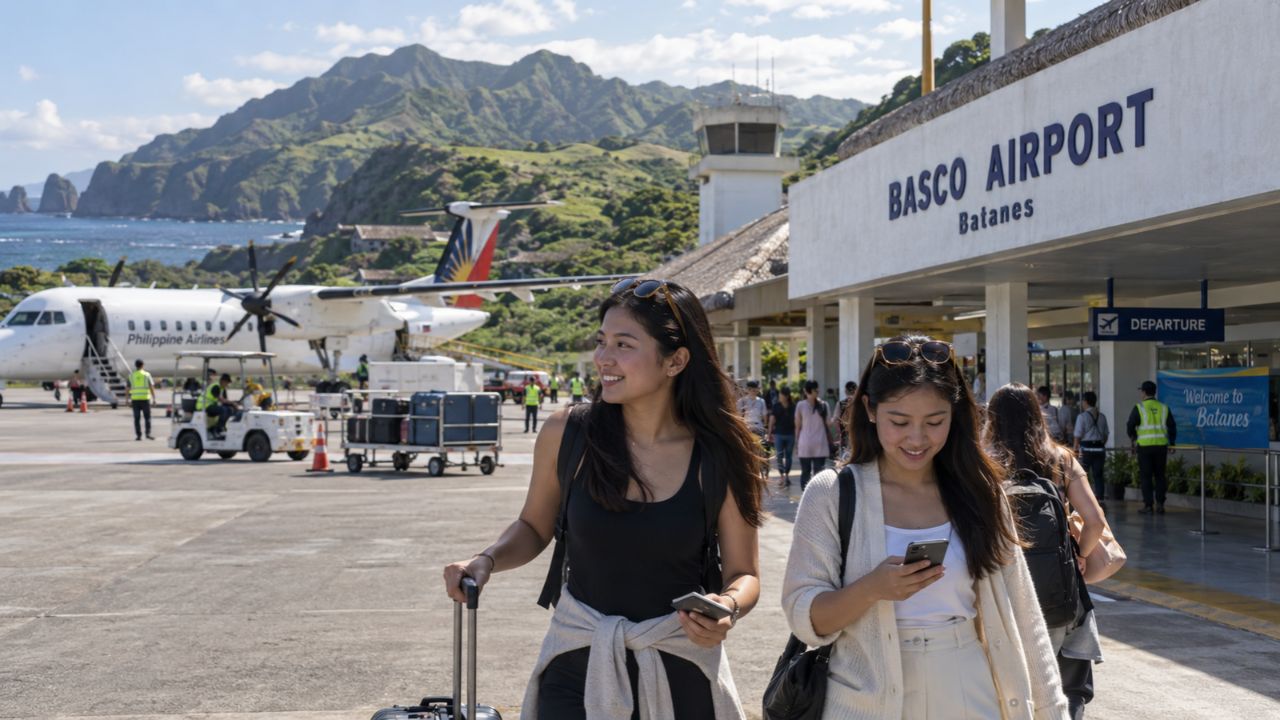
Perched on the northernmost rim of the Philippine archipelago where the Pacific Ocean collides with the South China Sea, Basco Airport operates on an abbreviated 1,250-meter runway that can be closed by a sudden wind shift in the Bashi Channel. While travelers often assume airport modernization begins and ends with expanded passenger lounges, the Civil Aviation Authority of the Philippines (CAAP) is currently advancing a far more consequential technical layer. Under Bid No. 26-71-08 BRAVO, the agency has allocated an Approved Budget for the Contract of PHP 38,019,735.40 (approximately PHP 38.02 million) for a joint Basco and Baguio meteorological instrument package, with bid submission and opening scheduled for 28 September 2026 following Bid Bulletin No. 1.
The Reality of Batanes Aviation: Weather Sensors, Power Units, and Procurement Realities
The newest verified aviation development across Batanes is not another promotional tourism campaign. It is an active meteorological procurement designed to feed real-time atmospheric observations into flight operations. According to CAAP's Bids and Awards Committee 2026 register, the tender combines installations at Basco and Baguio airports. Basco is specified for a single-site package, while Baguio receives a dual-site configuration. As of 17 September 2026, the project remains in an active procurement stage, with bids due on 28 September 2026 at 09:30 and a required delivery timeframe of 188 calendar days.
The procurement package introduces specialized equipment engineered for aerodromes exposed to severe maritime weather:
| Technical Component | Verified CAAP Specification | Operational Significance |
|---|---|---|
| Meteorological Sensors | Single-site package for wind speed, direction, temperature, humidity, pressure | Supplies certified aerodrome observations directly to flight operations |
| Weather Data Displays | Dedicated digital wind and meteorological monitors | Delivers real-time atmospheric readings to air traffic controllers |
| Data Telemetry | System with data logging, UHF radio units, and directional antennas | Transmits weather metrics reliably across airport operational channels |
| Off-Grid Power System | Solar photovoltaic array with battery banks and AC/DC supplies | Secures independent power for weather sensors during grid outages |
| Sensor Mast | 10-meter frangible mast with lightning protection and obstacle lighting | Provides safe, aviation-certified physical elevation for instruments |
| Certification Standards | Official DOST-PAGASA sensor certification and reliability sampling | Mandates certified measurement accuracy before site acceptance |
This technical investment follows two earlier infrastructure contracts awarded in mid-2025: a PHP 19,335,487.57 contract for the expansion and improvement of Basco Airport's passenger terminal (Notice to Proceed issued 8 July 2025), and a PHP 2,194,560.20 contract for powerhouse rehabilitation and generator replacement (Notice to Proceed issued 14 July 2025).
However, funding a tender does not guarantee immediate operational changes. In 2025, CAAP tendered the installation of Distance Measuring Equipment (DME) for Basco with an approved budget of PHP 24,097,602.70. On 13 August 2025, no contractors submitted proposals, forcing the committee to declare a failure of bidding on 2 September 2025. This documented setback underscores that technical upgrades require successful bidding, testing, and commissioning before flight reliability changes. Official project filings can be verified through the Civil Aviation Authority of the Philippines.
Beyond Basco: Itbayat Terminal Works and the Northern Frontier
The provincial aviation program extends beyond Batan Island to Itbayat, the northernmost inhabited municipality in the Philippines. Itbayat Airport serves an isolated community surrounded by towering sea cliffs, where maritime access involves navigating the turbulent Luzon Strait aboard traditional wooden faluwas.
CAAP awarded an Improvement and Rehabilitation contract for the Itbayat Airport Passenger Terminal Building valued at PHP 7,126,030.76 (against an initial budget of PHP 7,271,345.71). The Notice to Proceed was issued on 14 July 2025 with an agreed 120-calendar-day timeline that accounted for 17 unworkable rainy days. Both Basco and Itbayat operate under CAAP Area Center II alongside Tuguegarao, Cauayan, Bagabag, and Palanan airports.
For travelers, terminal rehabilitation at Itbayat provides sheltered processing facilities, but it should not be confused with an announcement of expanded commercial air routes. Flight services to Itbayat remain limited to chartered light aircraft and irregular flights dependent entirely on pilot visual visibility and calm winds. Regional weather warnings are continually tracked by DOST-PAGASA.
What Makes the Batanes Aviation Experience Different
Flying into Basco Airport is unlike touching down anywhere else in Southeast Asia. As twin-engine turboprops descend over the churning Bashi Channel, passengers fly directly between the volcanic cone of Mount Iraya and sheer ocean bluffs. The approach offers vistas of stone-hedged pastures, dramatic sea cliffs, and crashing Pacific waves rather than sprawling urban sprawl.
The province of Batanes is shaped by its extreme meteorology. Known as the "Home of the Winds," the archipelago endures multiple tropical depressions and typhoons every year. In September 2025, airport personnel bolted reinforced typhoon shutters over terminal glass panels and doors ahead of Typhoon Nando.
This environment has shaped the resilient Ivatan civilization. For centuries, the Ivatan people have constructed thick-walled stone dwellings (sinadumpar and maytuab) bonded with lime and sand, topped by dense layers of thatched cogon grass capable of withstanding ferocious gale winds. Communal pastures like Racuh a Payaman (Marlboro Hills) showcase centuries of traditional rotational grazing where livestock roam freely against a panoramic backdrop of green hills and deep blue waters. For authentic heritage itineraries, consult the Philippine Department of Tourism.
Visitor Insider Tips: Weather Buffers, Honesty Cafes, and Island Logistics
The Non-Negotiable 48-Hour Buffer
Never book an international connection out of Manila on the same day you are scheduled to fly home from Basco. Thick cloud ceilings, heavy crosswinds, or sudden tropical depressions can easily cause flight cancellations lasting two or three consecutive days. Always build a 48-to-72-hour buffer in mainland Luzon at the end of your Batanes holiday.
Currency, ATMs, and Connectivity
Cash is mandatory across Batanes. Basco town has only a few operating ATMs, and these frequently lose network connectivity or run out of cash during extended weather disruptions when transport flights cannot land. Withdraw sufficient Philippine Pesos (PHP) in Manila prior to boarding. Mobile data coverage is available in town centers but drops out across rural coastal roads.
Cultural Etiquette and the Ivatan Code of Trust
Batanes is celebrated for its profound social trust and near-zero crime rate. Visit the famous Honesty Coffee Shop in Ivana, an unstaffed establishment where travelers select coffee, local snacks, and handwoven handicrafts, recording their purchases and depositing exact payments into a wooden drop box. When traveling through rural villages like Mahatao or Uyugan, greet residents warmly, respect pasture boundaries, and always ask permission before taking portraits of locals wearing the traditional vakul (straw headgear woven from abaca fiber).
Island Transit Strategies
- Exploring Batan Island: Hire a local tricycle driver or rent a scooter to navigate the coastal highways and the winding climbs to the Basco Lighthouse and Marlboro Hills.
- Crossing to Sabtang Island: Travel south to San Vicente Port in Ivana for an early morning 30-minute faluwa crossing across the open sea to Sabtang, famous for the preserved stone villages of Chavayan and Savidug.
- Heading to Itbayat: Seek out light aircraft charters at Basco Airport. If traveling by sea, only embark on calm mornings; the three-to-four-hour crossing through open ocean currents requires a strong stomach and seasickness medication.
- Local Culinary Flavors: Savor authentic Ivatan dishes including luñis (crispy pork slow-cooked and preserved in lard), uved (savory patties made from grated banana pith mixed with minced fish or pork), and freshly grilled dorado (mahi-mahi) served on fragrant breadfruit leaves.
Cultural and Environmental Context: Protecting an Ancestral Domain
The entirety of Batanes is governed under an Ancestral Domain Title held by the indigenous Ivatan community. Tourism is managed under strict carrying capacity principles to preserve fragile natural ecosystems and living cultural heritage. The archipelago is recognized on the UNESCO Tentative World Heritage list for its harmonious harmony between traditional community life and extreme oceanic geography.
Conserving this delicate environment requires active traveler responsibility. Fresh water reserves are limited on smaller islands, and all non-recyclable solid waste must be transported back to mainland Luzon. Travelers are required to register at the Provincial Tourism Office, settle local environmental fees, refrain from taking beach pebbles or sea shells, and keep to established pasture paths to prevent soil erosion on windy coastal ridges.
FAQ: Visiting Batanes 2026
What new airport equipment is being installed at Basco Airport?
CAAP is procuring a PHP 38.02 million joint weather sensor system for Basco and Baguio, providing automated meteorological sensing, solar power backup, and UHF telemetry, with bids due 28 September 2026.
When is the ideal season to visit Batanes?
The driest months from March through June offer the calmest seas, bright skies, and the lowest risk of weather-related flight delays or cancellations.
How do travelers travel between Basco and Itbayat?
Visitors can book occasional chartered small-engine flights from Basco Airport or embark on a three-to-four-hour motorized faluwa sea crossing across the Luzon Strait.
What should I do if my flight from Basco is delayed or cancelled?
Airlines reschedule passengers on the next available operational flight. Keep an open travel schedule, maintain travel insurance, and allow a 48-hour buffer before onward international travel.
In the wild winds of the Bashi Channel, true travelers measure their journeys not by rigid airline timetables, but by the timeless stone resilience and quiet grace of the Ivatan spirit.
Related Travel Guides
Disclaimer
This article is for informational and educational purposes only. It does not constitute legal, financial, or professional advice. While we strive to provide accurate and up-to-date information, travel policies, regulations, and conditions change rapidly. Always verify information with official sources before making travel decisions. Nomad Lawyer makes no representations about the accuracy, reliability, completeness, or suitability of the information provided. Readers should consult qualified professionals for advice specific to their circumstances. The views expressed in this article are those of the author and do not necessarily reflect the views of Nomad Lawyer.
Naina Thakur
Contributor & Travel Specialist
Travel enthusiast and legal writer covering visa regulations, responsible tourism, and cultural journeys across global destinations.
Learn more about our team →