
Bali & Nusa Penida Festivals: A Traveler’s Guide to Sacred Ceremonies
Bali & Nusa Penida Festivals: A Traveler’s Guide to Sacred Ceremonies

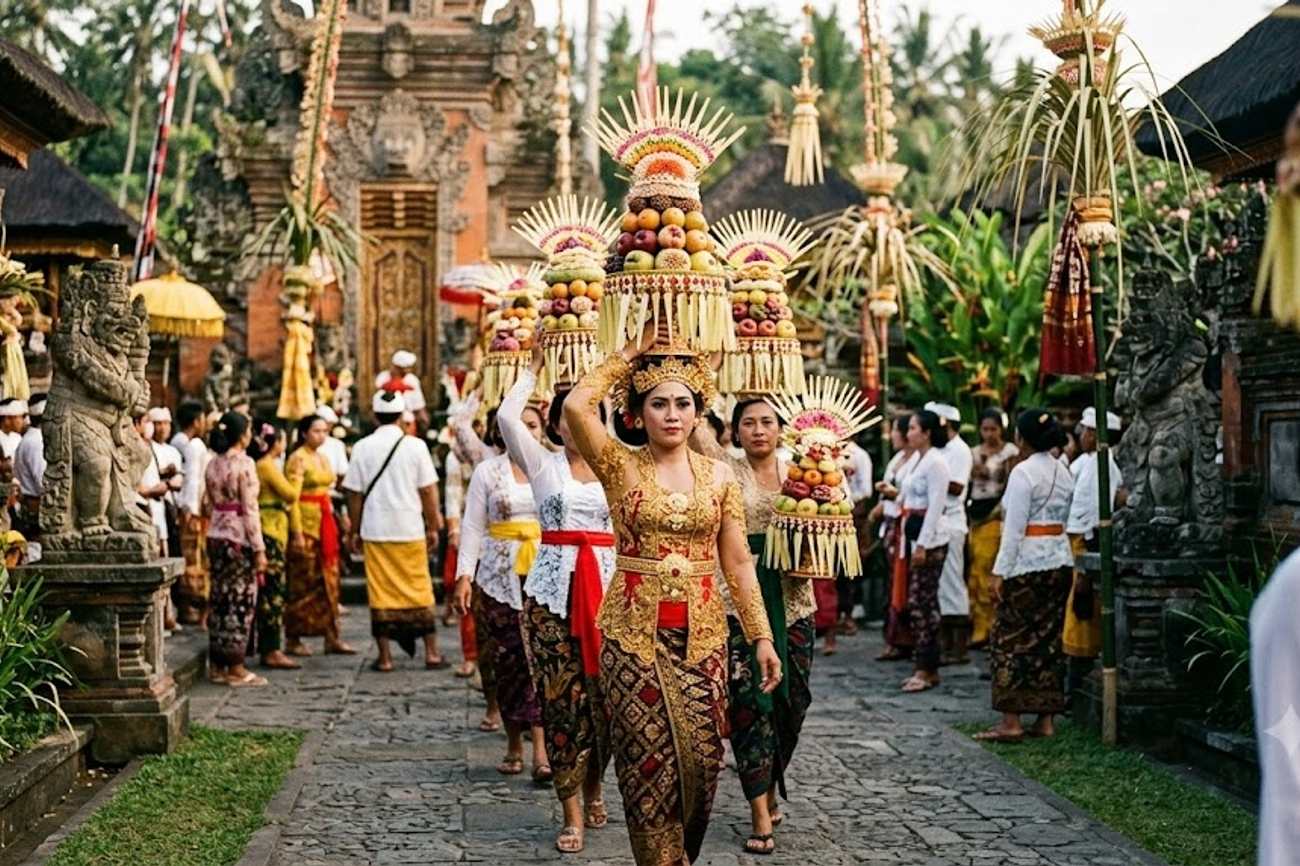
Image generated by AI
Hundreds of intricately carved stone temples, including the Paluang Temple and Girt Putri Cave Temple, form the spiritual infrastructure of Bali and Nusa Penida, where daily life is governed by the complex interplay of the lunar Saka and pawukon calendars. These religious frameworks do not merely dictate holiday dates but regulate the entire socio-economic rhythm of the region. For the modern traveler, this means that a journey to these islands is not a trip into a static destination, but an entry into a living liturgical cycle where commercial activity can be suspended entirely based on cosmic alignments.
The Mechanics of Sacred Logistics
The intersection of ancient spirituality and modern tourism creates a volatile logistical environment. In Bali and Nusa Penida, the transition from standard operating procedures to ceremonial mode is abrupt. During major holy periods, the physical environment undergoes a transformation; bamboo poles adorned with coconut leaves dominate the streetscapes, and incense-laden offerings become permanent fixtures of the pedestrian experience.
However, the most significant disruption for the international traveler is the Day of Silence. Unlike typical public holidays, this is a total cessation of commercial existence. Transport operations stop, businesses close, and outdoor movement is strictly prohibited. This is not a suggestion but a regulatory requirement. For those operating on tight itineraries, failing to account for this date can result in total strandedness, as the usual support systems of the tourism industry—taxis, tour guides, and fast-boats—cease to function.
The regulatory shift in recent years has moved away from the unstructured visitor participation of the past. Previously, the lack of coordination between rapid infrastructure growth and heritage preservation led to frequent disruptions of sacred rites. Current policies, managed through a collaboration of regional governance and community leaders, now emphasize a structured approach to cultural tourism. This shift is designed to protect the authenticity of indigenous assets, such as endemic agricultural methods and traditional hand-woven textiles, ensuring that the commercialization of the islands does not erode the very traditions that attract visitors.
Operational Friction and Visitor Distribution
The management of visitor flows has become a primary objective for regional authorities. To combat the extreme congestion at coastal viewpoints, the government has leveraged events like the annual Nusa Penida Festival. By integrating indigenous dance, traditional music, and culinary exhibitions with marine conservation initiatives, authorities are effectively decentralizing tourism. This strategy pushes travelers away from the "Instagram hotspots" and into community-driven sectors, spreading the economic benefit more equitably across the island.
Despite these strategic wins, the hospitality sector faces acute operational pressures during ceremonial windows. The surge in demand for local transport often outstrips supply, and fast-boat schedules—the only lifeline between the mainland and the smaller islands—are subject to sudden adjustments.
| Logistical Factor | Standard Period Status | Ceremonial/Holiday Status | Impact on Traveler |
|---|---|---|---|
| Commercial Activity | Full Operation | Restricted or Suspended | Potential total shutdown (Day of Silence) |
| Transport Availability | High/Predictable | Extremely Low/Volatile | Requirement for pre-arranged licensed drivers |
| Financial Access | Standard ATM availability | High risk of depletion | Necessity of significant cash reserves |
| Maritime Transit | Regular Schedules | Subject to sudden changes | Mandatory early booking of fast-boats |
| Site Access | Open/Tourist-centric | Restricted/Sacred-centric | Mandatory sarong and sash attire |
Expert Analysis: The Economics of Sacred Space
For travelers booking routes into Nusa Penida and Bali, the direct consequence of this cultural framework is a "volatility tax" on time and money. When a region operates on a lunar calendar rather than a Gregorian one, the predictability of the supply chain collapses. The pricing pressure created during these windows is not merely a result of demand, but a result of artificial scarcity created by religious observance.
The shift toward "structured community involvement" mentioned in regional policies is a calculated move to prevent the "museumification" of Bali. By integrating marine conservation into the Nusa Penida Festival, the region is pivoting from passive sightseeing to active stewardship. This means that the traveler is no longer just a consumer of a view, but a participant in a regulated cultural economy.
From a legal and logistical standpoint, the requirement for licensed drivers and pre-arranged rentals is a response to the rugged terrain and the high risk of accidents during peak festival crowds. The reliance on cash over digital payments in rural areas is not a lack of technology, but a reflection of the limited banking infrastructure on the outer islands, which becomes further strained when the local population also draws funds for ceremonial expenses. For the nomad or high-net-worth traveler, this necessitates a departure from the "cashless" lifestyle common in Western hubs.
To better understand the regulatory environment governing these movements, travelers should consult the Ministry of Tourism and Creative Economy of Indonesia or check the latest maritime safety advisories via the International Maritime Organization (IMO) when planning fast-boat crossings during peak swell seasons.
Key Takeaways
- Calendar Dependency: Itineraries must be cross-referenced with the Saka and pawukon calendars to avoid the total commercial shutdown of the Day of Silence.
- Dress Code Compliance: Entry into any sacred compound requires a traditional sarong and sash; failure to comply can result in denied entry to major sites.
- Liquidity Requirements: Due to ATM depletion on smaller islands during festivals, travelers must maintain high cash reserves in Indonesian Rupiah.
- Transit Strategy: Fast-boat tickets must be secured well in advance, and licensed local drivers are essential for navigating rugged interior terrain.
- Strategic Timing: Utilizing events like the Nusa Penida Festival allows travelers to avoid overcrowded coastal areas while supporting community-led conservation.
FAQ: Bali & Nusa Penida Festivals 2026
What happens to tourists during the Day of Silence? All commercial activities, including transport and shops, stop. Travelers are expected to remain indoors and maintain silence. You must stock food and water in advance and ensure your hotel is aware of your presence.
Is it legal to enter temples without a sarong? While not a criminal offense, it is a violation of local cultural regulations. Most temples will deny entry to anyone not wearing a sarong and sash. Many temples offer rentals at the entrance.
Why are fast-boats unreliable during festival seasons? High demand combined with unpredictable sea swells often leads to schedule changes. Because these boats are the primary link to Nusa Penida, congestion at the ports can cause significant delays.
Can I use credit cards for everything in Nusa Penida? No. While luxury resorts accept cards, local transport, small vendors, and rural ATMs are unreliable. Carrying cash is mandatory for navigating the island's interior and paying for local services.
In the balance between ancient cosmic harmony and modern mass tourism, the prepared traveler finds a sanctuary, while the unplanned visitor finds a wall.
Tags: Nusa Penida Festival 2026, Bali Saka Calendar, Girt Putri Cave Temple, Indonesian Cultural Tourism Policy, Nusa Penida Fast-boat Logistics
Related Travel Guides
- Italy Travel Revival As Venice’s New Generation Protects Ancient Water Traditions And Revives Lagoon Culture
- Dubai Travel Boom As Viral TikTok Products Turn Food Hunting Into A New Global Grocery Tourism Trend
- Greece Creates The Ultimate October Travel Escape With Santorini, Mykonos, Corfu And Kefalonia Island Adventures
Disclaimer
This article is for informational and educational purposes only. It does not constitute legal, financial, or professional advice. While we strive to provide accurate and up-to-date information, travel policies, regulations, and conditions change rapidly. Always verify information with official sources before making travel decisions. Nomad Lawyer makes no representations about the accuracy, reliability, completeness, or suitability of the information provided. Readers should consult qualified professionals for advice specific to their circumstances. The views expressed in this article are those of the author and do not necessarily reflect the views of Nomad Lawyer.
Preeti Gunjan
Contributor & Community Manager
A passionate traveller and community builder. Preeti helps grow the Nomad Lawyer community, fostering engagement and bringing the reader experience to life.
Learn more about our team →