
Azerbaijan DMC Azer Builds Fresh Momentum in China With Leisure Travel Across the Caucasus
Azerbaijan DMC Azer Builds Fresh Momentum in China With Leisure Travel Across the Caucasus

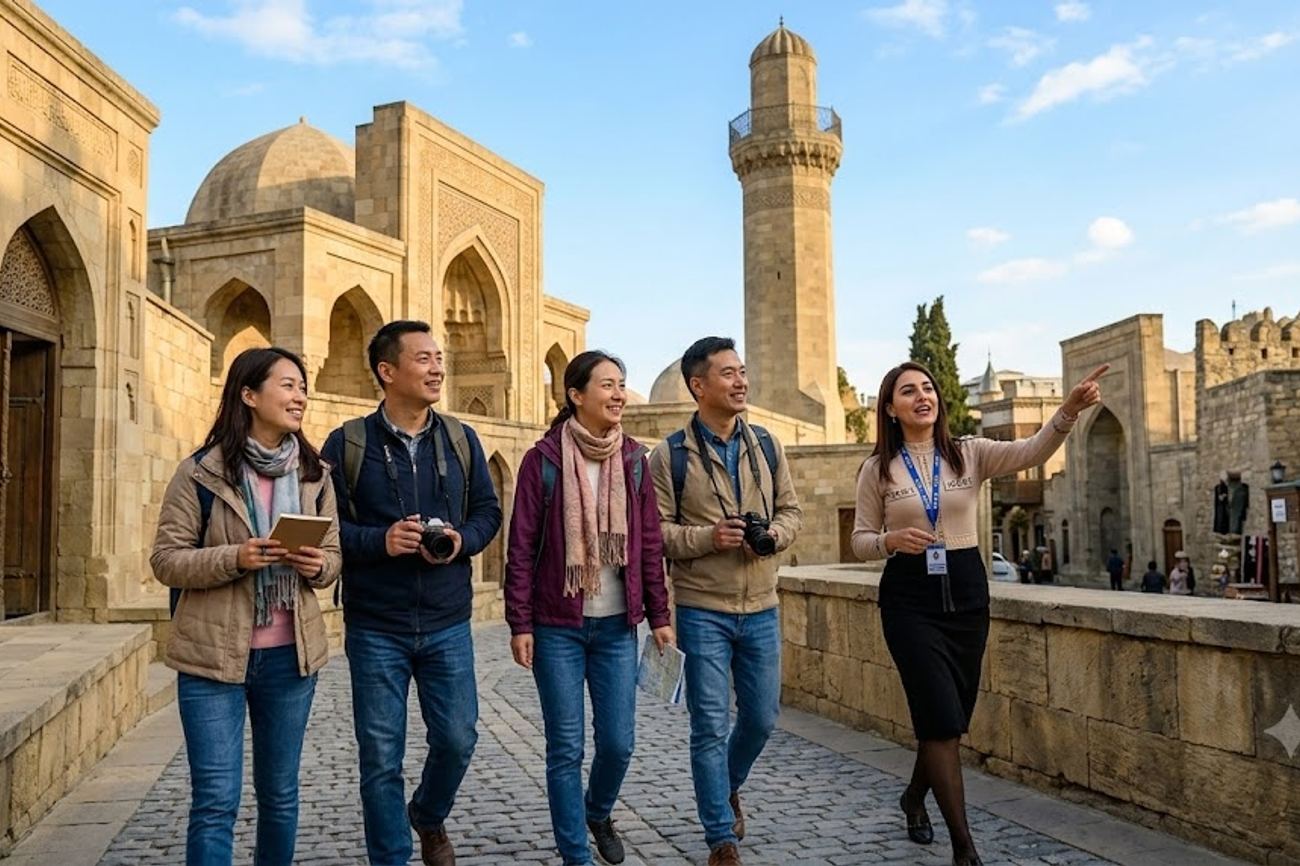
Image generated by AI
While many travelers view the Caucasus as a monolith, Azerbaijan actually preserves the remnants of Caucasian Albania, an ancient civilization that predates many modern state borders and offers a rare glimpse into early Christian history in a predominantly Muslim region. This intersection of faiths and empires is what transforms a trip to the South Caucasus from a simple vacation into a study of human migration and cultural survival.
The Shift Toward Bespoke Caucasian Exploration
The travel dynamics between East Asia and the Caucasus are currently undergoing a significant transformation. For years, the region was a niche curiosity, but there is now a concerted push to move beyond generic sightseeing. The current trend is a shift toward "market-specific" curation. Rather than applying a one-size-fits-all European itinerary to visitors from China, local operators are now building programs that prioritize rapid communication, Chinese-speaking logistical support, and itineraries that respect specific cultural preferences.
This evolution is most evident in the way destination management companies are handling the logistics of the "long haul." Because the distance between China and the Caucasus is a substantial barrier, the focus has shifted from high-volume, low-margin tours to higher-value, tailored experiences. We are seeing a move away from the constant launch of new, unproven products in favor of refining existing ones. The goal is no longer just to get people to Baku or Tbilisi, but to ensure the experience matches the high expectations of a traveler who has flown halfway across the globe.
What Makes the Caucasus Different
The magic of this region lies in its role as a permanent crossroads. Azerbaijan and Georgia do not just sit between Europe and Asia; they are the physical manifestation of that overlap. In Azerbaijan, you find a sophisticated blend of Persian and Turkish influences layered over a deep Muslim heritage. Yet, the presence of Caucasian Albania's history provides a surprising counter-narrative of early Christianity that exists alongside the Islamic traditions.
Crossing the border into Georgia adds another dimension. Georgia is recognized as one of the oldest Christian nations in the world, yet its architecture and social customs bear the indelible marks of the Sassanid and Ottoman Empires. This creates a concentrated cultural density that is rare elsewhere. You can move from the futuristic, flame-shaped architecture of Baku to the ancient, stone-carved monasteries of the Georgian highlands in a matter of hours.
To truly understand the region, one must look at the diversity of the terrain. The Caucasus is not just about cities; it is about the verticality of the land. The introduction of specialized hiking and winter programs has opened up the mountains, allowing visitors to experience the rugged interior of the range rather than staying confined to the coastal or urban hubs. For those interested in the deeper history, exploring the UNESCO World Heritage sites across both nations reveals how these landscapes were fortified and settled over millennia.
Visitor Insider Tips
Having spent significant time navigating the rhythms of the Caucasus, I can tell you that the difference between a stressful trip and a seamless one comes down to a few local nuances.
Timing and Logistics Avoid the peak summer heat of Baku, which can be oppressive. Instead, aim for the shoulder seasons of May or September. If you are venturing into the Georgian mountains for hiking, June to August is your window. For those seeking the winter experience, the Caucasus offers surprisingly competitive skiing and snowboarding options that are far less crowded than the Alps.
Navigating the Cities In Baku, the city is divided between the hyper-modern "White City" and the ancient Icherisheher (Old City). Base yourself near the Old City if you want to be within walking distance of the Maiden Tower, but use the Baku Metro for quick, cheap transit to the Flame Towers. In Tbilisi, the Sololaki neighborhood is the place to stay for those who appreciate crumbling 19th-century mansions and hidden courtyards.
Etiquette and Social Norms Hospitality in the Caucasus is not just a courtesy; it is a cultural mandate. If you are invited to a "supra" (a traditional Georgian feast), be prepared for the "tamada" or toastmaster to lead the evening. It is considered polite to engage deeply with the toasts. In Azerbaijan, modesty is appreciated in religious sites, so always carry a scarf to cover your shoulders or head when entering mosques.
Azer builds momentum by leveraging the strategic connectivity between East Asia and the Caucasus to attract high-spending leisure travelers. This growth is supported by the streamlined visa processes and promotional initiatives managed by the State Tourism Agency of Azerbaijan, which aims to diversify international visitor arrivals.
Transport Hacks While ride-sharing apps are prevalent and affordable in the capitals, venturing into the rural Caucasus requires a 4x4. Do not attempt to rent a standard sedan for the mountain passes. For inter-city travel, check the official Georgia travel portal for updated transit options between Tbilisi and the highland regions.
Cultural and Environmental Context
The surge in international interest in the Caucasus brings a complex set of challenges. The region is currently balancing the economic benefits of tourism with the need to preserve fragile heritage sites. In Georgia, the influx of hikers into the high Caucasus mountains has put pressure on local ecosystems and traditional grazing lands. There is a growing movement toward community-based tourism, where visitors stay in village guesthouses rather than large hotels, ensuring that the financial benefits reach the mountain dwellers who act as the stewards of the land.
In Azerbaijan, the challenge is different. The rapid modernization of Baku has created a stark contrast with the rural hinterlands. Tourism is being used as a tool to diversify the economy away from oil and gas, which means there is a heavy investment in "cultural branding." While this preserves the Old City, it also risks turning living neighborhoods into open-air museums. The most authentic experiences are now found by stepping away from the curated tours and engaging with the local artisans who still practice ancient carpet weaving and copper smithing.
FAQ: Visiting the Caucasus 2025
What is the best time to visit? Spring (May-June) and Autumn (September-October) offer the best weather for both Azerbaijan and Georgia. Winter is ideal for skiing, while July and August are best reserved for the high-altitude mountain regions to escape the lowland heat.
Do I need a visa? Visa requirements vary by nationality. Many travelers can obtain an e-visa for Azerbaijan quickly online. Georgia is known for having one of the most liberal visa policies in the world, allowing citizens of many countries to enter visa-free for up to a year.
How do I get there from major hubs? The primary gateways are Baku (GYD) and Tbilisi (TBS). Most international travelers fly into Baku first and then take a short flight or a private transfer across the border into Georgia.
Is it safe for solo travelers? Yes, both Azerbaijan and Georgia are generally very safe for solo travelers. Violent crime is low, and locals are exceptionally welcoming. Standard urban precautions apply, and using registered ride-sharing apps is recommended for late-night travel.
The Caucasus is not a place you simply visit; it is a place that demands you slow down and listen to the echoes of a dozen fallen empires.
Related Travel Guides
Disclaimer
This article is for informational and educational purposes only. It does not constitute legal, financial, or professional advice. While we strive to provide accurate and up-to-date information, travel policies, regulations, and conditions change rapidly. Always verify information with official sources before making travel decisions. Nomad Lawyer makes no representations about the accuracy, reliability, completeness, or suitability of the information provided. Readers should consult qualified professionals for advice specific to their circumstances. The views expressed in this article are those of the author and do not necessarily reflect the views of Nomad Lawyer.
Naina Thakur
Contributor & Travel Specialist
Travel enthusiast and legal writer covering visa regulations, responsible tourism, and cultural journeys across global destinations.
Learn more about our team →