
Azerbaijan's UNESCO Carpet Weaving and Kelaghayi Showcase Drives Tourism at Budapest Folk Arts Festival

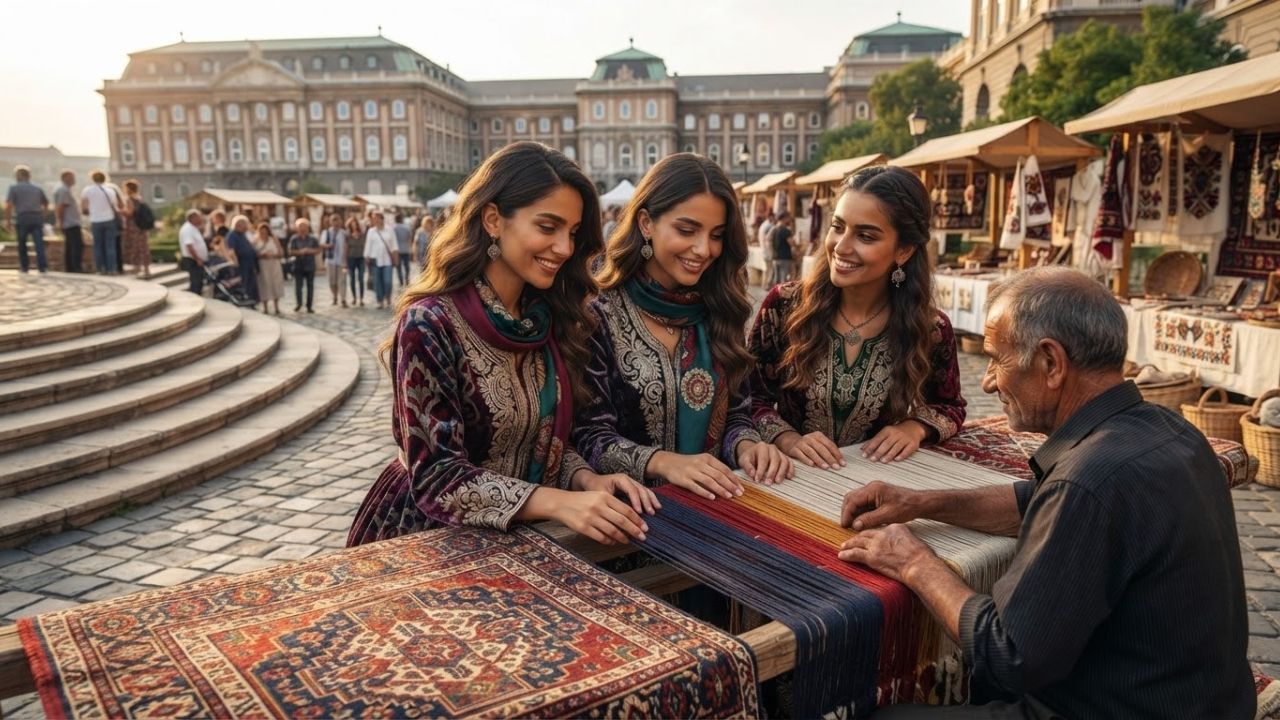
Image generated by AI
The Azerbaijan National Carpet Museum is presenting its UNESCO-recognized carpet weaving and kelaghayi silk crafting traditions at the 40th Annual Festival of Folk Arts at Buda Castle in Budapest, Hungary, stimulating global interest in Azerbaijani cultural tourism.
BUDAPEST, Hungary — Azerbaijan’s rich artistic heritage is captivating European travelers at the historic Buda Castle, where master weavers and silk artisans from the Azerbaijan National Carpet Museum are participating in the 40th Annual Festival of Folk Arts. The major cultural showcase brings centuries-old Caucasian craftsmanship to one of Central Europe’s premier tourist destinations.
Supported by Azerbaijan’s Ministry of Culture, the State Committee on Work with Diaspora, and the Azerbaijan House in Hungary, the delegation features live weaving demonstrations, interactive workshops, and exhibitions highlighting Azerbaijani carpet art and traditional kelaghayi silk headscarves—both inscribed on the UNESCO Representative List of the Intangible Cultural Heritage of Humanity.
The initiative illustrates how experiential cultural diplomacy and live heritage showcases are creating new pathways for international travel to Baku and regional artisan hubs across Azerbaijan.
Azerbaijan National Carpet Museum Leads Cultural Showcase at Buda Castle
The 40th Annual Festival of Folk Arts transforms the historic courtyard of Buda Castle into an open-air cultural forum. Visitors and international tourists can observe master artisans work, explore handcrafted textiles, and learn the historical narratives embedded within traditional motifs.
For Azerbaijan, participating in this high-profile European event provides an opportunity to position its cultural identity in front of global travelers seeking authentic heritage experiences.
By moving beyond passive museum displays to offer hands-on craft demonstrations, the Azerbaijan National Carpet Museum builds direct interest in visiting Azerbaijan's cultural landmarks, including the architecturally striking museum in Baku.
Azerbaijani Folk Arts & Heritage Tourism Benchmark Matrix
The reference table below outlines the core Azerbaijani crafts exhibited in Budapest, their official UNESCO status, cultural parameters, and direct impacts on international travel:
| Cultural Craft & Heritage Art | Official UNESCO Recognition Status | Traditional Technique / Materials | Direct Tourism & Destination Impact |
|---|---|---|---|
| Traditional Azerbaijani Carpet Weaving | UNESCO Intangible Cultural Heritage | Hand-knotted wool/silk with regional geometric motifs | Drives heritage travel to Baku, Quba & Karabakh weaving centers |
| Kelaghayi Silk Headscarf Art | UNESCO Intangible Cultural Heritage | Natural silk dyeing & woodblock stamp motif stamping (galib) | Inspires artisan workshop tours in Basgal & Sheki |
| Azerbaijan National Carpet Museum | Premier State Cultural Institution (Baku) | World's 1st dedicated carpet museum & research center | Serves as anchor destination for Baku cultural itineraries |
| Budapest Folk Arts Festival Showcase | 40th Annual Edition at Buda Castle | Live master classes, knotting sessions & book displays | Connects European tourists directly with Azerbaijani heritage |
| Bilateral Cultural Diplomacy | Supported by Ministry of Culture & Diaspora | Joint Hungarian-Azerbaijani cultural promotions | Expands flight demand between Budapest (BUD) & Baku (GYD) |
UNESCO Intangible Cultural Heritage: Carpet Weaving and Kelaghayi Artistry
Azerbaijani carpet weaving represents one of the world's oldest textile traditions. Each regional carpet school—including Quba, Shirvan, Ganja, Kazakh, Karabakh, and Tabriz—utilizes distinct knotting densities, natural vegetable dyes, and symbolic patterns encoding regional history, nature, and tribal folklore.
Alongside carpet art, the showcase highlights kelaghayi—a square silk headscarf crafted using traditional silk weaving, natural botanical dyes, and woodblock print stamping (galib).
The kelaghayi tradition, centered in historic silk towns like Basgal and Sheki, requires meticulous skill to apply protective wax patterns before dipping silk fabrics into hot dye baths.
Both art forms reflect Azerbaijan’s historical positioning along the ancient Silk Road, attracting textile historians and conscious travelers to the Caucasus.
Interactive Master Classes and Live Artisan Demonstrations in Budapest
A key factor driving engagement at Buda Castle is the interactive structure of Azerbaijan's exhibition. Rather than viewing completed textiles behind glass, festival attendees participate in hands-on master classes led by master carpet weavers.
Visitors learn fundamental knotting techniques (turkbaf double knots), observe how natural dyes are extracted from madder root and pomegranate skins, and watch the precise stamping of kelaghayi silk scarves.
Travel industry analysts note that interactive cultural encounters create lasting emotional connections, making participants significantly more likely to plan future vacations to the artisan's country of origin.
Cultural Diplomacy and Bilateral Tourism Ties Between Azerbaijan and Hungary
The collaboration between the Azerbaijan National Carpet Museum, the State Committee on Work with Diaspora, and the Azerbaijan House in Hungary underscores the growing role of cultural diplomacy in tourism development.
Hungary and Azerbaijan share strong diplomatic and economic ties, with direct air connections linking Budapest Airport (BUD) with Baku Heydar Aliyev International Airport (GYD).
By presenting authentic folk traditions at major European events, Azerbaijani tourism authorities cultivate high-yield travelers interested in culinary heritage, architecture, and historic silk routes.
Buda Castle Hosts Global Folk Traditions to Expand European Heritage Tourism
For the city of Budapest, hosting international cultural institutions at Buda Castle reinforces its status as a top European destination for cultural tourism.
The annual Festival of Folk Arts generates significant economic activity for local hotels, restaurants, and transport networks while offering visitors a diverse international program.
Integrating global master craftspeople alongside Hungarian artisans enriches the festival atmosphere, establishing Buda Castle as a meeting point for international living heritage.
Practical Implications for Heritage Travelers and Cultural Tour Planners
For travelers attending European cultural festivals, engaging with international delegations offers inspiration for future long-haul journeys.
From a travel planning perspective, visitors inspired by Azerbaijan's showcase can easily structure a cultural itinerary centered around Baku’s National Carpet Museum, the historic town of Sheki (a UNESCO World Heritage site known for its Palace of Sheki Khans and silk workshops), and the mountain weaving villages of Quba.
Direct air links and simplified electronic visa (e-Visa) procedures make traveling to Azerbaijan accessible for European citizens.
Traveler & Cultural Enthusiast Guide: Experiencing Azerbaijani Craft Heritage
Travelers interested in exploring Azerbaijan’s textile and cultural heritage should consider these key recommendations:
- Visit the Azerbaijan National Carpet Museum in Baku: Explore the iconic carpet-rolled architectural landmark located on the Baku Boulevard promenade.
- Journey to Sheki and Basgal Silk Centers: Take a scenic overland trip to Sheki and Basgal to witness traditional kelaghayi silk dyeing and woodblock stamping in original 18th-century workshops.
- Apply for the Azerbaijan ASAN e-Visa Online: Utilize the official ASAN e-Visa portal to secure electronic entry authorization within three business days prior to travel.
- Purchase Certified Hand-Knotted Textiles: Buy carpets directly from official museum shops or certified artisan cooperatives providing authenticity certificates.
Related Travel Guides
Disclaimer
This article is for informational and educational purposes only. It does not constitute legal, financial, or professional advice. While we strive to provide accurate and up-to-date information, travel policies, regulations, and conditions change rapidly. Always verify information with official sources before making travel decisions. Nomad Lawyer makes no representations about the accuracy, reliability, completeness, or suitability of the information provided. Readers should consult qualified professionals for advice specific to their circumstances. The views expressed in this article are those of the author and do not necessarily reflect the views of Nomad Lawyer.
Raushan Kumar
Founder & Lead Developer
Full-stack developer with 11+ years of experience and a passionate traveller. Raushan built Nomad Lawyer from the ground up with a vision to create the best travel and law experience on the web.
Learn more about our team →