
Austrian Airlines Streamlines Fleet to Boeing 787 and A320: Vienna Hub Guide 2026

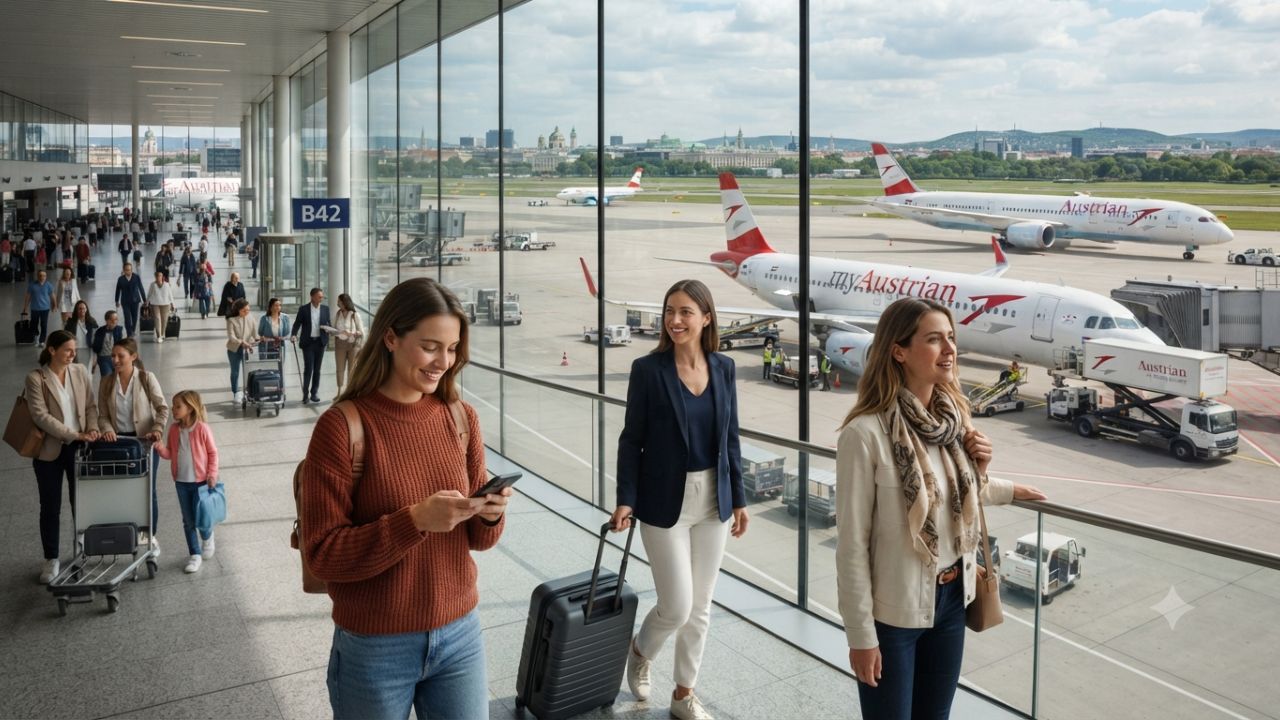
While most major European hub airports require minimum connecting times of 45 to 60 minutes, Vienna International Airport operates with one of the fastest connection windows in global aviation at just 25 minutes. Exploiting this razor-sharp transit efficiency, Austrian Airlines has launched seven new European destinations for summer 2026 while engineering an aggressive long-term simplification of its flight operations. Under a strategic roadmap unveiled by airline executive Sven, the Austrian flag carrier is collapsing its historically fragmented operational structure—which previously spanned five distinct aircraft families—into just two core aircraft types by 2028: the long-haul Boeing 787 Dreamliner and the short-to-medium-haul Airbus A320 family.
The Two-Fleet Revolution: How Boeing 787s and Airbus A320s Reshape Vienna by 2028
The strategic overhaul underway at Austrian Airlines addresses one of the most persistent cost challenges in European aviation: operational complexity. Maintaining five separate aircraft families required redundant crew training pipelines, segregated spare parts inventories, and complicated maintenance schedules.
By standardizing around two aircraft families by 2028, Austrian Airlines is building a unified fleet architecture:
| Fleet Category | Target Aircraft Family | Replaced Aircraft Types | Strategic Operational Benefit |
|---|---|---|---|
| Long-Haul Widebody | Boeing 787 Dreamliner | Boeing 767-300ER, Boeing 777-200ER | 25% lower fuel burn; enhanced cabin pressurization |
| Short & Medium-Haul | Airbus A320 Family | Bombardier Q400, older regional jets | Interchangeable flight crews; high seat reliability |
| Summer 2026 Additions | 7 New European Routes | Varied regional city pairs | Expanded point-to-point and transfer connectivity |
| Fuel Cost Management | 80% Hedged for 2026 | 20% Spot Market Exposure | Shielded via Lufthansa Group collective purchasing |
Sven explained that operating solely Boeing 787s on intercontinental flights alongside Airbus A320 family aircraft across European routes allows Austrian Airlines to maximize fleet productivity. The widebody Boeing 787 transition is particularly impactful for travelers, introducing quieter cabins, higher humidity levels, and larger dimmable windows that reduce long-haul fatigue.
At the same time, managing elevated fuel costs remains an operational priority. Because fuel represents the carrier's largest individual operating expenditure, Austrian Airlines relies on Lufthansa Group hedging strategies, having locked in 80% of its projected 2026 fuel requirements. While the remaining 20% exposure requires vigilant capacity management, the airline enters late 2026 with stronger cost protection than most regional competitors. Real-time terminal layouts and flight connections can be verified directly through Vienna Airport.
What Makes the Vienna Hub Experience Different: Fast Layovers and Austrian Hospitality
Vienna International Airport (Schwechat - VIE) offers an aviation environment uniquely tailored for seamless transit. Rather than navigating the sprawling, multi-terminal labyrinths of Frankfurt, Paris Charles de Gaulle, or London Heathrow, passengers transferring through Vienna experience a single compact terminal facility in Terminal 3. With gate-to-gate walking times rarely exceeding 15 minutes, the airport makes tight connections feel effortless.
Onboard, Austrian Airlines sets itself apart through its cultural ties to Viennese gastronomy. In partnership with renowned Austrian caterer DO & CO, the airline serves restaurant-quality meals, while business class passengers on long-haul routes enjoy a dedicated onboard coffee house service. Flight attendants present a curated menu of traditional Viennese coffees—including the iconic Melange and Einspänner—served on silver trays.
Geographically, Vienna occupies a privileged crossroads position. Situated near the borders of Slovakia, Hungary, and the Czech Republic, the Austrian capital serves as the natural Western gateway into Central and Eastern Europe. Austrian Airlines leverages this geography by providing high-frequency feeder connections to mid-sized cities throughout the Balkans and the Danube river basin. Detailed cultural travel itineraries can be explored through Austria Tourism.
Visitor Insider Tips: Train Transfers, Coffee Etiquette, and Neighborhood Quarters
The Airport Transit Choice: S-Bahn S7 versus CAT
When arriving at Vienna Airport, do not instinctively purchase tickets for the City Airport Train (CAT). While the CAT is heavily advertised and whisks travelers non-stop to Wien Mitte in 16 minutes for €14.90, the regular Austrian Federal Railways (ÖBB) suburban train line S7 departs from the exact same underground platforms. The S7 takes only 25 minutes to reach Wien Mitte and costs just €4.40. If you already hold a 24-, 48-, or 72-hour Vienna public transit card, you only need to purchase a €2.00 single-zone extension ticket to cover the ride from the airport.
Viennese Coffeehouse Rituals (Kaffeehauskultur)
Austrian coffeehouse culture is officially protected as UNESCO intangible cultural heritage. When entering a historic establishment like Café Sperl, Café Central, or Café Prückel:
- Never ask for a generic "cup of coffee." Order an extended espresso (Verlängerter), a classic Melange (espresso topped with steamed milk and velvety foam), or a Kleiner Brauner.
- Your order will always arrive on an oval silver tray accompanied by a small glass of fresh tap water topped with an inverted spoon.
- In Vienna, ordering one coffee grants you the right to sit for hours reading newspapers without being pressured to leave.
Where to Base Yourself in the Capital
- Neubau (District 7): The creative and artistic heart of the city, located just outside the Ringstrasse, packed with independent fashion boutiques, third-wave coffee roasters, and courtyard restaurants.
- Josefstadt (District 8): A peaceful, historic residential neighborhood of 18th-century townhouses and tranquil wine bars, located steps behind the Rathaus (City Hall).
- Innere Stadt (District 1): Spectacular for walking past imperial palaces, but hotels command steep price premiums.
Beating the Crowds at Imperial Palaces
To visit the imperial gardens and state apartments of Schönbrunn Palace or the Belvedere to admire Gustav Klimt's masterpieces, pre-book the earliest timed-entry slot (08:30) online. Wander through the cobblestone lanes of the Historic Centre of Vienna during the late evening, when illuminated Baroque facades can be appreciated without tour groups.
Cultural and Environmental Context: Sustainable Aviation and Rail Synergy
Austrian Airlines' network strategy operates within a progressive environmental framework. Austria has pioneered intermodal travel through the "AIRail" initiative, a joint project between Austrian Airlines and Austrian Federal Railways (ÖBB). On domestic routes linking Vienna with cities like Linz, Graz, and Salzburg, short-haul flights have been replaced by high-speed trains carrying designated Austrian flight numbers. Passengers enjoy single-ticket convenience, guaranteed connections, and mileage accrual while avoiding unnecessary regional aviation emissions.
Simultaneously, the fleet transition to Boeing 787s delivers an immediate 20% to 25% reduction in fuel burn compared to the older twin-aisle jets they replace. By combining intermodal rail connections with next-generation fleet investments and increasing supplies of Sustainable Aviation Fuel (SAF), Austrian Airlines demonstrates how European carriers can preserve essential international connectivity while actively reducing environmental footprints.
FAQ: Traveling With Austrian Airlines 2026
Which aircraft will Austrian Airlines operate by 2028?
Austrian Airlines is streamlining its operations to two aircraft families by 2028: Boeing 787 Dreamliners for long-haul routes and Airbus A320 family aircraft for short- and medium-haul European flights.
How many new European destinations did Austrian Airlines launch in 2026?
The carrier introduced seven new European destinations to its network during summer 2026, expanding regional travel options across the continent.
What is the most economical way to travel from Vienna Airport to the city center?
The regional S-Bahn train line S7 connects Vienna Airport to Wien Mitte in 25 minutes for just €4.40, offering a far more affordable alternative to the €14.90 City Airport Train.
How does Austrian Airlines manage jet fuel price volatility?
Through the Lufthansa Group, Austrian Airlines secured 80% fuel hedging for 2026, shielding the majority of its fuel consumption from short-term market price swings.
By uniting a lightning-fast 25-minute hub with a modern fleet of Boeing 787s and Airbus A320s, Austrian Airlines ensures that Vienna remains the most civilized and efficient gateway between east and west.
Related Travel Guides
Disclaimer
This article is for informational and educational purposes only. It does not constitute legal, financial, or professional advice. While we strive to provide accurate and up-to-date information, travel policies, regulations, and conditions change rapidly. Always verify information with official sources before making travel decisions. Nomad Lawyer makes no representations about the accuracy, reliability, completeness, or suitability of the information provided. Readers should consult qualified professionals for advice specific to their circumstances. The views expressed in this article are those of the author and do not necessarily reflect the views of Nomad Lawyer.
Kunal K Choudhary
Co-Founder & Contributor
A passionate traveller and tech enthusiast. Kunal contributes to the vision and growth of Nomad Lawyer, bringing fresh perspectives and driving the community forward.
Learn more about our team →