
The Trans-Tasman & Asian Gateway: How 9.07 Million Arrivals Are Redefining Australian Tourism in 2026

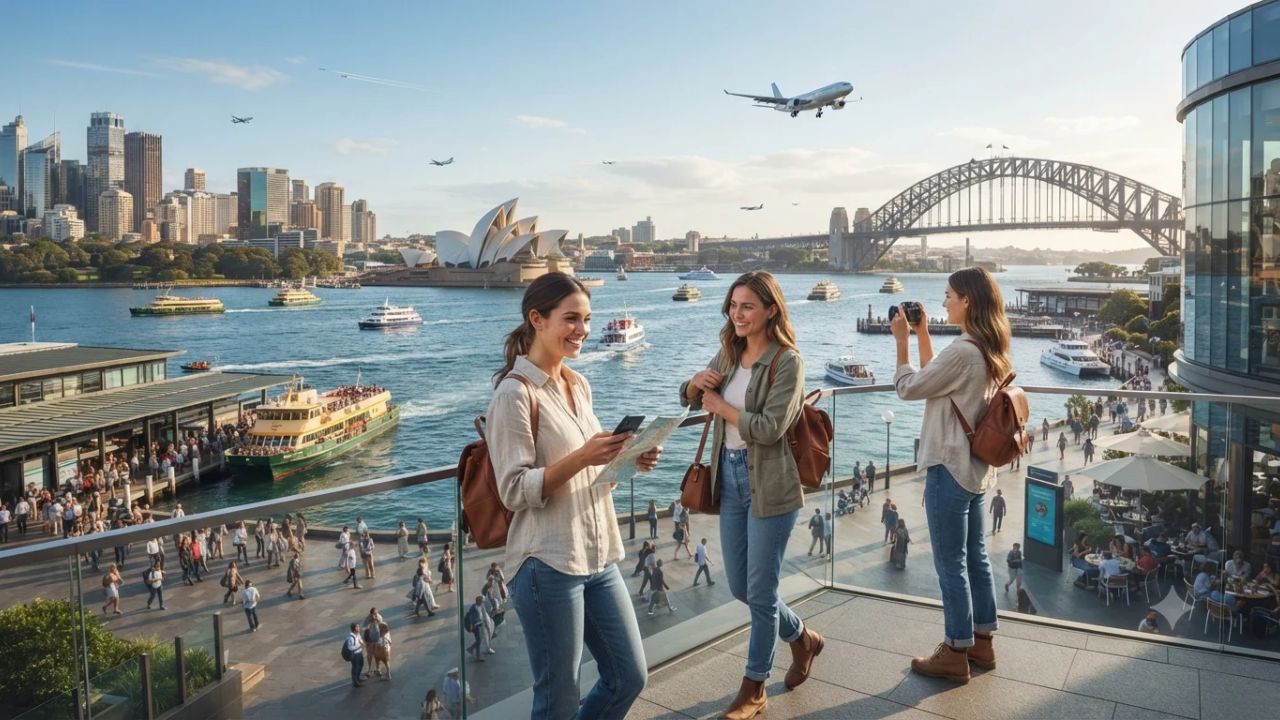
According to the latest Australian Travel Industry Association (ATIA) data backed by the Australian Bureau of Statistics, Australia welcomed 9.07 million international arrivals in the year to July 2026—a 6.9 per cent annual increase—while adventurous Australians undertook a record 12.76 million overseas journeys. Far from relying on traditional European holiday traffic, this dual expansion is powered by unprecedented Trans-Tasman solidarity, where 1.43 million New Zealanders crossed the ditch, alongside a roaring 17.6 per cent rebound in Chinese arrivals that delivered 1.13 million visitors to Australian shores.
With Hong Kong travel recording a sturdy 9.2 per cent growth, the Southern Hemisphere's largest travel economy is operating as the central hub of an integrated Asia-Pacific travel grid. Australian travelers are dispersing across regional neighbors including Indonesia, Japan, Vietnam, and China, while Asian and Kiwi visitors are venturing past traditional urban gateways in Sydney and Melbourne to explore regional wine valleys, indigenous heritage trails, and pristine coral reefs.
Analyzing the 2026 Asia-Pacific Inbound and Outbound Grid
The latest data from the Australian Bureau of Statistics and the Department of Infrastructure illustrates a travel sector firing on all cylinders. Bilateral flight expansions and increased seat capacity across Qantas, Air New Zealand, Cathay Pacific, and mainland Chinese carriers have restored multi-city regional transit.
| Travel Corridor & Market | 2026 Visitor Volume | Annual Growth Rate | Primary Travel Drivers |
|---|---|---|---|
| New Zealand (Top Inbound Source) | 1.43 million arrivals | Steady baseline | Family reunions, weekend sporting breaks, regional touring |
| Mainland China (Fastest Growth) | 1.13 million arrivals | +17.6% YoY | Premium independent travel, education, luxury shopping |
| Hong Kong SAR | Growing regional gateway | +9.2% YoY | Business transit, culinary city breaks, coastal holidays |
| Total International Inbound | 9.07 million arrivals | +6.9% YoY | High-yield regional exploration, conference tourism |
| Australian Outbound Volume | 12.76 million trips | +3.5% YoY | Outbound surges into Japan, Vietnam, Indonesia, and China |
New Zealand remains the undisputed anchor of Australia’s inbound hospitality sector. Because trans-Tasman flights require minimal jet lag and no complex visa barriers for citizens, Kiwi travelers provide consistent, multi-season patronage for boutique hotels in Queensland, theater seasons in Melbourne, and ski resorts in the Snowy Mountains.
What Sets Regional Australia Apart: Beyond the Harbour Bridge
Australia's enduring appeal lies in its immense geographic and environmental variety. While iconic urban landmarks like the Sydney Opera House and Melbourne's laneways remain primary arrival magnets, overseas travelers are increasingly booking regional multi-day journeys.
In the tropical north, travelers combine visits to the Great Barrier Reef with excursions into the ancient rainforests of the Daintree and the red sandstone gorges of Kakadu National Park, both inscribed on the UNESCO World Heritage register for their peerless natural and indigenous cultural value.
In South Australia and Western Australia, food and wine lovers travel along the Barossa Valley and Margaret River corridors, where Mediterranean-style climates produce world-renowned Shiraz and Cabernet Sauvignon. Meanwhile, direct regional flights into Hobart allow visitors to explore Tasmania's pristine wilderness sanctuaries and cutting-edge contemporary art galleries at MONA.
Independent travelers can research regional driving routes and verified nature sanctuaries via the official Tourism Australia portal.
Visitor Insider Tips: Timing, Local Etiquette, and Transport Hacks
Navigating Australia's continental distances requires adopting smart transport strategies and local cultural habits:
- Master the Domestic Aviation Hop: When planning multi-state journeys—such as combining the Great Barrier Reef with the Red Centre—book multi-city air passes directly through domestic airlines rather than backtracking through Sydney or Melbourne. Direct flights connect Cairns directly to Uluru and Darwin.
- Understand the "Coffee Culture" Code: Australian cafe culture takes specialty espresso seriously. Learn the local lexicon: a flat white is double espresso with micro-foamed milk; a long black is hot water topped with double espresso; and a short macchiato is an espresso stained with a dash of milk. Most neighborhood cafes close by 3:30 PM.
- Swim Exclusively Between the Red and Yellow Flags: Ocean surf along coastal beaches can produce powerful rip currents. Always swim between the red and yellow flags patrolled by volunteer surf lifesavers. Never swim alone at unpatrolled beaches, and heed all crocodile warning signs in northern tropical estuaries.
- Tap On with Contactless Payment on City Transit: You do not need to buy separate plastic transit cards in Sydney or Brisbane. Simply tap your physical or digital credit card (Apple Pay / Google Pay) on contactless readers at train stations, light rail stops, and public ferries.
- Respect Indigenous Sacred Sites: When visiting ancient Aboriginal rock art sites in Arnhem Land or the Flinders Ranges, join licensed indigenous-guided tours and never climb or touch ancient ochre paintings. Consult conservation advice through Parks Australia.
Cultural and Environmental Context: Sustainable Regional Dispersal
The expansion of international arrivals to 9.07 million highlights the importance of regional dispersal in preventing environmental bottlenecks. Concentrating millions of visitors exclusively in Bondi Beach or Uluru places infrastructure under strain and impacts fragile habitats.
By promoting regional road trips along the Pacific Coast and Great Ocean Road, state tourism agencies ensure that international visitor spending circulates into small agricultural communities, coastal oyster farms, and indigenous-owned guiding businesses.
Furthermore, strict national biosecurity protocols and marine sanctuary zoning protect Australia's endemic wildlife—from koalas and wombats to sea turtles and coral formations. Travelers are encouraged to choose operators certified by Ecotourism Australia, ensuring that their journeys directly support reef regeneration and rainforest carbon offsets.
FAQ: Visiting Australia in 2026
How many international tourists visited Australia in 2026?
Australia welcomed 9.07 million international arrivals in the year to July 2026, marking a 6.9 percent increase compared to the previous year.
Which country sends the highest number of visitors to Australia?
New Zealand is Australia's largest inbound source market, contributing 1.43 million visitors in 2026, followed closely by China with 1.13 million arrivals.
What entry visa is required for international travelers?
Eligible passport holders from the US, Canada, UK, and European nations can apply online for an Electronic Travel Authority (ETA) or eVisitor visa prior to boarding their flight.
What is the best season to explore both southern cities and the tropical north?
Spring (September to November) and Autumn (March to May) offer comfortable temperatures in southern cities and ideal dry-season weather across tropical northern Queensland and the Northern Territory.
[From sun-bleached coastal headlands to ancient ochre desert tracks, Australia reveals its deepest magic to those who journey beyond the beaten path.]
Related Travel Guides
The Ultimate Great Barrier Reef Guide: Cairns, Port Douglas, and Outer Reef Stays
Sydney to Melbourne Coastal Drive: Hidden Coves, Wildlife, and National Parks
10 Best Specialty Coffee Roasters in Melbourne, According to Reddit
Disclaimer
This article is for informational and educational purposes only. It does not constitute legal, financial, or professional advice. While we strive to provide accurate and up-to-date information, travel policies, regulations, and conditions change rapidly. Always verify information with official sources before making travel decisions. Nomad Lawyer makes no representations about the accuracy, reliability, completeness, or suitability of the information provided. Readers should consult qualified professionals for advice specific to their circumstances. The views expressed in this article are those of the author and do not necessarily reflect the views of Nomad Lawyer.
Raushan Kumar
Founder & Lead Developer
Full-stack developer with 11+ years of experience and a passionate traveller. Raushan built Nomad Lawyer from the ground up with a vision to create the best travel and law experience on the web.
Learn more about our team →