
Australia Tightens Conservation Protocols Across Iconic Pink Lakes for 2026 Tourism

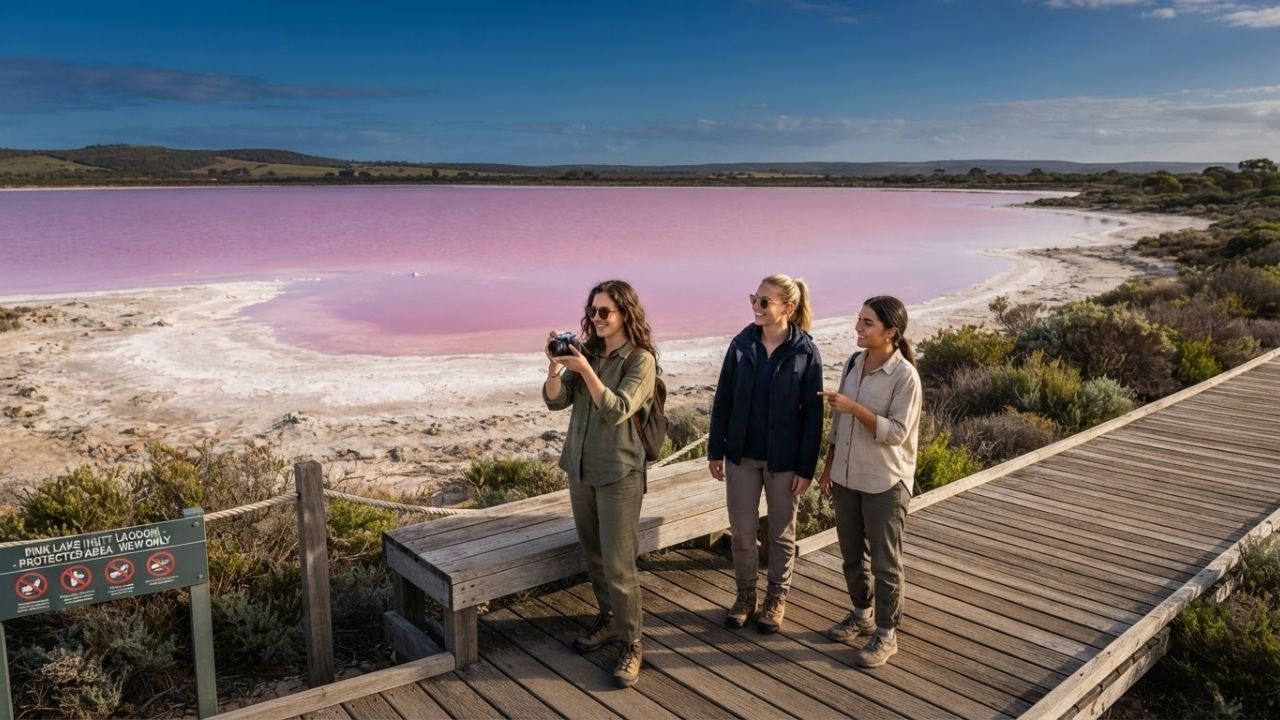
Image generated by AI
Australian national park authorities have introduced updated ecological management frameworks across the country's iconic pink lakes, balancing growing demand for chartered scenic flights with strict habitat protections.
[PERTH, Australia, Sept. 1, 2026] — Environmental managers across Western Australia, South Australia, and Victoria are enforcing revised visitor protocols surrounding Australia's world-famous pink lakes. Driven by high salinity, specialized micro-algae (Dunaliella salina), and red pigment-producing halobacteria, these saline basins display striking hues ranging from delicate pastel rose to deep magenta.
The administrative shift reflects a transition away from unmonitored foot traffic toward sustainable ecotourism. Park authorities have constructed elevated timber viewing boardwalks and established strict shoreline buffer zones to protect fragile salt crusts and microscopic biological communities from human disturbance while supporting regional scenic flight operators and eco-tours.
The Biological Science Behind Australia's Pink Water Bodies
Australia's pink lakes are extraordinary saline ecosystems shaped by a combination of climate, solar intensity, and micro-biology.
Scientific research highlights the key environmental factors producing these vivid hues:
- Dunaliella Salina Micro-Algae: In hyper-saline water, Dunaliella salina algae synthesize high concentrations of red beta-carotene pigments to protect themselves against intense ultraviolet sunlight.
- Halobacteria Accumulation: Salt-tolerant halobacteria thriving in the salt crust produce secondary red and pink carotenoid pigments, enhancing the lake's color saturation.
- Solar Angle and Rainfall Dependency: Color intensity varies throughout the day depending on cloud cover, water evaporation levels, and the sun's angle, with mid-day clear skies producing the most vivid bubblegum-pink hues.
- Visual Contrast: In coastal locations, the vibrant pink waters sit directly adjacent to brilliant white salt crusts, green coastal vegetation, and the deep blue Southern and Indian Oceans.
Major Australian Pink Lakes: Geographic Distribution and Characteristics
Saline pink lakes are distributed across several key regional destinations in Australia:
Lake Hillier (Middle Island, Western Australia)
Located on Middle Island in the Recherche Archipelago off Esperance, Lake Hillier is famous for maintaining a permanent bubblegum-pink shade year-round, even when bottled. Due to its protected nature reserve status, public access is restricted primarily to chartered scenic flights operated from Esperance.
Hutt Lagoon (Port Gregory, Western Australia)
Situated along the Coral Coast near Port Gregory, Hutt Lagoon covers a vast area where commercial beta-carotene harvesting operates alongside ecotourism. Visitors explore via designated lookouts, guided buggy tours, or scenic flights from Geraldton and Kalbarri.
Lake MacDonnell and Lake Bumbunga (South Australia)
Lake MacDonnell on the Eyre Peninsula features the famous "Watermelon Avenue," a narrow dirt track separating pink saline waters from blue coastal lagoons. In the Clare Valley wine region, Lake Bumbunga changes color from pink to white and blue depending on salinity and seasonal rainfall.
Policy Shift: Replacing Unregulated Access with Strict National Park Oversight
Historical management of Australia's saline lakes frequently involved unmonitored tourist access, resulting in trampled salt crusts, shoreline erosion, and disruption to delicate microbial colonies.
Modern national park management strategies have instituted structural protections:
- Elevated Timber Boardwalks: Direct foot access onto fragile saline crusts is prohibited in high-traffic zones, channeling visitors onto elevated platforms and marked trails.
- Vehicular Restrictions: Driving off-road vehicles or quad bikes onto dry lakebeds incurs heavy fines under state environmental protection acts.
- Expansion of Scenic Aviation: Tourism boards promote low-impact aerial tourism, enabling travelers to appreciate the vast scale of the lakes without physically intruding into vulnerable aquatic zones.
Comprehensive Data Breakdown: Key Australian Pink Lakes and Features
The table below outlines key geographical, scientific, and access guidelines across Australia's major pink lakes:
| Pink Lake Landmark | Geographic Region | Primary Biological Pigment Agent | Primary Visitor Access Method |
|---|---|---|---|
| Lake Hillier | Middle Island, Esperance (WA) | Dunaliella salina & halobacteria | Chartered scenic flights from Esperance |
| Hutt Lagoon | Port Gregory, Coral Coast (WA) | Commercial Dunaliella salina pools | Scenic flights, lookouts & coastal driving |
| Lake MacDonnell | Eyre Peninsula (SA) | Hyper-saline halobacteria crust | Vehicle transit along Watermelon Avenue track |
| Lake Bumbunga | Clare Valley (SA) | Seasonal micro-algae bloom | Boardwalk viewing & Clare Valley wine tours |
| Pink Lake Dimboola | Wimmera Region (Victoria) | Salt-crust halobacteria | Designated walking trails & park lookouts |
The table below details the policy evolution from historical tourism to 2026 national park management:
| Management Parameter | Historical Unregulated Access | Contemporary 2026 Conservation Framework |
|---|---|---|
| Shoreline Access | Unmonitored walking across fragile crusts | Elevated timber boardwalks & fenced lookouts |
| Vehicular Controls | Frequent off-road driving on dry lakebeds | Strict driving bans with heavy fines enforced |
| Environmental Focus | Basic sightseeing promotion | Microbial ecosystem preservation & low-impact flights |
| Regional Integration | Isolated regional visits | Packages combining scenic flights, eco-tours & wineries |
Why This Matters: Essential Takeaways for Global Travelers
For international tourists planning a trip to view Australia's pink lakes, these conservation guidelines provide practical travel advice:
- Book Scenic Flights for the Best Visual Perspective: Aerial views provide the most dramatic visual contrast between pink water, white salt edges, and blue ocean waters, especially at Lake Hillier and Hutt Lagoon.
- Time Visits Around Mid-Day Sun: Plan land-based viewings between 10:00 AM and 2:00 PM on clear days when direct overhead sunlight maximizes pigment vibrancy.
- Check Seasonal Rainfall Conditions: Rain dilutes lake salinity and temporarily reduces pink intensity. Verify recent weather forecasts with regional visitor centers in Esperance, Geraldton, or Adelaide.
- Adhere to Park Boardwalk Rules: Stay on designated footpaths and boardwalks. Stepping onto delicate salt crusts damages micro-algae colonies and violates national park regulations.
Frequently Asked Questions
Why are Australia's pink lakes pink?
The pink color is caused by a combination of high water salinity, Dunaliella salina micro-algae, and halobacteria that produce red beta-carotene and carotenoid pigments under intense sunlight.
Can you swim in Australia's pink lakes?
While the water is non-toxic, swimming is generally discouraged or prohibited by national park authorities to protect delicate microbial crusts and prevent skin irritation from extreme salt concentrations.
Which Australian pink lake stays pink all year round?
Lake Hillier on Middle Island in Western Australia maintains a permanent pink color year-round due to stable micro-algae and halobacteria populations.
How do tourists visit Lake Hillier?
Because Middle Island is a protected nature reserve, visitors view Lake Hillier primarily via chartered scenic flights departing from Esperance airport.
Related Travel Guides
Disclaimer
This article is for informational and educational purposes only. It does not constitute legal, financial, or professional advice. While we strive to provide accurate and up-to-date information, travel policies, regulations, and conditions change rapidly. Always verify information with official sources before making travel decisions. Nomad Lawyer makes no representations about the accuracy, reliability, completeness, or suitability of the information provided. Readers should consult qualified professionals for advice specific to their circumstances. The views expressed in this article are those of the author and do not necessarily reflect the views of Nomad Lawyer.
Raushan Kumar
Founder & Lead Developer
Full-stack developer with 11+ years of experience and a passionate traveller. Raushan built Nomad Lawyer from the ground up with a vision to create the best travel and law experience on the web.
Learn more about our team →