
Aviation Updates: Travel Chaos Engulfs Australia and New Zealand as 480 Delays Paralyze Qantas, Virgin, and Jetstar
As severe atmospheric storms and sudden workforce shortages paralyze the Oceania transit grid, thousands of passengers are trapped in severe travel chaos following a staggering 480 flight delays.

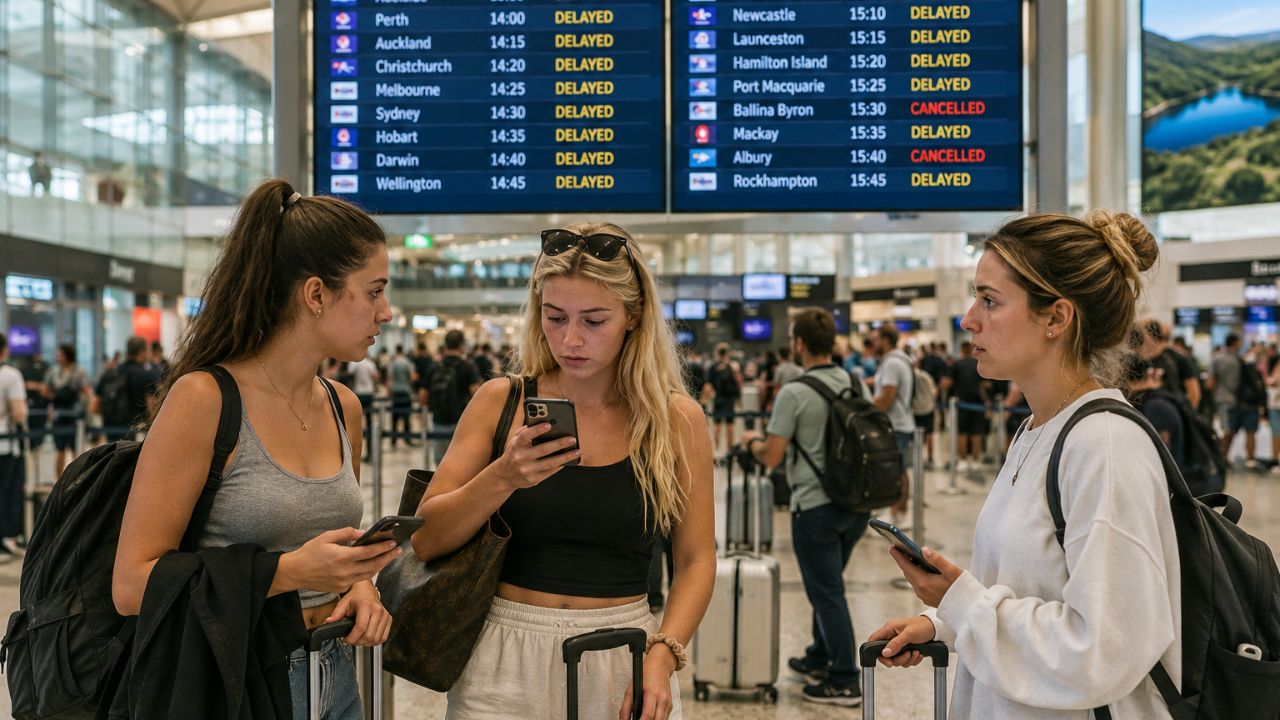
Image generated by AI
Aviation Updates: Travel Chaos Engulfs Australia and New Zealand as 480 Delays Paralyze Qantas, Virgin, and Jetstar
As severe atmospheric storms and sudden, critical workforce shortages brutally paralyze the Oceania transit grid, thousands of domestic and international travelers have been trapped in a massive wave of terminal gridlock.
Image generated by AI
As high-impact airline news platforms rapidly issue continuous aviation updates regarding the intense fragility of the global transit network, the Oceania aviation grid has suffered a devastating operational meltdown. Today, severe atmospheric storms completely hammered the regional network, causing unexpected operational breakdowns that severely disrupted massive holiday travel plans. Extreme lightning strikes and heavy turbulence triggered a staggering 480 stressful delays across the region. Simultaneously, sudden crew health issues combined with critical workforce shortages forced 37 rapid flight cancellations. This massive, compounding logistical failure heavily impacted diverse local airports across both Australia and New Zealand. Crowded terminal hubs located in Melbourne, Sydney, Adelaide, and Perth faced immense passenger congestion, while cascading flight turmoil simultaneously hit Auckland and Christchurch. Consequently, hundreds of frustrated travelers remain completely isolated as major carriers—specifically prominent brands like Virgin Australia, Qantas, Jetstar, and Air New Zealand—scramble frantically to assist distressed customers and reset their crumbling schedules.
Expanded Overview: The Scope of the Airport Disruptions
To fully comprehend the sheer scale of this devastating localized friction, aviation analysts must examine the massive geographic footprint of these severe airport disruptions.
The crippling ripple effects of today’s travel chaos are being felt widely across the entire Tasman region. The verified operational data paints a stark, terrifying picture of grounded planes and vastly overcrowded departure lounges, particularly across Australia. Sydney is currently the absolute hardest-hit location on the grid, logging a staggering 150 delays alongside 14 outright cancellations. Closely following is Melbourne Tullamarine, which is aggressively wrestling with 143 delays and 13 cancellations. The situation remains difficult, though slightly less severe, moving away from the East Coast: Perth Int’l has recorded 75 delays and 3 cancellations, while Adelaide Int’l is managing 36 delays and 2 cancellations.
Across the Tasman Sea, New Zealand’s highly connected travel network has absolutely not escaped the disruption. Auckland is currently dealing with a massive 49 delays and 1 cancellation. Meanwhile, on the South Island, Christchurch Int’l has reported 27 delays and 4 cancellations, completely severing vital regional links.
Section-Wise Breakdown: Australia Bears the Brunt
A deeper analysis of the provided figures reveals a highly disproportionate impact on Australia compared to its neighbor, exposing severe vulnerabilities in the East Coast network.
Australian airports are bearing the absolute brunt of the travel chaos. Combining the verified data for Sydney, Melbourne, Perth, and Adelaide, Australian cities account for a massive 404 of the day’s total delays and 32 of the outright cancellations. The intense concentration of disruptions in the major East Coast cities of Sydney and Melbourne explicitly highlights severe network congestion in these primary hubs. When bad weather and crew shortages strike simultaneously at these mega-hubs, the entire national grid collapses, ensuring that flights heading to regional outposts are instantly delayed or slashed from the board.
Section-Wise Breakdown: The Trans-Tasman Ripple Effect
In contrast, New Zealand’s aviation sector is faring comparatively better in total volume, though localized disruptions remain a massive headache for stranded passengers.
The combined totals for Auckland and Christchurch amount to 76 delays and 5 cancellations. Interestingly, the disruption telemetry reveals vastly different operational challenges at the two primary New Zealand airports. While Auckland suffered significantly more delays (49 versus 27), Christchurch experienced a higher volume of outright cancellations (4 versus 1). This clearly suggests that while Auckland struggled with rolling delays caused by late-arriving Australian aircraft, Christchurch lacked the redundant capacity to absorb the schedule changes, forcing airlines to aggressively cancel flights rather than delay them overnight.
Flight Details: Oceania Aviation Network Disruption Matrix
To ensure international travelers and aviation analysts can accurately track the exact operational telemetry of this massive network failure, the verified disruption data has been consolidated into the mandatory matrix below.
| Airline / Airport | Delays | Cancellations | Delay Rate | Cancellation Rate |
|---|---|---|---|---|
| Virgin Australia | 112 | 9 | 23% | 1% |
| Jetstar | 104 | 1 | 27% | 0% |
| Qantas | 80 | 7 | 15% | 1% |
| Air New Zealand | 40 | 5 | 9% | 1% |
| Sydney Airport | 150 | 14 | N/A | N/A |
| Melbourne Tullamarine | 143 | 13 | N/A | N/A |
| Perth Int'l | 75 | 3 | N/A | N/A |
| Auckland Airport | 49 | 1 | N/A | N/A |
| Christchurch Int'l | 27 | 4 | N/A | N/A |
| Adelaide Int'l | 36 | 2 | N/A | N/A |
Industry Analysis: Airline Performance Metrics
When heavily analyzing the carriers, the operational data exposes vastly varying degrees of resilience among Australian and New Zealand airlines.
- Virgin Australia: Faced the highest sheer volume of cancellations today, brutally pulling 9 flights from the board (a 1% cancellation rate). They also struggled significantly with punctuality, enduring 112 delays (a high 23% delay rate).
- Jetstar: While Jetstar brilliantly managed to keep their cancellations remarkably low—only 1 flight cancelled (0% cancellation rate)—they suffered the absolute highest proportion of late flights. A whopping 104 flights were delayed, resulting in a devastating 27% delay rate (more than one in four flights ran late).
- Qantas: The Australian flag carrier experienced 7 cancellations (1%) and 80 delays (15%). Their performance sits firmly in the middle of the pack.
- Air New Zealand: Operating primarily out of the less-affected New Zealand hubs, Air New Zealand weathered the day best, recording 5 cancellations (1%) and 40 delays (a relatively low delay rate of 9%).
Conclusion: Surviving the Oceania Gridlock
Ultimately, the staggering 480 flight delays and 37 cancellations across Australia and New Zealand represent a highly brutal day for regional transit. For passengers, travel is vastly more than simply reaching a destination; it represents crucial holidays and massive business opportunities. As sudden atmospheric storms and severe workforce shortages continue to trigger massive airport disruptions, travelers must remain hyper-vigilant. If you find yourself caught in this travel chaos, heavily rely on digital solutions. Airlines like Qantas and Jetstar will push automatic rebooking options directly to your device if your flight is cancelled. If flying Jetstar or Virgin Australia, prepare for massively extended waits, pack portable chargers, and actively explore alternative routings through less impacted airports like Adelaide to survive the grueling realities of modern air travel.
Key Takeaways
- Massive Regional Gridlock: Australia and New Zealand suffered a devastating 480 flight delays and 37 cancellations due to lightning, turbulence, and crew shortages.
- Sydney Bears the Brunt: Sydney Airport was the absolute hardest hit, logging a massive 150 delays and 14 cancellations.
- Jetstar Delay Chaos: While avoiding mass cancellations, Jetstar suffered a crippling 27% delay rate, severely stranding passengers.
- Virgin Australia Slashes Flights: Virgin suffered the highest sheer volume of cancellations (9) alongside 112 severe delays (23% delay rate).
- Digital Rebooking: Passengers are fiercely urged to utilize airline mobile apps for automatic rebooking rather than joining massive customer service queues.
FAQ: Australia and New Zealand Flight Disruptions
How many total flights were delayed or canceled across Australia and New Zealand today? Verified operational telemetry confirms a staggering regional breakdown consisting of 480 delayed flights and 37 outright cancellations across the Tasman grid.
Which airport experienced the worst flight disruptions? Sydney Airport was the most severely affected transit hub, suffering a devastating 150 delays and 14 cancellations, closely followed by Melbourne Tullamarine (143 delays, 13 cancellations).
Which airlines were most impacted by the travel chaos? Virgin Australia suffered 112 delays and 9 cancellations, while Jetstar experienced a massive 27% delay rate (104 delays). Qantas and Air New Zealand were also heavily impacted by the regional friction.
What caused the massive wave of flight delays across Oceania? The massive operational failure was aggressively fueled by a toxic combination of severe atmospheric storms (lightning and turbulence), sudden crew health issues, and critical airport workforce shortages.
Related Travel Guides
Brazil Airports 148 Delays LATAM GOL Azul Travel Chaos 2026
Montreal Trudeau 88 Delays Air Canada Jazz Travel Chaos 2026
Oceania Regional Tourism and Transit Survival Guide 2026
Disclaimer: This article is strictly for informational and aviation planning purposes. The specific flight disruption telemetry (480 delays, 37 cancellations), affected airports (Sydney, Melbourne, Auckland, etc.), and impacted airlines (Qantas, Virgin, Jetstar) are based on verified, manually obtained data available at the time of publication. Oceania airspace conditions, specific airline recovery schedules, and localized weather restrictions are highly dynamic and subject to immediate modification by the operating carriers and regulatory authorities. Passengers planning domestic or international travel through Australia or New Zealand should explicitly verify their exact flight itineraries, strictly monitor their airlines for sudden flight cancellations, and secure comprehensive travel insurance prior to departure.
Disclaimer
This article is for informational and educational purposes only. It does not constitute legal, financial, or professional advice. While we strive to provide accurate and up-to-date information, travel policies, regulations, and conditions change rapidly. Always verify information with official sources before making travel decisions. Nomad Lawyer makes no representations about the accuracy, reliability, completeness, or suitability of the information provided. Readers should consult qualified professionals for advice specific to their circumstances. The views expressed in this article are those of the author and do not necessarily reflect the views of Nomad Lawyer.
Raushan Kumar
Founder & Lead Developer
Full-stack developer with 11+ years of experience and a passionate traveller. Raushan built Nomad Lawyer from the ground up with a vision to create the best travel and law experience on the web.
Learn more about our team →