
Australia Issues Level 3 Warning as UAE, Qatar, and Oman Face Flight Suspensions and Missile Threats in 2026
Australian travelers face severe disruptions as the UAE, Qatar, and Oman experience flight suspensions and security alerts following a collapse of regional ceasefires.

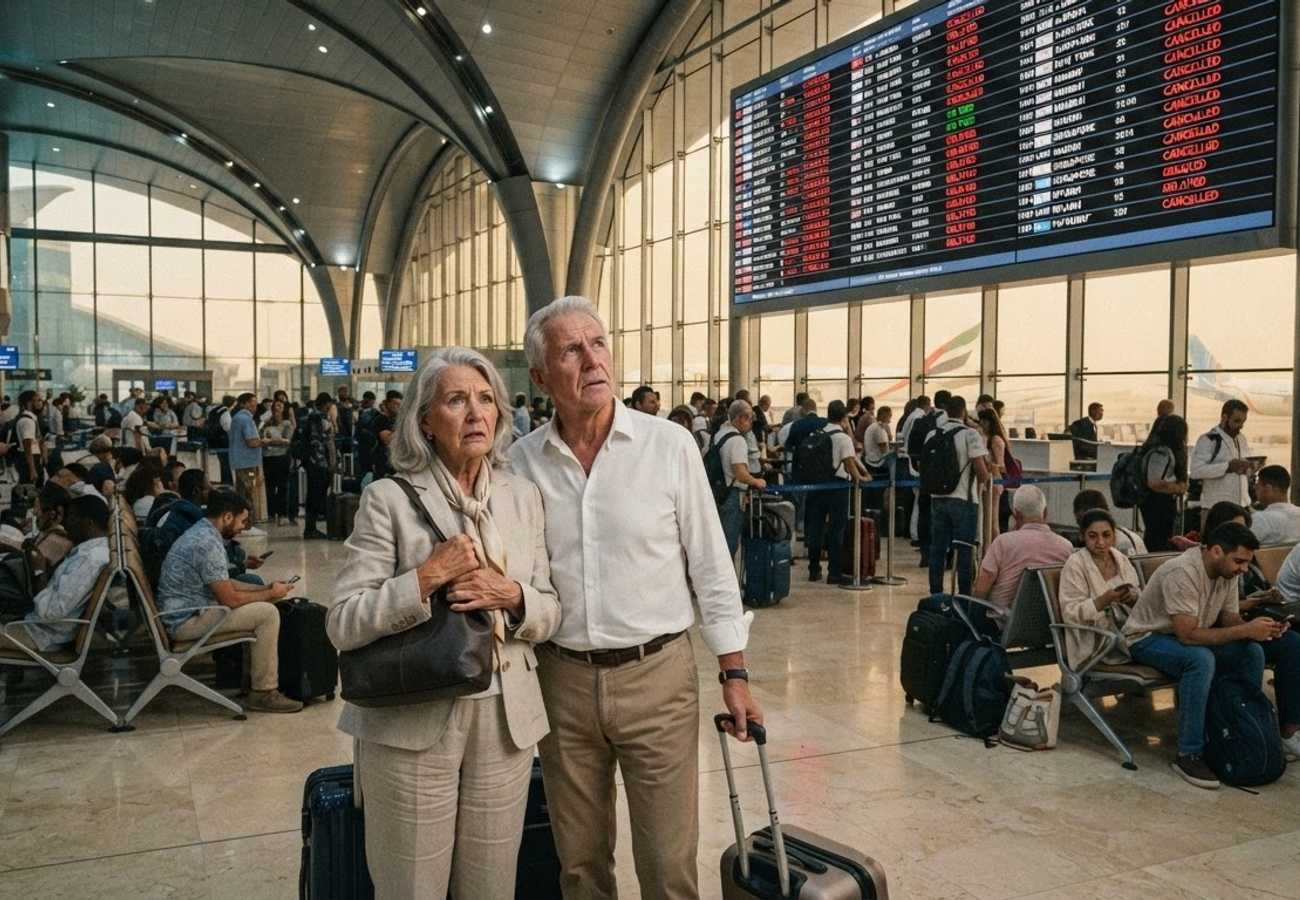
Image generated by AI
Australian travelers transiting through the Middle East are facing critical disruptions as regional security deteriorates, leading to widespread flight suspensions and heightened military alerts across the UAE, Qatar, Oman, and Jordan.
The collapse of regional ceasefires as of July 14, 2026, has created a volatile operating environment for global aviation. Increased military activity, including drone and missile launches, has forced major carriers to withdraw services and diverted long-haul flights, leaving thousands of passengers stranded or delayed.
Regional Security and Aviation Disruptions
The Australian Government has reinforced its Smartraveller advisory to Level 3, urging citizens to reconsider all travel or transit through the region. While the level remains at 3, the updated language explicitly warns of military strikes and reprisal attacks targeting the United Arab Emirates (UAE) and Qatar.
Security threats have escalated following U.S. strikes on Iranian targets, triggering retaliatory drone and missile activity. In Qatar, missile interceptions resulted in falling debris and shrapnel, causing injuries to three people over the recent weekend. The UAE has issued mobile safety alerts following missile detections near national borders, while Oman and Jordan have confirmed missile and drone landings within their territories.
Flight & Airport Impact Breakdown
The volatility has severely impacted flight schedules and airport capacity across the Gulf's primary transit hubs.
Carrier Suspensions:
- Air Astana: Suspended all Dubai services for July 14, 2026.
- Air Canada, British Airways, and Lufthansa: Extended suspensions for flights to Dubai, Abu Dhabi, and Doha through September and October 2026.
- Singapore Airlines: Prolonged suspension of Singapore–Dubai services until August 2, 2026.
- Japan Airlines: Cancelled all Tokyo–Doha operations until the end of July 2026.
Operational Impacts:
- Flight Diversions: Aircraft are avoiding airspace over Iran, Iraq, and Israel, adding approximately 120 to 180 minutes to long-haul flight durations.
- Dubai International Airport (DXB): Operating under restrictions that have reduced hourly landing capacity by approximately 40%.
- Hamad International Airport (DOH): Implementing rolling ground stops during periods of active missile interception.
- Passenger Volume: DXB is currently managing approximately three million passengers per week, exacerbating terminal congestion and hotel shortages.
Passenger Rights & Advisory (Information Gain)
Travelers affected by these disruptions should immediately review their rights regarding rebooking and compensation. Because these disruptions are linked to "extraordinary circumstances" (military conflict and security alerts), airlines are generally not required to pay monetary compensation under frameworks like EU261/2004 or similar national laws. However, the "Duty of Care" still applies.
Immediate Action Steps for Passengers:
- Rebooking & Refunds: Under most international aviation policies and US DOT guidelines, passengers are entitled to a full refund if the airline cancels the flight, regardless of the reason, or a rebooking on the next available flight at no extra cost.
- Duty of Care: If stranded overnight due to a cancellation or diversion, airlines are typically required to provide hotel accommodation and meal vouchers. Given the current shortage of hotels in Dubai, passengers should document all out-of-pocket expenses for later reimbursement claims.
- Insurance Verification: Australians should check if their travel insurance policy covers "War and Civil Unrest." Many standard policies exclude claims if a government advisory was already in place at the time of booking.
- Transit Documentation: Ensure all transit visas are valid for alternative hubs if diverted to non-Gulf destinations.
Industry Analyst View
The current crisis highlights the fragility of the "hub-and-spoke" model relied upon by Middle Eastern carriers. By concentrating massive volumes of traffic through a few key nodes like Dubai and Doha, the global aviation network becomes highly susceptible to regional instability.
The 40% reduction in landing capacity at DXB, combined with 3-hour flight extensions, creates a compounding delay effect. This "ripple effect" means that a disruption in the Gulf today causes scheduling failures in Sydney, London, and New York tomorrow. Until a stable ceasefire is established, carriers will likely continue to prioritize safety over schedule integrity, leading to prolonged capacity shortages through the end of the 2026 summer peak.
Travelers are urged to monitor official government advisories and airline notifications in real-time.
Related Travel Guides
Disclaimer
This article is for informational and educational purposes only. It does not constitute legal, financial, or professional advice. While we strive to provide accurate and up-to-date information, travel policies, regulations, and conditions change rapidly. Always verify information with official sources before making travel decisions. Nomad Lawyer makes no representations about the accuracy, reliability, completeness, or suitability of the information provided. Readers should consult qualified professionals for advice specific to their circumstances. The views expressed in this article are those of the author and do not necessarily reflect the views of Nomad Lawyer.
Raushan Kumar
Founder & Lead Developer
Full-stack developer with 11+ years of experience and a passionate traveller. Raushan built Nomad Lawyer from the ground up with a vision to create the best travel and law experience on the web.
Learn more about our team →