
Aurora Expeditions Opens Expedition Cruising to Children Aged Six as Lindblad, HX, and Ponant Expand Family Travel in 2026
Aurora Expeditions now welcomes children aged six and over aboard its purpose-built expedition ships, offering up to 50% fare savings for young explorers across Antarctica, the Arctic, and beyond.

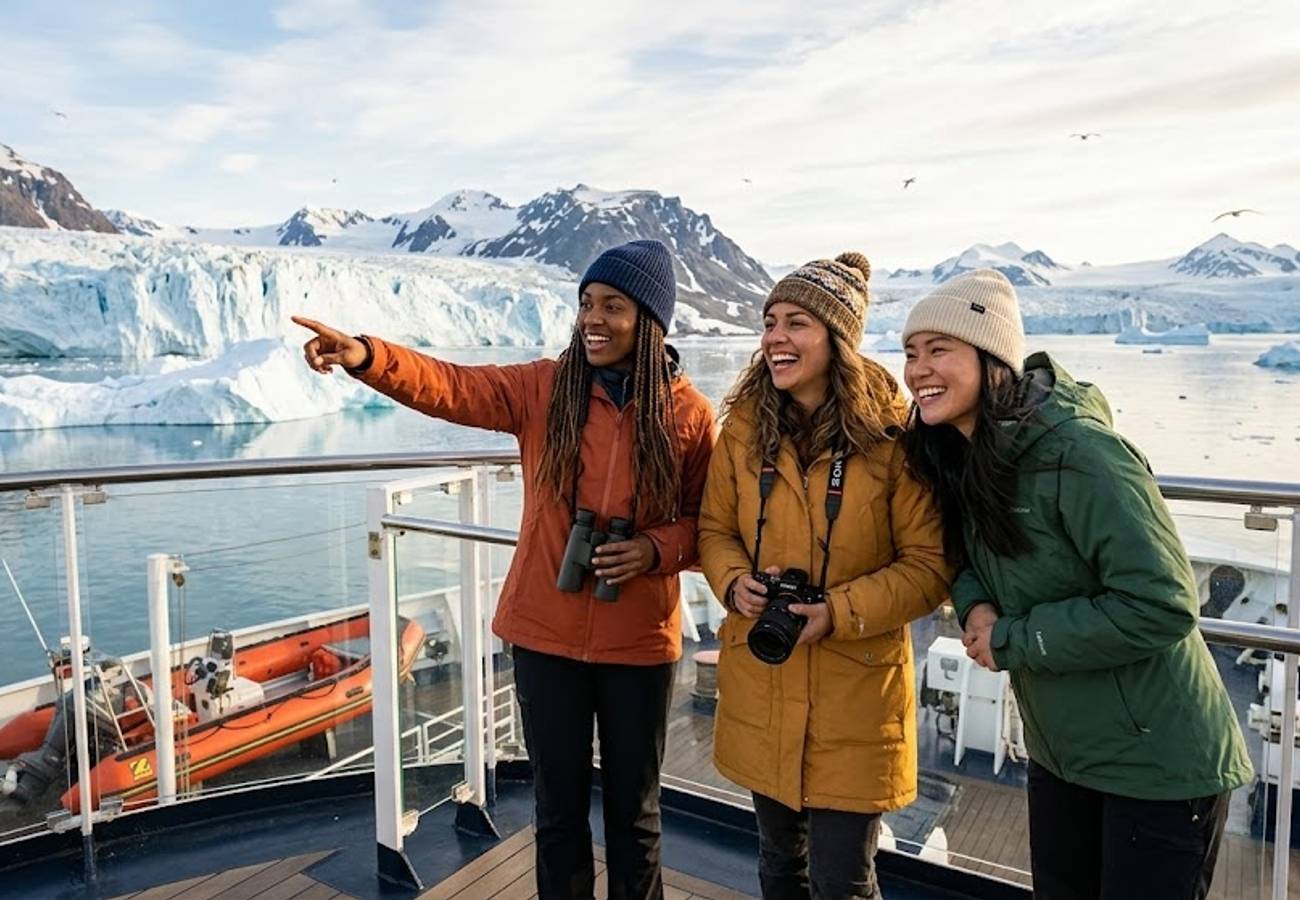
Image generated by AI
Aurora Expeditions now welcomes children as young as six aboard its purpose-built expedition ships, offering up to 50% fare savings for young explorers and signaling a broader industry shift toward multi-generational adventure travel.
Expedition cruising has long been the domain of adult adventurers seeking remote polar landscapes and wildlife encounters far from traditional cruise routes. That demographic is changing rapidly. Aurora Expeditions has lowered its minimum age to six, joining a growing roster of operators — including Lindblad Expeditions–National Geographic, HX, Ponant, and Silversea Expeditions — that are repositioning expedition travel as a family-friendly educational experience rather than an adults-only niche.
The shift reflects evolving traveller expectations. Families increasingly seek holidays that combine adventure, learning, and environmental awareness instead of conventional resort-based vacations. For expedition operators, this means redesigning onboard programming, excursions, and pricing structures to accommodate younger passengers without compromising the immersive nature of remote-region travel.
Aurora Expeditions Lowers Minimum Age to Six
Aurora Expeditions has confirmed that children aged six and over are now eligible to join voyages across its full expedition programme. The policy change applies to the company's purpose-built expedition vessels, which are designed to access remote destinations that larger conventional cruise ships cannot reach.
Alongside the age revision, Aurora is introducing savings of up to 50% on the Best Available Fare for children aged between six and 15. This pricing strategy directly addresses one of the primary barriers to family expedition travel — the historically high cost of remote-region cruising — and positions Aurora competitively against other family-focused expedition operators.
The decision aligns with growing demand for experiential family travel, where education, exploration, and environmental consciousness are integrated into a single journey rather than treated as separate components.
Learning Beyond the Classroom
Aurora Expeditions frames its family programme as an extension of experiential learning. Children aboard the company's vessels can observe wildlife in natural habitats, explore isolated coastlines via Zodiac inflatable boats, visit remote communities, and engage with different cultures through direct interaction.
Every expedition includes educational presentations delivered by Aurora's Expedition Team — comprising scientists, naturalists, historians, and destination specialists. These experts provide context on landscapes, ecosystems, and communities encountered during the voyage, effectively transforming each trip into a field-based learning environment.
Katie Malone, Chief Marketing Officer at Aurora Expeditions, emphasised that while children can study whales, glaciers, and remote cultures through textbooks, witnessing them in person creates a substantially deeper understanding. She positioned expedition travel as a vehicle for inspiring younger generations to become responsible global citizens who value environmental protection and cultural respect.
Purpose-Built Ships and Intimate Group Excursions
Aurora Expeditions operates smaller purpose-built expedition vessels rather than large cruise ships carrying thousands of passengers. This compact size enables access to destinations unreachable by larger vessels and creates a more intimate onboard atmosphere.
For families, the benefits are practical. Smaller group excursions mean closer interaction with expedition guides. Children can actively participate in educational activities throughout the voyage rather than being passive observers. The relaxed environment also accommodates varying attention spans and energy levels typical of younger travellers.
Zodiac Excursions and Wildlife Encounters
Wildlife observation remains a defining feature of Aurora's expeditions. Depending on the destination, children may witness whales surfacing beside the ship, seabirds overhead, penguin colonies along icy shorelines, or seals on remote beaches.
Zodiac inflatable boats transport guests from the ship to otherwise inaccessible coastlines. For younger passengers, these excursions function as standalone adventures — exploring hidden bays, dramatic cliffs, secluded beaches, and rugged shorelines while learning about geology, marine life, and local ecosystems. The landing craft also provide close-up photography opportunities of wildlife and untouched landscapes.
Cultural Engagement With Remote Communities
Aurora Expeditions incorporates cultural engagement into many itineraries. Travellers can visit remote communities to learn about traditional lifestyles, regional heritage, and local customs directly from residents.
For children, these interactions encourage cultural understanding and global awareness by introducing different ways of life through respectful exchanges. The company positions such experiences as perspective-broadening encounters that complement the natural-world education central to its expeditions.
How Competing Expedition Operators Compare
Aurora's policy shift places it within a competitive landscape where minimum ages and family programming vary significantly across operators. The table below summarises current family travel policies across major expedition cruise lines.
Family Expedition Cruise Line Comparison
| Expedition Cruise Line | Minimum Age | Family Features | Popular Destinations |
|---|---|---|---|
| Aurora Expeditions | 6+ | Family expedition voyages, educational experiences, up to 50% savings for children | Antarctica, Arctic, Greenland, Iceland, Europe |
| Lindblad Expeditions–National Geographic | 6 months on most itineraries; 4+ for Antarctica, Arctic and Greenland | National Geographic Explorers-in-Training programme, family departures, expert naturalists, adjoining cabins (Expeditions) | — |
| HX (formerly Hurtigruten Expeditions) | Children accepted on selected voyages (many family departures from age 5 or 6); no minimum age on Hurtigruten Coastal Express, though excursion limits apply (Hurtigruten) | Junior science activities, family cabins, educational lectures | Galápagos, Alaska, Antarctica, Arctic, Norway |
| Ponant | Generally 6+ on expedition voyages | Kid Explorers Club on selected sailings, family departures | Arctic, Antarctica, Kimberley, Iceland |
| Silversea Expeditions | Usually 6 months on many voyages, with higher age requirements on expedition itineraries | Family suites, destination-focused enrichment | Galápagos, Antarctica, Arctic, Australia |
| Abercrombie & Kent Expedition Cruises | Typically 7+ for Antarctica family departures | Dedicated family programmes and educational activities | Antarctica, Arctic |
| Polar Latitudes | Normally 12+, but children aged 7–11 may be accepted with prior approval (Polar Latitudes Expeditions) | Small-group polar expeditions | Antarctica |
Why the Industry Is Shifting Now
The expansion of family expedition travel reflects a measurable change in how families allocate leisure spending. Parents increasingly prioritise experiences over material consumption, and expedition cruising satisfies demand for travel that feels purposeful rather than purely recreational.
For operators, younger passengers represent a long-term strategic investment. Children who experience polar regions, wildlife conservation, and cultural exchange at an early age are more likely to become adult expedition travellers and environmental advocates. The educational framing also differentiates expedition cruising from mainstream family cruise offerings, which typically emphasise entertainment over learning.
Aurora's up to 50% fare reduction for children aged six to 15 is particularly significant. Expedition voyages to Antarctica or the Arctic routinely command premium pricing, and family affordability has been a persistent obstacle. By reducing that barrier, Aurora is effectively expanding the addressable market for expedition travel while pressuring competitors to revisit their own family pricing structures.
Key Takeaways
- Aurora Expeditions now accepts children aged six and over across its expedition programme, with up to 50% savings on Best Available Fare for children aged six to 15.
- The policy aligns Aurora with operators like Lindblad, HX, Ponant, and Silversea that have already developed family-specific expedition programming.
- Minimum ages vary widely across the industry — from six months on some Lindblad and Silversea voyages to 12+ at Polar Latitudes — reflecting differing approaches to remote-region safety and educational suitability.
- Educational programming, Zodiac excursions, wildlife observation, and community engagement form the core of the family expedition experience.
- The shift signals broader industry recognition that expedition travel's future growth depends on cultivating younger travellers and making remote-region cruising financially accessible to families.
FAQ
What is the minimum age for Aurora Expeditions voyages? Children aged six and over are now eligible to join Aurora Expeditions voyages across the company's full expedition programme.
How much can families save on Aurora Expeditions fares for children? Aurora Expeditions offers savings of up to 50% on the Best Available Fare for children aged between six and 15.
Which destinations does Aurora Expeditions cover for family travel? Aurora Expeditions operates family expedition voyages to Antarctica, the Arctic, Greenland, Iceland, and Europe.
How does Aurora Expeditions compare to Lindblad for family expedition travel? Lindblad Expeditions–National Geographic accepts children from six months on most itineraries and from age four for Antarctica, Arctic, and Greenland voyages. Aurora's minimum age of six is higher, but its up to 50% child fare savings may offer stronger affordability for families.
Do all expedition cruise lines accept children? Most major expedition operators now accept children, but minimum ages and family programming vary significantly. Polar Latitudes, for example, normally requires passengers to be 12 or older, though children aged seven to 11 may be accepted with prior approval.
As expedition operators compete for the next generation of explorers, the family market is becoming the defining battleground for remote-region cruising.
Related Travel Guides
Disclaimer
This article is for informational and educational purposes only. It does not constitute legal, financial, or professional advice. While we strive to provide accurate and up-to-date information, travel policies, regulations, and conditions change rapidly. Always verify information with official sources before making travel decisions. Nomad Lawyer makes no representations about the accuracy, reliability, completeness, or suitability of the information provided. Readers should consult qualified professionals for advice specific to their circumstances. The views expressed in this article are those of the author and do not necessarily reflect the views of Nomad Lawyer.
Preeti Gunjan
Contributor & Community Manager
A passionate traveller and community builder. Preeti helps grow the Nomad Lawyer community, fostering engagement and bringing the reader experience to life.
Learn more about our team →