
Atlanta and Chicago Airports Only US Hubs Recording Maximum International Tourism Growth in 2026
Government data from August 2026 reveals Hartsfield-Jackson Atlanta and Chicago O’Hare as the only US airports achieving maximum international tourism growth, signaling a shift toward mega-hub consolidation.

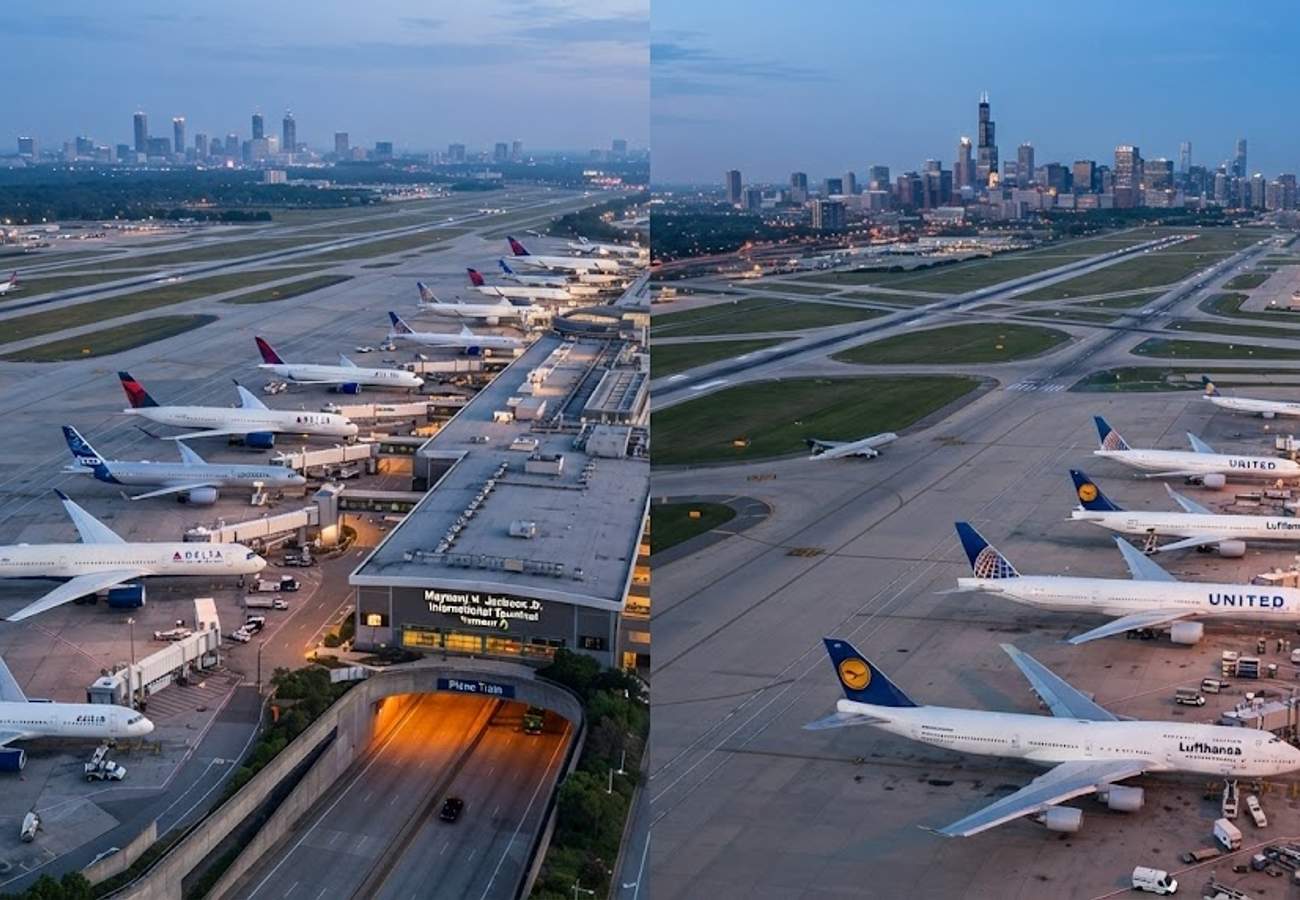
Image generated by AI
Official government data confirms Hartsfield-Jackson Atlanta International Airport (ATL) and Chicago O’Hare International Airport (ORD) are the sole US gateways recording maximum international tourism growth in 2026.
A report released on August 7, 2026, by the Bureau of Transportation Statistics (BTS) and the National Travel and Tourism Office (NTTO) indicates a structural pivot in how international visitors enter the United States. While coastal gateways historically dominated inbound traffic, current data shows a decisive shift toward these two inland mega-hubs.
This growth is not measured by raw passenger volume alone. The "maximum growth" designation is derived from a specific algorithmic blend of year-over-year percentage increases, the launch of new long-haul routes, and sustained load factors for wide-body aircraft.
The Shift in Global Arrival Patterns
The NTTO previously projected that international arrivals to the US would hit 85 million in 2026, surpassing the 2019 pre-pandemic peak of 79.4 million. ATL and ORD are capturing the largest share of this influx.
Market trends suggest international travelers are actively bypassing congested coastal ports in favor of the modernized infrastructure and connectivity found in Atlanta and Chicago. This transition is driven by:
- Infrastructure Investment: Billions spent on passenger facilitation to reduce customs bottlenecks.
- Corporate Renaissance: Increased demand for business travel into the American Midwest and the Southern US economic zones.
- Network Consolidation: Foreign flag carriers are concentrating long-haul operations into efficient mega-hubs rather than distributing flights across multiple smaller cities.
Hub Analysis: Hartsfield-Jackson Atlanta (ATL)
Atlanta continues to leverage its scale to dominate international arrivals. In 2025, the airport handled over 106.3 million passengers. The current growth surge is attributed to specific architectural and strategic advantages:
- Terminal Optimization: The Maynard H. Jackson Jr. International Terminal (Terminal F) and Concourse E now utilize biometric processing and automated baggage systems to eliminate bottlenecks.
- Logistical Efficiency: Five parallel runways and the "Plane Train" automated people mover allow for high-precision passenger flow.
- Delta Air Lines Integration: Delta has utilized "upgauging"—deploying high-capacity aircraft like the Airbus A350 and A330neo—to increase passenger volume without increasing the number of runway movements.
Hub Analysis: Chicago O’Hare (ORD)
Alongside Atlanta, Chicago O’Hare has emerged as a primary engine for federal tourism revenue. By optimizing runway utilization and expanding international concourses ahead of demand, ORD has avoided the operational collapses seen at other hubs during the early 2020s.
International Visitation Metrics 2026
| Metric | 2019 (Pre-Pandemic) | 2026 (Projected/Actual) |
|---|---|---|
| Total International Arrivals | 79.4 Million | 85 Million |
| Top Growth Hubs | Various Coastal | ATL & ORD Only |
| Primary Aircraft Strategy | Standard Long-Haul | Wide-body Upgauging |
Why This Matters
From a logistical perspective, this data confirms that the "recovery phase" of aviation is over. We have entered an era of aggressive expansion characterized by hub consolidation.
For travelers and corporate entities, the real impact is a change in accessibility. The US is no longer just a "coastal entry" destination. The concentration of growth in ATL and ORD means that the Midwest and South are now the primary gateways for global capital and tourism. This creates a self-sustaining cycle: higher demand justifies larger aircraft, which lowers ticket prices, further increasing the volume of international tourists.
Industry Outlook
The synergy between federal policy and airport administration suggests that ATL and ORD will maintain their competitive advantage for the foreseeable future. As the US prepares for upcoming international mega-events, expect further investment in port-of-entry biometrics and wide-body gate capacity at these two specific hubs. Other US airports failing to modernize their customs and transfer infrastructure risk permanent loss of market share to these two dominant entities.
The era of the distributed gateway is ending; the era of the super-hub has arrived.
Related Travel Guides
Disclaimer
This article is for informational and educational purposes only. It does not constitute legal, financial, or professional advice. While we strive to provide accurate and up-to-date information, travel policies, regulations, and conditions change rapidly. Always verify information with official sources before making travel decisions. Nomad Lawyer makes no representations about the accuracy, reliability, completeness, or suitability of the information provided. Readers should consult qualified professionals for advice specific to their circumstances. The views expressed in this article are those of the author and do not necessarily reflect the views of Nomad Lawyer.
Raushan Kumar
Founder & Lead Developer
Full-stack developer with 11+ years of experience and a passionate traveller. Raushan built Nomad Lawyer from the ground up with a vision to create the best travel and law experience on the web.
Learn more about our team →