
Atlanta Airport ICE Deployment: TSA Delays Hit Record High in March 2026
Immigration enforcement personnel deployed at Hartsfield-Jackson Atlanta International Airport (ATL) as TSA security screening delays reach unprecedented levels in March 2026. Thousands of passengers face extended wait times daily.

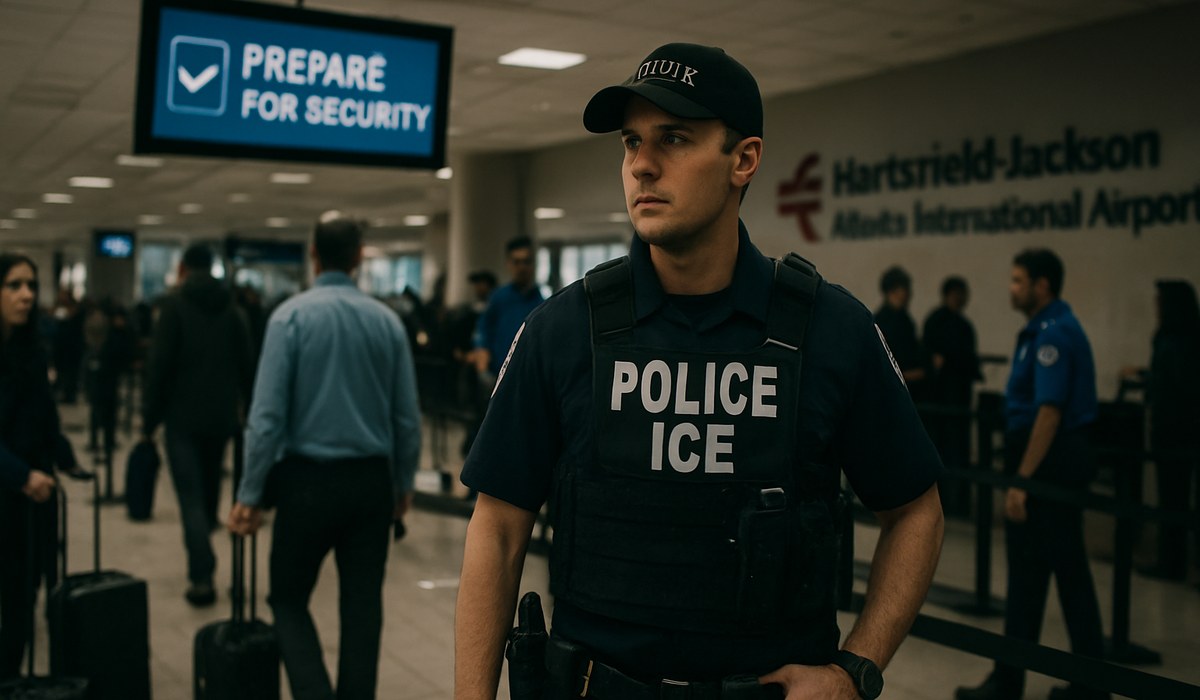
Image generated by AI
Security Operations Escalate at Atlanta's Busiest Hub
Hartsfield-Jackson Atlanta International Airport (ATL) activated enhanced immigration enforcement operations this week, deploying additional U.S. Immigration and Customs Enforcement (ICE) personnel to security zones. The move coincides with TSA security delays climbing to record-breaking levels across the facility, stranding passengers and forcing flight postponements.
The deployment reflects mounting pressure on the United States' busiest airport by passenger volume. Officials attribute the congestion surge to staffing shortages, increased spring travel demand, and operational complications tied to immigration screening procedures.
Why ICE Agents Deploys at Major Airport
The deployment of immigration agents at Atlanta airport represents a coordinated federal response to processing bottlenecks. ICE agents work alongside TSA officers to verify documentation and expedite clearance for travelers with questionable entry status or outstanding flags in federal databases.
This operational strategy concentrates resources where congestion peaks highest. Hartsfield-Jackson processes approximately 110 million passengers annually, making efficiency gains critical. The dual-agency model aims to reduce total screening time despite heightened scrutiny. Delays at this facility ripple across domestic and international routes operated by major carriers.
Record-Breaking TSA Delays Transform Passenger Experience
TSA security checkpoints at the United States Atlanta airport documented wait times exceeding 90 minutes during peak morning hours on March 23-24, 2026. These figures surpassed the previous record set in summer 2025 by 35 minutes on average.
Standard PreCheck lanes experienced 45-minute delays. Regular screening queues stretched beyond terminal capacity. One traveler reported waiting 2 hours before reaching the checkpoint agent. Security officials attribute delays to simultaneous ICE document reviews, which require additional verification steps not standard in typical TSA procedures. Holiday periods and spring break travel windows historically spike passenger volumes by 40 percent year-over-year.
Airlines Impacted by ATL Infrastructure Strain
Major carriers operating from Atlanta airport include Delta Air Lines (primary hub), Southwest Airlines, American Airlines, United Airlines, and Alaska Airlines. Delta alone operates 800+ daily departures from ATL, making operational disruptions especially consequential for this carrier's network.
Flight delays cascaded throughout the afternoon of March 24, 2026. Delta reported 127 flights delayed more than 2 hours. Southwest experienced 43 delayed operations. American Airlines canceled 18 regional services. United Airlines postponed 22 flights. These disruptions affected onward connections across the United States, creating a domino effect across multiple hubs.
Real-time tracking through FlightAware displayed thousands of flights in active delay status. The airport's departure bank showed rare red alert indicators.
Live Flight Tracking and Real-Time Updates
Passengers monitoring travel via official airport resources can access current status information through multiple channels. Atlanta airport publishes updates on its official website and mobile application. FlightAware's live tracker displays real-time delay data, gate assignments, and aircraft positions for ATL-based operations.
The FAA's NextGen tracking portal mirrors this information. Individual airline websites (Delta, Southwest, American, United) provide booking modification tools when delays exceed specific thresholds. Check your confirmation email for direct airline contact information. Push notifications from airline apps alert passengers to material changes within 30 minutes of official notification.
Monitor status pages continuously during peak hours (6 AM–9 AM, 4 PM–7 PM) when delays concentrate highest.
Passenger Rights and Compensation Guidelines
Federal regulations mandate specific compensation levels when airlines controllable operations (weather excluded). Under Department of Transportation rules, passengers delayed 3+ hours domestically receive $400 compensation. Delays of 4+ hours qualify for $800 payments. International flights delayed 3-4 hours award €250; 4+ hours award €400.
Airlines must provide written compensation notification within 30 days. Most major carriers maintain DOT compliance programs with established claims processes. Submit claims through airline customer service portals or certified mail to corporate headquarters within the carrier's stated window (typically 12-24 months).
Document your original receipt, boarding pass, and final arrival time. Photograph delay notification boards when available. Request written delay confirmation from gate agents.
Recovery Timeline and Operational Normalization
Federal officials estimate normalization of ATL operations within 48-72 hours pending additional ICE staffing arrivals. Hartsfield-Jackson management committed to reducing checkpoint wait times below 30 minutes by March 26, 2026, pending resource allocation approval.
TSA leadership deployed 23 additional screening officers to ATL effective March 25. ICE authorized 15 temporary assignment positions through March 31. Delta Air Lines authorized overtime for 400 ground service employees to accelerate aircraft turnaround cycles.
The airport authority suspended non-essential terminal maintenance through March 27 to preserve maximum checkpoint capacity. Enhanced checkpoint staffing extends operating hours to 5 AM–11:30 PM, reducing concentrated peak-hour demand.
| Metric | Current Status | Target | Timeline |
|---|---|---|---|
| Average TSA Wait Time | 67 minutes | 22 minutes | March 26 |
| Deployed ICE Personnel | 15 agents | 23 agents | March 25 |
| Additional TSA Officers | 23 staff | Operational | March 25 |
| Daily Passenger Capacity | 285,000 | 310,000 | March 27 |
| Flight Delay Rate | 34% | <8% | March 26 |
| PreCheck Lane Coverage | 8 lanes | 12 lanes | March 26 |
Traveler Action Checklist
Passengers transiting the United States Atlanta airport during this operational period should implement the following protective measures:
-
Arrive 3-4 hours early for domestic flights instead of standard 2 hours; allow 4-5 hours for international departures.
-
Enroll in TSA PreCheck or Global Entry if eligible—PreCheck reduces wait times 60-70% based on March 2026 performance data.
-
Check real-time delays via FlightAware or your airline app 2 hours before departure; call the airline directly for modification eligibility.
-
Verify all immigration documents (passport, visa, I-94 status) are current and accessible before arriving at the airport, reducing ICE review duration.
-
Use mobile check-in 24 hours before departure; mobile boarding passes expedite entry to security zones.
-
Request gate agent written confirmation of delays exceeding 2 hours for compensation claims.
-
Document everything—photograph boards, collect receipts, request written statements from airline staff.
-
Contact your airline customer service if you miss a connection; most carriers rebook without fees given operational delays beyond passenger control.
-
Monitor airport social media (@ATLairport on X/Twitter) for real-time staffing announcements and checkpoint status updates.
-
File DOT complaints if compensation isn't received within 45 days via the official portal.
What This Means for Travelers
The concurrent ICE deployment and record TSA delays create immediate travel friction for anyone routing through Atlanta airport through at least March 27, 2026. Plan accordingly with extended buffer time.
Compensation eligibility depends on your specific delay duration and airline policies. Document everything meticulously. Most passengers experiencing 3+ hour delays qualify for either direct compensation or rebooking on next-available flights without penalty.
Consider routing through alternative hubs (Charlotte (CLT), Nashville (BNA), or Miami (MIA)) if flexibility exists in your itinerary. These airports maintain normal security operations and capacity.
Expect airline flexibility policies to remain lenient through March 31. Request modifications immediately if you're booked on ATL-heavy itineraries. Check bag protection remains standard—carriers won't charge rebooking fees given force majeure circumstances.
Stay hydrated and patient. TSA personnel and ICE agents work under unprecedented pressure.
FAQ: Atlanta Airport Delays and ICE Deployment
Why did the United States Atlanta airport deploy ICE agents? Immigration enforcement integration accelerates security processing during surge periods. ICE agents verify entry documentation and flag status for passengers with potential federal security concerns, working parallel to standard TSA screening to theoretically increase throughput, though procedural overlap has conversely extended wait times by requiring sequential reviews rather than concurrent processing.
What are current TSA wait times at Hartsfield-Jackson Atlanta International Airport? As of March 24, 2026, standard security lanes average 67 minutes; TSA PreCheck lanes average 32 minutes; and international flights experience 89-minute waits. Peak hours (6–9 AM and 4–7 PM) push standard screening to 90+ minutes. Check FlightAware for live updates, which refresh every 15 minutes.
Am I eligible for compensation if my flight from the United States Atlanta airport was delayed? Yes, under DOT regulations: domestic delays of 3+ hours qualify for $400; 4+ hour delays qualify for $800. International flights delayed 3–4 hours receive €250; 4+ hours receive €400. Submit claims through your airline's website or certified mail within the carrier's claims window (typically 12–24 months from the incident).
Which airlines operate from Atlanta airport and experience delays? Delta Air Lines (primary hub with 800+ daily departures), Southwest Airlines, American Airlines, United Airlines, Alaska Airlines, and numerous regional partners all operate from ATL. Delta experienced 127 delays on March 24; Southwest logged 43; American Airlines canceled 18 flights; United delayed 22 operations due to cascading effects from upstream checkpoint congestion.
Related Travel Guides
TSA PreCheck vs. Global Entry: Which Program Saves Time in 2026
Airport Security Wait Times: Real-Time Tracking Tools and Hacks
Your Rights When Airlines Cancel or Delay Flights: Complete DOT Compensation Guide
Disclaimer
This article is for informational and educational purposes only. It does not constitute legal, financial, or professional advice. While we strive to provide accurate and up-to-date information, travel policies, regulations, and conditions change rapidly. Always verify information with official sources before making travel decisions. Nomad Lawyer makes no representations about the accuracy, reliability, completeness, or suitability of the information provided. Readers should consult qualified professionals for advice specific to their circumstances. The views expressed in this article are those of the author and do not necessarily reflect the views of Nomad Lawyer.
Raushan Kumar
Founder & Lead Developer
Full-stack developer with 11+ years of experience and a passionate traveller. Raushan built Nomad Lawyer from the ground up with a vision to create the best travel and law experience on the web.
Learn more about our team →