
Widespread Flight Cancellations and Delays Disrupt Asian Travel Network
Over 5,090 delays and 258 cancellations hit Asian airports on August 2, 2026, driven by weather patterns and Middle East security alerts.

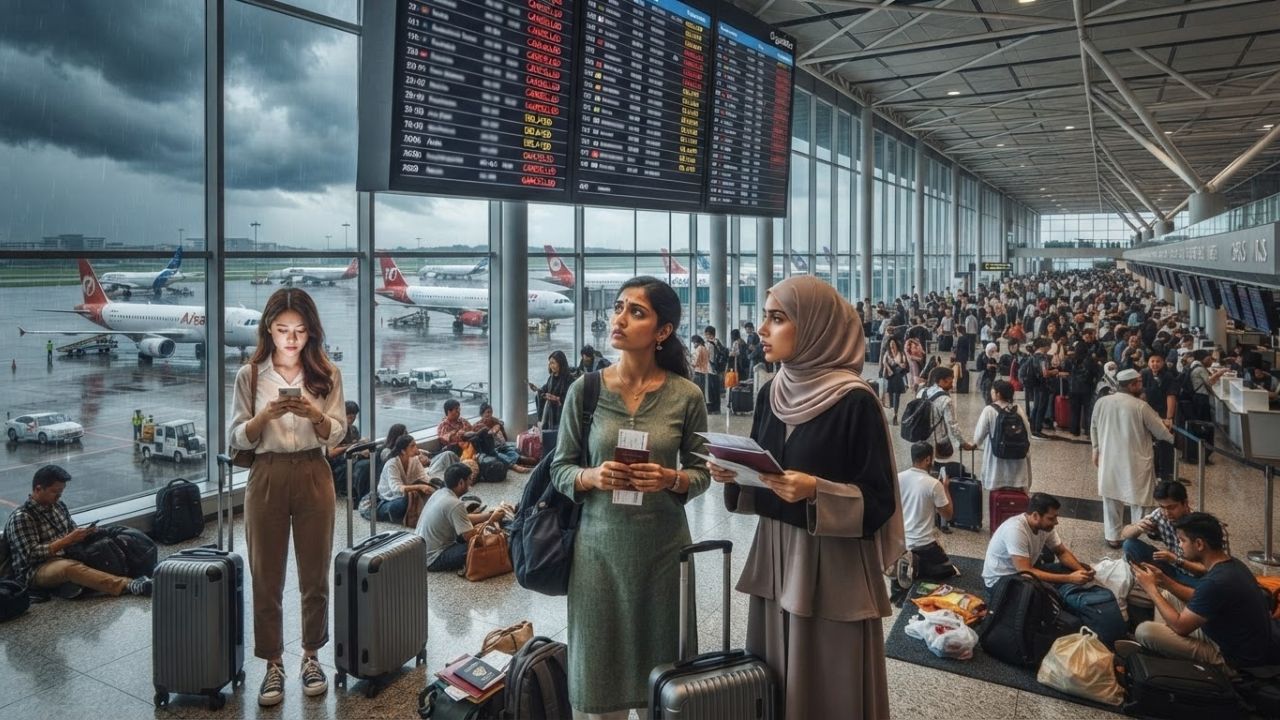
Image generated by AI
Widespread flight cancellations and delays severely affected travel networks across Asia on August 2, 2026, recording thousands of disrupted operations. The regional flight delays were caused by severe weather fronts and heightened geopolitical airspace alerts, forcing carriers to adjust flight schedules.
Detailed Regional Disruption Metrics
Our analysis of international flight tracking data indicates that carriers operating in Asia recorded 5,090 delays and 258 cancellations. In China, severe weather patterns reduced airport capacity, resulting in 3,167 delays and 100 cancellations. In the Middle East, geopolitical sensitivities and route adjustments resulted in 887 delays and 134 cancellations, particularly impacting Gulf international transit centers verified by FlightAware traffic archives.
China Eastern logged the highest delay volume in East Asia with 826 delays, followed by China Southern with 720 and Air China with 508. In the Gulf region, Saudia recorded 56 cancellations and 42 delays, while FlyDubai reported 195 delays and Emirates logged 145 delays. These flight cancellations concentrated significant operational stress at major hubs, with Shanghai Pudong processing 573 delays and Dubai International managing 381 delays.
Breakdown of Key Disruption Hotspots
The regional schedule delays affected major Asian transit hubs and passenger terminals:
- Shanghai Pudong (PVG): The East Asian hub reported 573 delays and 5 cancellations, leading China in total delays.
- Dubai International (DXB): The transit hub recorded 381 delays and 5 cancellations, slowing long-haul connections.
- King Khalid Riyadh (RUH): The Saudi gateway processed 116 delays and 35 cancellations due to routing sensitivities.
- Indira Gandhi New Delhi (DEL): Monsoon alerts and heavy rains contributed to 251 delays and 3 cancellations.
- Incheon International (ICN): Extreme heatwaves in South Korea slowed ramp operations, resulting in 164 delays and 3 cancellations.
Passenger Rights & Advisory (Information Gain & Experience)
For travelers experiencing flight delays or cancellations on international routes, understanding carrier rebooking liabilities is key:
- US DOT Codeshare Refund Rights: Under U.S. Department of Transportation (DOT) guidelines, if you book a flight with a US airline that is operated by an Asian codeshare partner and the flight is cancelled, you have the right to a full cash refund of your ticket. This remains valid even for international multi-leg itineraries.
- EU261 Transit Protections: For passengers departing European airports on Gulf carriers (such as Emirates or Qatar Airways), European Union EU261 rules apply. If your flight is delayed by more than three hours due to controllable operational issues, you are entitled to compensation up to €600.
- Middle East Travel Insurance Coverage: Given the geopolitical airspace adjustments, travelers should verify if their travel insurance policies cover air corridor closures. Standard policies often require special riders to cover cancellations stemming from military airspace suspensions.
Industry Analyst View
The simultaneous impact of severe weather and airspace constraints shows the vulnerability of the global hub-and-spoke transit system. When primary connection gateways like Dubai or Shanghai face capacity drops, the scheduling delays rapidly cascade to secondary terminals.
Additionally, managing these scheduling recovery cycles requires airlines to maintain higher fuel reserves for alternative routes. To support passenger recovery, airport operators must ensure customer service desks are prepared for overnight transit deplanings. This coordination remains vital to maintain traveler confidence and protect regional yields as travel demand continues to grow.
Related Travel Guides
Disclaimer
This article is for informational and educational purposes only. It does not constitute legal, financial, or professional advice. While we strive to provide accurate and up-to-date information, travel policies, regulations, and conditions change rapidly. Always verify information with official sources before making travel decisions. Nomad Lawyer makes no representations about the accuracy, reliability, completeness, or suitability of the information provided. Readers should consult qualified professionals for advice specific to their circumstances. The views expressed in this article are those of the author and do not necessarily reflect the views of Nomad Lawyer.
Kunal K Choudhary
Co-Founder & Contributor
A passionate traveller and tech enthusiast. Kunal contributes to the vision and growth of Nomad Lawyer, bringing fresh perspectives and driving the community forward.
Learn more about our team →