
Travel Asia Continues as Jet Fuel Crisis Disrupts Regional Flights
Asia's severe jet fuel shortage in March 2026 forces airlines to impose surcharges and delay flights. Travelers face soaring costs and unpredictable schedules across Southeast Asia's busiest hubs.

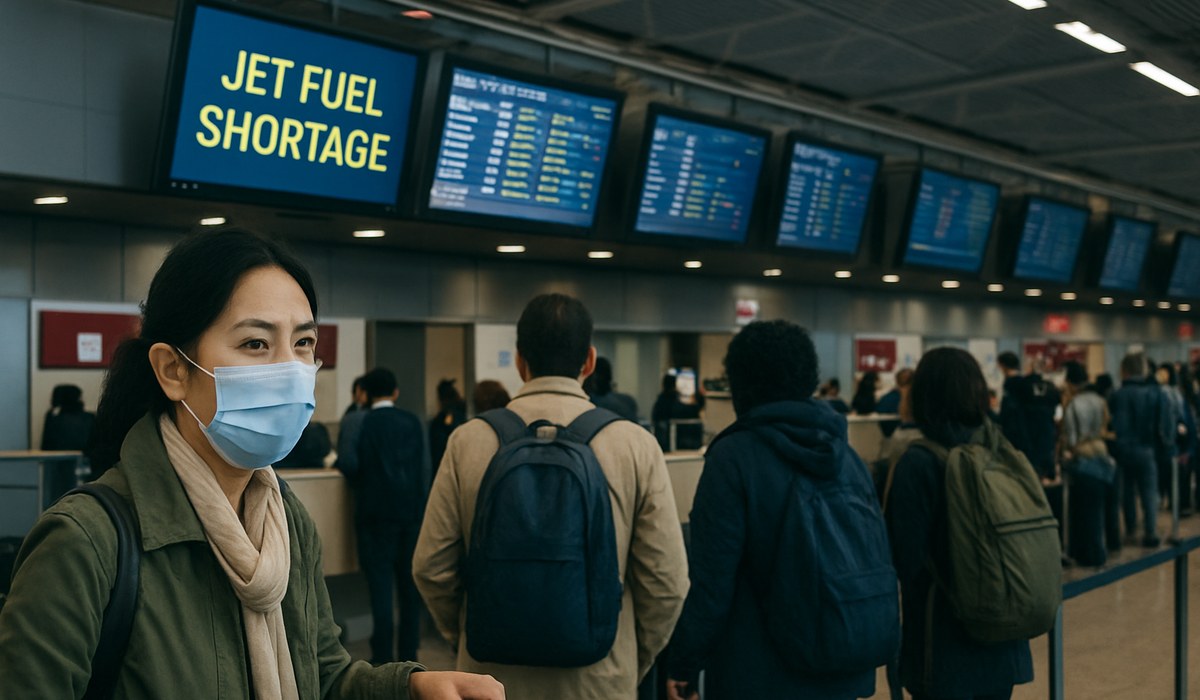
Image generated by AI
Quick Summary
- A critical jet fuel shortage is cascading across Asia's major aviation hubs, forcing carriers to implement emergency fuel surcharges on bookings.
- Bangkok (BKK), Singapore (SIN), and Manila (MNL) airports are experiencing the most severe supply constraints, with daily flight cancellations climbing into double digits.
- Airlines including Thai Airways, Singapore Airlines, and Philippine Airlines are adjusting schedules and rerouting aircraft to manage fuel allocations.
- Travelers should monitor real-time flight status, verify fuel surcharge breakdowns on tickets, and understand their rebooking rights before departure.
Your next Asia-Pacific flight could arrive days late. Or cost hundreds more than advertised. Both realities are unfolding simultaneously as a cascading jet fuel shortage disrupts the region's air travel ecosystem in real time.
The crisis is no longer theoretical. Since mid-March 2026, major Asian airports have faced rationing that operators describe as the worst supply squeeze in a decade. Airlines are scrambling. Passengers are facing hidden costs and schedule uncertainty. The broader question: How long before this regional bottleneck freezes the continent's connectivity to the world?
How Asia's Jet Fuel Crisis Is Unfolding Right Now
The root cause traces back to a perfect storm of supply-side shocks. Export restrictions implemented by leading fuel-producing nations have tightened availability just as demand rebounded post-recovery. Refinery maintenance across the region has trimmed capacity precisely when output matters most. And aging pipeline infrastructure simply cannot move fuel fast enough to meet sudden spikes in airline demand.
"We're seeing allocation cuts of 15 to 20 percent at our highest-traffic airports," according to regional airport operators surveyed this week. Bangkok's Suvarnabhumi (BKK), the gateway for Southeast Asian connectivity, is particularly exposed. The facility typically fuels 500+ aircraft daily. That number has dropped to roughly 420, forcing daily triage decisions about which flights depart on schedule and which get delayed or cancelled.
Related reporting on the supply breakdown: China Halts Fuel Exports: Airlines Weigh Surcharges as Jet Fuel Crisis Deepens provides deeper context on the geopolitical factors strangling supply chains.
Singapore Changi (SIN)—traditionally the region's most efficient hub—is implementing slot-based fuel allocation for the first time since 2008. Carriers receive daily allowances rather than unlimited fuel access. This mechanism prevents hoarding but creates rigid scheduling constraints that cascade into downstream delays across the network.
Manila's Ninoy Aquino International (MNL) has begun restricting night arrivals, citing fuel storage capacity limits. The airport cannot physically hold sufficient inventory to support unrestricted operations, forcing airlines to consolidate evening flights into tighter windows.
The International Air Transport Association (IATA) released a statement this week confirming that Asian carriers face margin compression of 3 to 5 percent amid surging fuel costs. Jet fuel prices across the region have risen 18 percent since January alone.
Why This Shortage Will Cost You More to Fly
Surcharges are appearing on ticket confirmations faster than airline websites can recalculate fares. Thai Airways, Singapore Airlines, Malaysia Airlines, and Philippine Airlines have all announced fuel levies—typically ranging from $25 to $60 per ticket depending on route distance.
But the visible surcharge is only part of the story. Base fares themselves are creeping upward. Economy seats on Bangkok-to-Tokyo routes that cost $280 in February are now priced at $340. That $60 premium reflects both the surcharge and underlying fuel hedging adjustments.
Corporate travel managers are reporting unexpected bill shock. A typical mid-size firm's quarterly air spend to Asia is up 12 percent despite flat or declining headcount traveling. "We're seeing $4,000 to $5,000 unexpected costs per traveler on a single trip," one director of travel noted.
The economics are unforgiving. Jet fuel represents 25 to 35 percent of operating costs for regional carriers. When prices spike and supply tightens simultaneously, airlines have two choices: absorb losses or pass costs to passengers. The industry is choosing the latter—aggressively.
More context on regional airline response strategies: Air Premia Expands Americas-Southeast Asia Connectivity with Thai Airways Partnership shows how carriers are optimizing routes to work around fuel constraints.
Long-haul routes are hit hardest. A flight from Singapore to London (13+ hours) consumes 40 percent more fuel than a regional service. Airlines are strategically grounding some ultra-long-haul capacity and consolidating bookings onto larger aircraft to improve fuel efficiency per seat. That means fewer available seats on profitable routes and even tighter availability.
Budget carriers are particularly exposed. AirAsia, Nok Air, and Lion Air operate on razor-thin margins. A 20 percent fuel cost spike erodes profitability entirely. Some budget operators are already announcing temporary capacity reductions.
Which Asian Airlines and Routes Are Most Affected
The impact map is uneven but concentrated on Southeast Asia's core hubs.
Bangkok (BKK) remains the epicenter. Thai Airways—the national carrier and largest employer at Suvarnabhumi—is managing fuel rationing by implementing 8 to 12 percent capacity cuts on non-hub international routes. Daily cancellations average 4 to 6 flights. Affected routes include Bangkok-Delhi, Bangkok-Hong Kong, and several India-Southeast Asia connections.
Singapore (SIN) Changi is restricting fuel allocations but maintaining higher operational discipline. Singapore Airlines has implemented modest schedule trims on less-profitable regional routes while protecting premium hub connectivity. The carrier is consolidating some aircraft maintenance windows to free up temporarily idle airframes, effectively squeezing additional capacity from existing fleet.
Manila (MNL) Philippine Airlines faces acute constraints. The carrier handles more passengers annually than Thai Airways but operates from a smaller, fuel-storage-constrained facility. Three regional routes (Manila-Bangkok, Manila-Hong Kong, Manila-Cebu) have been consolidated into fewer daily departures. Delays exceeding 4 hours are occurring on 15 to 20 percent of affected flights.
Kuala Lumpur (KUL) Malaysia Airlines is experiencing moderate impact but has negotiated preferential fuel access through long-term supply agreements. The carrier is capitalizing on relative advantage by incrementally shifting capacity from Bangkok to Kuala Lumpur, potentially reshaping regional hub dynamics.
Data from FlightAware shows that Asian delay rates have climbed 32 percent week-over-week. Fuel-related delays (explicitly coded in FlightAware data) account for roughly 18 percent of all Asian disruptions currently.
Long-haul inbound routes from the Middle East, India, and Australia are experiencing knock-on effects. A delayed inbound flight burns time on the tarmac, consuming fuel that was not budgeted. Airlines are now building fuel buffers more aggressively—burning fuel tactically to reduce weight for departure—which ironically increases consumption per flight hour.
Forward bookings for April and May are showing softening demand, particularly on routes originating from secondary Chinese cities and Indian metros. Travelers are rerouting through different hubs or delaying trips entirely.
The broader trend: [India's Travel Market to Reach USD 132
Disclaimer
This article is for informational and educational purposes only. It does not constitute legal, financial, or professional advice. While we strive to provide accurate and up-to-date information, travel policies, regulations, and conditions change rapidly. Always verify information with official sources before making travel decisions. Nomad Lawyer makes no representations about the accuracy, reliability, completeness, or suitability of the information provided. Readers should consult qualified professionals for advice specific to their circumstances. The views expressed in this article are those of the author and do not necessarily reflect the views of Nomad Lawyer.
Preeti Gunjan
Contributor & Community Manager
A passionate traveller and community builder. Preeti helps grow the Nomad Lawyer community, fostering engagement and bringing the reader experience to life.
Learn more about our team →