
Asia Aviation Crisis 2026: 4,224 Flight Delays and 152 Cancellations Hit Tokyo, Beijing, and Jakarta
Massive operational disruptions across 22 Asian airports led to over 4,000 delays and 152 cancellations, with Guangzhou Baiyun and Jakarta-Soekarno-Hatta facing the heaviest impacts.

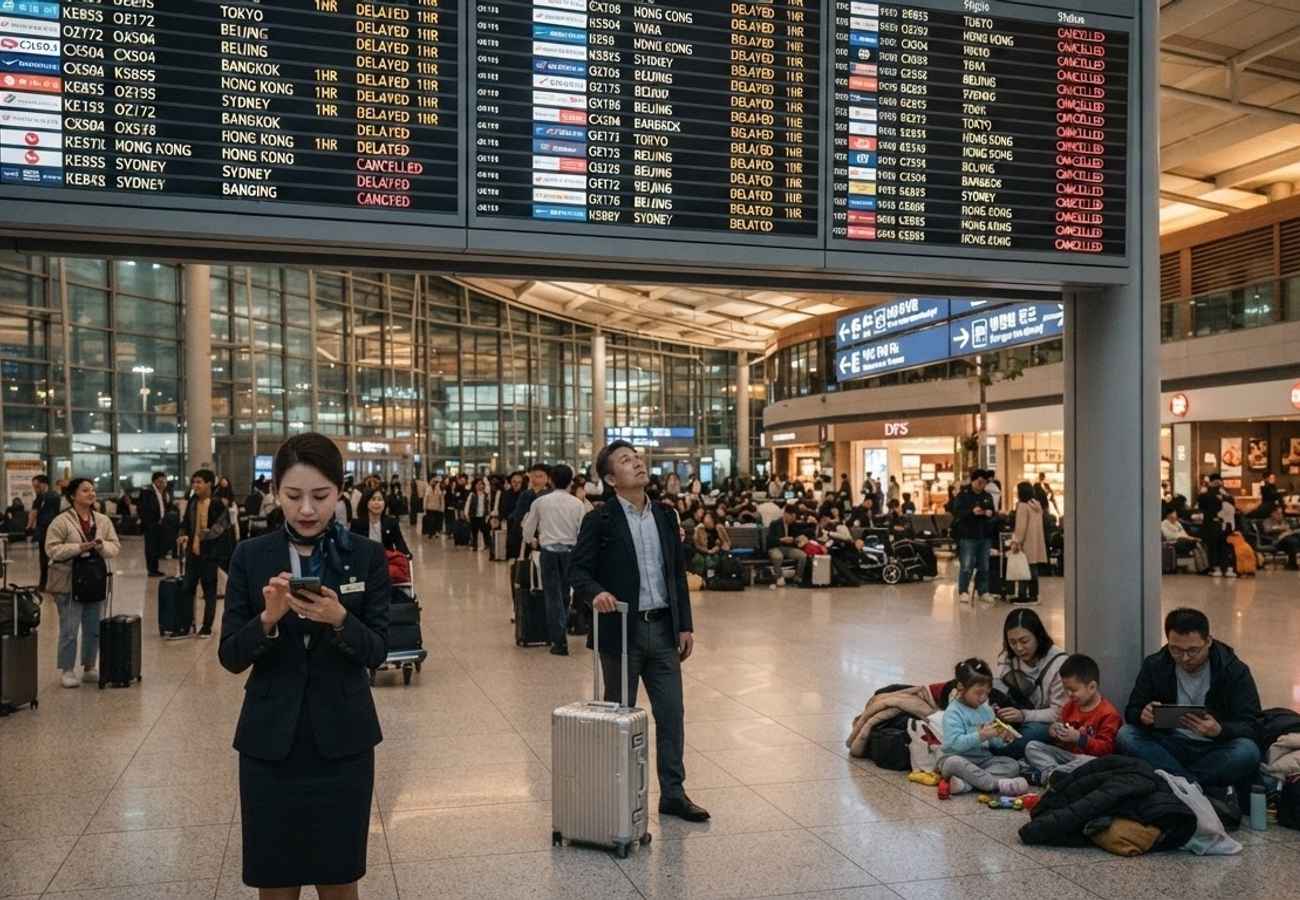
Image generated by AI
Air travel across Asia entered a state of significant volatility on August 31, 2026, with 4,224 delays and 152 cancellations recorded across 22 major hubs. The disruptions reveal a stark disparity in airport resilience, where some hubs managed thousands of delays without canceling flights, while others saw high cancellation rates despite lower traffic volumes.
Regional Breakdown of Aviation Disruptions
The operational instability was most acute in China, Japan, South Korea, Indonesia, and Singapore. While the sheer volume of delays was concentrated in Chinese hubs, the severity of flight cancellations peaked in Indonesia.
China's Hub Pressure
Guangzhou Baiyun International Airport emerged as the primary epicenter of the crisis, recording a staggering 782 delays. This figure dwarfs other major hubs, including Shanghai Pudong (478 delays) and Hangzhou Xiaoshan (305 delays).
A significant portion of the pressure at Guangzhou Baiyun was tied to a single carrier; China Southern Airlines alone accounted for 341 of the delays at that location.
Japanese and South Korean Impact
In Japan, Tokyo Haneda recorded 157 delays and one cancellation. Other notable Japanese hubs included:
- Fukuoka Airport: 110 delays, 4 cancellations.
- New Chitose Airport: 80 delays, 3 cancellations.
- Narita International Airport: 70 delays, 6 cancellations.
- Osaka International (Itami): 31 delays, 3 cancellations.
South Korea's Incheon International Airport faced 298 delays and four cancellations, with Korean Air contributing 79 of those delays. Jeju International (206 delays, 2 cancellations) and Gimpo International (138 delays, 2 cancellations) also reported significant setbacks.
Divergent Patterns in Cancellations vs. Delays
The data highlights a critical distinction for travelers: a high number of delays does not always correlate with a high number of cancellations.
The High-Delay, Low-Cancellation Model Singapore Changi Airport exemplifies this trend. Despite recording 182 delays—including 51 for Singapore Airlines and 38 for Scoot—the airport suffered only one single cancellation. Similarly, Guangzhou Baiyun managed 782 delays with only six cancellations.
The High-Cancellation Risk Model Conversely, Jakarta-Soekarno-Hatta International Airport recorded the highest cancellation count of any airport in the region with 22 cancellations, alongside 207 delays. Batik Air was the primary driver here, accounting for 16 of those cancellations.
In Beijing, the contrast between the two main airports was evident. Beijing Capital International recorded 159 delays and 18 cancellations (14 of which were Air China flights), while Beijing Daxing recorded 128 delays and four cancellations.
Airline Performance and Operational Load
Two carriers dominated the delay statistics, suggesting systemic operational challenges within their networks. China Southern Airlines (551 delays) and China Eastern (517 delays) combined for 1,068 total delays.
The following table provides the comprehensive breakdown of the most affected airlines and airports.
Major Airline and Airport Disruption Data
| Entity | Delays | Cancellations | Key Notes |
|---|---|---|---|
| Guangzhou Baiyun Airport | 782 | 6 | Highest overall delay count |
| Shanghai Pudong Airport | 478 | - | High volume disruption |
| Hangzhou Xiaoshan Airport | 305 | - | Significant delay volume |
| Incheon International | 298 | 4 | South Korea's primary hub |
| Jakarta-Soekarno-Hatta | 207 | 22 | Highest cancellation count |
| Singapore Changi | 182 | 1 | High delays, minimal cancellations |
| Beijing Capital Intl | 159 | 18 | High cancellation rate |
| China Southern Airlines | 551 | - | Most delayed airline |
| China Eastern | 517 | - | Second most delayed airline |
| Air China | 228 | - | Third most delayed airline |
| Korean Air | 121 | - | Significant Incheon impact |
| Shenzhen Airlines | 121 | - | High regional delays |
| Japan Airlines | 119 | - | Notable Japanese delays |
Key Takeaways for Travelers
- Carrier Concentration: If flying with China Southern or China Eastern, expect a higher probability of delays, particularly through Guangzhou and Shanghai.
- Hub Variance: Jakarta-Soekarno-Hatta currently presents the highest risk for total flight cancellations.
- Beijing Divergence: Travelers using Beijing Capital International are facing higher cancellation risks than those using Beijing Daxing.
- Operational Resilience: Singapore Changi remains highly resilient against cancellations despite facing significant delay volumes.
Frequently Asked Questions
Which airport had the most flight cancellations? Jakarta-Soekarno-Hatta International Airport recorded the highest number of cancellations with 22.
Which airline was most affected by delays? China Southern Airlines recorded the highest number of delays with a total of 551.
Was Singapore Changi Airport affected? Yes, Changi recorded 182 delays, though it maintained a very low cancellation rate with only one flight cancelled.
Travelers are strongly encouraged to monitor real-time flight status through official airline apps and airport dashboards.
Related Travel Guides
Disclaimer
This article is for informational and educational purposes only. It does not constitute legal, financial, or professional advice. While we strive to provide accurate and up-to-date information, travel policies, regulations, and conditions change rapidly. Always verify information with official sources before making travel decisions. Nomad Lawyer makes no representations about the accuracy, reliability, completeness, or suitability of the information provided. Readers should consult qualified professionals for advice specific to their circumstances. The views expressed in this article are those of the author and do not necessarily reflect the views of Nomad Lawyer.
Preeti Gunjan
Contributor & Community Manager
A passionate traveller and community builder. Preeti helps grow the Nomad Lawyer community, fostering engagement and bringing the reader experience to life.
Learn more about our team →