
Asia Aviation Crisis 2026: 3,786 Flights Delayed and 259 Cancelled in Single Day
A massive wave of operational and weather-related disruptions hit Asian aviation on August 27, 2026, resulting in 3,786 delays and 259 cancellations across major regional hubs.
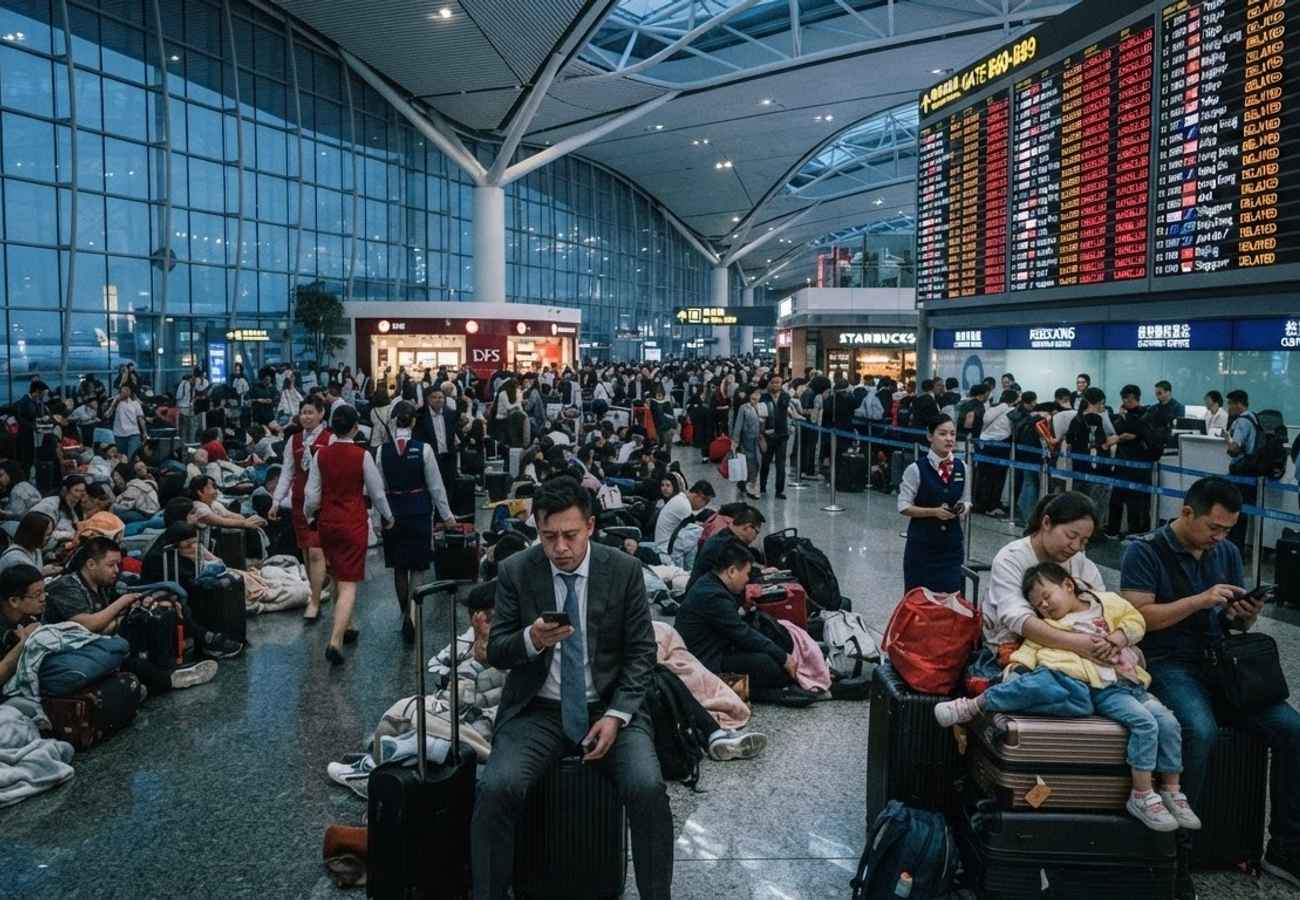
Image generated by AI
Asia's air travel network has suffered a severe operational collapse, with 3,786 flights delayed and 259 cancelled in a single 24-hour period. The disruption highlights a systemic lack of resilience across the region's primary aviation hubs.
The latest surge in disruptions, recorded on August 27, 2026, is not an isolated incident but part of a volatile pattern defining the year. Aggregated tracking data confirms that the crisis spanned major gateways from China and Japan to India and Southeast Asia. This event follows a series of high-impact failures throughout 2026, including a July sequence where severe storms impacted 6,961 flights and another July event that saw 8,754 delays and 432 cancellations across Asia and the Middle East.
Industry data suggests the regional network is operating with virtually no slack. When primary hubs experience localized failures, the ripple effect is immediate. Late-arriving aircraft and displaced crews create a cascading backlog that converts minor delays into region-wide crises.
Critical Disruption Metrics: 2026 Asia Aviation
The following data points illustrate the scale of the current and preceding disruptions:
- August 27 Event: 3,786 flights delayed; 259 flights cancelled.
- July Storm Sequence: 6,961 flights disrupted.
- July Regional Event: 8,754 delays; 432 cancellations.
- Typhoon Dolphin Impact: 8,200+ delays; 700+ cancellations.
- Early August Weather Event: 2,500+ delays; 300 cancellations.
Primary Hubs Under Pressure
The congestion is concentrated around the region's most critical connecting points. Our analysis of flight-tracking dashboards indicates that the following airports bore the brunt of the recent volatility:
- China: Beijing Capital, Shanghai Pudong, and Guangzhou Baiyun.
- Japan & Korea: Tokyo Haneda and Seoul Incheon.
- India & SE Asia: Delhi, Kuala Lumpur, and Manila.
Shanghai Pudong and Guangzhou have repeatedly topped the rankings for total delayed movements this summer. Tokyo Haneda specifically suffered over 400 delays and dozens of cancellations during a single recent typhoon event. Because these airports serve as the primary links between East Asia and long-haul destinations in Europe and North America, the delays frequently extend to hubs like Dubai and Istanbul as aircraft miss their planned rotations.
Convergence of Systemic Failures
The 2026 crisis is the result of three converging factors rather than a single catalyst.
1. Extreme Weather Patterns Severe weather remains the most frequent trigger. Typhoon Dolphin serves as a primary example, causing massive disruptions across China, Japan, India, and Indonesia. These events expose the fragility of current scheduling.
2. Geopolitical Instability Conflict surrounding Iran has forced a redesign of long-haul routings between Asia, Africa, and Europe. This has increased flight times and operational complexity. Market trends suggest that airspace closures and volatile jet fuel prices have forced airlines to reduce frequencies on key Southeast Asian routes.
3. Infrastructure and Fleet Constraints Asian hubs consistently rank among the highest globally for late flights. A combination of tight crew rosters, limited spare aircraft, and ground congestion means there is no margin for recovery once a disruption begins.
Operational Impact and Passenger Rights
For the passenger, these figures translate to overcrowded terminals and prolonged queues for rebooking. From a legal perspective, the impact varies by jurisdiction. Travelers on routes involving the European Union often have clearly defined compensation rights. However, within many Asian markets, assistance is frequently limited to basic refreshments or simple rebooking, leaving passengers to absorb the costs of missed connections and unplanned overnight stays.
For airlines, the financial strain is mounting. Increased fuel costs, higher crew overtime expenses, and reduced revenue from cancelled flights are impacting balance sheets across Southeast Asia.
Logistics Analysis: Why This Matters
From a logistical perspective, this data confirms that the "hub-and-spoke" model in Asia is currently over-leveraged. When a "super-hub" like Shanghai or Tokyo stalls, it doesn't just affect local passengers; it freezes the flow of aircraft for the entire hemisphere.
For the digital nomad or frequent business traveler, the real impact is the disappearance of the "safe" connection. The traditional 2-3 hour layover is no longer a sufficient buffer in the 2026 environment. Our analysis suggests that operational volatility is now "baked into" the regional schedule, meaning disruptions are a feature of the system rather than an anomaly.
Forward Outlook
Volatility is expected to persist through the autumn. Thunderstorm activity and typhoon risks remain high, and there is no definitive timeline for the normalization of airspace corridors between Asia and Europe.
To mitigate risk, travelers should adopt the following strategies:
- Prioritize Early Departures: Morning flights have significantly higher on-time rates before the day's delays accumulate.
- Extend Connection Windows: Increase layover times at major hubs beyond the airline's minimum requirement.
- Audit Ticket Conditions: Verify the specific care and compensation obligations of the carrier, especially when flying outside EU-protected airspace.
The Asian aviation network is currently a high-risk environment where a single storm can paralyze thousands of journeys.
Related Travel Guides
Disclaimer
This article is for informational and educational purposes only. It does not constitute legal, financial, or professional advice. While we strive to provide accurate and up-to-date information, travel policies, regulations, and conditions change rapidly. Always verify information with official sources before making travel decisions. Nomad Lawyer makes no representations about the accuracy, reliability, completeness, or suitability of the information provided. Readers should consult qualified professionals for advice specific to their circumstances. The views expressed in this article are those of the author and do not necessarily reflect the views of Nomad Lawyer.