
Arnold Palmer Regional Airport and Others Secure Federal Grants to Attract a New Airline and Restore Flights
Arnold Palmer Regional Airport and Others Secure Federal Grants to Attract a New Airline and Restore Flights

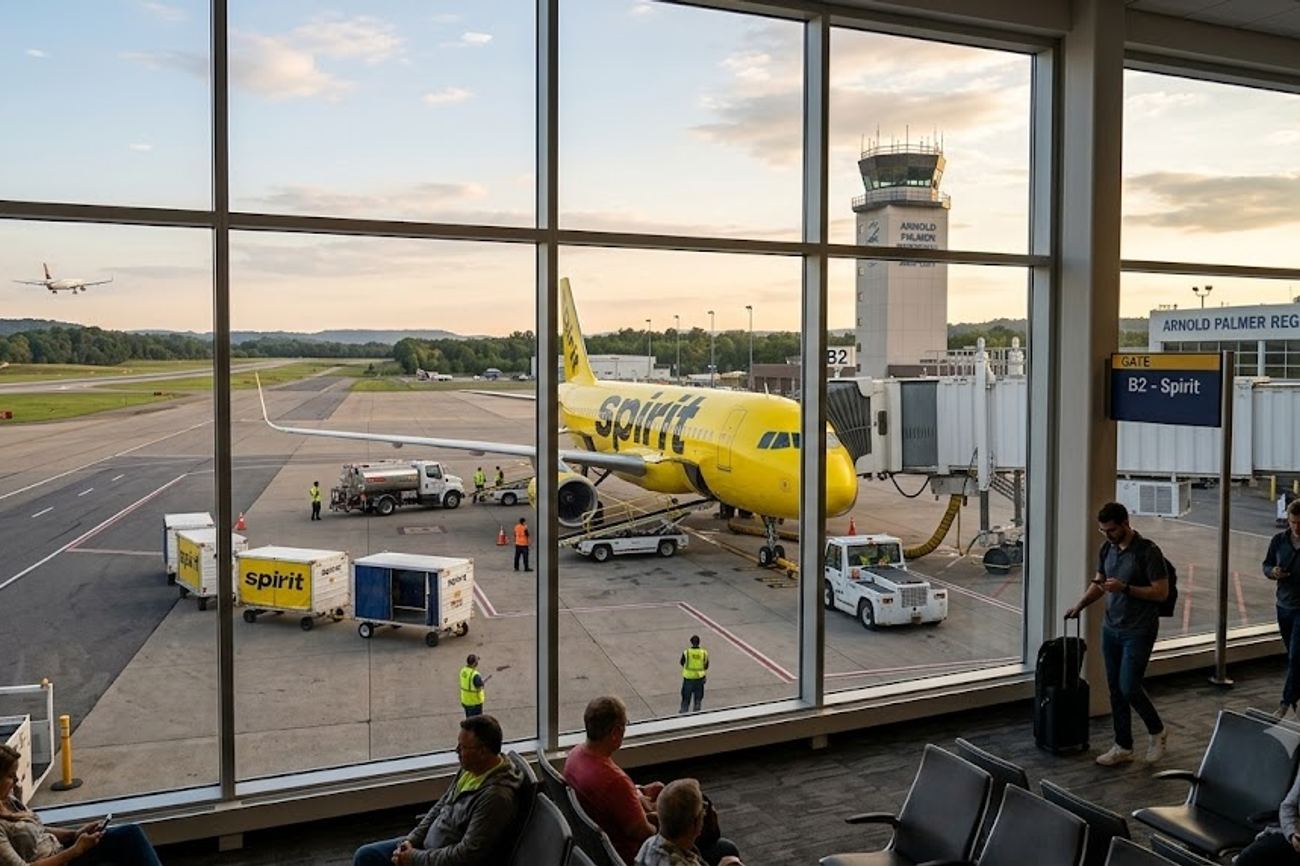
Image generated by AI
[Greensburg, Pennsylvania] — The Arnold Palmer Regional Airport has secured an $850,000 federal grant to lure a new commercial airline and restore passenger services following a total collapse of scheduled flights earlier this year.
The funding arrives via the U.S. Department of Transportation (DOT) through the Small Community Air Service Development Program (SCASDP). This capital injection is specifically earmarked to provide revenue guarantees, reducing the financial risk for airlines that hesitate to enter smaller markets. Local officials are now moving to replace previous carriers that abandoned the Westmoreland County region, leaving the community without direct air access.
The Funding Trigger
The crisis began earlier this year when existing commercial operations at Arnold Palmer Regional Airport ceased entirely. This departure created a vacuum in regional connectivity, forcing residents and business travelers to rely on distant metropolitan hubs. Because small-market routes often carry high operational risks and thin margins, the airport lacked the leverage to attract a replacement carrier on its own.
The $850,000 allocation acts as a fiscal safety net. Under the SCASDP framework, these funds allow the airport to guarantee a minimum level of revenue to a prospective airline. By offsetting potential losses during the initial launch phase, the federal government removes the primary barrier—financial instability—that typically prevents carriers from servicing rural or mid-sized airports.
Market Impact and Affected Demographics
The loss of air service created a ripple effect across Westmoreland County, impacting both the local economy and individual commuter patterns. The absence of flights has specifically hindered access to high-demand leisure and business corridors.
| Affected Group | Primary Impact | Resulting Behavior |
|---|---|---|
| Holiday Travelers | Loss of direct routes to Florida and South Carolina | Increased reliance on long-distance driving |
| Local Businesses | Reduced accessibility for corporate clients | Slowdown in regional economic momentum |
| Tourism Operators | Drop in inbound visitors from national hubs | Decreased revenue for local hospitality |
| Commuters | Extended transit times to alternative airports | Increased travel costs and time loss |
The airport is not alone in this struggle. The U.S. Department of Transportation identified 14 distinct regional agencies nationwide in this funding cycle that require similar interventions. From Wisconsin to Florida, regional hubs are utilizing these grants to combat the dual pressures of pilot shortages and rising operational overhead.
Practical Traveler Advisory and Strategic Insights
For the average passenger in Westmoreland County, this grant does not mean flights resume tomorrow, but it significantly increases the probability of a new carrier arriving soon.
Currently, the airport is in the negotiation phase. While the grant application was supported by an undisclosed airline sponsor, no formal operational contracts have been signed. Travelers should expect the following:
- Targeted Destinations: Negotiations are prioritizing "sunshine destinations" and coastal markets, specifically in Florida and South Carolina, which were the most heavily utilized routes prior to the service collapse.
- Improved Stability: Because the new carrier will be backed by federal revenue guarantees, the risk of another sudden departure is lowered, though not eliminated.
- Reduced Transit Times: Once a carrier is finalized, residents will no longer need to drive to major metropolitan terminals, saving several hours of transit per trip.
The Arnold Palmer Regional Airport is utilizing federal grants to enhance infrastructure and incentivize new carrier entries to restore critical flight connectivity. These improvements aim to streamline passenger logistics and increase accessibility for travelers visiting the region via the Federal Aviation Administration.
The Path to Restoration
Airport leadership is now leveraging the confirmed funding to enter formal commercial discussions. The presence of guaranteed capital fundamentally shifts the power dynamic in these negotiations; the airport is no longer asking a carrier to take a blind risk, but is offering a subsidized entry into the market.
Executives are currently reviewing multiple proposals. The stated goal is to avoid "short-lived operational agreements." Instead, the airport is seeking a partner capable of sustaining long-term service stability to ensure that the regional economy does not suffer another sudden disconnection from the national aviation network.
The broader strategy involves using the SCASDP funds to bridge the "startup gap." By covering the initial high-risk costs of establishing a route, the government enables the airline to build a passenger base. Once the route reaches a critical mass of profitability, the federal subsidy is no longer required, and the route becomes a permanent fixture of the commercial aviation landscape.
FAQ: Arnold Palmer Regional Airport 2024
When will flights resume at Arnold Palmer Regional Airport? A specific start date has not been announced. The airport is currently using the $850,000 grant to negotiate with prospective airlines. Formal operational commitments are pending.
Which destinations are most likely to be restored? Local authorities are focusing on high-demand holiday routes, specifically targeting coastal and sunshine destinations in Florida and South Carolina.
Who is paying for the new airline services? The U.S. Department of Transportation is providing the $850,000 grant through the Small Community Air Service Development Program to guarantee revenue for the incoming carrier.
Why did the previous airlines leave the region? While specific carrier reasons weren't detailed, regional airports often face high financial risks and operational costs that make small-market routes unsustainable without government intervention.
Federal funding has turned the tide for Westmoreland County, transforming a stranded airport back into a viable gateway.
Related Travel Guides
- AirAsia Secures Historic 17th Consecutive World’s Best Low Cost Airline Title at Skytrax Awards
- Flights Cancelled Sweep Through Asia with 241 Cancellations and 4,331 Delays Affecting Aleppo, Hanoi and More Airports
- Los Angeles Air Travel Expands as Delta Adds Monterey, Philadelphia and More Flights to Boston, Seattle and Houston: What You Need to Know
Disclaimer
This article is for informational and educational purposes only. It does not constitute legal, financial, or professional advice. While we strive to provide accurate and up-to-date information, travel policies, regulations, and conditions change rapidly. Always verify information with official sources before making travel decisions. Nomad Lawyer makes no representations about the accuracy, reliability, completeness, or suitability of the information provided. Readers should consult qualified professionals for advice specific to their circumstances. The views expressed in this article are those of the author and do not necessarily reflect the views of Nomad Lawyer.
Naina Thakur
Contributor & Travel Specialist
Travel enthusiast and legal writer covering visa regulations, responsible tourism, and cultural journeys across global destinations.
Learn more about our team →