
Argentina Spring Road Trips: Whales, Wine Valleys, and Salt Flats
Explore Argentina in September with six road trips across Península Valdés whales, Salta salt flats, Mendoza Malbec vineyards, and Iguazú Falls jungle routes.

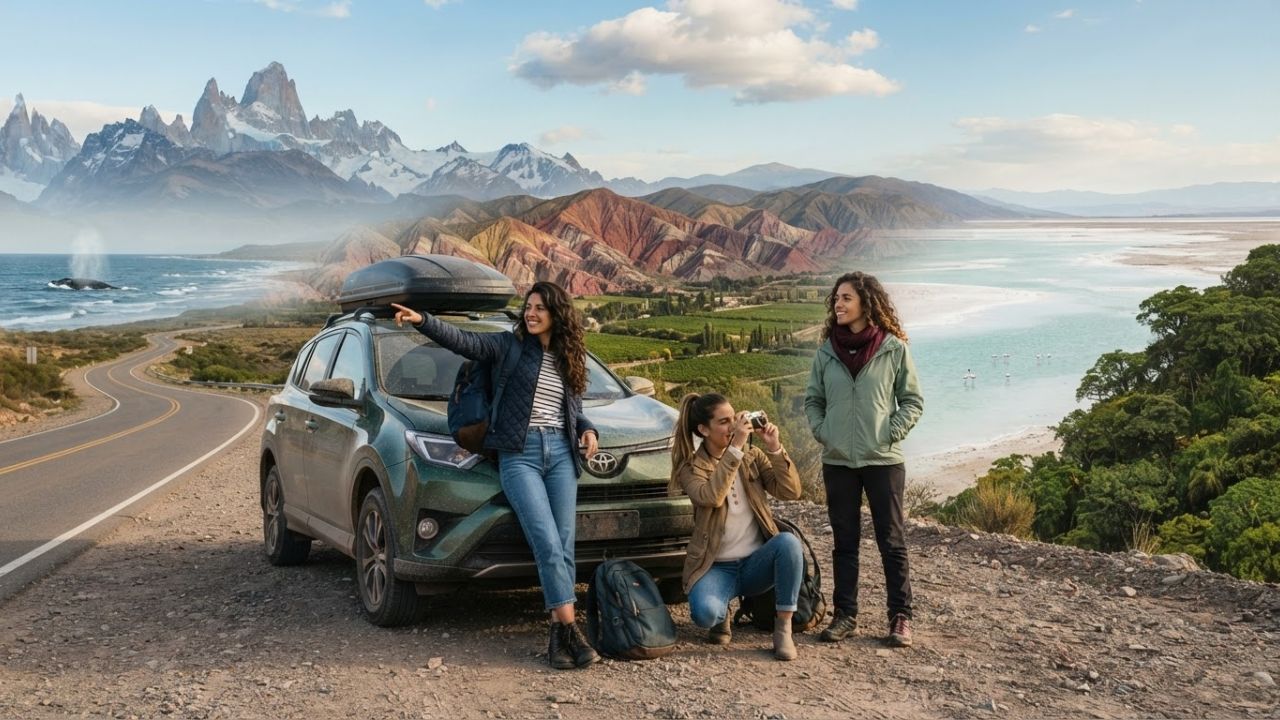
Image generated by AI
September unlocks Argentina’s prime spring self-drive season, connecting migrating southern right whales in Chubut, high-altitude Andes salt flats along Route 40, and thundering cataracts at Iguazú before peak summer crowds arrive.
BUENOS AIRES, Argentina — As September arrives across the Southern Hemisphere, Argentina undergoes a dramatic seasonal shift. Daylight hours lengthen, wildflowers emerge across alpine valleys, and the intense heat of midsummer remains months away. For independent travelers, early spring provides an exceptional window for self-drive exploration. Across thousands of kilometers of paved highways and gravel passes, drivers can experience Atlantic wildlife breeding grounds, high-altitude desert plateaus, sun-drenched vineyards, sub-tropical cloud forests, and riverine wetlands within a single journey.
Rather than confining itineraries to capital city stopovers, overland travel in September allows travelers to connect regional traditions with remarkable geological transitions. Six distinct road trips highlight why Argentina in early spring represents one of the world's most versatile self-drive adventures.
The Local Trend Revealed: Early Spring Drives Across Argentina's Six Diverse Regions
The growing appeal of early spring driving routes stems from favorable seasonal weather and thinner shoulder-season crowds across Argentina's distinct provinces:
Puerto Madryn and Península Valdés (Chubut)
Along the arid Patagonian coastline of Chubut province, Puerto Madryn serves as the primary gateway to Península Valdés, a UNESCO World Heritage site celebrated for marine biodiversity. September marks the absolute peak of the southern right whale calving and breeding season. Pregnant females and nursing mothers shelter in the calm waters of Golfo Nuevo and Golfo San José, offering travelers close sightings from chartered catamarans departing Puerto Pirámides, or directly from the pebbled shoreline at El Doradillo Beach, where deep coastal drop-offs allow whales to swim mere meters from observers.
Continuing along the peninsula’s gravel routes toward Punta Norte and Caleta Valdés brings encounters with sprawling colonies of southern elephant seals and South American sea lions. A 60-kilometer detour inland leads to the historic Chubut River Valley town of Gaiman, settled by 19th-century Welsh pioneers, where teahouses serve traditional afternoon Welsh tea alongside regional berry jams and spiced fruit bread. Because coastal Atlantic winds remain brisk and temperatures can drop quickly, travelers require windproof outer shells, thermal layers, and sturdy walking boots.
Salta and Jujuy (The Andean Northwest)
Traversing the northwest provinces of Salta and Jujuy provides one of South America’s most celebrated overland loops, anchored by National Routes 40 and 9. Starting in Salta—renowned for its 18th-century Spanish colonial architecture, vibrant peña folk music halls, and hand-cut baked empanadas—drivers head southwest through the Quebrada de las Conchas toward Cafayate. This red-rock canyon road winds past wind-carved sandstone formations, including the acoustic Amphitheatre and the Devil's Throat, before opening into sun-drenched valleys producing Argentina’s signature white Torrontés wine.
Heading north into Jujuy province, Route 9 climbs into the Quebrada de Humahuaca. Purmamarca nestles against the Cerro de los Siete Colores (Hill of Seven Colours), while Tilcara preserves the pre-Inca stone fortress of Pucará. Further north, the road reaches historic Humahuaca before ascending switchbacks over the Lipán Pass to reach the blinding expanse of the Salinas Grandes salt flats. At elevations exceeding 3,400 meters, spring visitors encounter bright sunshine and crisp mountain air, requiring ample hydration, deliberate acclimatization, and warm evening attire.
Mendoza (Wine Terroirs and Andean Peaks)
Mendoza represents the premier destination for pairing viticulture with alpine topography. Provincial tourism authorities highlight September as an ideal window, characterized by clear skies, budding vines, and comfortable daytime temperatures prior to the intense summer sun. Basing in Mendoza City provides direct highway access to historic estates across Luján de Cuyo, Maipú, and the higher-altitude Uco Valley, where family-run bodegas host leisurely outdoor tastings of world-class Malbec backed by snow-capped Andean peaks.
Beyond the cellar doors, Route 7 winds west into the high Andes, leading past the thermal mineral pools of Termas de Cacheuta, the natural mineral bridge at Puente del Inca, and trailhead viewpoints for Mount Aconcagua, the highest summit in the Americas. To the south, San Rafael features the dramatic carved chasm of the Atuel Canyon, where travelers can book whitewater rafting and kayaking runs along the Atuel River. Drivers during August and September should monitor regional weather forecasts for the dry, warm Zonda wind, a foehn-type wind that can cause sudden temperature spikes and dust storms.
Tafí del Valle (Tucumán)
Tucumán province features one of northern Argentina’s most startling botanical transitions. Ascending Provincial Route 307 from San Miguel de Tucumán, the roadway snakes through the dense sub-tropical rainforest canopy of the Los Sosa Nature Reserve. Within an hour of navigating tight switchbacks alongside rushing river gorges, the humid jungle falls away, revealing the open, golden alpine basin of Tafí del Valle.
September brings crisp, dry daytime air and minimal rainfall, making the valley ideal for hiking, horseback excursions, and visiting pre-Columbian megalith sites. Regional drives around La Ciénega dam and the broader Yungas Circuit reveal high-altitude cattle pastures and traditional dairy farms known for producing artisanal cow and goat milk cheeses. Drivers should take caution along the narrow curves of Quebrada de los Sosa by traveling in daylight and packing fleece layers for chilly valley evenings.
Colón and El Palmar National Park (Entre Ríos)
For travelers starting from Buenos Aires, Entre Ríos province offers an accessible driving escape roughly 300 kilometers north along modern highway corridors. Situated along the Uruguay River, Colón pairs sandy riverfronts with extensive thermal mineral baths, serving as the launching pad for El Palmar National Park, located 50 kilometers further north via National Route 14.
El Palmar protects one of the world’s last remaining dense preserves of native yatay palm trees, creating an open savanna ecosystem inhabited by capybaras, South American foxes, black-necked swans, and rheas. Visitors can drive along well-maintained unpaved park trails, hike down to the stone ruins of Calera del Palmar—an 18th-century lime kiln facility along the riverbank—and end the day soaking in Colón's hot spring pools. September brings mild, pleasant weather for birdwatching and trail walking, with occasional brief spring showers.
Misiones and Iguazú Falls
In the northeastern sub-tropical panhandle of Misiones, roads cut through iron-rich red soils flanked by dense Atlantic rainforest. Iguazú National Park, bordering Brazil, anchors the region with its 275 individual waterfalls crashing over basalt escarpments. Visiting in September offers moderate humidity, comfortable walking temperatures along the upper and lower boardwalk circuits, and robust river flows fed by winter rains in the upper Paraná basin.
An extended self-drive across Misiones along National Route 12 integrates cultural history via the preserved 17th-century Jesuit-Guaraní ruins of San Ignacio Miní, a UNESCO World Heritage site constructed from carved red sandstone. The drive allows travelers to observe rare toucans, morpho butterflies, and coatis while learning how native Guaraní communities cultivate and harvest artisanal yerba mate across local cooperative farms.
Cultural & Environmental Value: Protecting Fragile Ecosystems and Indigenous Heritage
For the visitor, the true value of these road journeys lies in how tourism revenue supports ecological conservation and regional cultural preservation.
In Península Valdés, self-drive fees and whale-watching excursions directly fund provincial wildlife ranger programs that enforce strict navigation perimeters around nursing southern right whales. Similarly, in El Palmar National Park, visitor entrance fees underwrite aggressive habitat restoration initiatives to control invasive shrub species and protect young yatay palm saplings.
Along the Andean circuits of Salta, Jujuy, and Tucumán, road travelers engage directly with rural communities whose agricultural and artisanal traditions date back centuries. Purchasing hand-woven llama wool ponchos in Purmamarca or dining at family-run roadside eateries directly sustains Indigenous Kolla and Diaguita households. In Chubut, the enduring Welsh presence in Gaiman showcases an unusual linguistic and culinary heritage established in 1865, preserved through community-led heritage museums and historic tea rooms.
Local Visitor Insider Tips: High Passes, Traditional Asados, and Route Etiquette
To travel Argentina by car safely and respectfully, keep these practical regional guidelines in mind:
- Optimal Visit Windows: September represents the sweet spot between winter chills and midsummer humidity. Aim for early to mid-September in Chubut for whale sightings, and mid-to-late September in Mendoza and Salta when vineyard estates open their outdoor terraces.
- Cultural Etiquette & Social Traditions: When offered a mate gourd by locals in northern or rural regions, accept it gratefully, drink the liquid entirely through the metal straw (bombilla) until you hear a slight gurgle, and hand it directly back. Never stir the bombilla with your hand. Say gracias only when you do not wish to receive another round.
- Regional Dining Specialties: In Salta, order empanadas salteñas stuffed with knife-cut beef, potatoes, scallions, and hard-boiled eggs, baked in wood-fired clay ovens and accompanied by spicy tomato salsa. In Mendoza, reserve an afternoon multi-course asado (barbecue) featuring wood-grilled skirt steak paired with aged Malbec. In Gaiman, indulge in Welsh tea served with bara brith (spiced dried fruit cake) and rich butter cookies. In Misiones, pick up freshly baked chipa (Guaraní cassava and cheese rolls) sold warm at roadside bakeries.
- Under-the-Radar Detours: Between Cafayate and Cachi on Salta’s Route 40, allocate three hours to slowly drive the unpaved Quebrada de las Flechas, where millions of years of tectonic upheaval have pushed sandstone strata into dramatic, angular arrow-like fins. In Mendoza, make time to visit the high-altitude Uco Valley sub-appellation of Gualtallary, where chalky limestone soils yield distinct, mineral-driven wines.
Tourism Outlook: Decentralized Routes Reshape South American Travel
The expansion of regional driving circuits across Argentina reflects a broader shift toward independent, slow-paced travel across South America. Supported by ongoing road maintenance along the iconic National Route 40 and expanded domestic air routes connecting regional hubs like Salta, Mendoza, and Puerto Madryn, travelers are no longer tethered strictly to international gateway cities.
As the country continues to develop responsible self-drive infrastructure—including electric charging corridors in wine country, well-marked trail networks in national parks, and community-guided rural homestays—Argentina's early spring road trips demonstrate how seasonal travel can disperse economic benefits to rural communities while safeguarding fragile coastal and mountain ecologies.
Related Travel Guides
Bolivia Establishes Four Amazon Municipal Reserves for Ecotourism
Halifax Tourism Surges as US Dollar and Cool Summers Draw Visitors
The 10 Best Hidden Scenic Byways in South America, According To Reddit
Disclaimer
This article is for informational and educational purposes only. It does not constitute legal, financial, or professional advice. While we strive to provide accurate and up-to-date information, travel policies, regulations, and conditions change rapidly. Always verify information with official sources before making travel decisions. Nomad Lawyer makes no representations about the accuracy, reliability, completeness, or suitability of the information provided. Readers should consult qualified professionals for advice specific to their circumstances. The views expressed in this article are those of the author and do not necessarily reflect the views of Nomad Lawyer.
Raushan Kumar
Founder & Lead Developer
Full-stack developer with 11+ years of experience and a passionate traveller. Raushan built Nomad Lawyer from the ground up with a vision to create the best travel and law experience on the web.
Learn more about our team →